
Is the Nissan 3.3 V6 a Good Engine?

The Nissan 3.3L V6 engine is a solid, dependable powerplant known for its durability and smooth operation, especially in trucks and SUVs like the Pathfinder and Frontier. While not the most powerful or fuel-efficient engine in its class, it offers a great balance of reliability and low maintenance for daily drivers and off-road enthusiasts alike.
Key Takeaways
- Proven Reliability: The Nissan 3.3 V6 is known for lasting 200,000+ miles with proper maintenance, making it a favorite among long-term owners.
- Smooth Power Delivery: With around 170–200 horsepower, it provides adequate power for mid-size SUVs and trucks, especially in off-road or towing scenarios.
- Common Oil Consumption Issues: Some models, particularly early 2000s versions, may experience higher oil consumption—regular checks are essential.
- Timing Chain Durability: Unlike belt-driven engines, the 3.3 V6 uses a timing chain, reducing the risk of catastrophic failure and maintenance costs.
- Good for Modifications: Enthusiasts appreciate its potential for mild performance upgrades, especially when paired with forced induction kits.
- Fuel Economy Trade-Off: Expect 15–18 mpg combined—decent for its era but less efficient than modern V6 engines.
- Widely Available Parts: Due to its long production run, replacement parts and expertise are easy to find and affordable.
📑 Table of Contents
- Is the Nissan 3.3 V6 a Good Engine? A Deep Dive into Performance and Reliability
- History and Development of the Nissan 3.3 V6
- Performance and Power Output
- Reliability and Common Issues
- Maintenance Tips for Long-Term Health
- Owner Experiences and Real-World Feedback
- Is the Nissan 3.3 V6 Right for You?
- Conclusion
Is the Nissan 3.3 V6 a Good Engine? A Deep Dive into Performance and Reliability
If you’ve ever shopped for a used Nissan Pathfinder, Frontier, or Xterra from the late 1990s to the mid-2000s, chances are you’ve come across the 3.3-liter V6 engine. This engine has powered some of Nissan’s most popular trucks and SUVs for nearly two decades, earning a reputation for toughness and longevity. But is the Nissan 3.3 V6 a good engine? That’s the million-dollar question—especially if you’re considering buying a vehicle with this powerplant or already own one and want to know what to expect.
At first glance, the 3.3 V6 might not seem like a standout. It doesn’t boast the high horsepower numbers of modern turbocharged engines, nor does it sip fuel like a hybrid. But what it lacks in flash, it makes up for in reliability and simplicity. This engine was designed during an era when durability and ease of repair were top priorities—before computers took over every aspect of engine management. As a result, the 3.3 V6 has become a favorite among DIY mechanics, off-roaders, and budget-conscious buyers who value function over form.
In this article, we’ll take a comprehensive look at the Nissan 3.3 V6 engine. We’ll explore its origins, performance characteristics, common problems, maintenance tips, and real-world experiences from owners. Whether you’re a first-time buyer, a seasoned mechanic, or just curious about Nissan’s engineering legacy, this guide will help you decide if the 3.3 V6 is the right engine for your needs.
History and Development of the Nissan 3.3 V6
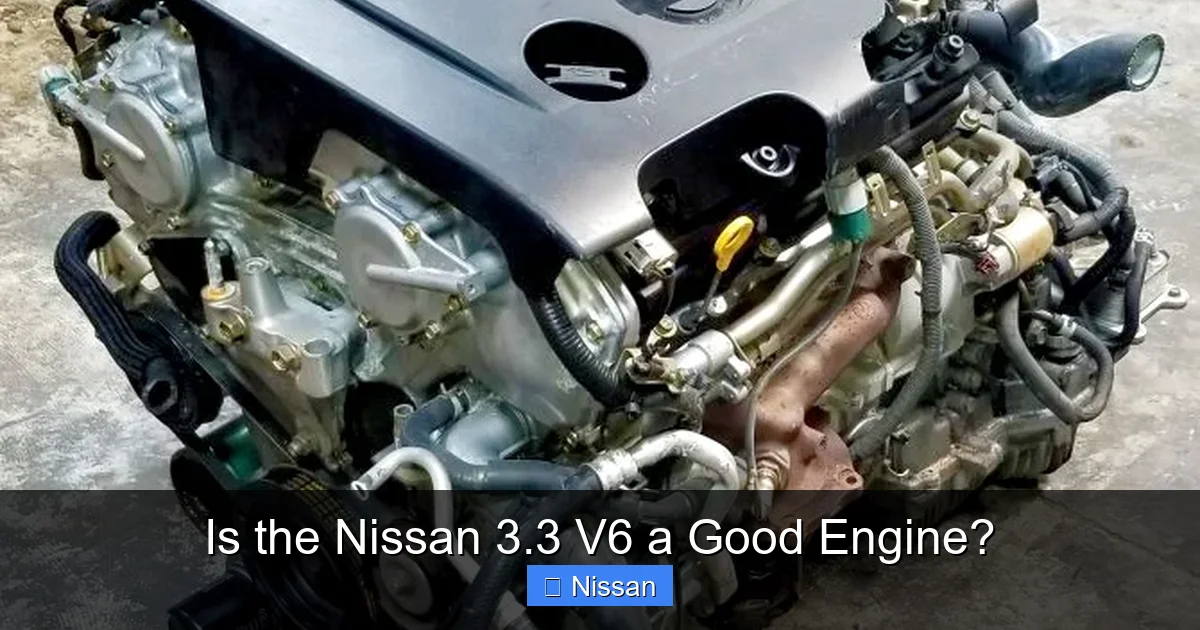
Visual guide about Is the Nissan 3.3 V6 a Good Engine?
Image source: low-offset.com
The Nissan 3.3L V6 engine, officially known as the VG33E and later the VG33ER (with supercharger), first appeared in the mid-1990s. It was part of Nissan’s VG engine family, which also included 2.0L, 2.4L, and 3.0L variants. The 3.3L version was developed to meet the growing demand for more power in mid-size trucks and SUVs, especially as consumers began expecting more capability from their family vehicles.
First Appearances and Applications
The VG33E made its debut in the 1996 Nissan Pathfinder, replacing the older 3.0L V6. It quickly became the standard engine for the second-generation Pathfinder and was later adopted in the Nissan Frontier pickup truck (in extended cab and crew cab models), the Xterra SUV, and even the Infiniti QX4 luxury SUV. Its widespread use across multiple platforms speaks to its versatility and Nissan’s confidence in its design.
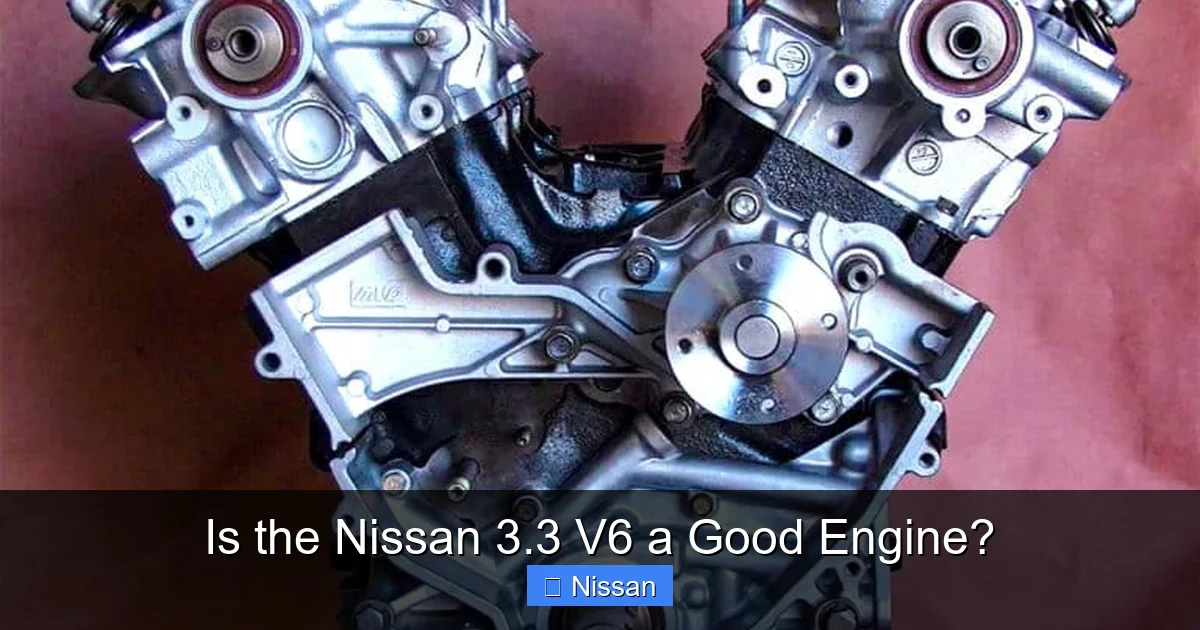
This engine was a naturally aspirated V6 with a 60-degree bank angle, aluminum cylinder heads, and a cast-iron block—a combination that balanced weight, strength, and cost. It featured a single overhead cam (SOHC) design with two valves per cylinder, which, while not the most advanced by today’s standards, was reliable and easy to service.
Evolution: From VG33E to VG33ER
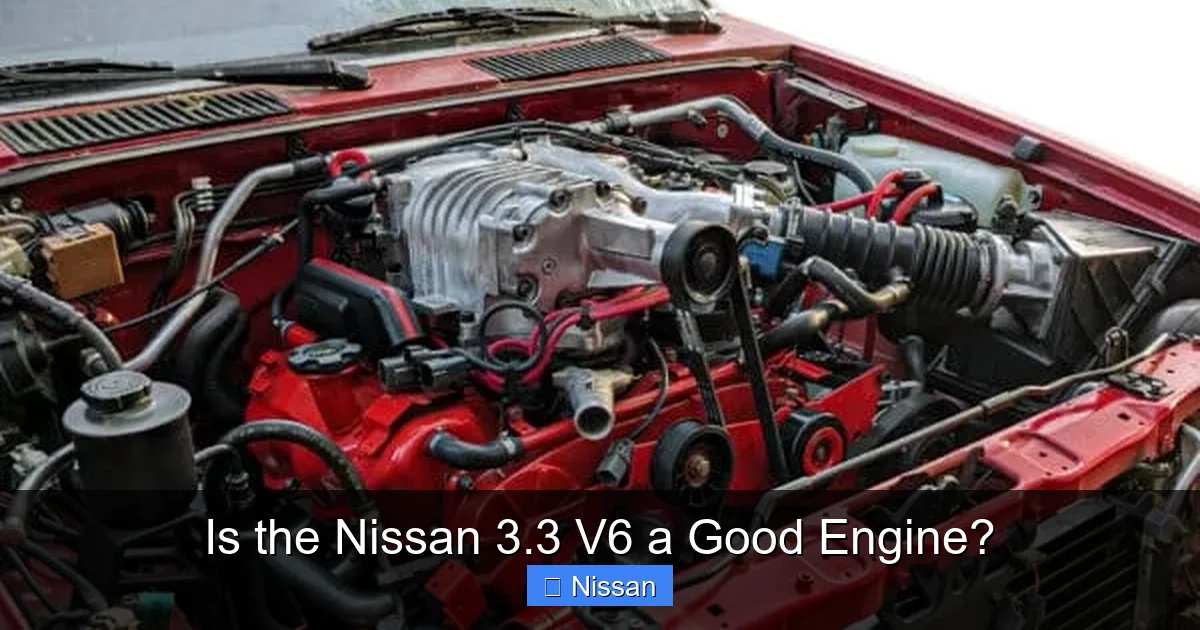
In 2001, Nissan introduced the VG33ER, a supercharged version of the 3.3L V6. This upgrade was primarily used in the 2001–2004 Nissan Frontier and Xterra, offering a significant boost in horsepower—jumping from around 170 hp to over 210 hp. The supercharger added excitement to an otherwise modest engine, making it more appealing to performance-minded buyers.
Despite the performance gains, the supercharged version wasn’t without its quirks. The added complexity of the supercharger system introduced new maintenance considerations, such as belt tension and intercooler care. However, for many owners, the extra power was worth the trade-off.
Why Nissan Chose This Design
Nissan’s decision to use a 3.3L V6 was driven by market needs. In the 1990s and early 2000s, consumers wanted more power for towing, off-roading, and highway driving—without stepping up to a full-size truck. The 3.3L V6 offered a sweet spot between the smaller 2.4L four-cylinder and the larger V8 engines found in competitors like the Toyota Tacoma or Ford Ranger.
Additionally, the engine’s design prioritized durability. With a timing chain instead of a belt, fewer sensors than modern engines, and a straightforward fuel injection system, it was built to last. This made it ideal for rugged use in trucks and SUVs that often saw heavy loads, rough terrain, and long commutes.
Performance and Power Output
Visual guide about Is the Nissan 3.3 V6 a Good Engine?
Image source: low-offset.com
When it comes to raw numbers, the Nissan 3.3 V6 won’t blow you away. But performance isn’t just about horsepower—it’s about how that power is delivered and how it fits the vehicle’s purpose.
Horsepower and Torque Ratings
The naturally aspirated VG33E produces between 170 and 180 horsepower, depending on the model year and application. Torque output is typically around 200 lb-ft, which is respectable for a mid-size SUV or truck of its era. For comparison, the Toyota 5VZ-FE 3.4L V6 in the Tacoma makes about 190–200 hp and 220 lb-ft of torque—slightly more, but not dramatically so.
The supercharged VG33ER, on the other hand, bumps output to approximately 210–220 horsepower and 245 lb-ft of torque. That’s a noticeable improvement, especially in acceleration and towing capacity. Owners of supercharged Frontiers and Xterras often report feeling a significant difference when merging onto highways or climbing hills.
Real-World Driving Experience
In everyday driving, the 3.3 V6 feels smooth and responsive. It doesn’t have the instant punch of a turbocharged engine, but it delivers power in a linear, predictable manner. This makes it easy to drive in traffic and comfortable for long road trips.
For off-roading, the engine’s low-end torque is a big plus. Whether you’re crawling over rocks in a Pathfinder or hauling gear in a Frontier, the 3.3 V6 provides enough grunt to get the job done. Many owners appreciate that it doesn’t feel underpowered, even when the vehicle is fully loaded.
Towing capacity varies by model, but most 3.3L-equipped trucks and SUVs can tow between 3,500 and 5,000 pounds—enough for small trailers, boats, or campers. That’s not class-leading, but it’s sufficient for most recreational needs.
Fuel Economy: What to Expect
Fuel economy is one area where the 3.3 V6 shows its age. Most models return between 15 and 18 miles per gallon in combined city/highway driving. That’s not terrible for a V6 from the early 2000s, but it’s noticeably less efficient than modern engines with direct injection, cylinder deactivation, or turbocharging.
For example, a 2004 Nissan Frontier with the 3.3L V6 might average 16 mpg, while a 2023 Toyota Tacoma with a 2.7L four-cylinder can achieve over 20 mpg. However, if you’re buying a used vehicle with the 3.3 V6, you’re likely prioritizing reliability and capability over fuel savings.
Reliability and Common Issues
Visual guide about Is the Nissan 3.3 V6 a Good Engine?
Image source: low-offset.com
One of the biggest reasons people ask, “Is the Nissan 3.3 V6 a good engine?” is because of its reputation for reliability. And for the most part, that reputation is well-earned.
Proven Longevity
Many owners report driving their 3.3L V6 engines well beyond 200,000 miles with minimal issues. With regular oil changes, timely maintenance, and a bit of care, these engines can easily reach 250,000 miles or more. There are even documented cases of 300,000+ mile engines still running strong.
The key to this longevity is the engine’s simple design. Fewer moving parts, a robust timing chain, and a lack of complex electronics mean there’s less that can go wrong. Unlike engines that rely on timing belts, which must be replaced every 60,000–100,000 miles, the 3.3 V6’s timing chain is designed to last the life of the engine.
Oil Consumption: A Known Quirk
One of the most common issues with the 3.3 V6—especially in early 2000s models—is oil consumption. Some engines burn oil at a rate of a quart every 1,000 to 2,000 miles. This isn’t necessarily a sign of imminent failure, but it does require vigilance.
The cause is often worn piston rings or valve seals, which allow oil to seep into the combustion chamber. While this doesn’t usually lead to catastrophic engine damage, it can result in fouled spark plugs, reduced performance, and increased emissions.
The good news? Regular oil level checks and top-offs can keep the engine running smoothly. Many owners simply keep a quart of oil in the trunk and check the dipstick weekly. If consumption becomes excessive (more than a quart per 1,000 miles), a mechanic can perform a compression test or leak-down test to assess the engine’s health.
Head Gasket Concerns
Another issue that occasionally surfaces is head gasket failure, particularly in high-mileage engines or those that have overheated. The 3.3 V6 uses a multi-layer steel (MLS) head gasket, which is generally durable, but extreme heat can cause it to fail.
Symptoms include white smoke from the exhaust, coolant loss, or milky oil. If you notice any of these signs, it’s important to address them quickly to avoid engine damage. Regular coolant changes and avoiding overheating can help prevent this problem.
Supercharger Maintenance (VG33ER)
For owners of the supercharged VG33ER, there are a few additional maintenance items to consider. The supercharger belt should be inspected regularly and replaced every 60,000–80,000 miles. A loose or worn belt can cause slippage, reducing boost and performance.
The intercooler and intake system should also be kept clean to ensure efficient airflow. Some owners upgrade to a larger intercooler or high-flow air filter to improve performance and reduce heat soak.
Maintenance Tips for Long-Term Health
Keeping your Nissan 3.3 V6 running smoothly doesn’t require a PhD in engineering—just a little attention and routine care.
Oil Changes: The Golden Rule
Regular oil changes are the single most important thing you can do for your 3.3 V6. Use high-quality synthetic or conventional oil (5W-30 or 10W-30) and change it every 3,000 to 5,000 miles, especially if you drive in harsh conditions or tow frequently.
Don’t skip this step. Clean oil reduces wear, prevents sludge buildup, and helps maintain proper lubrication—especially important if your engine tends to consume oil.
Coolant and Radiator Care
The cooling system is critical for preventing overheating and head gasket issues. Flush the coolant every 30,000 to 50,000 miles and inspect hoses and the radiator for leaks or cracks. Use a 50/50 mix of antifreeze and distilled water.
If you live in a hot climate or do a lot of towing, consider upgrading to a high-capacity radiator or adding an auxiliary transmission cooler.
Air Filter and Fuel System
A clean air filter ensures proper airflow and fuel efficiency. Replace it every 15,000 to 30,000 miles, or sooner if you drive on dusty roads.
Fuel injectors can become clogged over time, leading to rough idle or hesitation. Using a quality fuel injector cleaner every 10,000 miles can help keep them clean. For older engines, a professional cleaning may be necessary.
Spark Plugs and Ignition System
The 3.3 V6 uses traditional spark plugs and ignition coils. Replace spark plugs every 30,000 to 60,000 miles, depending on the type (copper, platinum, or iridium). Use the correct gap and torque specifications to avoid misfires.
If you notice a rough idle or poor acceleration, check the ignition coils. They’re relatively inexpensive and easy to replace.
Owner Experiences and Real-World Feedback
To truly understand if the Nissan 3.3 V6 is a good engine, it helps to hear from the people who drive them every day.
Long-Term Reliability Stories
Many owners share stories of their 3.3L engines going the distance. One Pathfinder owner reported driving his 2001 model over 280,000 miles with only routine maintenance—no major engine work. Another Frontier owner used his truck for towing a camper across the country and praised the engine’s consistency and power.
These stories aren’t outliers. Online forums like Nissan Forum, Xterra Nation, and Reddit are filled with similar testimonials. The consensus? If you maintain it, the 3.3 V6 will take care of you.
Common Complaints
Of course, not every experience is perfect. Some owners complain about oil consumption, as mentioned earlier. Others note that the engine can feel sluggish when towing heavy loads or climbing steep grades—especially in naturally aspirated form.
A few owners also mention that the engine’s age shows in its technology. No variable valve timing, no direct injection, and limited emissions controls mean it doesn’t meet modern efficiency or environmental standards. But for a used vehicle, that’s often a trade-off for simplicity and durability.
Why Enthusiasts Love It
Despite its quirks, the 3.3 V6 has a loyal following. Off-roaders appreciate its low-end torque and reliability in harsh conditions. DIY mechanics love how easy it is to work on—no need for special tools or diagnostic scanners.
And for those who want more power, the engine responds well to modifications. Cold air intakes, exhaust upgrades, and even supercharger kits (for non-supercharged models) can unlock extra performance without breaking the bank.
Is the Nissan 3.3 V6 Right for You?
So, is the Nissan 3.3 V6 a good engine? The answer depends on your needs, budget, and expectations.
If you’re looking for a reliable, no-nonsense engine for a used truck or SUV, the 3.3 V6 is an excellent choice. It’s proven, durable, and easy to maintain. It won’t win any drag races, but it will get you where you need to go—year after year.
However, if you prioritize fuel economy, cutting-edge technology, or maximum towing capacity, you might want to consider a newer engine or a different vehicle altogether.
Ultimately, the 3.3 V6 shines in the used market. It’s a workhorse that values function over flash, and for many owners, that’s exactly what they want.
Conclusion
The Nissan 3.3 V6 engine may not be the most exciting or advanced powerplant on the market, but it’s one of the most dependable. With a history of longevity, straightforward design, and real-world reliability, it’s earned its place as a favorite among truck and SUV owners.
Whether you’re driving a Pathfinder through the mountains, using a Frontier for weekend projects, or exploring backroads in an Xterra, the 3.3 V6 delivers consistent performance and peace of mind. Just remember to check the oil, change the coolant, and give it the care it deserves.
In the end, the Nissan 3.3 V6 isn’t just a good engine—it’s a testament to the value of simplicity, durability, and engineering that stands the test of time.
Frequently Asked Questions
How long does the Nissan 3.3 V6 engine last?
With proper maintenance, the Nissan 3.3 V6 can easily last 200,000 to 250,000 miles. Some well-cared-for engines have even surpassed 300,000 miles without major rebuilds.
Does the Nissan 3.3 V6 burn oil?
Yes, some models—especially early 2000s versions—are known to consume oil. Regular oil level checks and top-offs are recommended to prevent low oil conditions.
Is the supercharged 3.3 V6 reliable?
The supercharged VG33ER is generally reliable but requires extra attention to the supercharger belt and intercooler. With proper maintenance, it can be as durable as the naturally aspirated version.
What vehicles came with the Nissan 3.3 V6?
The engine was used in the Nissan Pathfinder, Frontier, Xterra, and Infiniti QX4 from the mid-1990s to the mid-2000s.
Can you modify the Nissan 3.3 V6 for more power?
Yes, the engine responds well to modifications like cold air intakes, exhaust upgrades, and supercharger kits. It’s a popular choice for mild performance builds.
Is the Nissan 3.3 V6 good for towing?
Yes, it’s capable of towing 3,500 to 5,000 pounds depending on the vehicle. It provides strong low-end torque, making it suitable for light to moderate towing tasks.
