
Nissan Altima Won’t Start: Common Problems

Your Nissan Altima won’t start, and you’re frustrated? You’re not alone. From dead batteries to ignition switch failures, this guide covers the most common reasons your Altima refuses to turn over—and how to fix them fast.
Key Takeaways
- Dead or weak battery: The #1 cause of no-start issues; check voltage and connections.
- Faulty starter motor: Listen for clicking sounds—this often signals a bad starter.
- Ignition switch problems: A worn switch can prevent power from reaching the engine.
- Fuel delivery issues: Clogged filters or failing fuel pumps disrupt engine startup.
- Faulty crankshaft position sensor: Critical for engine timing; failure means no spark or fuel.
- Security system glitches: Immobilizer errors can block startup even with a working key.
- Corroded wiring or fuses: Simple electrical faults can mimic major mechanical problems.
📑 Table of Contents
- Why Won’t My Nissan Altima Start? A Real-World Breakdown
- 1. Dead or Weak Battery: The Usual Suspect
- 2. Starter Motor Failure: That Clicking Sound
- 3. Ignition Switch Problems: Power Without Crank
- 4. Fuel System Issues: No Gas, No Go
- 5. Crankshaft Position Sensor: The Silent Killer
- 6. Security System & Immobilizer Glitches
- 7. Electrical Gremlins: Fuses, Relays & Corrosion
- When to Call a Mechanic
- Prevention Tips: Keep Your Altima Starting Smoothly
- Final Thoughts
Why Won’t My Nissan Altima Start? A Real-World Breakdown
Picture this: It’s Monday morning, you’re running late for work, and you hop into your trusty Nissan Altima—only to find it completely unresponsive. You turn the key, press the start button, or push the ignition, but nothing happens. No engine cranking, no dashboard lights, maybe just a faint click or total silence. Sound familiar?
Don’t panic. The “Nissan Altima won’t start” problem is more common than you might think—and in most cases, it’s fixable without a costly trip to the dealership. Whether you drive a 2013 model with 120,000 miles or a nearly new 2022 Altima, electrical gremlins, worn components, or simple maintenance oversights can leave you stranded.
In this guide, we’ll walk you through the most frequent culprits behind a non-starting Altima. We’ll explain what to look for, how to test key systems at home, and when it’s time to call a professional. Our goal? To get you back behind the wheel—safely and affordably—with minimal stress.
1. Dead or Weak Battery: The Usual Suspect
Let’s start with the obvious: your battery. It’s the heart of your car’s electrical system, and if it’s dead or dying, your Altima simply won’t have the juice to fire up the engine.
Signs of a Failing Battery
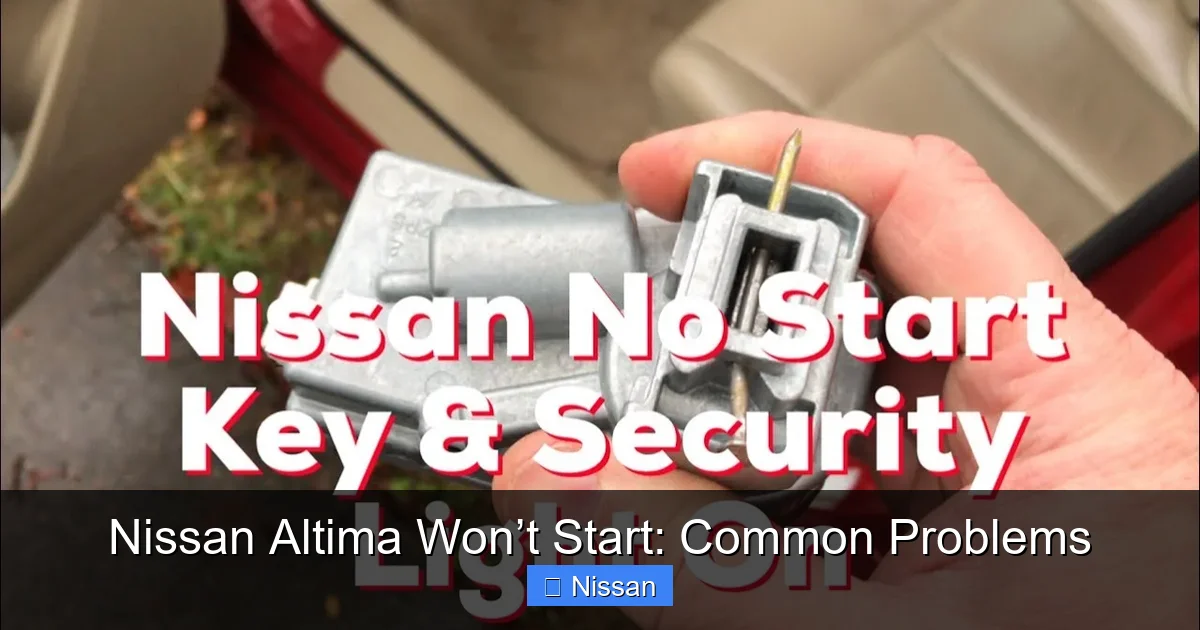
Dim headlights when you turn the key? Dashboard lights flickering or staying off? A slow crank—or no crank at all? These are classic signs your battery is struggling. In cold weather, batteries lose efficiency fast, so winter mornings are prime time for no-start issues.
Visual guide about Nissan Altima Won’t Start: Common Problems
Image source: i.ytimg.com
How to Test Your Battery
Grab a multimeter (available at any auto parts store for under $20). With the car off, touch the red probe to the positive terminal (+) and the black probe to the negative (-). A healthy battery should read 12.6 volts or higher. Anything below 12.4 volts means it’s weak; under 12 volts likely means it’s dead.
You can also do a load test—many auto shops offer this for free. If your battery is more than 3–5 years old, consider replacing it preemptively. Nissan Altimas are known for sensitive electrical systems, and a marginal battery can cause intermittent no-start problems that seem random.
Common Battery Mistakes
One mistake drivers make? Assuming jump-starting solves the problem permanently. If your battery dies frequently, it could indicate a deeper issue like a faulty alternator not recharging it properly. Always check the charging system after a jump.
2. Starter Motor Failure: That Clicking Sound
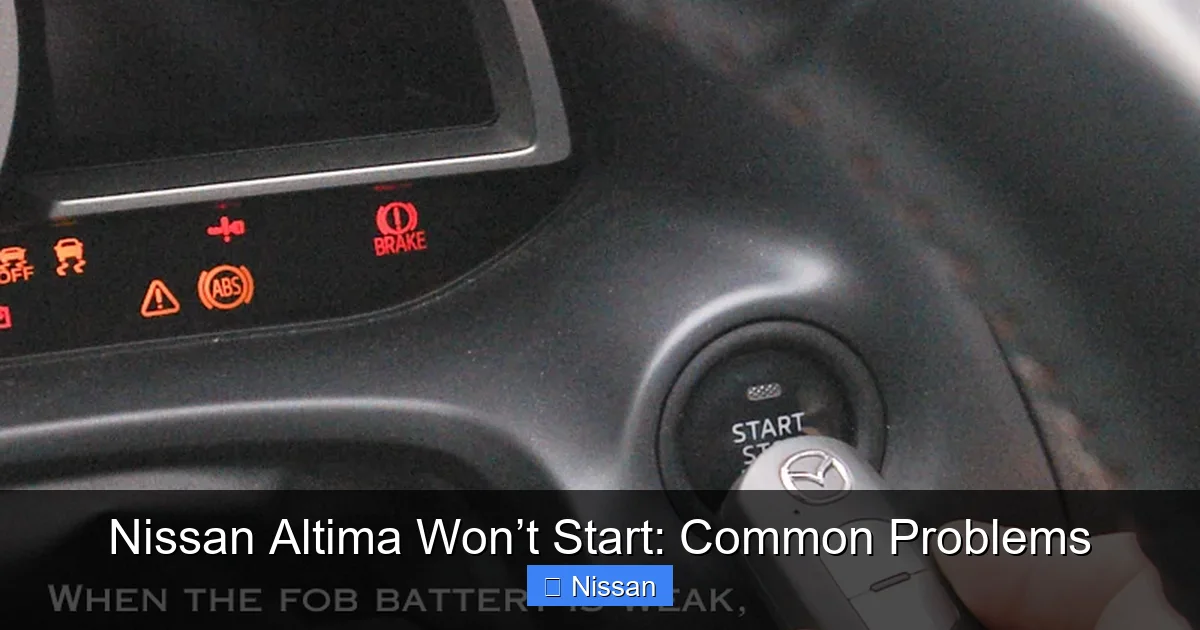
If you turn the key and hear a single loud *click*—but the engine doesn’t crank—you’re likely dealing with a bad starter motor.
What Does a Bad Starter Sound Like?
A healthy starter spins the engine smoothly. A failing one may produce:
Visual guide about Nissan Altima Won’t Start: Common Problems
Image source: samarins.com
- A rapid clicking noise (often confused with a bad battery)
- A single loud click followed by silence
- A grinding or whirring sound that doesn’t engage the engine
Note: If you hear *multiple* rapid clicks, that’s usually the battery. But one solid click? That’s typically the starter solenoid trying—and failing—to engage.
Testing the Starter
Testing a starter isn’t always DIY-friendly, but here’s a quick check: Turn on your headlights. Have someone try to start the car while you watch the lights. If they stay bright (not dimming), the battery has power—but the starter isn’t drawing current. That points to a starter issue.
Another clue: Tap the starter gently with a hammer (while someone tries to start the car). If it suddenly works, the starter’s brushes or solenoid are worn out. This is a temporary fix—replace the starter soon.
Altima-Specific Starter Notes
Nissan Altimas from 2007–2018 are particularly prone to starter motor failures due to heat exposure and vibration. If you own one of these models and experience intermittent no-starts, especially after the engine has been running, suspect the starter first.
3. Ignition Switch Problems: Power Without Crank
Your ignition switch doesn’t just “turn on” the car—it sends power to critical systems like the fuel pump, ignition coil, and starter relay. If it’s faulty, your Altima may have dash lights but no crank.
Symptoms of a Bad Ignition Switch
- Dashboard lights come on, but nothing happens when you turn the key
- Accessories (radio, windows) work, but the engine won’t start
- Intermittent starting—works one day, doesn’t the next
- Key feels loose or wobbly in the cylinder
This is especially common in older Altimas (pre-2013) where the ignition switch wears out from repeated use. Over time, internal contacts corrode or break, cutting power to the starter circuit.
How to Diagnose
Use a test light or multimeter to check for power at the starter relay when you turn the key to “Start.” No power? The ignition switch is likely the culprit. You can also try jiggling the key while turning it—if the car suddenly starts, that’s a red flag for switch wear.
Replacing an ignition switch isn’t extremely difficult, but it requires removing the steering column covers. If you’re not comfortable with interior disassembly, leave this to a mechanic.
4. Fuel System Issues: No Gas, No Go
Even with a strong battery and working starter, your Altima won’t start if fuel isn’t reaching the engine. Modern Altimas rely on precise fuel delivery, and several components can fail.
Fuel Pump Failure
The fuel pump sits inside the gas tank and pressurizes fuel for injection. When it fails, you’ll often hear no humming noise from the rear of the car when you turn the key to “On” (before cranking). That hum is the pump priming—if it’s silent, the pump may be dead.
Visual guide about Nissan Altima Won’t Start: Common Problems
Image source: taxihack.com
Other signs: Engine cranks but won’t fire, especially when hot. Or it starts briefly then dies. Fuel pumps in Altimas (especially 2007–2015 models) are known to fail around 100,000 miles due to overheating from low fuel levels. Never run your Altima on less than ¼ tank—it keeps the pump cool.
Clogged Fuel Filter
While newer Altimas have in-tank filters (part of the pump assembly), older models (pre-2007) have external filters that clog over time. A restricted filter reduces fuel flow, causing hard starts or stalling.
If your Altima cranks but sputters or won’t stay running, and you haven’t replaced the fuel filter in 30,000–60,000 miles, it’s worth checking.
Fuel Pressure Test
A mechanic can perform a fuel pressure test using a gauge on the fuel rail. Normal pressure for most Altimas is 45–60 psi. Low pressure confirms a pump or filter issue.
5. Crankshaft Position Sensor: The Silent Killer
This small sensor tells your engine computer when to fire the spark plugs and inject fuel. If it fails, your Altima may crank endlessly but never start—because there’s no spark or fuel delivery.
Why It Matters
The crankshaft position sensor (CKP) monitors engine speed and position. Without its signal, the ECU can’t synchronize ignition and fuel injection. Result? A no-start condition that feels like a fuel or spark issue—but isn’t.
Symptoms
- Engine cranks but doesn’t start
- Intermittent stalling while driving
- Check Engine Light with codes like P0335 (Crankshaft Position Sensor “A” Circuit)
- Hard starting when engine is hot
Nissan Altimas from 2007–2015 are notorious for CKP sensor failures. The sensor is located near the crankshaft pulley (under the engine), exposed to heat and oil leaks. Over time, the sensor’s wiring degrades or the internal magnet weakens.
Testing and Replacement
Testing requires an oscilloscope or advanced scan tool, so most DIYers can’t do it at home. However, if you’re getting P0335 or similar codes, and the car cranks but won’t fire, replace the CKP sensor. It’s relatively inexpensive ($50–$100) and located near the front of the engine block.
6. Security System & Immobilizer Glitches
Modern Altimas come with an immobilizer system that prevents theft. But sometimes, the system malfunctions and blocks startup—even with the correct key.
How the Immobilizer Works
Your key contains a microchip that communicates with the car’s security module. If the system doesn’t recognize the key, it disables the fuel pump and starter.
Signs of Immobilizer Issues
- Security light flashing on the dashboard
- Car cranks but won’t start
- Key feels “unrecognized” (even if it’s the right one)
- Recently replaced battery or had electrical work done
Sometimes, a weak car battery can cause the immobilizer to lose sync with the key. Try re-syncing the key by inserting it into the ignition, turning to “On” (not Start), waiting 10 seconds, then turning off. Repeat 2–3 times.
If that doesn’t work, you may need a diagnostic scan to check for immobilizer codes (like B2190). In rare cases, the key chip is damaged—try a spare key if you have one.
7. Electrical Gremlins: Fuses, Relays & Corrosion
Sometimes, the simplest things cause the biggest headaches. Corroded wires, blown fuses, or faulty relays can mimic major mechanical failures.
Check the Fuses First
Locate your fuse box (usually under the dashboard or in the engine bay). Check fuses related to the ignition, fuel pump, and starter. A blown 10A or 15A fuse could be the only thing stopping your Altima from starting.
Starter Relay Issues
The starter relay acts as a switch for the starter motor. If it fails, you’ll get no crank—even with a good battery and starter. Relays are cheap ($10–$20) and easy to swap. Try swapping the starter relay with a similar one (like the horn relay) to test.
Corrosion and Loose Connections
Check battery terminals for white or green corrosion. Clean them with baking soda and water. Also inspect ground wires—especially the main ground from the battery to the chassis. A loose or corroded ground can cause all sorts of electrical weirdness.
When to Call a Mechanic
While many “Nissan Altima won’t start” issues are DIY-friendly, some require professional tools and expertise. Call a mechanic if:
- You’ve checked battery, starter, and fuses—but still no start
- You’re getting complex diagnostic trouble codes (DTCs)
- The problem is intermittent and hard to reproduce
- You suspect internal engine damage (e.g., timing belt failure)
A good mechanic will use an OBD2 scanner to read live data—like crankshaft sensor signals, fuel pressure, and ignition timing—to pinpoint the issue fast.
Prevention Tips: Keep Your Altima Starting Smoothly
An ounce of prevention is worth a pound of cure. Here’s how to avoid future no-start headaches:
- Replace your battery every 4–5 years—even if it seems fine
- Keep fuel level above ¼ tank to protect the fuel pump
- Use a battery tender if you don’t drive often
- Clean battery terminals annually
- Address Check Engine Lights promptly—they often warn of sensor issues
- Use OEM or high-quality aftermarket parts for replacements
Final Thoughts
The “Nissan Altima won’t start” problem is frustrating—but rarely a death sentence for your car. In most cases, it’s a fixable issue rooted in the battery, starter, ignition, fuel system, or sensors. By methodically checking each component, you can often solve the problem yourself and save hundreds in labor costs.
Remember: Start simple. Check the battery and fuses first. Listen for sounds—clicks, hums, silence—they tell a story. And when in doubt, don’t force it. A professional diagnosis can save you time, money, and further damage.
Your Altima has served you well. With a little troubleshooting and care, it’ll keep starting reliably for years to come.
Frequently Asked Questions
Why does my Nissan Altima click but not start?
A single loud click usually means a faulty starter motor or solenoid. Multiple rapid clicks often point to a weak or dead battery. Test your battery voltage first—if it’s good, suspect the starter.
Can a bad alternator cause my Altima not to start?
Yes, but indirectly. A failing alternator won’t recharge your battery while driving, leading to a drained battery over time. If your car starts with a jump but dies soon after, have the alternator tested.
Why won’t my Altima start even with a new battery?
A new battery rules out power supply, but the issue could be the starter, ignition switch, fuel pump, or crankshaft sensor. Check for fuel pump hum and test the starter relay next.
How do I reset the immobilizer on my Nissan Altima?
Try re-syncing the key: Insert it, turn to “On” for 10 seconds, turn off. Repeat 2–3 times. If that fails, use an OBD2 scanner to check for immobilizer codes or try a spare key.
Is it safe to jump-start my Nissan Altima?
Yes, but use proper jumper cables and connect red to positive, black to negative (or a grounded metal part). Avoid sparks near the battery. After jumping, drive for at least 30 minutes to recharge the battery.
How much does it cost to fix a Nissan Altima that won’t start?
Costs vary: Battery replacement ($120–$200), starter ($200–$400 with labor), fuel pump ($300–$600), or ignition switch ($150–$300). Simple fixes like fuses or relays cost under $50.
