
A Physical Motion to Avoid or Dodge Something

Understanding the physical motion to avoid or dodge something is crucial for safety, sports performance, and self-defense. This guide breaks down the mechanics, timing, and real-world applications of dodging so you can react faster and move smarter.
Have you ever seen someone effortlessly sidestep a flying soccer ball, duck under a swinging arm, or leap aside just before a car runs a red light? That’s not luck—it’s the result of mastering a physical motion to avoid or dodge something. Whether you’re on the basketball court, walking down a busy street, or defending yourself in a dangerous situation, the ability to dodge can mean the difference between injury and safety, failure and success.
Dodging isn’t just about flinching or jumping out of the way. It’s a coordinated, intentional movement that combines perception, timing, balance, and agility. At its core, dodging is a survival skill. Animals dodge predators. Athletes dodge opponents. Even toddlers dodge obstacles as they learn to walk. But despite how natural it seems, many people don’t know how to dodge effectively. They react too late, move in the wrong direction, or lose balance mid-motion. That’s why understanding the mechanics behind this physical motion is so important.
In this article, we’ll explore what dodging really means, how it works in different contexts, and how you can improve your ability to avoid danger or obstacles. From the science of reaction time to practical drills you can do at home, we’ll cover everything you need to move with confidence and control. Whether you’re an athlete, a parent, or just someone who wants to stay safe, mastering the art of dodging is a skill worth developing.
Key Takeaways
- Proper dodging starts with awareness: Recognizing a threat early gives you the split-second advantage needed to react.
- Body positioning is everything: A low center of gravity and balanced stance improve agility and control during evasive moves.
- Timing beats speed: Dodging isn’t about being the fastest—it’s about moving at the right moment to avoid impact.
- Direction matters: Sidestepping or angling your body reduces exposure and increases escape efficiency.
- Practice builds instinct: Regular drills help turn dodging into a reflex, not a conscious decision.
- Different scenarios require different dodges: Sports, self-defense, and everyday hazards each call for tailored techniques.
- Mental focus enhances physical response: Staying calm under pressure improves your ability to execute a clean dodge.
📑 Table of Contents
What Is Dodging? Defining the Physical Motion
At its simplest, dodging is a physical motion to avoid or dodge something—whether it’s a person, object, or force—by moving your body out of its path. It’s not blocking, deflecting, or absorbing impact. Instead, it’s about evasion. Think of it like a chess move: you don’t meet your opponent head-on; you reposition yourself to gain an advantage.
Dodging involves a quick, controlled shift in body position. This could mean stepping to the side, ducking down, leaning back, or even jumping. The key is that the movement is deliberate and timed to avoid contact. Unlike a flinch—which is a reflexive, often uncontrolled reaction—dodging is a learned skill that improves with practice.
There are several types of dodges, each suited to different situations. A lateral dodge (stepping left or right) is common in sports like football or tennis. A duck or crouch is used to avoid overhead threats, like a punch or a low-hanging branch. A backward lean or retreat works when space allows. And in high-pressure scenarios, a combination of movements—like a step and a duck—might be necessary.
What makes dodging effective isn’t just the movement itself, but the preparation behind it. Your brain processes visual cues, predicts the trajectory of the threat, and signals your muscles to act—all in a fraction of a second. This entire process is what we call the dodge response. And while some people seem naturally gifted at it, anyone can improve with the right training.
The Science Behind Dodging: How Your Body Reacts
Visual guide about A Physical Motion to Avoid or Dodge Something
Image source: thumbs.dreamstime.com
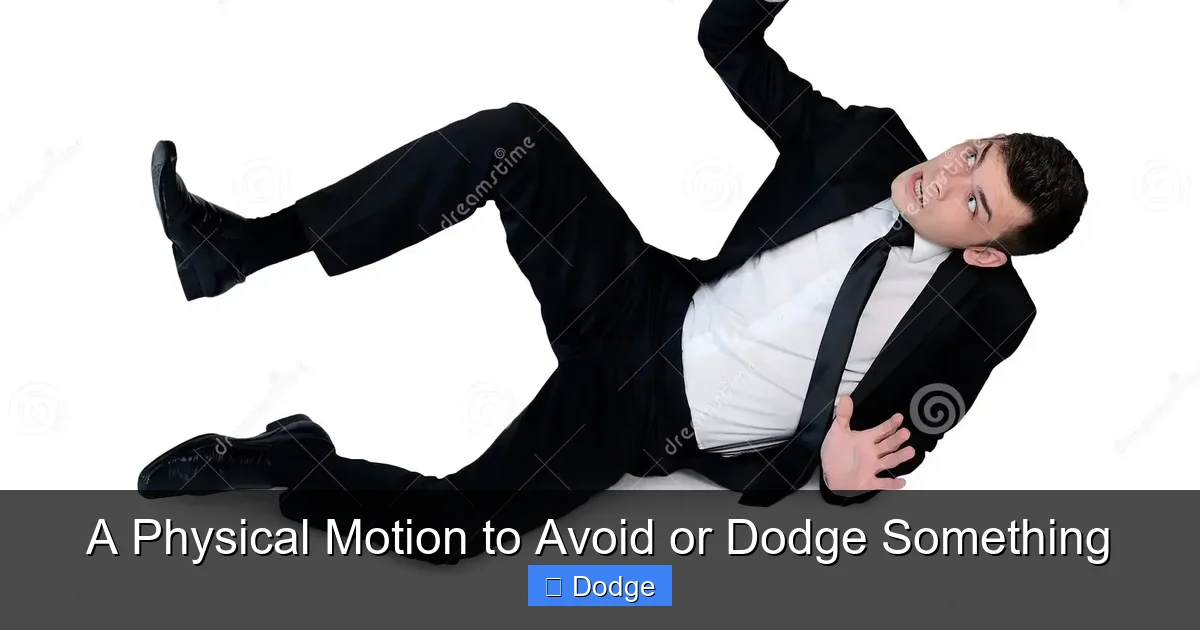
To truly master the physical motion to avoid or dodge something, it helps to understand the science behind it. Dodging is a complex interplay between your senses, brain, and muscles. It starts the moment your eyes detect movement or danger.
When you see something coming toward you—a ball, a person, a car—your eyes send signals to your brain’s visual cortex. From there, the information travels to the motor cortex, which plans the movement, and the cerebellum, which coordinates balance and timing. This entire process happens in milliseconds. In fact, studies show that elite athletes can react to visual stimuli in as little as 150 milliseconds.
But reaction time is only part of the equation. The other part is movement time—how long it takes your body to execute the dodge. This depends on muscle strength, flexibility, and neuromuscular efficiency (how well your nerves communicate with your muscles). A well-trained athlete might have a movement time of 200 milliseconds, while an untrained person could take twice as long.
Another key factor is anticipation. Skilled dodgers don’t just react—they predict. They read body language, watch for subtle cues, and use past experience to guess what’s coming next. For example, a boxer might notice their opponent’s shoulder twitch before a punch is thrown. This allows them to start dodging before the punch even leaves the hand.
Balance and proprioception—your sense of body position—also play a huge role. If you’re off-balance when you try to dodge, you’re more likely to stumble or fall. That’s why athletes train on unstable surfaces and practice drills that challenge their equilibrium.
Finally, there’s the psychological aspect. Fear and panic can slow your reaction time and cloud your judgment. Staying calm under pressure allows you to think clearly and move efficiently. This is why mindfulness and stress management are often part of elite training programs.
Types of Dodges and When to Use Them
Visual guide about A Physical Motion to Avoid or Dodge Something
Image source: slidetodoc.com
Not all dodges are created equal. The right physical motion to avoid or dodge something depends on the situation, the direction of the threat, and the space available. Here are the most common types of dodges and when to use them.
Lateral Dodge (Side Step)
The lateral dodge is one of the most versatile and widely used evasive moves. It involves stepping quickly to the left or right to avoid an oncoming object or person. This dodge is common in sports like basketball, soccer, and martial arts.
To perform a lateral dodge, start in a balanced stance with your knees slightly bent and your weight on the balls of your feet. As the threat approaches, push off with one foot and step sideways, keeping your body low and your core engaged. Avoid crossing your feet—this can throw off your balance.
This dodge works best when you have space to move and the threat is coming straight at you. It’s less effective if the object is already too close or if you’re surrounded.
Duck or Crouch
The duck is ideal for avoiding overhead threats, such as a swinging arm, a low beam, or a flying object. It involves bending your knees and lowering your head and shoulders, effectively making yourself a smaller target.
To duck properly, keep your back straight and your core tight. Don’t just drop your head—lower your entire upper body. This helps maintain balance and prepares you to move again quickly.
The duck is especially useful in self-defense situations. If someone swings at your head, ducking under the blow gives you a chance to counter or escape. It’s also common in sports like boxing and MMA.
Backward Lean or Retreat
When space allows, stepping or leaning backward can be an effective way to avoid impact. This dodge is often used in martial arts, where practitioners maintain distance from their opponent.
To retreat, shift your weight to your back foot and step back, keeping your upper body upright. Avoid turning your back—this leaves you vulnerable. Instead, keep your eyes on the threat and be ready to move again.
This dodge works best when you have room to move and the threat is slow or predictable. It’s less effective in tight spaces or against fast-moving objects.
Angular Dodge (45-Degree Step)
The angular dodge involves stepping at an angle—usually 45 degrees—to the side and slightly forward or backward. This reduces your profile and makes it harder for the threat to hit you.
This dodge is popular in combat sports because it combines evasion with positioning. By stepping at an angle, you not only avoid the attack but also put yourself in a better position to counter.
To perform an angular dodge, push off with your back foot and step diagonally. Keep your body compact and your hands up to protect your face.
Jump or Leap
In some cases, the best way to avoid something is to go over it. Jumping or leaping is useful for avoiding low obstacles, like puddles, cracks, or fallen objects.
To jump safely, bend your knees, swing your arms back, and push off with both feet. Land softly on the balls of your feet to absorb impact.
This dodge requires good leg strength and coordination. It’s less common in self-defense but frequently used in parkour, dance, and obstacle courses.
How to Improve Your Dodging Skills
Visual guide about A Physical Motion to Avoid or Dodge Something
Image source: i1.wp.com
Like any physical skill, dodging improves with practice. The more you train, the faster and more accurate your reactions become. Here are some practical tips and drills to help you master the physical motion to avoid or dodge something.
Start with Awareness Drills
Before you can dodge, you need to see the threat coming. Practice awareness by paying attention to your surroundings. Look for movement, listen for sounds, and scan your environment regularly.
Try this drill: Have a friend stand a few feet away and randomly throw a soft ball at you. Your job is to dodge it without getting hit. Start slow, then increase the speed as you improve. This builds your reaction time and helps you recognize patterns.
Practice Balance and Agility
Good dodging requires strong balance and quick footwork. Incorporate agility drills into your routine, such as ladder drills, cone drills, or zig-zag runs.
For example, set up five cones in a line, spaced two feet apart. Run sideways between them, touching each cone with your hand. This improves lateral movement and coordination.
You can also practice on unstable surfaces, like a balance board or foam pad. This challenges your proprioception and strengthens the small muscles that keep you stable.
Use Shadow Dodging
Shadow dodging is a mental and physical exercise where you practice evasive movements without an actual threat. Stand in front of a mirror and simulate dodging punches, kicks, or balls.
Focus on your form: keep your knees bent, your core tight, and your movements smooth. Visualize different scenarios and practice the appropriate dodge for each.
This drill helps build muscle memory and confidence. Over time, your body will respond automatically when a real threat appears.
Incorporate Sport-Specific Training
If you play a sport, tailor your dodging practice to that activity. Basketball players should practice lateral steps and quick cuts. Boxers should work on ducks and slips. Soccer players should focus on agility and change of direction.
Join a class or work with a coach to get personalized feedback. Video analysis can also help you see where you’re going wrong and how to improve.
Train Under Pressure
Dodging in a calm environment is one thing—doing it under stress is another. To simulate real-world conditions, practice with distractions, time limits, or fatigue.
For example, do dodging drills after a sprint or during a high-intensity workout. This teaches your body to react even when you’re tired.
You can also add mental challenges, like solving a math problem while dodging. This improves focus and multitasking under pressure.
Stay Consistent
Like any skill, dodging requires regular practice. Aim to train at least 2–3 times per week. Even 10–15 minutes a day can make a big difference over time.
Track your progress by timing your reactions or counting how many times you successfully dodge in a drill. Celebrate small wins and stay motivated.
Real-World Applications of Dodging
Dodging isn’t just for athletes or martial artists. It’s a useful skill in everyday life. Here are some common scenarios where the physical motion to avoid or dodge something can keep you safe.
Walking in Crowded Areas
In busy streets or malls, people often walk unpredictably. Dodging helps you avoid collisions with others, especially when someone suddenly stops or changes direction.
Practice subtle lateral steps or quick leans to get around obstacles without breaking your stride.
Driving and Pedestrian Safety
Pedestrians and cyclists need to dodge cars, bikes, and other hazards. Always look both ways, make eye contact with drivers, and be ready to step back or to the side if a vehicle comes too close.
Drivers also benefit from dodging skills—swerving to avoid debris, animals, or other cars. But remember: swerving should be a last resort. Always prioritize braking and control.
Sports and Recreation
From dodgeball to downhill skiing, many activities require quick dodges. In team sports, dodging helps you evade defenders, catch passes, or score goals.
In individual sports like tennis or racquetball, dodging allows you to reach shots and return them effectively.
Self-Defense and Personal Safety
In dangerous situations, dodging can save your life. Whether it’s avoiding a punch, a grab, or a weapon, the ability to move quickly and unpredictably gives you a major advantage.
Combine dodging with verbal de-escalation and escape strategies for the best results. Remember: the goal is to avoid conflict, not to win a fight.
Workplace and Home Hazards
Accidents happen at home and work. Dodging falling objects, slipping on wet floors, or avoiding machinery can prevent injuries.
Stay alert, wear protective gear, and practice quick reactions. For example, if a tool slips from a shelf, a quick step back can prevent a head injury.
Common Mistakes to Avoid When Dodging
Even experienced people make mistakes when dodging. Here are some common errors and how to fix them.
Moving Too Early or Too Late
Timing is everything. If you dodge too early, the threat might change direction and hit you anyway. If you dodge too late, you won’t avoid impact.
Practice reading cues and waiting for the right moment. In sports, watch your opponent’s hips—they reveal direction before the move happens.
Crossing Your Feet
Crossing your feet during a dodge throws off your balance and slows you down. Always step with one foot at a time, keeping your feet shoulder-width apart.
Tensing Up
Muscle tension slows movement and increases fatigue. Stay relaxed but ready. Breathe deeply and keep your movements fluid.
Looking at the Ground
Your eyes should be on the threat, not your feet. Looking down reduces your awareness and reaction time.
Overcommitting
Don’t throw your whole body into a dodge unless necessary. Small, controlled movements are often more effective and safer.
Conclusion
Mastering the physical motion to avoid or dodge something is more than just a cool trick—it’s a vital skill for safety, performance, and confidence. Whether you’re dodging a ball, a punch, or a pothole, the principles are the same: awareness, timing, balance, and practice.
By understanding the science behind dodging, learning the different types of moves, and training regularly, you can improve your ability to react quickly and move effectively. Start small, stay consistent, and don’t be afraid to make mistakes. Every dodge you practice brings you one step closer to moving like a pro.
Remember, dodging isn’t about being perfect. It’s about being prepared. So the next time you see something coming your way, you’ll be ready—not with fear, but with control.
Frequently Asked Questions
What is the best way to dodge a punch?
The best way to dodge a punch is to use a combination of a lateral step and a duck. Step to the side to avoid the main force of the punch, then duck slightly to protect your head. Keep your hands up and stay balanced to counter or escape.
How fast do you need to be to dodge effectively?
You don’t need to be the fastest person—just timely. Most dodges rely on anticipation and quick reactions, not raw speed. With practice, even average reaction times can be effective.
Can anyone learn to dodge, or is it only for athletes?
Anyone can learn to dodge with practice. While athletes may have an edge, the basic principles of awareness, balance, and timing apply to everyone. Start with simple drills and build from there.
Is dodging the same as blocking?
No, dodging and blocking are different. Blocking stops or absorbs impact, while dodging avoids it entirely. Dodging is often safer because it reduces the force on your body.
How can I improve my reaction time for dodging?
Improve reaction time with drills like ball tosses, light signals, or video games that require quick responses. Regular practice strengthens the brain-muscle connection.
What should I do if I can’t dodge in time?
If you can’t dodge, try to minimize impact by turning your body, protecting your head, and bracing yourself. Falling safely—rolling instead of landing stiff—can also reduce injury.
