
What Transmission Is in a 1996 Dodge Ram 1500?

The 1996 Dodge Ram 1500 came equipped with either the 42RE (3-speed automatic) or the 46RE (4-speed automatic) transmission, depending on engine size and trim. These robust transmissions were designed for durability and towing, but require regular maintenance to avoid common issues like slipping or harsh shifting.
If you’re driving a 1996 Dodge Ram 1500—or thinking about buying one—you’ve probably wondered: *What transmission is in a 1996 Dodge Ram 1500?* It’s a great question, especially if you’re planning to maintain, repair, or even upgrade your truck. The transmission is the heart of your vehicle’s drivetrain, and knowing what’s under the hood (or more accurately, under the truck) can save you time, money, and headaches down the road.
The 1996 Dodge Ram 1500 was a pivotal model year, marking the second generation of the Ram pickup and introducing a bold new design that set the tone for future trucks. But beyond the aggressive styling and improved ride quality, the real story lies in the mechanical heart of the truck—the transmission. Depending on the engine and configuration, your Ram 1500 could be running one of two automatic transmissions: the 42RE or the 46RE. Both were built by Chrysler and designed to handle the demands of daily driving, towing, and light off-roading.
Understanding which transmission your truck has isn’t just about curiosity—it’s essential for proper maintenance, troubleshooting, and upgrades. Whether you’re a weekend mechanic, a DIY enthusiast, or just want to keep your classic Ram running strong, this guide will walk you through everything you need to know about the 1996 Dodge Ram 1500 transmission. From identifying your unit to common problems and maintenance tips, we’ve got you covered.
Key Takeaways
- Two Main Transmissions: The 1996 Dodge Ram 1500 used the 42RE (3-speed) or 46RE (4-speed) automatic transmissions, selected based on engine type and drivetrain.
- Engine-Dependent Selection: V6 and smaller V8 engines typically used the 42RE, while larger V8 and V10 models came with the 46RE for increased torque handling.
- Common Issues to Watch: Overheating, solenoid failures, and worn valve bodies are frequent problems that can lead to shifting delays or transmission slippage.
- Maintenance Is Crucial: Regular fluid changes every 30,000–50,000 miles help extend transmission life and prevent costly repairs.
- Upgrades Available: Performance rebuilds, shift kits, and cooler installations can improve reliability and towing capacity.
- Identification Tips: You can identify your transmission by checking the pan shape, VIN, or consulting service records.
- DIY-Friendly Repairs: Many transmission maintenance tasks can be done at home with basic tools, saving money on labor costs.
📑 Table of Contents
Overview of the 1996 Dodge Ram 1500 Transmission Options
The 1996 Dodge Ram 1500 offered two primary automatic transmission options, both part of Chrysler’s A500 series. These transmissions were known for their durability and widespread use across Dodge and Jeep vehicles of the era. The choice between them depended largely on the engine size and intended use of the truck.
The first option is the **42RE**, a 3-speed automatic transmission. It was typically paired with smaller engines like the 3.9L V6 and the 5.2L Magnum V8. While it only has three forward gears, it was reliable and sufficient for light-duty hauling and everyday driving. The 42RE uses a torque converter and hydraulic controls to shift gears, and it’s known for its simplicity and ease of repair.
The second option is the **46RE**, a 4-speed automatic transmission. This unit was standard on the more powerful 5.9L Magnum V8 and optional on some 5.2L V8 models. The fourth gear provides an overdrive function, improving fuel economy at highway speeds and reducing engine wear during long drives. The 46RE was designed to handle higher torque loads, making it ideal for towing trailers, boats, or heavy loads.
Both transmissions are electronically controlled and use a combination of solenoids, sensors, and a transmission control module (TCM) to manage shifting. They also feature a lock-up torque converter for improved efficiency. While they share many similarities, the 46RE is generally considered the more capable and desirable option due to its overdrive and stronger internal components.
It’s worth noting that manual transmissions were not commonly offered in the 1996 Ram 1500, especially in higher trim levels. Most buyers opted for the automatic, which contributed to the popularity of the 42RE and 46RE. These transmissions were also used in other Chrysler vehicles, including the Dakota, Durango, and Jeep Grand Cherokee, making parts and knowledge widely available.
How to Identify Your 1996 Ram 1500 Transmission
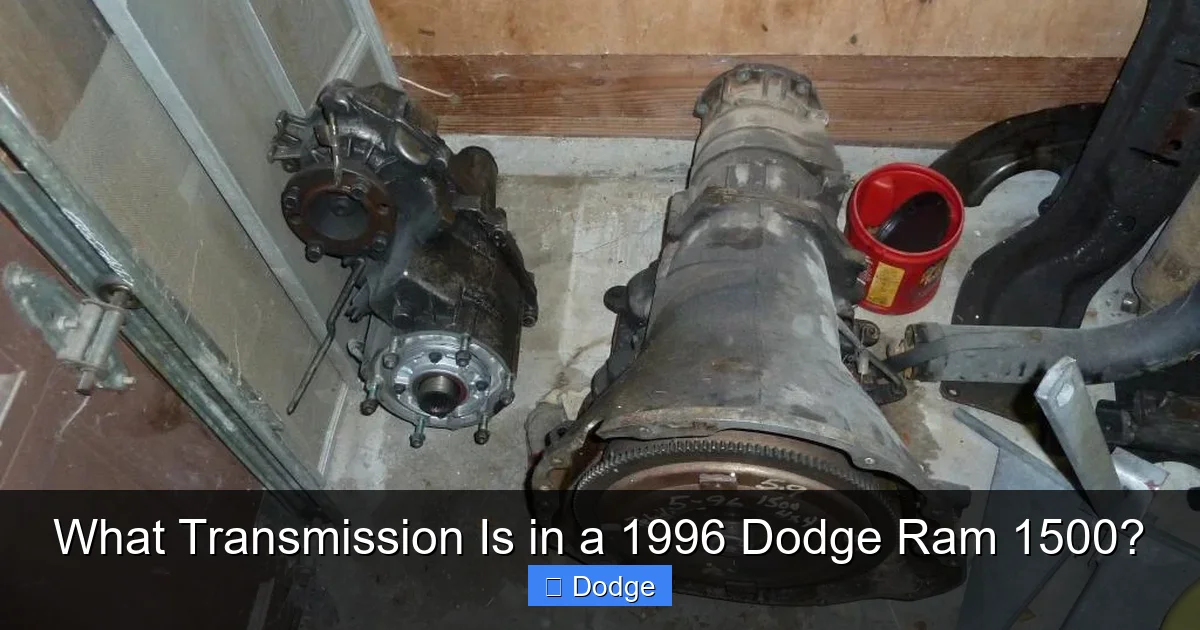
Visual guide about What Transmission Is in a 1996 Dodge Ram 1500?
Image source: cdn.carcomplaints.com
If you’re not sure which transmission your 1996 Dodge Ram 1500 has, don’t worry—there are several ways to identify it. The easiest method is to look under the truck, but you can also use your vehicle identification number (VIN) or consult service records.
One of the most reliable ways to identify your transmission is by examining the **transmission pan**. The shape and bolt pattern of the pan differ between the 42RE and 46RE. The 42RE has a rectangular pan with 14 bolts, while the 46RE has a more elongated, oval-shaped pan with 16 bolts. This visual difference is often the quickest way to tell them apart.
Another method is to check the **VIN**. The 8th character of your VIN indicates the engine type, which can help narrow down the transmission. For example:
– A 3.9L V6 (VIN code “X”) typically uses the 42RE.
– A 5.2L V8 (VIN code “W”) may use either the 42RE or 46RE, depending on the drivetrain.
– A 5.9L V8 (VIN code “Z”) almost always came with the 46RE.
You can also look for a **transmission tag** or **sticker** on the transmission case. This tag usually includes the model number, build date, and sometimes the gear ratios. The 46RE will clearly be labeled as such, while the 42RE will have its own designation.
If you’re still unsure, consult your owner’s manual or contact a Dodge dealership with your VIN. They can provide accurate information based on factory records. Alternatively, online forums and communities dedicated to Dodge trucks often have members who can help identify your transmission based on photos or descriptions.
Technical Specifications of the 42RE and 46RE
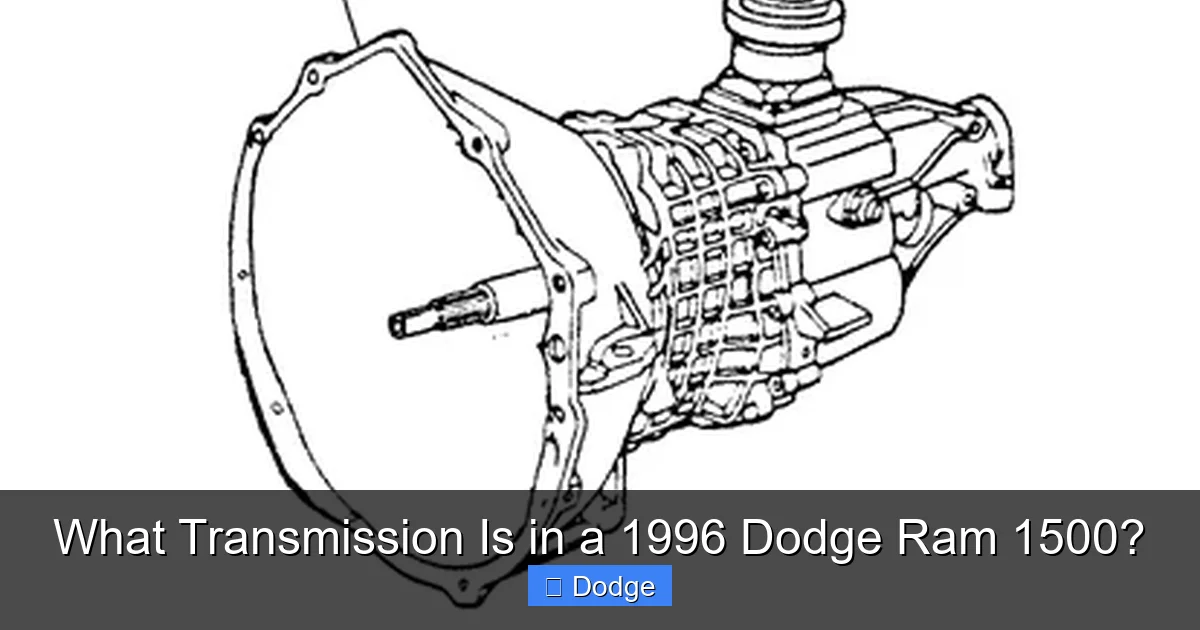
Visual guide about What Transmission Is in a 1996 Dodge Ram 1500?
Image source: moparpartsgiant.com
Understanding the technical specs of your transmission can help you make informed decisions about maintenance, repairs, and upgrades. Here’s a detailed breakdown of the 42RE and 46RE used in the 1996 Dodge Ram 1500.
42RE Transmission Specs
– **Type:** 3-speed automatic
– **Gear Ratios:** 2.45:1 (1st), 1.45:1 (2nd), 1.00:1 (3rd)
– **Torque Rating:** Approximately 300 lb-ft
– **Fluid Type:** ATF+3 or ATF+4
– **Fluid Capacity:** ~12 quarts (with torque converter)
– **Control System:** Electronic (TCM-controlled)
– **Common Applications:** 3.9L V6, 5.2L V8 (RWD and 4WD)
The 42RE is a solid, no-frills transmission. Its three-speed design means it lacks overdrive, which can reduce fuel efficiency on the highway. However, it’s simple to work on and less prone to electronic issues. It’s also lighter than the 46RE, which can be a benefit for fuel economy and handling.
46RE Transmission Specs
– **Type:** 4-speed automatic
– **Gear Ratios:** 2.45:1 (1st), 1.45:1 (2nd), 1.00:1 (3rd), 0.69:1 (4th overdrive)
– **Torque Rating:** Approximately 360 lb-ft
– **Fluid Type:** ATF+3 or ATF+4
– **Fluid Capacity:** ~13 quarts (with torque converter)
– **Control System:** Electronic (TCM-controlled)
– **Common Applications:** 5.9L V8, 5.2L V8 (especially 4WD models)
The 46RE’s overdrive gear is a major advantage, especially for long-distance driving or towing. It reduces engine RPM at highway speeds, which lowers fuel consumption and engine wear. The stronger internal components also make it better suited for heavy-duty use.
Both transmissions use a similar hydraulic and electronic control system. They rely on solenoids to regulate line pressure and shift timing. Over time, these solenoids can wear out or become clogged, leading to shifting problems.
Common Transmission Problems in the 1996 Ram 1500
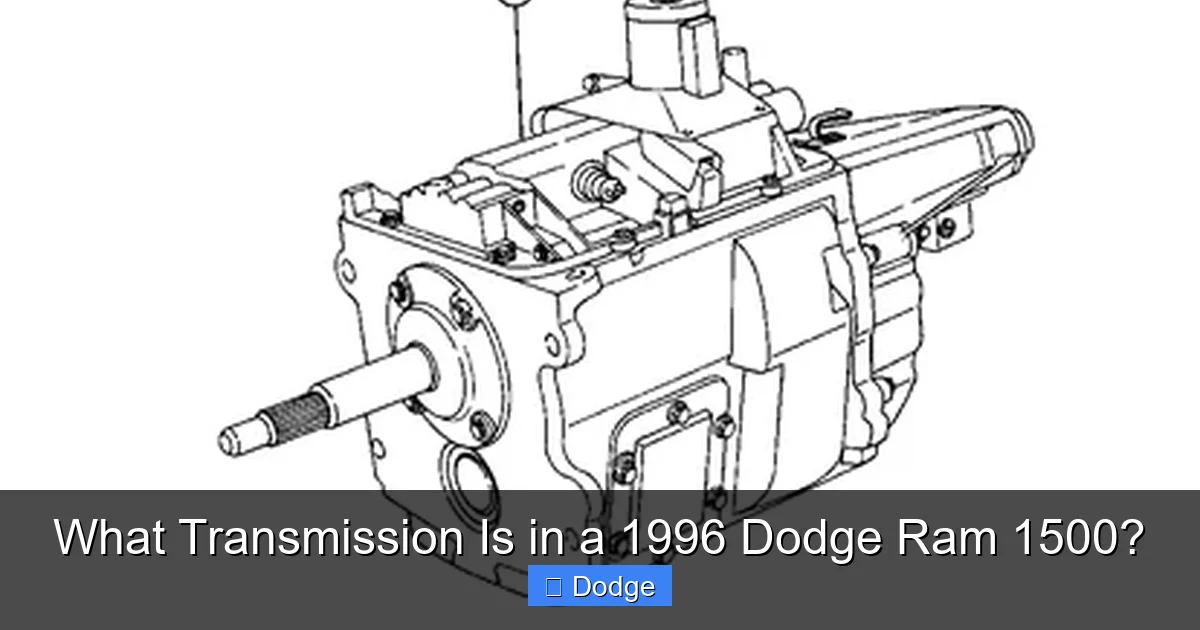
Visual guide about What Transmission Is in a 1996 Dodge Ram 1500?
Image source: moparpartsgiant.com
Like any mechanical component, the 42RE and 46RE transmissions in the 1996 Dodge Ram 1500 can develop issues over time. While they’re generally reliable, certain problems are more common than others. Being aware of these can help you catch issues early and avoid major repairs.
Overheating
One of the most frequent causes of transmission failure is overheating. The 42RE and 46RE are air-cooled by default, relying on airflow through the radiator and transmission cooler. However, this isn’t always enough, especially when towing or driving in hot climates. Overheating breaks down the transmission fluid, leading to sludge buildup, seal degradation, and eventual failure.
**Tip:** Install an auxiliary transmission cooler if you frequently tow or drive in extreme conditions. This simple upgrade can significantly extend the life of your transmission.
Solenoid Failures
The shift solenoids control when and how the transmission shifts gears. Over time, these solenoids can fail due to electrical issues or debris in the fluid. Symptoms include delayed shifting, harsh shifts, or getting stuck in one gear.
**Tip:** If you notice shifting problems, have the solenoids tested. Replacing a faulty solenoid is relatively inexpensive and can restore normal operation.
Worn Valve Body
The valve body is the “brain” of the transmission, directing fluid to the appropriate clutches and bands. Wear and debris can cause valves to stick or leak, resulting in poor shifting or slipping.
**Tip:** A valve body rebuild or replacement can resolve many shifting issues. Some enthusiasts install shift kits to improve performance and durability.
Torque Converter Problems
The torque converter transfers engine power to the transmission. A failing converter can cause shuddering, slipping, or overheating. In severe cases, it can damage the transmission internals.
**Tip:** If you feel a vibration or shudder during acceleration, have the torque converter inspected. A lock-up converter issue is often the culprit.
Low or Dirty Fluid
Transmission fluid lubricates, cools, and provides hydraulic pressure. Low or degraded fluid is a leading cause of transmission problems. Dark, burnt-smelling fluid is a sign of overheating or contamination.
**Tip:** Check your fluid regularly—ideally every 3,000 to 5,000 miles. Change it every 30,000 to 50,000 miles, or more frequently if you tow.
Maintenance Tips for Longevity
Proper maintenance is the best way to keep your 1996 Dodge Ram 1500 transmission running smoothly for years. These transmissions were built to last, but they need consistent care to reach their full potential.
Regular Fluid Changes
One of the most important maintenance tasks is changing the transmission fluid and filter. Over time, fluid breaks down and accumulates debris, reducing its effectiveness. Most experts recommend changing the fluid every 30,000 to 50,000 miles, or more often if you tow or drive in severe conditions.
**DIY Tip:** You can change the fluid yourself with basic tools. Drain the pan, replace the filter, and refill with the correct type of ATF+3 or ATF+4. Be sure to torque the pan bolts properly to avoid leaks.
Use the Right Fluid
Always use the manufacturer-recommended fluid. The 42RE and 46RE are designed for ATF+3 or ATF+4. Using the wrong type—such as Dexron or Mercon—can cause shifting problems or damage internal components.
**Tip:** Check your owner’s manual or the transmission dipstick for the correct specification. When in doubt, consult a Dodge specialist.
Install a Transmission Cooler
As mentioned earlier, overheating is a major threat. Installing an auxiliary cooler is one of the best upgrades you can make, especially if you use your truck for towing or hauling.
**Tip:** Choose a cooler rated for at least 10,000 GVW. Mount it in front of the radiator for maximum airflow.
Check for Leaks
Inspect the transmission regularly for signs of leaks. Common leak points include the pan gasket, cooler lines, and seals. A small leak can quickly lead to low fluid levels and damage.
**Tip:** Clean the transmission area and check for wet spots after parking. Address leaks promptly to prevent bigger issues.
Drive Responsibly
How you drive affects your transmission’s lifespan. Avoid “neutral coasting,” which can cause overheating. Also, don’t shift from Drive to Reverse while the vehicle is moving—this puts extreme stress on the transmission.
**Tip:** Let the truck come to a complete stop before shifting into Reverse. This simple habit can prevent costly damage.
Upgrades and Performance Enhancements
If you’re looking to get more out of your 1996 Ram 1500, there are several upgrades you can make to the transmission. Whether you want better towing capacity, smoother shifts, or increased durability, these modifications can help.
Shift Kits
A shift kit modifies the valve body to provide firmer, quicker shifts. This improves performance and reduces clutch slippage. Popular brands include TransGo and Sonnax.
**Tip:** Shift kits are relatively easy to install and can make a noticeable difference in how your truck drives.
Performance Rebuilds
If your transmission is worn or damaged, consider a performance rebuild. This involves replacing worn clutches, bands, and seals with upgraded components. Some rebuilds include billet parts for added strength.
**Tip:** A quality rebuild can restore your transmission to like-new condition—or better. Look for a reputable shop with experience in Dodge transmissions.
Deep Pans and Coolers
A deep transmission pan increases fluid capacity, which helps with cooling and lubrication. Combined with an auxiliary cooler, this setup is ideal for heavy-duty use.
**Tip:** Choose a pan with a built-in drain plug for easier maintenance.
Electronic Shift Controllers
Aftermarket controllers allow you to customize shift points and firmness. These are popular among towing enthusiasts and performance drivers.
**Tip:** These controllers plug into the existing wiring and can be adjusted via a dial or app.
Conclusion
So, what transmission is in a 1996 Dodge Ram 1500? The answer depends on your engine and configuration, but it’s almost certainly one of two reliable automatics: the 42RE or the 46RE. Both were built to handle the demands of a full-size pickup, and with proper care, they can last well over 200,000 miles.
The 42RE is a solid choice for lighter-duty use, while the 46RE offers better performance and efficiency thanks to its overdrive gear. Identifying your transmission is the first step toward proper maintenance and troubleshooting. From checking the pan shape to reviewing your VIN, there are several ways to confirm which unit you have.
Common issues like overheating, solenoid failures, and low fluid levels can be prevented with regular maintenance. Simple tasks like fluid changes, cooler installation, and leak checks go a long way in preserving your transmission. And if you’re looking to enhance performance, upgrades like shift kits and rebuilds are readily available.
Whether you’re restoring a classic Ram or just keeping your daily driver on the road, understanding your transmission is key. The 1996 Dodge Ram 1500 may be over 25 years old, but with the right care, it can still deliver the power, reliability, and rugged charm that made it a legend.
Frequently Asked Questions
What transmission does a 1996 Dodge Ram 1500 have?
The 1996 Dodge Ram 1500 typically came with either the 42RE (3-speed automatic) or the 46RE (4-speed automatic) transmission, depending on the engine size and drivetrain configuration.
How can I tell if my Ram 1500 has a 42RE or 46RE?
You can identify your transmission by checking the pan shape—14 bolts for the 42RE, 16 for the 46RE—or by decoding your VIN to determine the engine and likely transmission pairing.
Can I tow with a 1996 Ram 1500 transmission?
Yes, especially if equipped with the 46RE. The 46RE is better suited for towing due to its overdrive and stronger internals. Always use a transmission cooler when towing heavy loads.
How often should I change the transmission fluid?
Change the fluid every 30,000 to 50,000 miles, or more frequently if you tow, drive in hot climates, or notice shifting issues.
What causes transmission slipping in a 1996 Ram 1500?
Slipping is often caused by low fluid, worn clutches, solenoid failure, or overheating. Regular maintenance can prevent most of these issues.
Can I upgrade my 42RE to a 46RE?
While possible, swapping transmissions is complex and requires matching the engine, drivetrain, and electronics. It’s often more practical to rebuild or upgrade your existing unit.
