
Why Is My Nissan Altima Making a Whining Noise?

If your Nissan Altima is making a whining noise, it’s often linked to issues with the transmission, power steering, or alternator. Ignoring the sound can lead to costly repairs, so early diagnosis is key. This guide breaks down the most common causes and what you can do about them.
Key Takeaways
- Transmission problems are a top cause: Low or degraded transmission fluid can create a high-pitched whine, especially during acceleration or shifting.
- Power steering system issues: A failing pump or low fluid levels may produce a whining sound when turning the wheel.
- Alternator or belt wear: A worn serpentine belt or faulty alternator can emit a whining noise, often increasing with engine RPM.
- Engine accessory malfunctions: Components like the water pump or air conditioning compressor may whine if bearings are failing.
- Timing chain tensioner wear: In some Altima models, a loose or worn timing chain can cause a metallic whine from the engine bay.
- Early diagnosis saves money: Addressing whining noises promptly can prevent major mechanical failures and expensive repairs.
- Regular maintenance matters: Routine fluid checks and belt inspections help prevent many noise-related issues.
📑 Table of Contents
Why Is My Nissan Altima Making a Whining Noise?
You’re cruising down the highway in your Nissan Altima, enjoying the smooth ride—until you hear it: a high-pitched whining noise that seems to grow louder with speed or engine revs. It’s not just annoying; it’s concerning. Is it serious? Could it be something simple? Or is your car trying to tell you it’s time for a major repair?
Whining noises in your Nissan Altima aren’t uncommon, but they’re never something to ignore. Unlike clunks, knocks, or rattles, a whine often points to issues with rotating components—parts that spin fast and rely on proper lubrication, tension, or alignment. The good news? Many of these problems are fixable, especially if caught early.
In this guide, we’ll walk you through the most common reasons your Altima might be making a whining noise. We’ll explain what each sound means, where it’s coming from, and what you can do about it—whether that means a quick fluid top-off, a belt replacement, or a visit to your trusted mechanic. By the end, you’ll know how to respond confidently the next time your car starts singing a high-pitched tune.
Common Causes of Whining Noises in the Nissan Altima
Visual guide about Why Is My Nissan Altima Making a Whining Noise?
Image source: 700r4transmissionhq.com
Whining noises in your Nissan Altima can stem from several sources, but they usually fall into one of a few categories: transmission issues, power steering problems, belt or alternator wear, or engine accessory failures. Let’s break down each of these so you can start narrowing down the culprit.
1. Transmission-Related Whining
One of the most frequent causes of a whining noise in the Nissan Altima is a problem with the transmission. The continuously variable transmission (CVT) used in many Altima models is known for its smooth operation, but it’s also sensitive to fluid condition and level.
When transmission fluid is low, dirty, or degraded, it can’t properly lubricate the internal components. This leads to increased friction and heat, which in turn causes a high-pitched whine—especially during acceleration or when shifting. You might notice the noise gets louder when you press the gas pedal or when the engine is under load.
For example, if you’ve recently driven through deep water or missed a scheduled transmission service, the fluid may have broken down. Over time, CVT fluid loses its viscosity and additives, making it less effective at protecting gears and pulleys.
Another sign of transmission trouble is delayed engagement—when you shift from Park to Drive and there’s a noticeable lag before the car moves. If you hear a whine along with this delay, it’s a strong indicator that the transmission needs attention.
2. Power Steering System Issues
The power steering system in your Altima uses a hydraulic pump to assist with steering effort. When this system starts to fail, it often announces itself with a whining or groaning noise—especially when you turn the steering wheel, particularly at low speeds or when parking.
The most common cause is low power steering fluid. Over time, fluid can leak from hoses, seals, or the pump itself. If the fluid level drops too low, the pump runs dry, creating air bubbles and friction that produce a whining sound. You might also notice the steering becoming stiffer or less responsive.
Another possibility is a failing power steering pump. The pump contains bearings that can wear out over time. As these bearings degrade, they create a high-pitched whine that increases with engine RPM. In some cases, the noise is most noticeable when the engine is cold and the fluid is thicker.
If your Altima has electric power steering (EPS), the issue might be different. EPS systems use an electric motor instead of a hydraulic pump, so they don’t rely on fluid. However, a failing EPS motor or control module can still produce unusual noises, including a whine or hum.
3. Serpentine Belt and Alternator Problems
The serpentine belt is a long, ribbed belt that drives multiple engine accessories, including the alternator, power steering pump, air conditioning compressor, and water pump. If this belt is worn, loose, or misaligned, it can slip or vibrate, creating a whining or squealing noise.
A common scenario is a belt that’s lost tension over time. Belts stretch with use, and if the tensioner isn’t adjusting properly, the belt can slip—especially under load. This slipping generates friction and a high-pitched whine that often gets louder when you turn on accessories like the AC or headlights.
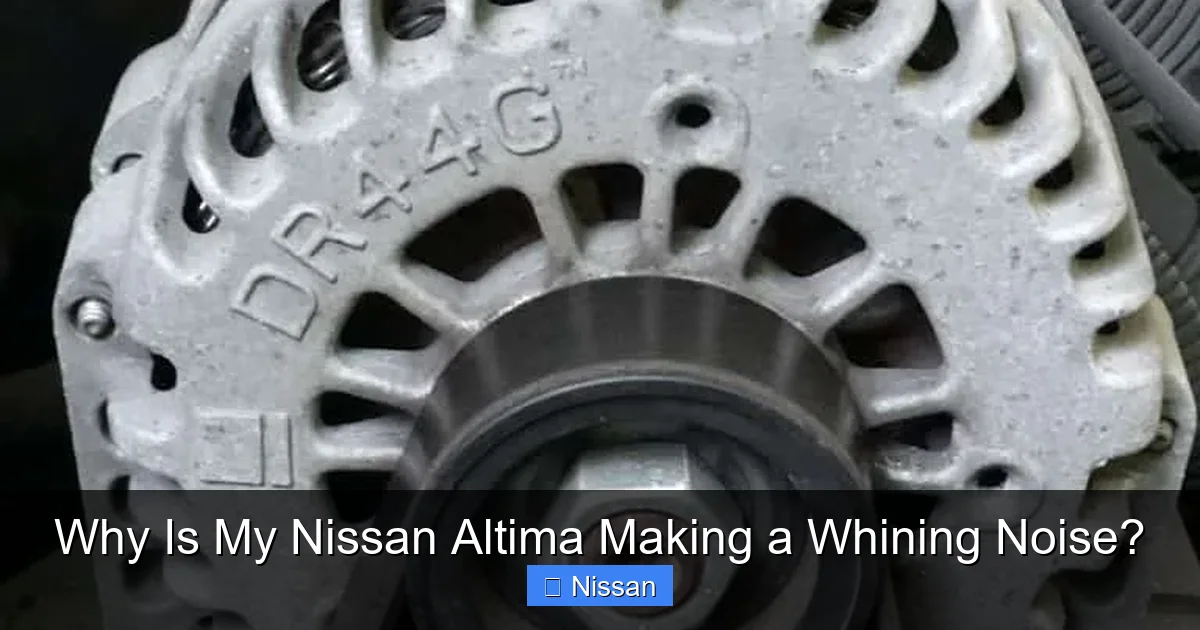
The alternator itself can also be the source of a whine. Inside the alternator are bearings that allow the rotor to spin smoothly. When these bearings wear out, they produce a whining or grinding noise that increases with engine speed. You might also notice electrical issues, such as dimming headlights or a battery warning light on the dashboard.
To check the belt, inspect it for cracks, fraying, or glazing (a shiny, smooth surface). If it looks worn, it’s time for a replacement. Also, listen for noise when you start the car—a brief squeal on startup is normal, but a persistent whine is not.
4. Engine Accessory Failures
Several engine accessories rely on bearings and pulleys to function. When these components wear out, they can produce a whining noise that seems to come from the front of the engine.
The water pump, for example, has a bearing that allows the impeller to spin and circulate coolant. If this bearing fails, it can create a high-pitched whine, often accompanied by coolant leaks or overheating. You might also notice steam or a sweet smell from the engine bay.
Similarly, the air conditioning compressor uses a clutch and bearing to engage and disengage the compressor. A failing compressor bearing can produce a whining or grinding noise, especially when the AC is turned on. In some cases, the noise stops when you turn off the AC, which can help you isolate the source.
Another possibility is the idler pulley or tensioner pulley. These small pulleys guide and tension the serpentine belt. If their bearings wear out, they can whine or chirp, particularly at idle or low speeds.
5. Timing Chain and Tensioner Issues
In some Nissan Altima models—especially those with 2.5L 4-cylinder engines—a whining noise may come from the timing chain system. Unlike older engines that use timing belts, many Altimas use a timing chain, which is more durable but can still wear over time.
The timing chain is kept taut by a hydraulic tensioner. If this tensioner fails or loses pressure, the chain can become loose and slap or whine against the engine cover. This noise is often described as a metallic whine or rattle and is most noticeable at startup or idle.
A loose timing chain can also cause timing issues, leading to poor engine performance, misfires, or even engine damage if left unchecked. If you hear a whining noise from the front of the engine that doesn’t go away, especially if it’s accompanied by a check engine light, it’s important to have it inspected.
How to Diagnose the Whining Noise in Your Altima
Visual guide about Why Is My Nissan Altima Making a Whining Noise?
Image source: 700r4transmissionhq.com
Now that you know the possible causes, the next step is figuring out which one is affecting your car. Diagnosing a whining noise doesn’t require a mechanic’s degree—just a little patience and some basic tools.
Step 1: Listen Carefully and Note When the Noise Occurs
Start by paying close attention to when the whining happens. Does it happen:
– Only when accelerating?
– When turning the steering wheel?
– When the AC is on?
– At idle or high RPMs?
– When the engine is cold?
These details can help narrow down the source. For example, a noise that increases with engine speed is likely related to the alternator, water pump, or timing chain. A noise that happens only when turning suggests a power steering issue.
Step 2: Check Fluid Levels
Low fluid levels are a common cause of whining noises. Start by checking:
– **Transmission fluid:** Locate the dipstick (if your model has one), pull it out, wipe it clean, reinsert it, and check the level and condition. The fluid should be red or pink and not smell burnt.
– **Power steering fluid:** Find the reservoir (usually near the firewall), check the level, and look for leaks.
– **Engine oil:** While not directly related to whining, low oil can cause engine strain and noise.
If any fluid is low, top it off with the correct type specified in your owner’s manual. But remember—adding fluid may silence the noise temporarily, but it won’t fix the underlying issue if there’s a leak or mechanical failure.
Step 3: Inspect the Serpentine Belt
Pop the hood and look at the serpentine belt. Check for:
– Cracks or fraying
– Glazing (shiny spots)
– Missing ribs
– Signs of oil contamination
If the belt looks worn, replace it. Also, check the tensioner pulley for play or noise. You can do this by spinning it by hand—it should turn smoothly without wobbling or grinding.
Step 4: Use a Mechanic’s Stethoscope (or a Long Screwdriver)
If you have a mechanic’s stethoscope, use it to listen to different components while the engine is running. Place the tip on the alternator, water pump, power steering pump, and transmission case. The component making the loudest noise is likely the culprit.
No stethoscope? A long metal screwdriver can work in a pinch. Place the handle against your ear and the tip on the component. Be careful not to touch moving parts or hot surfaces.
Step 5: Test Drive and Monitor
Take your Altima for a short drive and note when the noise occurs. Try turning the steering wheel, accelerating, and using the AC. If the noise changes or disappears under certain conditions, it can help pinpoint the source.
For example, if the whine stops when you turn off the AC, the compressor or its clutch may be failing. If it gets louder when you accelerate, it could be the transmission or alternator.
When to See a Mechanic
Visual guide about Why Is My Nissan Altima Making a Whining Noise?
Image source: 700r4transmissionhq.com
While some whining noises can be resolved with simple fixes—like topping off fluid or replacing a belt—others require professional attention. Here’s when you should call a mechanic:
– The noise is getting louder or more frequent.
– You notice other symptoms like overheating, poor acceleration, or warning lights.
– You’re unsure of the source and don’t feel comfortable diagnosing it yourself.
– The noise comes from the transmission or timing chain—these are complex systems that require specialized tools and knowledge.
Ignoring a whining noise can lead to bigger problems. For example, a failing alternator can leave you stranded when the battery dies. A damaged transmission can cost thousands to repair or replace. A loose timing chain can cause catastrophic engine damage.
Don’t wait until your car breaks down. If you’re hearing a persistent whine, schedule an inspection as soon as possible. Many repair shops offer free diagnostics, so there’s little downside to getting it checked.
Preventing Whining Noises in Your Nissan Altima
The best way to deal with a whining noise is to prevent it from happening in the first place. Regular maintenance is your best defense against unexpected sounds and costly repairs.
Follow the Maintenance Schedule
Your Nissan Altima comes with a recommended maintenance schedule in the owner’s manual. Stick to it. Key services include:
– **Transmission fluid changes:** Every 30,000 to 60,000 miles, depending on driving conditions.
– **Power steering fluid flush:** Every 50,000 to 100,000 miles.
– **Serpentine belt inspection:** Every 60,000 miles or as recommended.
– **Coolant replacement:** Every 60,000 to 100,000 miles.
These services help keep fluids clean and components lubricated, reducing wear and noise.
Check Fluids Monthly
Make it a habit to check your fluids once a month. Look at:
– Engine oil
– Transmission fluid
– Power steering fluid
– Coolant
– Brake fluid
Low or dirty fluid is often the first sign of a problem. Catching it early can prevent damage.
Listen to Your Car
Your car talks to you—through sounds, smells, and vibrations. Pay attention to changes. If you notice a new noise, don’t ignore it. The sooner you address it, the cheaper and easier the fix will be.
Use Quality Parts and Fluids
When replacing parts or fluids, use OEM (original equipment manufacturer) or high-quality aftermarket products. Cheap fluids or belts may save money upfront but can fail sooner and cause more problems.
Avoid Extreme Driving Conditions
Frequent short trips, towing, or driving in extreme heat or cold can accelerate wear on components. If you drive in harsh conditions, consider more frequent maintenance.
Conclusion
A whining noise in your Nissan Altima can be unsettling, but it’s rarely a sign of immediate danger—especially if you catch it early. Most whines are caused by issues with the transmission, power steering, belts, or engine accessories—problems that are often preventable with regular maintenance.
By listening carefully, checking fluids, and staying on top of service intervals, you can keep your Altima running smoothly and quietly for years to come. And if the noise persists or you’re unsure of the cause, don’t hesitate to visit a trusted mechanic. A small investment in diagnosis today can save you from a major repair tomorrow.
Remember: your car’s sounds are its way of communicating. When it starts whining, it’s asking for help. Listen, respond, and keep the ride smooth.
Frequently Asked Questions
Why is my Nissan Altima making a whining noise when I accelerate?
This is often due to low or degraded transmission fluid, especially in models with a CVT. The noise increases with engine load and can indicate internal wear or overheating. Check the fluid level and condition, and consider a transmission service.
Can a bad alternator cause a whining noise in my Altima?
Yes, a failing alternator bearing can produce a high-pitched whine that gets louder with engine RPM. You might also notice electrical issues like dimming lights or a battery warning light. Have it tested if you suspect alternator trouble.
Is a whining noise from the power steering serious?
It can be. A whine when turning usually means low fluid or a failing pump. If ignored, it can lead to steering failure. Check the fluid level and look for leaks. Top off fluid if low, but have the system inspected if the noise continues.
How often should I change the transmission fluid in my Nissan Altima?
Most Altimas require a transmission fluid change every 30,000 to 60,000 miles, depending on driving conditions. Check your owner’s manual for the exact interval. Regular changes help prevent whining and extend transmission life.
Can a worn serpentine belt cause a whining noise?
Yes, a loose, worn, or glazed serpentine belt can slip and create a high-pitched whine. Inspect the belt for cracks or shine, and replace it if needed. Also, check the tensioner pulley for proper operation.
Should I be worried if my Altima makes a whining noise at idle?
It depends on the source. A whine at idle could be from a failing water pump, idler pulley, or timing chain tensioner. Since these are critical components, it’s best to have the noise diagnosed promptly to avoid engine damage.
