
What Size Battery Does a 2016 Nissan Rogue Use?

The 2016 Nissan Rogue typically uses a Group 35 battery with 600+ CCA and 95+ RC. This compact SUV requires a reliable 12-volt lead-acid or AGM battery for optimal performance.
Key Takeaways
- Correct Battery Group Size: The 2016 Nissan Rogue uses a Group 35 battery, which fits perfectly in the engine bay and connects securely to the vehicle’s electrical system.
- Minimum Cold Cranking Amps (CCA): A minimum of 600 CCA is recommended to ensure reliable starts in cold weather, especially in northern climates.
- Reserve Capacity (RC) Matters: Look for a battery with at least 95 minutes of reserve capacity to keep electronics running if the alternator fails.
- AGM vs. Standard Lead-Acid: While most Rogues use standard flooded batteries, some higher trims or models with start-stop technology may require an AGM (Absorbent Glass Mat) battery.
- OEM vs. Aftermarket Options: Nissan recommends genuine parts, but high-quality aftermarket brands like Optima, DieHard, and Interstate offer reliable, cost-effective alternatives.
- Proper Installation & Maintenance: Always disconnect the negative terminal first when replacing, and check battery health annually to avoid unexpected failures.
- Warranty & Lifespan: Most car batteries last 3–5 years; choose one with a strong warranty (e.g., 3-year free replacement) for peace of mind.
📑 Table of Contents
- What Size Battery Does a 2016 Nissan Rogue Use?
- Understanding Car Battery Basics
- Official Battery Specifications for the 2016 Nissan Rogue
- Top Battery Brands for the 2016 Nissan Rogue
- How to Replace the Battery in a 2016 Nissan Rogue
- Battery Maintenance and Longevity Tips
- Common Battery Problems and Troubleshooting
- Conclusion
What Size Battery Does a 2016 Nissan Rogue Use?
If you’re the proud owner of a 2016 Nissan Rogue, you know it’s a dependable, fuel-efficient SUV that handles everything from daily commutes to weekend adventures with ease. But like any vehicle, it relies on one critical component to get going every single day: the battery. Whether you’re dealing with a dead battery on a cold morning or just planning ahead for a replacement, knowing the right battery size and type for your 2016 Nissan Rogue is essential.
The good news? The 2016 Nissan Rogue has a straightforward battery requirement. It uses a **Group 35 battery**, which is a common size found in many Japanese vehicles. This battery is compact yet powerful enough to handle the electrical demands of the Rogue’s engine, infotainment system, climate control, and other accessories. But size isn’t the only factor—voltage, cold cranking amps (CCA), reserve capacity (RC), and battery chemistry all play a role in ensuring your SUV starts reliably and performs well over time.
In this guide, we’ll walk you through everything you need to know about the battery for your 2016 Nissan Rogue—from technical specifications and top brand recommendations to installation tips and maintenance advice. Whether you’re a DIY enthusiast or planning to visit a mechanic, this article will help you make an informed decision and keep your Rogue running smoothly for years to come.
Understanding Car Battery Basics
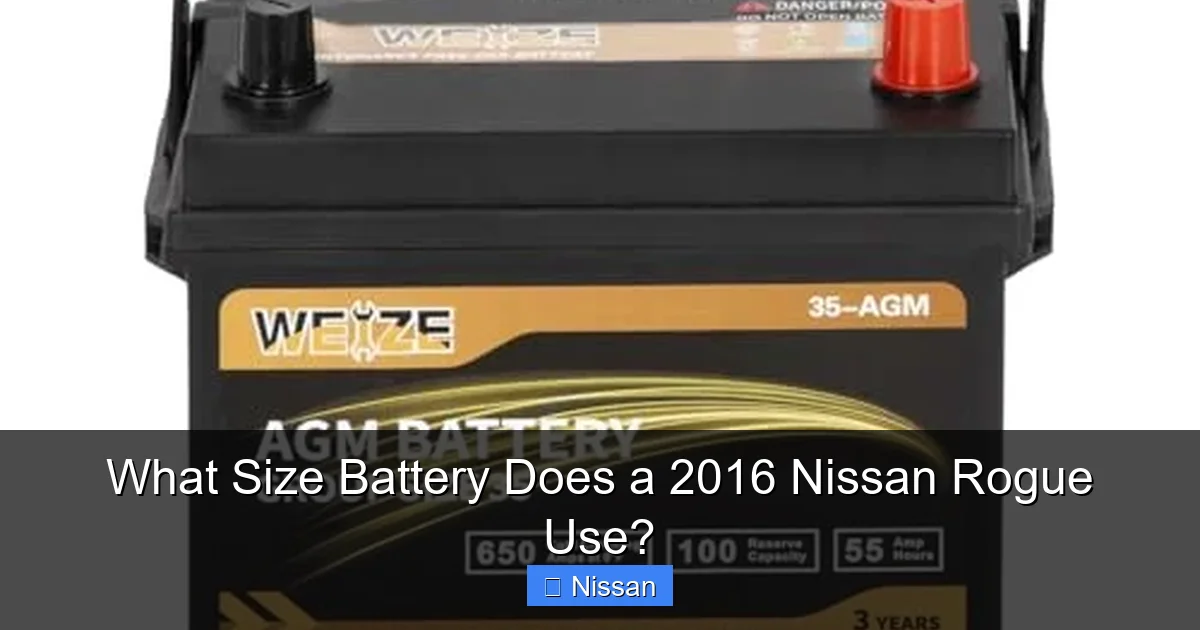
Visual guide about What Size Battery Does a 2016 Nissan Rogue Use?
Image source: m.media-amazon.com
Before diving into the specifics for the 2016 Nissan Rogue, it helps to understand what car batteries do and how they’re rated. At its core, a car battery is a rechargeable power source that provides the initial burst of electricity needed to start the engine. Once the engine is running, the alternator takes over to power the vehicle’s electrical systems and recharge the battery.
Most modern vehicles, including the 2016 Nissan Rogue, use a **12-volt lead-acid battery**. These batteries consist of six cells, each producing about 2.1 volts, which together deliver the standard 12.6 volts when fully charged. The two main types of lead-acid batteries are **flooded (wet cell)** and **AGM (Absorbent Glass Mat)**. Flooded batteries are the most common and cost-effective, while AGM batteries are more durable, spill-proof, and better suited for vehicles with advanced electronics or start-stop systems.
Key Battery Specifications Explained
When shopping for a replacement battery, you’ll come across several technical terms. Here’s what they mean:
– **Group Size:** This refers to the physical dimensions and terminal placement of the battery. The 2016 Nissan Rogue uses a **Group 35**, which measures approximately 9.0 x 6.8 x 8.9 inches (L x W x H). Using the correct group size ensures the battery fits securely in the battery tray and connects properly to the cables.
– **Cold Cranking Amps (CCA):** This measures how much current a battery can deliver at 0°F (-18°C) for 30 seconds while maintaining at least 7.2 volts. The higher the CCA, the better the battery performs in cold weather. For the 2016 Rogue, a minimum of **600 CCA** is recommended, though 650–700 CCA is ideal for colder regions.
– **Reserve Capacity (RC):** This indicates how long the battery can power essential systems if the alternator fails. It’s measured in minutes at 25 amps and 80°F. A higher RC (95+ minutes) means better reliability during electrical failures.
– **Amp-Hour (Ah) Rating:** This reflects the battery’s total energy storage capacity. While not always listed, a typical Group 35 battery has around 50–60 Ah.
– **Battery Chemistry:** Most 2016 Rogues use standard flooded batteries, but if your vehicle has features like automatic start-stop or advanced driver assistance systems (ADAS), an AGM battery may be required for optimal performance.
Understanding these specs helps you choose a battery that not only fits but also meets your driving needs and climate conditions.
Official Battery Specifications for the 2016 Nissan Rogue
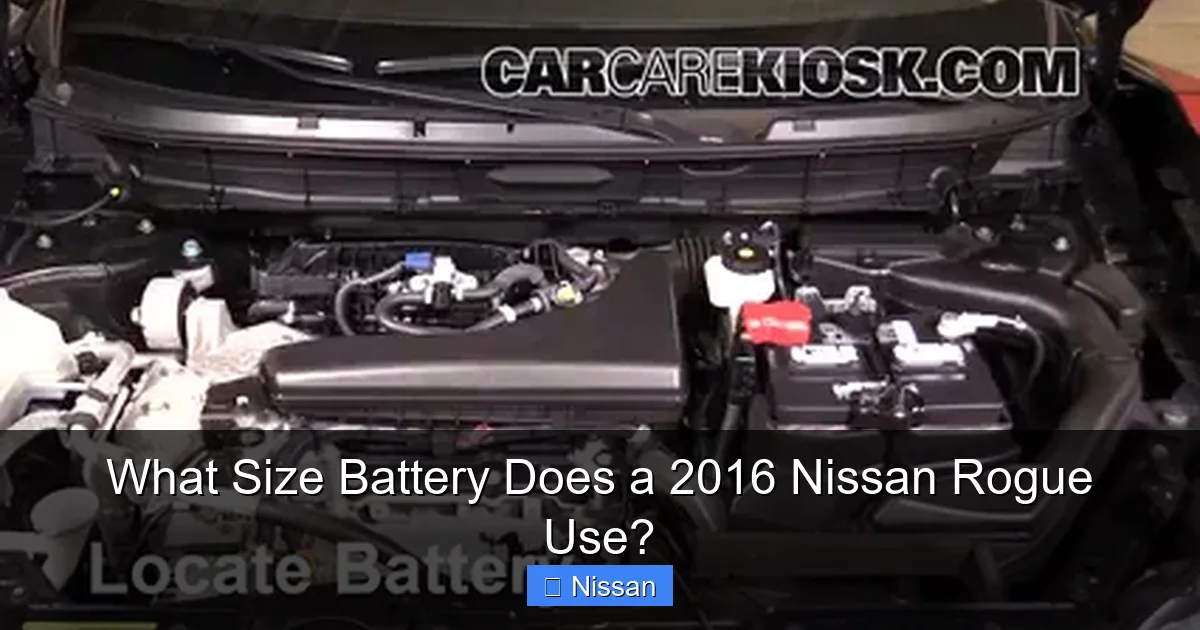
Visual guide about What Size Battery Does a 2016 Nissan Rogue Use?
Image source: d2n97g4vasjwsk.cloudfront.net
Now that you know the basics, let’s look at the official battery requirements for the 2016 Nissan Rogue. According to Nissan’s service documentation and owner’s manual, the recommended battery specifications are as follows:
– **Battery Group Size:** Group 35
– **Voltage:** 12 volts
– **Minimum Cold Cranking Amps (CCA):** 600
– **Reserve Capacity (RC):** 95 minutes or higher
– **Terminal Configuration:** Top-post, positive on the right (when facing the battery)
– **Battery Type:** Standard flooded lead-acid (most models); AGM for select trims with start-stop
These specs apply to all 2016 Rogue models, including the S, SV, and SL trims, whether equipped with front-wheel drive (FWD) or all-wheel drive (AWD). However, there’s one important exception: if your Rogue has the **Intelligent Start-Stop System** (available on some SV and SL models), it may require an **AGM battery** instead of a standard flooded one. AGM batteries are more resistant to deep cycling and can handle the frequent starts and stops better than traditional batteries.
Why Group 35?
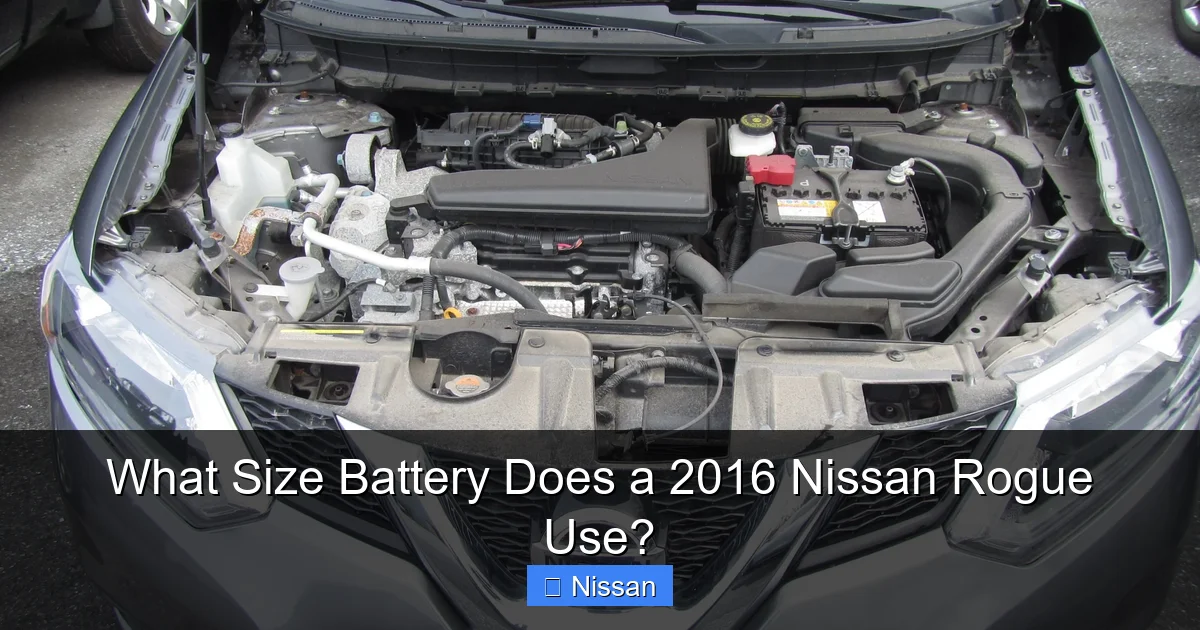
The Group 35 battery is a popular choice for compact and midsize SUVs because it offers a great balance of size, power, and affordability. It’s slightly smaller than a Group 24 or 27 battery but still packs enough punch for most four- and six-cylinder engines. In the 2016 Rogue, the battery is located in the engine compartment on the driver’s side, behind the air intake. The compact design of the Group 35 allows it to fit snugly in this space without interfering with other components.
Using a battery with the wrong group size—even if it has the same voltage and CCA—can lead to installation issues, poor connections, or even damage to the battery tray or cables. Always double-check the group size before purchasing.
CCA and RC: Why They Matter for Your Rogue
Cold cranking amps are especially important if you live in a region with harsh winters. A battery with 600 CCA may start your Rogue on a mild winter day, but it could struggle when temperatures drop below freezing. For that reason, many experts recommend opting for a battery with **650–700 CCA** if you live in the Midwest, Northeast, or Canada.
Reserve capacity is equally important. If your alternator fails while driving, the battery must power critical systems like headlights, wipers, and the ignition. A battery with 95+ minutes of RC gives you time to safely pull over or reach a repair shop. This is especially useful for long commutes or rural driving where help may not be immediately available.
Top Battery Brands for the 2016 Nissan Rogue
Visual guide about What Size Battery Does a 2016 Nissan Rogue Use?
Image source: weberbrothersauto.s3.us-east-1.amazonaws.com
When it’s time to replace your battery, you’ll find a wide range of options from both OEM (Original Equipment Manufacturer) and aftermarket brands. While Nissan offers genuine batteries through dealerships, many drivers prefer high-quality aftermarket options that offer better value and performance.
Here are some of the best battery brands compatible with the 2016 Nissan Rogue:
1. Optima Batteries
Optima is known for its **RedTop** and **YellowTop** AGM batteries. The **Optima RedTop 35** is a top pick for the 2016 Rogue, offering 720 CCA and 95 minutes of RC. It’s built with spiral-wound cells for superior vibration resistance and longer life. While it’s more expensive than standard batteries, it’s ideal for drivers who want maximum reliability and performance.
2. DieHard
DieHard, available at Sears and other retailers, offers reliable flooded and AGM batteries. The **DieHard Gold Group 35** delivers 650 CCA and 100 minutes of RC, making it a solid choice for most Rogue owners. It comes with a 3-year free replacement warranty and is priced competitively.
3. Interstate Batteries
Interstate is a trusted name in automotive batteries, with a wide network of dealers and installers. The **Interstate MT-35** (flooded) and **MTP-35** (AGM) are both excellent options. They offer 650–700 CCA and strong warranties. Interstate batteries are often available with free installation at participating locations.
4. Bosch
Bosch produces high-quality AGM batteries under the **Bosch S6** line. The **Bosch S6-AGM35** provides 760 CCA and 120 minutes of RC, making it one of the most powerful options for the Rogue. It’s ideal for vehicles with high electrical demands or start-stop systems.
5. AC Delco
AC Delco offers the **Professional Series Group 35** battery with 650 CCA and 95 minutes of RC. It’s a reliable, no-frills option that fits the Rogue perfectly and comes with a 3-year warranty.
6. Nissan Genuine Battery
If you prefer OEM parts, Nissan sells genuine batteries through dealerships. These are typically rebranded versions of batteries from manufacturers like Exide or Johnson Controls. While they’re more expensive, they come with a 2-year warranty and are guaranteed to meet Nissan’s specifications.
When choosing a brand, consider your budget, driving habits, and climate. For most 2016 Rogue owners, a high-quality flooded battery like the DieHard Gold or Interstate MT-35 offers the best balance of performance and value.
How to Replace the Battery in a 2016 Nissan Rogue
Replacing the battery in a 2016 Nissan Rogue is a straightforward task that most DIYers can complete in under 30 minutes. However, it’s important to follow safety procedures and take precautions to avoid electrical damage or injury.
Tools and Supplies Needed
– New Group 35 battery (flooded or AGM, as needed)
– Wrench or socket set (usually 10mm)
– Battery terminal cleaner or wire brush
– Baking soda and water (for cleaning corrosion)
– Safety gloves and goggles
– Battery terminal protectant spray (optional)
Step-by-Step Replacement Guide
1. **Park and Prepare:** Park your Rogue on a level surface, turn off the engine, and engage the parking brake. Open the hood and locate the battery on the driver’s side.
2. **Disconnect the Negative Terminal:** Always disconnect the **negative (black) cable first** to prevent short circuits. Use a wrench to loosen the nut and carefully remove the cable from the terminal.
3. **Disconnect the Positive Terminal:** Next, disconnect the **positive (red) cable** using the same method.
4. **Remove the Battery Hold-Down:** Most Rogues have a metal clamp or bracket securing the battery. Remove the bolts or nuts holding it in place.
5. **Lift Out the Old Battery:** Carefully lift the old battery out of the tray. Batteries are heavy (30–40 lbs), so use proper lifting technique or ask for help.
6. **Clean the Tray and Terminals:** Inspect the battery tray for corrosion or debris. Clean any buildup with a mixture of baking soda and water, then dry thoroughly. Clean the cable terminals with a wire brush.
7. **Install the New Battery:** Place the new battery in the tray, ensuring the terminals match the correct polarity (positive on the right). Secure it with the hold-down clamp.
8. **Reconnect the Cables:** Connect the **positive cable first**, then the **negative cable**. Tighten the nuts securely but avoid over-tightening.
9. **Test the System:** Close the hood and start the engine. Check that all electronics (lights, radio, AC) are working properly.
10. **Reset Systems (if needed):** Some Rogues may require a radio code or system reset after battery replacement. Refer to your owner’s manual for details.
Safety Tips
– Never touch both terminals at the same time.
– Avoid spilling battery acid—wear gloves and goggles.
– Dispose of the old battery properly at a recycling center or auto parts store.
– If your Rogue has a start-stop system, ensure the new battery is compatible and registered with the vehicle’s computer (may require a scan tool).
Battery Maintenance and Longevity Tips
A well-maintained battery can last 4–5 years, even in demanding conditions. Here are some tips to extend the life of your 2016 Nissan Rogue’s battery:
1. Check Battery Health Annually
Have your battery tested once a year, especially before winter. Most auto parts stores offer free battery testing. A load test can reveal if the battery is losing capacity.
2. Keep Terminals Clean
Corrosion on the terminals can interfere with electrical connections. Clean them every 6–12 months with a wire brush and baking soda solution.
3. Drive Regularly
Short trips don’t give the alternator enough time to fully recharge the battery. If you only drive short distances, consider using a battery maintainer or trickle charger.
4. Avoid Draining the Battery
Leaving lights, the radio, or accessories on when the engine is off can drain the battery. Modern Rogues have systems to prevent this, but it’s still good practice to double-check.
5. Protect from Extreme Temperatures
Heat accelerates battery degradation, while cold reduces performance. Park in a garage when possible, and consider a battery insulation kit in very cold climates.
6. Use a Battery Tender in Storage
If you store your Rogue for extended periods, use a smart battery charger or tender to maintain charge without overcharging.
Common Battery Problems and Troubleshooting
Even with proper maintenance, battery issues can arise. Here are some common problems and what they might mean:
Slow or No Start
If the engine cranks slowly or doesn’t start at all, the battery may be weak or dead. Check the voltage with a multimeter—12.6V is fully charged; below 12.0V indicates a problem.
Check Engine or Battery Light
These warning lights may indicate a failing alternator, loose belt, or battery issue. Have the charging system tested.
Corrosion on Terminals
White or green powder on the terminals is a sign of acid leakage. Clean it immediately to prevent damage.
Swollen Battery Case
A bulging battery case usually means overcharging or extreme heat. Replace the battery and check the alternator.
Frequent Jump-Starts Needed
If you need jump-starts often, the battery may be nearing the end of its life or the alternator isn’t charging properly.
Conclusion
The 2016 Nissan Rogue is a reliable and efficient SUV, and keeping its battery in top condition is key to maintaining that reliability. The correct battery size is a **Group 35** with at least **600 CCA** and **95 minutes of reserve capacity**. While most models use standard flooded batteries, those with start-stop technology may require an AGM battery for optimal performance.
Whether you choose a trusted brand like Optima, DieHard, or Interstate, or opt for a Nissan genuine battery, make sure it meets the specifications and comes with a solid warranty. Proper installation, regular maintenance, and awareness of warning signs can help you avoid unexpected breakdowns and extend the life of your battery.
By understanding your vehicle’s needs and taking proactive steps, you can ensure your 2016 Nissan Rogue starts reliably every time—no matter the weather or road ahead.
Frequently Asked Questions
What happens if I use the wrong battery size in my 2016 Nissan Rogue?
Using the wrong battery size can lead to poor fitment, loose connections, or damage to the battery tray and cables. It may also cause electrical issues or prevent the vehicle from starting. Always use a Group 35 battery for proper compatibility.
Can I use an AGM battery in a 2016 Nissan Rogue without start-stop?
Yes, you can use an AGM battery even if your Rogue doesn’t have start-stop technology. AGM batteries offer better durability and performance, but they’re more expensive. Ensure the AGM battery matches the Group 35 size and has the correct terminal layout.
How often should I replace the battery in my 2016 Nissan Rogue?
Most car batteries last 3–5 years. However, driving conditions, climate, and maintenance affect lifespan. Have your battery tested annually and replace it if it shows signs of weakness or is over 4 years old.
Do I need a special tool to replace the battery in a 2016 Nissan Rogue?
No special tools are required. A basic wrench or socket set (usually 10mm) is sufficient to remove the terminals and hold-down clamp. If your Rogue has a start-stop system, you may need a scan tool to register the new battery.
Where can I buy a replacement battery for my 2016 Nissan Rogue?
You can purchase a replacement battery at auto parts stores (AutoZone, Advance Auto Parts, O’Reilly), dealerships, or online retailers like Amazon. Many stores offer free installation and battery recycling.
Is it safe to replace the battery myself?
Yes, replacing the battery is generally safe if you follow proper procedures: disconnect the negative terminal first, wear safety gear, and avoid short circuits. If you’re unsure, consult a professional mechanic.
