
Where Is the Tpms Reset Button on a Nissan Altima?

Knowing where the TPMS reset button on a Nissan Altima is located can save you time and stress when your tire pressure warning light comes on. This guide walks you through the exact location, step-by-step reset instructions, and helpful tips to ensure your TPMS system works properly after tire changes, rotations, or seasonal adjustments.
Key Takeaways
- TPMS Reset Button Location: On most Nissan Altima models (2007–2024), the TPMS reset button is typically found under the dashboard, near the steering column, or on the lower left side of the instrument panel.
- No Physical Button on Some Models: Newer Altimas (especially 2019 and later) may not have a physical reset button and instead require using the vehicle’s infotainment system or a diagnostic tool.
- Reset After Tire Service: Always reset the TPMS after inflating tires, rotating them, or replacing sensors to ensure accurate readings.
- Use the Correct Tire Pressure: Check your owner’s manual or the driver’s door jamb sticker for the recommended PSI before resetting.
- Drive to Reinitialize: After pressing the reset button, drive the car at 15+ mph for 10–15 minutes to allow the system to recalibrate.
- Battery or Sensor Issues: If the light stays on after reset, a faulty sensor or low sensor battery may be the cause.
- Professional Help Available: If DIY methods fail, visit a Nissan dealer or trusted mechanic with TPMS diagnostic tools.
📑 Table of Contents
- Where Is the TPMS Reset Button on a Nissan Altima?
- Understanding the Nissan Altima TPMS System
- Locating the TPMS Reset Button on Your Nissan Altima
- Step-by-Step Guide to Resetting the TPMS on a Nissan Altima
- Common Mistakes to Avoid When Resetting TPMS
- When to Visit a Mechanic or Nissan Dealer
- Maintaining Your TPMS for Long-Term Reliability
- Conclusion
Where Is the TPMS Reset Button on a Nissan Altima?
Have you ever been driving your Nissan Altima when suddenly, a yellow warning light shaped like a flat tire appears on your dashboard? That’s your Tire Pressure Monitoring System (TPMS) alerting you that one or more tires may be underinflated. It’s a helpful safety feature, but it can also be confusing—especially when you’ve already checked your tires and they’re properly inflated. That’s where the TPMS reset button comes in.
The TPMS reset button is a small, often overlooked component that allows you to recalibrate your vehicle’s tire pressure sensors after maintenance like tire rotation, inflation, or replacement. But here’s the catch: its location isn’t always obvious. Depending on your Altima’s model year, the button might be tucked under the dashboard, hidden behind a panel, or even replaced entirely by a digital reset process. In this guide, we’ll walk you through exactly where to find the TPMS reset button on your Nissan Altima, how to use it, and what to do if your system still won’t cooperate.
Understanding the Nissan Altima TPMS System
Before diving into the reset process, it’s important to understand how the TPMS works in your Nissan Altima. The system monitors the air pressure in each of your tires using sensors mounted inside the wheels. These sensors transmit real-time data to your car’s computer, which then alerts you via a dashboard warning light if pressure drops below the recommended level—typically 25% or more below the ideal PSI.
Visual guide about Where Is the Tpms Reset Button on a Nissan Altima?
Image source: i0.wp.com
The TPMS serves a critical safety role. Underinflated tires can lead to poor fuel economy, uneven tire wear, reduced handling, and even blowouts at high speeds. That’s why Nissan equips every Altima with this system, starting from the 2007 model year onward. However, the technology has evolved over time. Older models (2007–2018) often use a direct TPMS with physical sensors and a manual reset button, while newer models (2019–2024) may use indirect TPMS or require menu-based resets through the infotainment system.
Direct vs. Indirect TPMS: What’s the Difference?
In a direct TPMS, each tire has its own pressure sensor that sends data wirelessly to the vehicle’s computer. This method is highly accurate and allows the system to pinpoint which tire is low. Most Nissan Altimas use this type, especially models from 2007 to 2018.
In contrast, an indirect TPMS doesn’t use physical sensors. Instead, it relies on the car’s anti-lock braking system (ABS) to detect differences in wheel rotation speed. A underinflated tire rotates faster than a properly inflated one, and the system interprets this as low pressure. While indirect systems are less expensive, they’re also less precise and can’t identify which specific tire is low. Some newer Altimas may use a hybrid approach or transition to indirect systems in certain trims.
Why Does the TPMS Light Come On?
The TPMS warning light can illuminate for several reasons:
- Low Tire Pressure: The most common cause—usually due to temperature changes, punctures, or natural air loss over time.
- Recent Tire Service: After rotating tires, replacing a sensor, or inflating tires, the system may need a reset to recognize the new configuration.
- Faulty Sensor: TPMS sensors have internal batteries that last 5–10 years. When they die, the sensor stops transmitting data.
- System Malfunction: Wiring issues, software glitches, or damaged receivers can cause false alerts.
- Seasonal Temperature Drops: Cold weather can reduce tire pressure by 1 PSI for every 10°F drop in temperature.
Understanding these triggers helps you respond appropriately—whether that means inflating a tire, resetting the system, or visiting a mechanic.
Locating the TPMS Reset Button on Your Nissan Altima
Now for the main question: Where is the TPMS reset button on a Nissan Altima? The answer depends on your model year, but here’s a breakdown by generation.

Visual guide about Where Is the Tpms Reset Button on a Nissan Altima?
Image source: vehiclefreak.com
2007–2018 Nissan Altima: Physical Reset Button
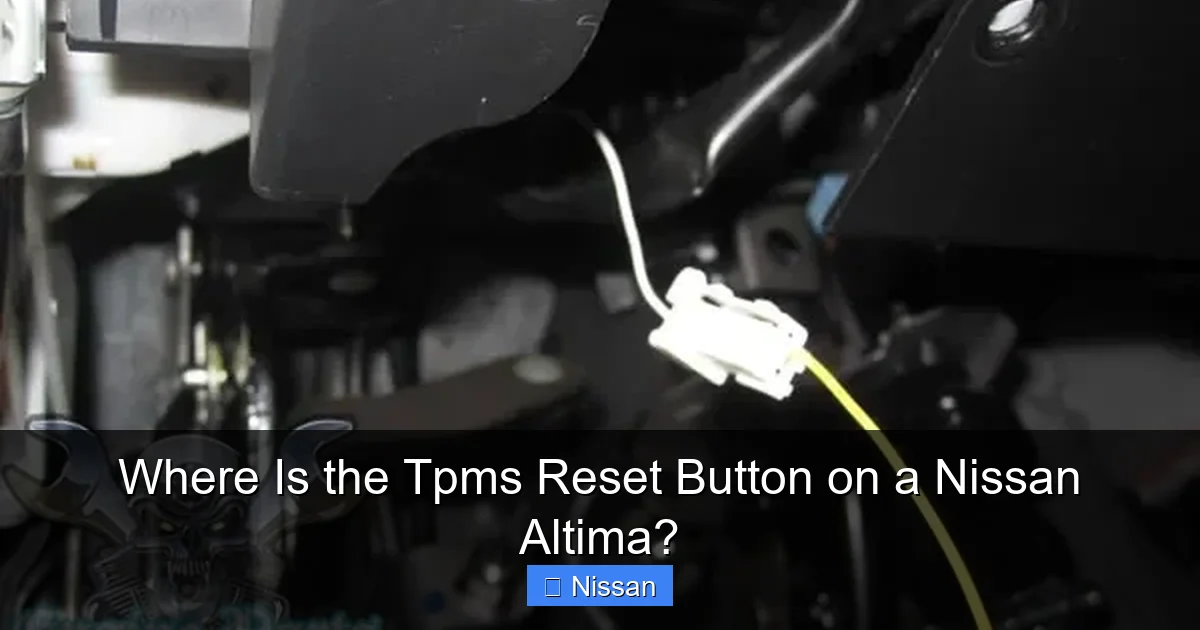
For most Altimas from 2007 to 2018, the TPMS reset button is a small, round or rectangular button located under the dashboard on the driver’s side. Here’s how to find it:
- Sit in the driver’s seat and look down near the steering column.
- The button is usually mounted on the lower left side of the instrument panel, close to the fuse box or knee panel.
- It’s often labeled “SET” or “TPMS” and may be black or gray.
- You might need to crouch or use a flashlight to spot it—it’s easy to miss!
For example, on a 2015 Altima, the button is typically found just below the steering wheel, near the OBD-II port. On a 2010 model, it’s often tucked behind a small plastic panel that you can gently pry open with a flathead screwdriver.
2019–2024 Nissan Altima: Digital or Menu-Based Reset
Starting around 2019, Nissan began phasing out the physical TPMS reset button in favor of digital controls. On these newer models, you’ll reset the TPMS through the vehicle’s touchscreen infotainment system. Here’s how:
- Turn the ignition to the “ON” position (do not start the engine).
- Navigate to the “Settings” menu on the touchscreen.
- Select “Vehicle Settings” or “Driver Assistance.”
- Look for “Tire Pressure” or “TPMS Reset.”
- Follow the on-screen prompts to complete the reset.
Some 2022 and 2023 Altimas may also require you to use the NissanConnect app or a dealership scan tool for a full reset, especially after sensor replacement.
What If You Can’t Find the Button?
If you’ve searched under the dashboard and come up empty, don’t panic. Here are a few troubleshooting tips:
- Check the Owner’s Manual: Nissan provides detailed diagrams and instructions for your specific model year.
- Look for a Hidden Panel: Some buttons are behind removable plastic covers. Use a trim tool to avoid scratching the dashboard.
- Use a Flashlight: The button may be recessed or obscured by wiring.
- Ask a Dealer: If all else fails, a Nissan service technician can confirm the location or perform the reset for you.
Remember: Not every Altima has a physical button. If your model uses a digital system, you won’t find one—and that’s perfectly normal.
Step-by-Step Guide to Resetting the TPMS on a Nissan Altima
Once you’ve located the reset button (or confirmed your model uses a digital method), follow these steps to reset your TPMS system. Always ensure your tires are properly inflated before starting.

Visual guide about Where Is the Tpms Reset Button on a Nissan Altima?
Image source: upgradedvehicle.com
For Models with a Physical Reset Button (2007–2018)
- Check Tire Pressure: Use a reliable tire gauge to verify all four tires are inflated to the recommended PSI (found on the driver’s door jamb sticker).
- Turn Ignition to “ON”: Insert the key and turn it to the “ON” position without starting the engine. The dashboard lights should illuminate.
- Press and Hold the Reset Button: Locate the TPMS reset button under the dashboard. Press and hold it for 3–5 seconds until the TPMS light blinks three times.
- Release the Button: Let go once the light blinks. This signals the system is in reset mode.
- Drive the Vehicle: Start the engine and drive at 15 mph or faster for 10–15 minutes. This allows the sensors to relearn the tire positions and pressures.
- Verify the Light Turns Off: The TPMS warning light should go out. If it stays on, repeat the process or check for sensor issues.
Pro Tip: Some Altimas require you to press the brake pedal or turn the headlights on during the reset. Consult your owner’s manual for model-specific steps.
For Models with Digital Reset (2019–2024)
- Ensure Proper Tire Inflation: Check all tires and adjust as needed.
- Turn Ignition to “ON”: Do not start the engine.
- Access the Menu: Use the touchscreen to go to Settings > Vehicle Settings > Tire Pressure.
- Select “Reset” or “Initialize”: Confirm the action when prompted.
- Drive the Car: Drive at 15+ mph for 10–15 minutes to complete the relearn process.
- Check the Dashboard: The TPMS light should turn off. If not, try the process again or visit a dealer.
Note: On some 2023 Altimas, you may need to use the NissanConnect Services app to initiate a remote reset, especially if the vehicle is equipped with advanced driver assistance systems.
What to Do If the Reset Doesn’t Work
If the TPMS light remains on after a reset, consider these possibilities:
- One or More Sensors Are Dead: TPMS sensor batteries typically last 5–10 years. A dead sensor won’t transmit data, causing a persistent warning.
- Sensor Not Properly Installed: After a tire change, the sensor may have been damaged or not seated correctly.
- System Needs a Hard Reset: Disconnect the car battery for 10–15 minutes to reset the entire electrical system.
- Software Glitch: A firmware update from Nissan may be required—visit a dealership for assistance.
In these cases, professional diagnosis is often the best solution. A mechanic with TPMS scan tools can read error codes and determine if a sensor needs replacement.
Common Mistakes to Avoid When Resetting TPMS
Even experienced drivers can make errors when resetting their TPMS. Here are some common pitfalls and how to avoid them:
Resetting Without Checking Tire Pressure
One of the biggest mistakes is hitting the reset button without first verifying that all tires are properly inflated. The TPMS reset doesn’t fix low pressure—it only tells the system to recognize the current pressure as “normal.” If your tires are underinflated, resetting will just mask the problem and could lead to unsafe driving conditions.
Not Driving After the Reset
The relearn process requires motion. Simply pressing the button and turning off the car won’t complete the cycle. You must drive the vehicle at a minimum speed (usually 15 mph) for at least 10 minutes to allow the sensors to sync with the control module.
Assuming All Models Have a Physical Button
As mentioned earlier, newer Altimas don’t have a physical reset button. Assuming one exists can lead to frustration and wasted time. Always check your model year and consult the owner’s manual before searching.
Ignoring Seasonal Pressure Changes
Tire pressure drops in cold weather. If you reset your TPMS in summer and don’t adjust for winter, the light may come on again when temperatures fall. Check and adjust tire pressure seasonally to prevent unnecessary alerts.
Using the Wrong PSI
Always refer to the sticker on the driver’s door jamb for the correct tire pressure. Don’t rely on the number printed on the tire sidewall—that’s the maximum pressure, not the recommended one. Overinflating can reduce traction and cause uneven wear.
When to Visit a Mechanic or Nissan Dealer
While most TPMS resets can be done at home, there are times when professional help is necessary. Consider visiting a mechanic or Nissan dealership if:
- The TPMS light stays on after multiple reset attempts.
- You suspect a sensor is faulty or has a dead battery.
- You’ve recently had tires replaced and the system won’t recognize the new sensors.
- Your Altima is a newer model with complex TPMS software that requires diagnostic tools.
- You’re uncomfortable performing the reset yourself.
Dealerships have specialized equipment to read TPMS error codes, test sensor functionality, and perform software updates. They can also replace sensors if needed—typically costing $50–$150 per sensor, including labor.
Additionally, if you frequently drive in extreme temperatures or off-road conditions, your sensors may wear out faster. A professional inspection every 2–3 years can help catch issues early.
Maintaining Your TPMS for Long-Term Reliability
To keep your TPMS working smoothly, follow these maintenance tips:
- Check Tire Pressure Monthly: Use a digital gauge for accuracy. Do this when tires are cold (before driving).
- Rotate Tires Regularly: Follow Nissan’s recommended rotation schedule (usually every 5,000–7,500 miles).
- Inspect Sensors During Tire Service: Ask your tire shop to check sensor condition when mounting or balancing tires.
- Replace Sensors When Needed: If a sensor fails, replace it with an OEM or high-quality aftermarket unit.
- Keep the System Clean: Avoid using harsh chemicals near the valve stems, which can damage sensors.
By staying proactive, you’ll reduce the chances of unexpected TPMS warnings and ensure your Altima remains safe and efficient on the road.
Conclusion
Finding the TPMS reset button on a Nissan Altima doesn’t have to be a mystery. Whether you’re driving a 2007 model with a physical button under the dashboard or a 2024 Altima that uses a digital menu, the process is straightforward once you know what to look for. The key is to always check your tire pressure first, follow the correct reset steps for your model year, and drive the vehicle to complete the relearn cycle.
Remember, the TPMS is there to protect you—not to cause frustration. With a little knowledge and the right approach, you can keep your system running smoothly and your tires properly inflated. And if all else fails, don’t hesitate to reach out to a Nissan professional. Your safety is worth the extra effort.
Frequently Asked Questions
Where is the TPMS reset button on a 2015 Nissan Altima?
The TPMS reset button on a 2015 Nissan Altima is typically located under the dashboard on the driver’s side, near the steering column. Look for a small button labeled “SET” or “TPMS” just below the instrument panel.
Do all Nissan Altimas have a TPMS reset button?
No. Older models (2007–2018) usually have a physical reset button, while newer models (2019 and later) often use a digital menu in the infotainment system instead.
How long do I need to drive after resetting the TPMS?
You should drive at 15 mph or faster for 10–15 minutes after resetting. This allows the system to relearn tire positions and pressures.
Why won’t my TPMS light turn off after a reset?
The light may stay on due to a faulty sensor, low sensor battery, improper tire pressure, or a system malfunction. Try re-inflating tires and repeating the reset, or visit a mechanic.
Can I reset the TPMS without a button?
Yes, on newer Altimas, you can reset the TPMS through the touchscreen menu under Settings > Vehicle Settings > Tire Pressure.
How often should I check my tire pressure?
Check your tire pressure at least once a month and before long trips. Always check when tires are cold for the most accurate reading.
