
What Does Tire Maintenance Mean on a Nissan Rogue?

Tire maintenance on a Nissan Rogue involves regular checks, rotations, alignments, and replacements to ensure safety, performance, and fuel efficiency. Proper care extends tire life, improves handling, and helps avoid costly repairs down the road.
Key Takeaways
- Regular tire pressure checks: Maintaining the correct PSI improves fuel economy, handling, and tire lifespan. The Nissan Rogue recommends 33–35 PSI for most models.
- Scheduled tire rotations: Rotating tires every 5,000 to 7,500 miles ensures even wear and extends tire life.
- Alignment and balance inspections: Misaligned wheels cause uneven wear and poor handling—check after hitting potholes or curbs.
- Tread depth monitoring: Use the penny test or a tread gauge; replace tires when tread is below 2/32 of an inch.
- Seasonal tire considerations: Switching to winter tires in cold climates improves traction and safety.
- Nissan’s Tire Pressure Monitoring System (TPMS): Understand how the dashboard alerts work and respond promptly to warnings.
- Professional inspections: Have a certified technician inspect tires during routine service visits for hidden damage or wear patterns.
📑 Table of Contents
- What Does Tire Maintenance Mean on a Nissan Rogue?
- Why Tire Maintenance Matters for Your Nissan Rogue
- Understanding Your Nissan Rogue’s Tire Specifications
- Essential Tire Maintenance Tasks for Your Nissan Rogue
- Using Nissan’s Tire Pressure Monitoring System (TPMS)
- When to Replace Tires on Your Nissan Rogue
- DIY vs. Professional Tire Maintenance
- Conclusion
What Does Tire Maintenance Mean on a Nissan Rogue?
Owning a Nissan Rogue is a smart choice—it’s reliable, fuel-efficient, and packed with modern features. But like any vehicle, it needs regular care to keep performing at its best. One of the most critical, yet often overlooked, aspects of vehicle maintenance is tire care. So, what does tire maintenance mean on a Nissan Rogue?
Simply put, tire maintenance involves a series of routine checks and services designed to keep your tires in optimal condition. This includes monitoring air pressure, rotating tires, checking tread depth, inspecting for damage, and ensuring proper alignment and balance. For the Nissan Rogue—a compact SUV known for its smooth ride and all-weather capability—proper tire care directly impacts safety, fuel efficiency, handling, and overall driving experience.
Neglecting tire maintenance can lead to uneven wear, reduced traction, poor fuel economy, and even dangerous blowouts. On the other hand, staying proactive helps you get the most out of your tires, saves money in the long run, and keeps you and your passengers safe on the road. Whether you’re commuting to work, taking a weekend road trip, or driving through snowy mountain passes, well-maintained tires are your first line of defense.
Why Tire Maintenance Matters for Your Nissan Rogue

Visual guide about What Does Tire Maintenance Mean on a Nissan Rogue?
Image source: i.ytimg.com
The Nissan Rogue is engineered for comfort and versatility, but its performance heavily depends on the condition of its tires. Unlike sports cars or heavy-duty trucks, the Rogue relies on balanced tire performance to deliver a smooth, quiet ride and confident handling in various conditions. That’s why tire maintenance isn’t just a suggestion—it’s essential.
One of the biggest reasons tire care matters is safety. Worn or underinflated tires reduce your vehicle’s ability to grip the road, especially in rain, snow, or during sudden stops. According to the National Highway Traffic Safety Administration (NHTSA), underinflated tires contribute to thousands of accidents each year. On a vehicle like the Rogue, which often carries families and cargo, this risk is even more significant.
Fuel efficiency is another major factor. When tires are underinflated, your engine has to work harder to move the vehicle, which increases fuel consumption. Studies show that driving with tires 20% below recommended pressure can reduce fuel economy by up to 10%. Over time, that adds up—both in cost and environmental impact.
Additionally, proper tire maintenance extends the life of your tires. The average set of tires on a Nissan Rogue can last between 40,000 and 60,000 miles, but only if they’re well cared for. Skipping rotations or ignoring alignment issues can cut that lifespan in half. And since a new set of tires can cost $500 or more, regular maintenance is a smart financial move.
Finally, tire maintenance contributes to a better driving experience. Well-balanced, properly inflated tires reduce road noise, improve ride comfort, and enhance steering responsiveness. Whether you’re navigating city streets or cruising on the highway, you’ll notice the difference.
Understanding Your Nissan Rogue’s Tire Specifications
Visual guide about What Does Tire Maintenance Mean on a Nissan Rogue?
Image source: i.ytimg.com
Before diving into maintenance routines, it’s important to understand the specific tire requirements for your Nissan Rogue. Not all tires are created equal, and using the wrong size or type can affect performance and safety.
Most Nissan Rogue models come equipped with all-season tires, typically sized 225/65R17 or 235/55R19, depending on the trim level and year. These tires are designed to perform well in a variety of conditions, including dry pavement, light rain, and even light snow. However, they’re not ideal for severe winter weather or off-road driving.
The “225/65R17” designation breaks down as follows: 225 is the tire width in millimeters, 65 is the aspect ratio (the height of the sidewall as a percentage of the width), R stands for radial construction, and 17 is the wheel diameter in inches. It’s crucial to match these specifications when replacing tires to ensure proper fit and performance.
Nissan also recommends a tire pressure of 33 to 35 PSI (pounds per square inch) for most Rogue models. This information is usually found on a sticker inside the driver’s side door jamb or in the owner’s manual. Maintaining this pressure is vital—too little air increases rolling resistance and wear, while too much can lead to a harsher ride and reduced traction.
Another key feature of the Nissan Rogue is its Tire Pressure Monitoring System (TPMS). This system alerts you when one or more tires are significantly underinflated. A warning light on the dashboard will illuminate, usually shaped like a horseshoe with an exclamation point. When this happens, it’s important to check your tire pressure as soon as possible.
Original Equipment Tires vs. Aftermarket Options
When it’s time to replace your tires, you’ll have a choice between original equipment (OE) tires and aftermarket options. OE tires are the ones that came with your vehicle from the factory. They’re specifically chosen by Nissan to match the Rogue’s suspension, weight distribution, and performance goals.
Aftermarket tires, on the other hand, offer more variety in terms of performance, price, and specialty features. For example, you might choose high-performance all-season tires for better grip, or all-terrain tires if you frequently drive on gravel or dirt roads.
While aftermarket tires can be a great upgrade, it’s important to ensure they meet or exceed the load index and speed rating of your original tires. Installing tires with a lower rating can compromise safety and may void your warranty.
Seasonal Tire Considerations
Depending on where you live, you may need to consider seasonal tire changes. In colder climates with snow and ice, winter tires are highly recommended. These tires are made with a softer rubber compound and deeper tread patterns that provide superior traction in cold conditions.
All-season tires, while convenient, are a compromise. They perform adequately in many conditions but aren’t optimized for extreme cold or heavy snow. If you live in an area with harsh winters—like the Northeast or Midwest—switching to winter tires from late fall to early spring can significantly improve safety.
For drivers in milder climates, all-season tires may be sufficient year-round. However, it’s still wise to inspect your tires seasonally and adjust pressure as temperatures change. Cold weather causes air to contract, which can lower tire pressure by 1 PSI for every 10°F drop in temperature.
Essential Tire Maintenance Tasks for Your Nissan Rogue

Visual guide about What Does Tire Maintenance Mean on a Nissan Rogue?
Image source: nissannationpodcast.com
Now that you understand why tire care matters and what your Rogue needs, let’s break down the essential maintenance tasks. These are simple, actionable steps you can take to keep your tires in top shape.
1. Check Tire Pressure Monthly
One of the easiest and most important maintenance tasks is checking tire pressure. Ideally, you should do this once a month and before long trips. Use a reliable tire pressure gauge—digital gauges are more accurate than the old pencil-style ones.
To check pressure, remove the valve cap from each tire, press the gauge onto the valve stem, and read the result. Compare it to the recommended PSI listed on the door jamb sticker. If the pressure is low, add air using an air compressor (available at most gas stations). If it’s too high, press the center of the valve stem to release air.
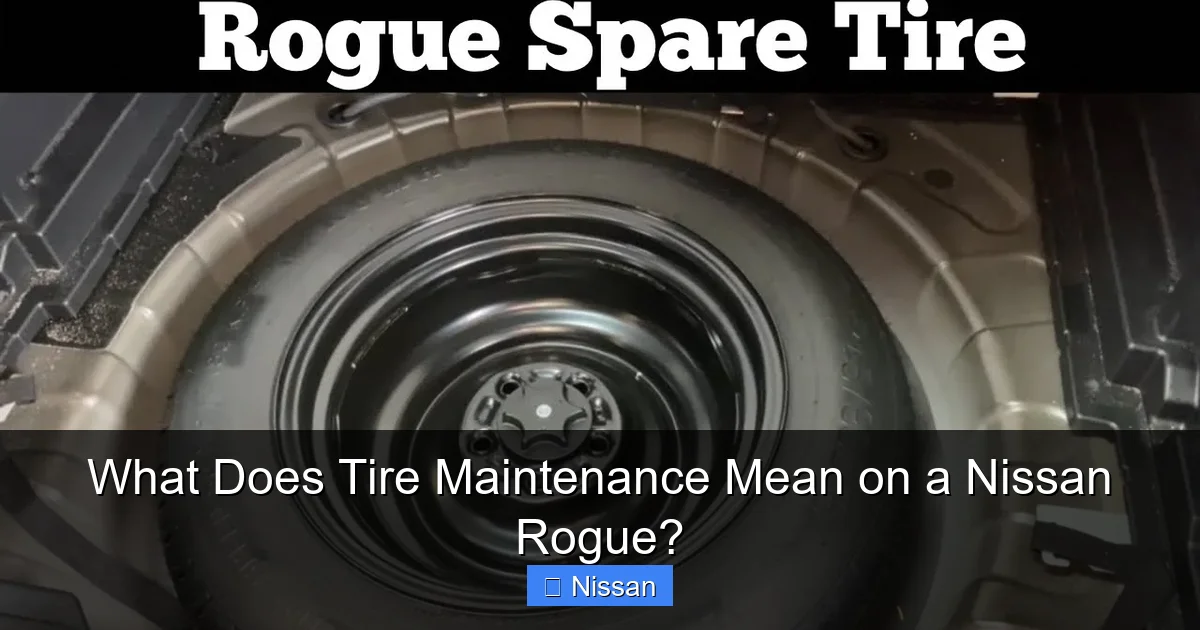
Don’t forget the spare tire! Many drivers overlook it, but a flat spare is useless in an emergency. Check its pressure every few months and keep it properly inflated.
2. Rotate Tires Every 5,000 to 7,500 Miles
Tire rotation involves moving each tire to a different position on the vehicle. This helps ensure even wear, especially since front and rear tires wear at different rates. On the Nissan Rogue, which is typically front-wheel drive, the front tires bear more weight and handle steering, so they tend to wear faster.
The standard rotation pattern for front-wheel drive vehicles is to move the front tires straight to the rear and cross the rear tires to the front (left rear to right front, right rear to left front). However, always consult your owner’s manual or a technician to confirm the correct pattern for your specific model.
Rotating tires every 5,000 to 7,500 miles is a good rule of thumb. Many drivers combine this with oil changes or other routine services. Some tire shops even offer free rotations with the purchase of new tires.
3. Inspect Tread Depth Regularly
Tread depth is a key indicator of tire health. Worn tread reduces traction, especially in wet or snowy conditions. The legal minimum tread depth in most states is 2/32 of an inch, but many experts recommend replacing tires when they reach 4/32 of an inch for better safety.
You can check tread depth using a tread depth gauge, which costs about $10 and is available at auto parts stores. Alternatively, use the penny test: insert a penny into the tread groove with Lincoln’s head upside down. If you can see the top of Lincoln’s head, the tread is too worn.
Look for uneven wear patterns, such as excessive wear on the inside or outside edges. This could indicate alignment issues, underinflation, or suspension problems. Addressing these early can prevent premature tire replacement.
4. Check for Damage and Wear
In addition to tread depth, inspect your tires for visible damage. Look for cuts, cracks, bulges, or embedded objects like nails or glass. These can lead to slow leaks or blowouts if left unchecked.
Pay special attention to the sidewalls, which are more vulnerable to damage from curbs or potholes. A bulge in the sidewall often indicates internal damage and requires immediate replacement.
Also, check the valve stems for cracks or leaks. A faulty valve stem can cause slow air loss and may need to be replaced during a tire service.
5. Maintain Proper Wheel Alignment and Balance
Wheel alignment ensures that your tires are angled correctly relative to the road and each other. Misalignment causes uneven wear, pulling to one side, and reduced fuel efficiency.
Common signs of misalignment include uneven tire wear, the vehicle pulling to one side, or a steering wheel that’s off-center when driving straight. Alignment should be checked annually or after hitting a large pothole or curb.
Wheel balancing, on the other hand, ensures that weight is evenly distributed around the tire and wheel assembly. Unbalanced tires can cause vibrations, especially at highway speeds. This is usually corrected by attaching small weights to the wheel.
Most tire shops include balancing with new tire installations, but it’s a good idea to have it checked during rotations or if you notice any shaking.
Using Nissan’s Tire Pressure Monitoring System (TPMS)
The Nissan Rogue is equipped with a Tire Pressure Monitoring System (TPMS) that alerts you when tire pressure is too low. This system uses sensors in each wheel to monitor pressure and sends a signal to the vehicle’s computer.
When the TPMS warning light comes on, it means one or more tires are underinflated—typically by 25% or more below the recommended level. This is a safety feature designed to prevent accidents caused by low tire pressure.
However, the TPMS isn’t a substitute for regular manual checks. The system may not detect slow leaks or small pressure changes, and sensors can fail over time. Additionally, the TPMS light may come on in cold weather due to natural pressure drops, even if your tires are fine.
If the light comes on, don’t ignore it. Pull over safely and check your tire pressure. If one tire is significantly lower than the others, it may have a puncture. If all tires are low, you may need to add air.
Some newer Rogue models allow you to reset the TPMS after inflating the tires. This is usually done through the vehicle’s infotainment system or by following a specific procedure in the owner’s manual.
Common TPMS Issues and Fixes
One common issue is a faulty TPMS sensor. These sensors have batteries that last about 5–10 years. When the battery dies, the sensor stops transmitting data, and the warning light may stay on even with proper pressure.
Replacing a TPMS sensor can cost $50–$100 per wheel, including labor. Some shops offer sensor replacement during tire changes, which can save time and money.
Another issue is sensor damage during tire mounting. If a tire is removed and reinstalled improperly, the sensor can be cracked or dislodged. Always inform the technician that your vehicle has TPMS sensors.
When to Replace Tires on Your Nissan Rogue
No tire lasts forever. Eventually, even the best-maintained tires will need to be replaced. But how do you know when it’s time?
The most obvious sign is tread depth. As mentioned earlier, replace tires when tread reaches 2/32 of an inch. However, consider replacing them earlier—around 4/32 of an inch—for better wet and snow performance.
Age is another factor. Tires degrade over time, even if they’re not used much. The rubber compounds break down, leading to cracks and reduced flexibility. Most manufacturers recommend replacing tires every 6–10 years, regardless of tread depth.
Check the tire’s DOT code, which is stamped on the sidewall. It includes a four-digit number indicating the week and year of manufacture. For example, “2322” means the tire was made in the 23rd week of 2022.
Other signs that it’s time for new tires include frequent air loss, visible damage, or a noticeable decline in ride quality. If your Rogue feels less stable or noisier than usual, it could be due to worn tires.
When replacing tires, it’s best to replace all four at the same time, especially on all-wheel-drive models. Mixing new and old tires can cause drivetrain stress and reduce performance.
DIY vs. Professional Tire Maintenance
Many tire maintenance tasks can be done at home with basic tools. Checking pressure, inspecting tread, and even rotating tires (with a jack and lug wrench) are manageable for most DIYers.
However, some tasks are best left to professionals. Wheel alignment, balancing, and TPMS sensor replacement require specialized equipment and expertise. Attempting these at home can lead to improper adjustments or damage.
If you’re unsure, consult a certified Nissan technician or a reputable tire shop. Many offer free inspections and can provide recommendations based on your driving habits and vehicle condition.
Conclusion
Tire maintenance on a Nissan Rogue isn’t complicated, but it’s essential. By checking pressure monthly, rotating tires regularly, monitoring tread depth, and addressing alignment and balance issues, you can keep your Rogue safe, efficient, and enjoyable to drive.
Remember, tires are the only part of your vehicle that touches the road. Investing a little time in their care pays big dividends in safety, performance, and cost savings. Whether you’re a DIY enthusiast or prefer professional service, staying on top of tire maintenance ensures your Nissan Rogue continues to deliver the reliability and comfort you expect.
Frequently Asked Questions
How often should I check tire pressure on my Nissan Rogue?
Check tire pressure at least once a month and before long trips. Cold weather can cause pressure to drop, so it’s especially important in winter months.
Can I rotate my own tires on a Nissan Rogue?
Yes, with the right tools—a jack, jack stands, lug wrench, and torque wrench—you can rotate tires at home. Just follow the correct pattern for front-wheel drive vehicles.
What does the TPMS light mean on my Nissan Rogue?
The TPMS light indicates that one or more tires are significantly underinflated. Check tire pressure immediately and add air if needed.
How long do tires last on a Nissan Rogue?
With proper maintenance, tires on a Nissan Rogue typically last 40,000 to 60,000 miles. However, age and driving conditions also affect lifespan.
Do I need winter tires for my Nissan Rogue?
If you live in an area with snow and ice, winter tires are recommended. They provide better traction and safety in cold conditions than all-season tires.
Can I mix different tire brands on my Nissan Rogue?
It’s not recommended. Mixing tire brands or models can affect handling and wear. Always replace tires in sets of four for best performance.
