
How to Unlock a Dodge Challenger with the Key Inside

Getting locked out of your Dodge Challenger with the key still inside can be frustrating—but it’s more common than you think. Fortunately, there are several safe and practical ways to regain access without damaging your vehicle or waiting hours for roadside assistance. From using built-in features to DIY tools and professional help, this guide covers everything you need to know.
Key Takeaways
- Use the key fob’s physical key blade: Most Dodge Challenger key fobs have a hidden mechanical key that can manually unlock the driver’s door.
- Try the “Key Out” warning system: If your Challenger has Uconnect, it may alert you if the key is left inside—preventing lockouts before they happen.
- Access via rear seat or trunk (if applicable): Some models allow interior access through fold-down rear seats or trunk release levers.
- Use a wedge and rod tool safely: A slim jim or inflatable wedge can help manipulate the lock mechanism—but only if done carefully to avoid airbag or wiring damage.
- Call Dodge Roadside Assistance: Owners with active warranties or service plans can get free lockout help from certified technicians.
- Prevent future lockouts with habits and tech: Enable smartphone apps, keep a spare key, and develop routines to double-check before locking.
- Avoid DIY methods that cause damage: Never use coat hangers, screwdrivers, or excessive force—these can break windows, damage seals, or trigger airbags.
📑 Table of Contents
- Introduction: The Frustration of a Locked Dodge Challenger
- Understanding Why Your Dodge Challenger Locks with the Key Inside
- Method 1: Use the Hidden Physical Key in Your Key Fob
- Method 2: Use the Uconnect System and Smartphone App
- Method 3: Access Through the Trunk or Rear Seat
- Method 4: Use a Wedge and Rod Tool (Advanced DIY)
- Method 5: Call Dodge Roadside Assistance
- Preventing Future Lockouts: Smart Habits and Upgrades
- Conclusion: Stay Calm and Use the Right Tool
Introduction: The Frustration of a Locked Dodge Challenger
Picture this: You’ve just finished a long day, you’re heading to your sleek Dodge Challenger parked in the driveway, and you press the lock button on your key fob—only to hear the doors click shut… with your keys still sitting on the passenger seat. Your heart sinks. You’re locked out, and the key is literally inside the car. It’s a scenario that feels like a cruel joke, but it happens more often than you’d think—even to careful drivers.
Modern vehicles like the Dodge Challenger are packed with advanced security features, keyless entry systems, and push-button ignitions designed to keep your car safe. But these same features can sometimes work against you. For example, if the key fob battery dies or the car doesn’t detect the key properly, the doors might lock automatically—even if the key is still inside. And because many Challengers don’t have traditional keyholes on all doors, getting back in isn’t as simple as sliding a spare key into a lock.
The good news? You’re not out of options. Whether you’re dealing with a dead fob, a malfunctioning sensor, or just plain forgetfulness, there are several safe and effective ways to unlock your Dodge Challenger without calling a locksmith or risking damage to your vehicle. In this guide, we’ll walk you through step-by-step solutions—from using hidden features in your key fob to smart prevention tips—so you can get back on the road quickly and confidently.
Understanding Why Your Dodge Challenger Locks with the Key Inside
Visual guide about How to Unlock a Dodge Challenger with the Key Inside
Image source: images.caricos.com
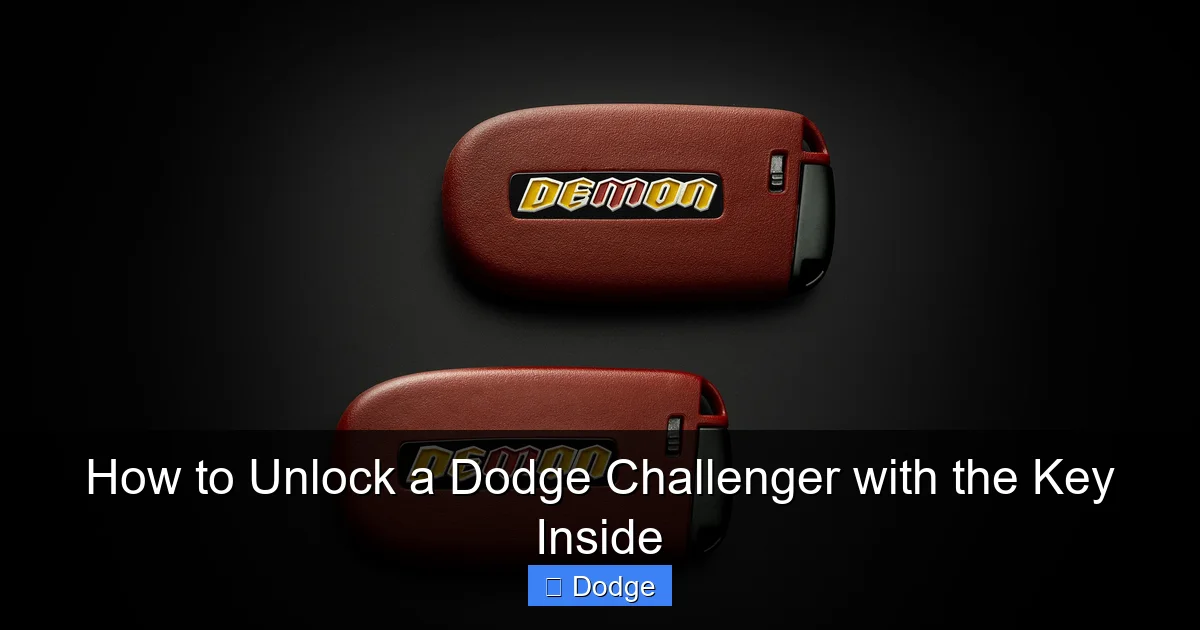
Before we dive into solutions, it’s important to understand why this happens in the first place. The Dodge Challenger, especially models from 2015 onward, uses a sophisticated keyless entry and ignition system. This system relies on radio frequency signals between the key fob and the car to determine whether the key is present. When you press the lock button on the door handle or the fob itself, the car checks for the key’s signal. If it doesn’t detect the fob (due to a dead battery, interference, or being just outside the detection range), it may still allow the doors to lock—even if the physical key is inside.
How the Keyless Entry System Works
The Challenger’s keyless system uses proximity sensors and transponders. When you approach the car with the fob in your pocket or bag, the doors unlock automatically. When you walk away, they lock. But if the fob is inside the car and the system misreads its location—or if the fob’s battery is too weak to transmit a strong signal—the car might not recognize that the key is present. This can lead to an accidental lockout.
Additionally, some drivers accidentally press the lock button on the fob while the key is still in the ignition or on the seat. Since the car doesn’t always give a clear warning (like a beep or dashboard message) when the key is inside, it’s easy to miss the mistake until it’s too late.
Common Scenarios That Cause Lockouts
– **Dead key fob battery:** A weak battery can prevent the car from detecting the fob, even if it’s inside.
– **Interference from electronic devices:** Phones, tablets, or other RF-emitting devices can disrupt the signal.
– **Accidental button press:** Bumping the fob in your pocket or bag can trigger the lock function.
– **Child lock or safety feature activation:** Some models have settings that prevent unlocking under certain conditions.
– **Software glitches:** Rarely, a bug in the Uconnect system can cause erratic locking behavior.
Understanding these causes helps you not only solve the immediate problem but also prevent it from happening again.
Method 1: Use the Hidden Physical Key in Your Key Fob
Visual guide about How to Unlock a Dodge Challenger with the Key Inside
Image source: i.ytimg.com
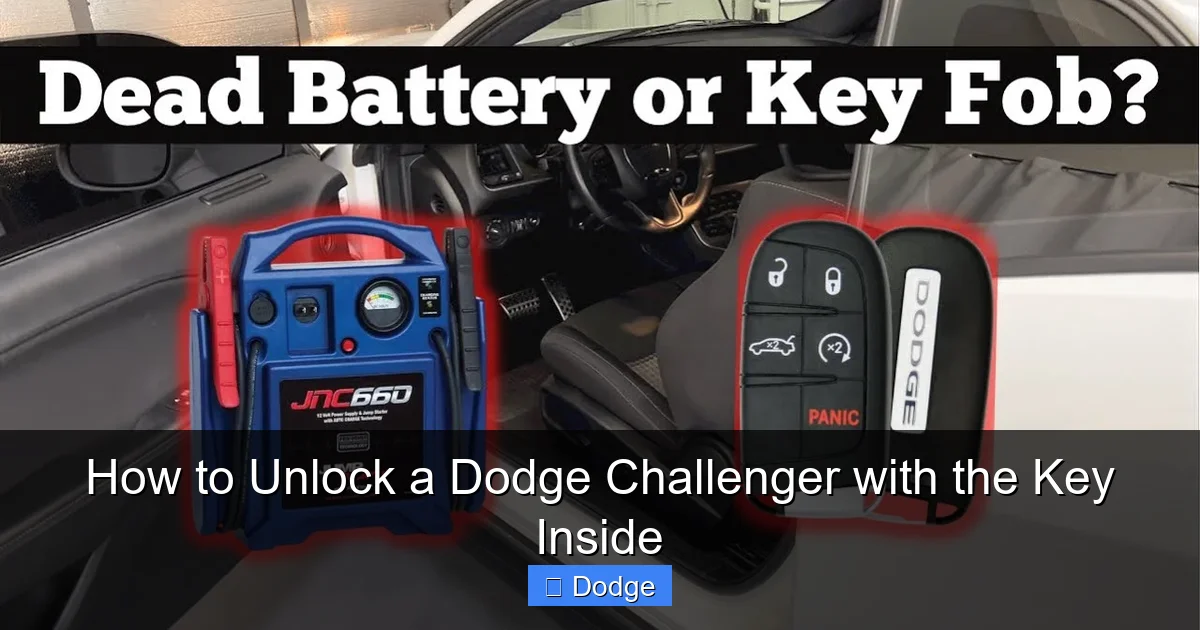
One of the most reliable ways to unlock your Dodge Challenger when the key is inside is to use the mechanical key hidden inside the key fob. Yes, that sleek, high-tech fob actually contains a traditional metal key blade—designed specifically for situations like this.
How to Access the Physical Key
Most Dodge Challenger key fobs (especially those from 2015 and newer) have a small release button or sliding mechanism on the side. Here’s how to access it:
1. Look for a small button or groove on the side of the fob.
2. Press the button (or slide the cover) to release the key blade.
3. Pull out the metal key—it’s usually tucked inside the fob’s housing.
Once you have the key, locate the keyhole on the driver’s side door. On many Challenger models, the keyhole is hidden behind a small cover on the door handle. Gently pry off the cover with your fingernail or a flat tool (like a credit card), then insert the key and turn it to unlock the door.
Important Tips for Using the Physical Key
– **Only the driver’s door has a keyhole:** Passenger doors and the trunk typically don’t have mechanical locks, so this method only works for the driver’s side.
– **Be gentle with the cover:** Forcing it can break the plastic or scratch the paint.
– **Replace the cover after use:** This protects the keyhole from dirt and moisture.
– **Test the key periodically:** Make sure it turns smoothly—corrosion or debris can make it hard to use in an emergency.
This method is safe, free, and doesn’t require any special tools. It’s the first thing you should try when locked out.
Method 2: Use the Uconnect System and Smartphone App
Visual guide about How to Unlock a Dodge Challenger with the Key Inside
Image source: i.ytimg.com
If your Dodge Challenger is equipped with Uconnect and you’ve set up the Uconnect app on your smartphone, you may be able to unlock your car remotely—even if the key is inside.
How the Uconnect App Works
The Uconnect app (available for iOS and Android) connects to your vehicle via cellular data. If your car has an active Uconnect subscription (often included for the first 12–18 months), you can use the app to:
– Lock and unlock doors
– Start the engine
– Locate your vehicle
– Check fuel level and tire pressure
To unlock your Challenger using the app:
1. Open the Uconnect app on your phone.
2. Log in with your account credentials.
3. Select your vehicle from the list.
4. Tap the “Unlock” button.
5. Wait a few seconds—the doors should unlock automatically.
Requirements and Limitations
– **Active Uconnect subscription:** The remote unlock feature requires an active plan. Check your subscription status in the app or on the Uconnect website.
– **Cellular signal:** Both your phone and the car need a strong cellular connection.
– **Vehicle compatibility:** Not all Challenger trims include Uconnect with remote services. Check your owner’s manual or the Dodge website to confirm.
– **Battery level:** If your car’s 12V battery is dead, the app may not work.
This method is incredibly convenient—but only if you’ve set it up in advance. If you haven’t used the app before, now is a great time to download it and activate your services.
Method 3: Access Through the Trunk or Rear Seat
Some Dodge Challenger models—especially those with a fold-down rear seat or interior trunk release—offer an alternative way to get inside when locked out.
Using the Trunk Release Lever
If your Challenger has an interior trunk release lever (usually located on the driver’s side footwell or near the parking brake), you can try this method:
1. Locate the trunk release lever inside the car (you’ll need to see it through the window).
2. Use a long, thin tool (like a coat hanger or grabber tool) to reach through the window gap and pull the lever.
3. Once the trunk opens, crawl inside (if possible) and unlock the doors from the inside.
Note: This only works if the trunk release is mechanical (not electronic) and if you can safely reach it. Newer models may have electronic trunk releases that require power—so this method won’t work if the car is completely dead.
Folding Down the Rear Seat
On some Challenger models, the rear seats can be folded down from the trunk area. If you can access the trunk (via a keyhole or remote release), you may be able to climb into the cabin through the opening.
Steps:
1. Open the trunk using the key fob, physical key, or interior release.
2. Pull the seat release lever (usually a strap or button inside the trunk).
3. Fold the seat forward.
4. Crawl into the passenger area and unlock the doors.
This method requires flexibility and caution—avoid damaging upholstery or triggering airbags. Only attempt if you’re comfortable and the opening is large enough.
Method 4: Use a Wedge and Rod Tool (Advanced DIY)
If the above methods don’t work, you can try using a professional lockout tool—like an inflatable wedge and a long reach rod. This method is more advanced and should be used carefully to avoid damage.
How It Works
The wedge is inserted between the window and the door frame to create a small gap. The rod is then used to manipulate the lock mechanism or unlock button inside the car.
Steps:
1. Insert the inflatable wedge into the top corner of the driver’s side window.
2. Gently pump air into the wedge to create a 1–2 inch gap.
3. Insert the reach rod through the gap.
4. Locate the lock button or manual lock lever inside the car.
5. Press or pull the mechanism to unlock the door.
Safety Precautions
– **Avoid airbag sensors:** Modern Challengers have side airbags near the doors. Forcing tools into the wrong area can trigger them.
– **Don’t scratch the paint:** Use soft covers on tools to protect the finish.
– **Don’t force it:** If the rod won’t reach or the mechanism won’t move, stop—forcing it can break internal components.
– **Consider professional help:** If you’re unsure, call a locksmith. They have specialized tools and training.
This method works best on older models or when other options fail. It’s not recommended for beginners.
Method 5: Call Dodge Roadside Assistance
When all else fails, Dodge Roadside Assistance is your best friend. If you’re a Dodge owner with an active warranty or service plan, you’re likely entitled to free lockout assistance.
How to Request Help
1. Call the Dodge Roadside Assistance number: 1-800-423-6343 (U.S.).
2. Provide your vehicle identification number (VIN) and location.
3. Explain that you’re locked out with the key inside.
4. A certified technician will be dispatched to unlock your car—usually within 30–60 minutes.
What’s Covered
– Free lockout service (up to a certain number of calls per year).
– No damage to your vehicle—technicians use professional tools.
– Available 24/7, nationwide.
Even if you don’t have an active plan, calling can give you peace of mind. They may offer pay-per-use options or connect you with a local locksmith.
Preventing Future Lockouts: Smart Habits and Upgrades
The best way to deal with a lockout is to avoid it altogether. Here are some practical tips to keep your keys—and your sanity—intact.
Develop a Pre-Lock Routine
Before you walk away from your Challenger, make it a habit to:
– Check the passenger seat and floor mats.
– Look in the cup holders and door pockets.
– Confirm the key fob is in your pocket or bag.
You can even say it out loud: “Keys with me?” This simple habit takes seconds but can save you hours of frustration.
Keep a Spare Key
Store a spare key fob or physical key in a secure location:
– With a trusted family member or friend.
– In a magnetic key box under the car (hide it well!).
– In your workplace or gym locker.
Avoid keeping it in obvious places like under the mat or in the wheel well—thieves know these spots.
Enable Uconnect Alerts
If your Challenger has Uconnect, enable the “Key Left Inside” alert. This feature warns you if the key is detected inside the car when you try to lock it. To activate it:
1. Go to the Uconnect settings menu.
2. Select “Vehicle” > “Door Locks.”
3. Turn on “Key In Vehicle Alert.”
This small setting can prevent many lockouts before they happen.
Replace the Key Fob Battery Regularly
A weak battery is a common cause of lockouts. Most fob batteries last 2–3 years. Replace them proactively—don’t wait until they die. You can buy replacements at auto parts stores or online (usually CR2032 batteries).
Use a Key Fob Cover
A silicone or rubber cover can prevent accidental button presses. It also protects the fob from drops and moisture.
Conclusion: Stay Calm and Use the Right Tool
Being locked out of your Dodge Challenger with the key inside is annoying—but it’s not the end of the world. With the right knowledge and tools, you can regain access quickly and safely. Start with the simplest solutions: use the hidden physical key, try the Uconnect app, or access the trunk. If those don’t work, consider professional help from Dodge Roadside Assistance.
Remember, prevention is always better than cure. Develop smart habits, keep a spare key, and maintain your fob’s battery. And if you do get locked out, stay calm—panicking won’t open the door, but the right method will.
Your Challenger is built for performance, style, and reliability. Don’t let a simple lockout ruin your day. With this guide, you’re prepared for whatever comes your way.
Frequently Asked Questions
Can I unlock my Dodge Challenger if the key fob battery is dead?
Yes, you can still unlock your Challenger using the physical key hidden inside the fob. Remove the key blade and use it to manually unlock the driver’s door. You can also try the Uconnect app if your car has an active subscription.
Does every Dodge Challenger have a physical key inside the fob?
Most models from 2015 onward include a mechanical key blade inside the fob. However, older models or certain trims may not. Check your owner’s manual or look for a release button on the fob to confirm.
Will using a wedge tool damage my Challenger’s airbags?
If used incorrectly, a wedge tool can trigger side airbags or damage wiring. Always insert the wedge gently and avoid forcing it. If you’re unsure, call a professional locksmith instead.
How much does Dodge Roadside Assistance cost?
Roadside Assistance is often free for the first few years with a new vehicle warranty. After that, you can purchase a plan or pay per use. Call 1-800-423-6343 for current pricing.
Can I unlock my Challenger with my smartphone if I didn’t set up Uconnect?
No, the Uconnect app requires prior setup and an active subscription. If you haven’t registered your vehicle, you’ll need to use another method like the physical key or roadside assistance.
What should I do if my Challenger locks with the key inside and the battery is dead?
First, try using the physical key to unlock the door. If the 12V battery is dead, you may need a jump start to power the car before using electronic methods like the Uconnect app. Call roadside assistance for help.
