
Where Is the Catalytic Converter on a Dodge Ram 1500?

Knowing where the catalytic converter is on your Dodge Ram 1500 is essential for maintenance, repairs, and theft prevention. This guide breaks down its exact location, function, and how to protect it—whether you drive a newer model or an older truck.
Key Takeaways
- Location varies by model year and engine: The catalytic converter on a Dodge Ram 1500 is typically found underneath the truck, near the engine and exhaust manifold, but exact placement depends on the year and engine type.
- Multiple converters on newer models: Modern Ram 1500s (especially 2013 and later) often have two catalytic converters—one close to the engine (pre-cat) and another further down the exhaust system (main cat).
- High theft risk due to precious metals: Catalytic converters contain platinum, palladium, and rhodium, making them a prime target for thieves, especially on high-clearance trucks like the Ram 1500.
- Easy to identify visually: Look for a honeycomb-like metal canister in the exhaust line; it’s usually round or oval and connected to the exhaust manifold or mid-pipe.
- Regular inspection prevents issues: Check for rattling noises, reduced fuel efficiency, or the check engine light—these can signal a failing or stolen catalytic converter.
- Installation and replacement require expertise: Replacing a catalytic converter involves lifting the truck, disconnecting exhaust components, and often welding—best left to professionals unless you’re experienced.
- Anti-theft measures are highly recommended: Consider installing a catalytic converter shield, etching your VIN, or parking in well-lit, secure areas to deter theft.
📑 Table of Contents
- Where Is the Catalytic Converter on a Dodge Ram 1500?
- Understanding the Catalytic Converter’s Role in Your Ram 1500
- Locating the Catalytic Converter on Different Ram 1500 Models
- How to Visually Identify the Catalytic Converter
- Why Catalytic Converter Theft Is a Problem for Ram 1500 Owners
- Replacing or Repairing the Catalytic Converter on a Ram 1500
- Maintenance Tips to Extend Catalytic Converter Life
- Conclusion
Where Is the Catalytic Converter on a Dodge Ram 1500?
If you’re a Dodge Ram 1500 owner, you’ve probably heard about catalytic converters—maybe from a mechanic, a news report about thefts, or a sudden drop in fuel economy. But where exactly is this mysterious component hiding under your truck? And why does its location matter?
The catalytic converter is a critical part of your Ram 1500’s exhaust system. It’s designed to reduce harmful emissions by converting toxic gases like carbon monoxide, nitrogen oxides, and unburned hydrocarbons into less harmful substances like carbon dioxide and water vapor. Without it, your truck wouldn’t pass emissions tests, and the environment would take a bigger hit every time you hit the gas.
But beyond its environmental role, the catalytic converter has become a hot topic—literally and figuratively—due to rising theft rates. Thieves target these parts because they contain valuable precious metals like platinum, palladium, and rhodium. And because the Dodge Ram 1500 sits high off the ground, it’s easier for criminals to slide underneath and cut out the converter in minutes.
So, knowing where your catalytic converter is located isn’t just about maintenance—it’s about protection. Whether you’re troubleshooting a check engine light, planning a DIY repair, or trying to prevent theft, understanding its position under your truck is the first step.
Understanding the Catalytic Converter’s Role in Your Ram 1500
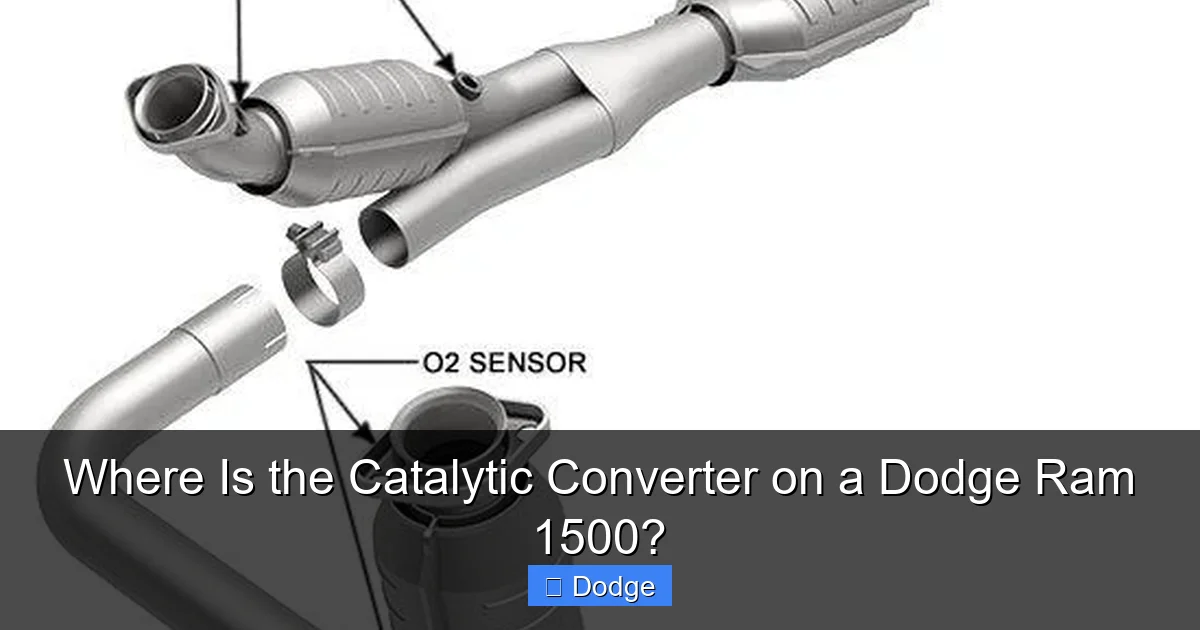
Visual guide about Where Is the Catalytic Converter on a Dodge Ram 1500?
Image source: 2040-parts.com
Before we dive into the physical location, let’s talk about what the catalytic converter actually does—and why it’s so important.
The catalytic converter is essentially a pollution-fighting filter for your truck’s exhaust. When your engine burns fuel, it produces harmful byproducts. The converter uses a combination of heat and precious metal catalysts to trigger chemical reactions that neutralize these toxins. For example, it turns carbon monoxide (a deadly gas) into carbon dioxide, and breaks down nitrogen oxides into nitrogen and oxygen.
In modern vehicles like the Dodge Ram 1500, this process happens quickly and efficiently—usually within seconds of the engine starting. The converter is designed to last for 100,000 miles or more, but it can fail due to age, contamination (like oil or coolant leaks), or physical damage.
One thing to note: the catalytic converter doesn’t improve performance or fuel economy on its own. In fact, a clogged or failing converter can actually reduce power and efficiency. That’s why it’s crucial to keep it in good condition—not just for the environment, but for your truck’s overall health.
How the Exhaust System Works in the Ram 1500
To understand where the catalytic converter sits, it helps to know how the exhaust system flows. In a typical Dodge Ram 1500, exhaust gases exit the engine through the exhaust manifolds (one per cylinder bank on V6 and V8 engines). These manifolds collect the gases and funnel them into the exhaust pipes.
From there, the gases travel toward the catalytic converter, which is usually mounted close to the engine for maximum efficiency. This “close-coupled” design allows the converter to heat up quickly, which is essential for it to work properly. Once the gases are cleaned, they continue down the exhaust system through the resonator and muffler before exiting through the tailpipe.
In newer models (especially those with advanced emissions systems), you might find multiple catalytic converters. For example, a 2020 Ram 1500 with a 5.7L HEMI V8 often has a pre-catalytic converter (or “pre-cat”) right after the exhaust manifold and a main catalytic converter further down the line. This dual setup helps meet stricter emissions standards.
Locating the Catalytic Converter on Different Ram 1500 Models
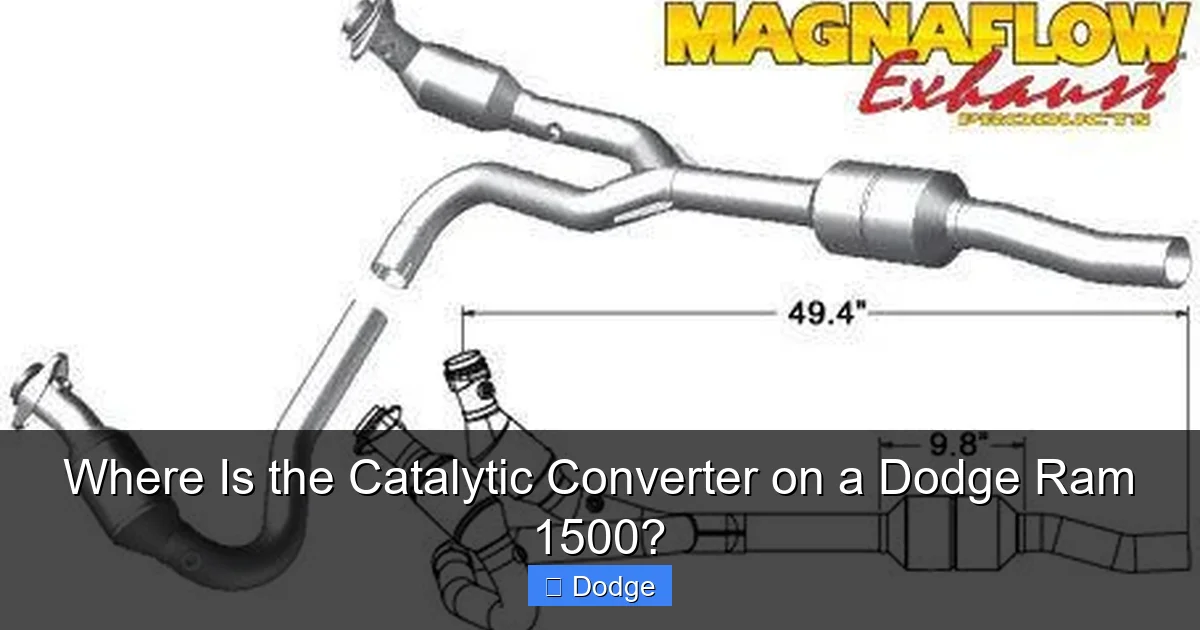
Visual guide about Where Is the Catalytic Converter on a Dodge Ram 1500?
Image source: 2040-parts.com
Now for the main event: where exactly is the catalytic converter on your Dodge Ram 1500? The answer depends on your truck’s model year, engine size, and drivetrain. Let’s break it down by generation.
2009–2018 Dodge Ram 1500 (Fourth Generation)
For trucks made between 2009 and 2018, the catalytic converter is typically located underneath the truck, just behind the front wheels. On V6 and V8 engines, you’ll usually find one converter per side (driver and passenger), mounted close to the exhaust manifolds.
To spot it, look for a round or oval metal canister with pipes entering and exiting. It’s often bolted to the exhaust manifold and connected to the mid-pipe. Because these models have a single converter per side, they’re easier to identify—but also more vulnerable to theft due to their accessibility.
If you’re under the truck, you’ll likely see the converter hanging down slightly, protected by heat shields. Be careful when inspecting it—these parts can get extremely hot, especially after driving.
2019–Present Ram 1500 (Fifth Generation)
The newer Ram 1500 models (2019 and later) have a more complex emissions system. Most come equipped with two catalytic converters: a pre-cat and a main cat.
The pre-catalytic converter is mounted directly to the exhaust manifold, right at the engine. This allows it to heat up quickly and start reducing emissions almost immediately after startup. You’ll find one on each side of the engine (for V6 and V8 models).
The main catalytic converter is located further back, usually near the center of the truck, closer to the transmission tunnel. It’s larger and handles the bulk of the emissions cleanup once the exhaust has cooled slightly.
This dual-converter setup improves efficiency and helps the Ram 1500 meet modern emissions standards. However, it also means there are more parts to maintain—and more targets for thieves.
Engine-Specific Variations
Not all Ram 1500s are created equal when it comes to catalytic converter placement. Here’s a quick rundown by engine type:
– 3.6L Pentastar V6: Typically has two catalytic converters—one per side, mounted near the exhaust manifolds. The main cat is further back, near the transmission.
– 5.7L HEMI V8: Also uses a dual-converter system. The pre-cats are bolted to the manifolds, and the main cat is centrally located.
– 3.0L EcoDiesel V6: Diesel engines have different emissions systems, but they still use catalytic converters (often called DOCs—Diesel Oxidation Catalysts). These are usually located close to the turbocharger and are less prone to theft due to lower precious metal content.
If you’re unsure which engine your Ram 1500 has, check the underhood emissions label or your owner’s manual. You can also look up your VIN on Dodge’s official website for detailed specs.
How to Visually Identify the Catalytic Converter
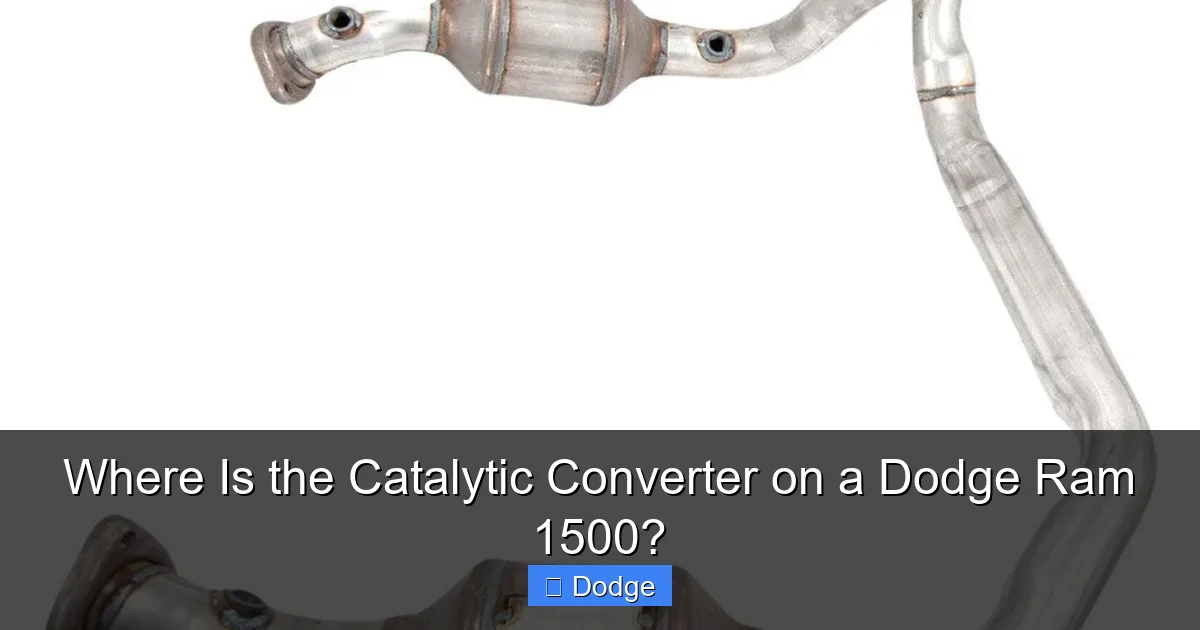
Visual guide about Where Is the Catalytic Converter on a Dodge Ram 1500?
Image source: carid.com
Even if you’ve never crawled under your truck, you can still spot the catalytic converter with a little know-how. Here’s how to identify it:
Look for a metal canister that’s roughly the size of a small water bottle or larger. It’s usually round or oval and made of stainless steel. The converter will have an inlet pipe (coming from the engine) and an outlet pipe (leading toward the muffler).
One of the easiest ways to confirm it’s the catalytic converter is to look for the honeycomb structure inside. If you can peek into the inlet or outlet (be careful—don’t touch hot parts!), you might see a ceramic or metallic honeycomb pattern. This is the catalyst substrate where the chemical reactions happen.
You’ll also notice heat shields—thin metal covers bolted over the converter to protect surrounding components from excessive heat. These shields often have vents or perforations to allow heat to escape.
If your truck has been recently driven, the converter will be extremely hot. Never touch it without letting it cool down first. And if you’re inspecting it for damage or theft, use a flashlight and a mirror to get a better view from underneath.
Signs of a Damaged or Missing Catalytic Converter
Sometimes, the best way to find the catalytic converter is to notice when it’s not working—or not there at all. Here are some common signs:
– Loud rattling noise from under the truck: This could mean the honeycomb inside has broken apart.
– Reduced engine performance or acceleration: A clogged converter restricts exhaust flow, making your truck feel sluggish.
– Check engine light with P0420 or P0430 code: These codes indicate low catalytic converter efficiency.
– Strong smell of sulfur (rotten eggs): A failing converter may not be processing hydrogen sulfide properly.
– Visible damage or missing component: If you see a cut pipe or an empty space where the converter should be, it’s likely been stolen.
If you suspect your catalytic converter is damaged or missing, have it inspected by a mechanic as soon as possible. Driving without a functioning converter can damage other parts of the exhaust system and may cause your truck to fail emissions tests.
Why Catalytic Converter Theft Is a Problem for Ram 1500 Owners
Unfortunately, the catalytic converter’s valuable contents have made it a prime target for theft—and the Dodge Ram 1500 is especially vulnerable.
Because the truck sits high off the ground, thieves can easily slide underneath with a reciprocating saw or angle grinder and cut out the converter in under five minutes. They don’t need to jack up the vehicle or remove wheels—just slide in and make the cut.
According to the National Insurance Crime Bureau (NICB), catalytic converter thefts have increased dramatically in recent years, with over 64,000 reported cases in 2022 alone. Vehicles like the Ram 1500, Ford F-150, and Toyota Prius are top targets because of their high clearance and valuable converter content.
The metals inside—especially palladium and rhodium—can fetch hundreds of dollars per converter on the black market. And while insurance may cover the replacement cost, the hassle of repairs, downtime, and potential damage to surrounding components can be frustrating.
How to Protect Your Ram 1500 from Theft
The good news? There are several effective ways to deter thieves and protect your catalytic converter:
– Install a catalytic converter shield: These metal covers bolt over the converter and make it much harder to cut out. Brands like CatClamp, Miller CAT, and Rugged Ridge offer Ram 1500-specific shields.
– Etch your VIN on the converter: This makes it harder to sell and easier for law enforcement to trace. Many repair shops offer this service for a small fee.
– Park in well-lit, secure areas: Avoid leaving your truck in dark alleys or unmonitored parking lots. Garage parking is ideal.
– Use motion-sensor lights or security cameras: Thieves prefer stealth—bright lights and visible cameras can scare them off.
– Consider a vehicle alarm with tilt sensors: These alarms go off if someone tries to slide under your truck.
Some owners also install secondary locks or welding the converter in place, though these methods are more permanent and may not be practical for everyone.
Replacing or Repairing the Catalytic Converter on a Ram 1500
If your catalytic converter is damaged, clogged, or stolen, you’ll need to replace it. But is it a DIY job?
In most cases, replacing a catalytic converter on a Dodge Ram 1500 is best left to professionals. Here’s why:
First, you’ll need to lift the truck safely using jack stands or a lift. Then, you’ll have to disconnect the exhaust pipes, remove heat shields, and unbolt the old converter. On newer models with dual converters, this process can be even more complex.
Many converters are welded in place, requiring a skilled technician with a welder to install the new one properly. Even if your converter is bolted, the flanges and gaskets must be aligned correctly to prevent exhaust leaks.
OEM vs. Aftermarket Converters
When replacing your catalytic converter, you have two main options: OEM (Original Equipment Manufacturer) or aftermarket.
OEM converters are made by Dodge or its suppliers and are designed to meet exact factory specifications. They’re more expensive—often $1,000 or more—but they come with warranties and guaranteed compatibility.
Aftermarket converters are cheaper (typically $200–$600) and widely available. However, quality can vary. Look for converters that are EPA-compliant and carry a warranty. Some states, like California, require CARB-certified converters, so check your local regulations.
Cost of Replacement
The cost to replace a catalytic converter on a Ram 1500 can range from $800 to $2,500 or more, depending on the model year, engine, and whether you use OEM or aftermarket parts. Labor costs can add $200–$500 to the total.
If your converter was stolen, your auto insurance may cover the replacement under comprehensive coverage—minus your deductible. Be sure to file a police report, as most insurers require it.
Maintenance Tips to Extend Catalytic Converter Life
While catalytic converters are built to last, a little maintenance can go a long way in preventing premature failure.
– Fix engine problems promptly: Misfires, rich fuel mixtures, and oil leaks can dump unburned fuel into the exhaust, overheating and damaging the converter.
– Use the right fuel: Avoid leaded or contaminated gasoline, which can coat the catalyst and reduce efficiency.
– Don’t ignore the check engine light: A P0420 or P0430 code means your converter isn’t working efficiently—address it before it fails completely.
– Drive regularly and at highway speeds: Short trips don’t allow the converter to reach optimal operating temperature, leading to buildup and clogging.
By taking care of your engine and exhaust system, you can help your catalytic converter last well beyond 100,000 miles.
Conclusion
Knowing where the catalytic converter is on your Dodge Ram 1500 isn’t just a trivia fact—it’s a practical necessity. Whether you’re troubleshooting a performance issue, protecting against theft, or planning a repair, understanding its location and function empowers you to take better care of your truck.
From the engine bay to the undercarriage, the catalytic converter plays a vital role in keeping your Ram 1500 clean, efficient, and road-legal. And with rising theft rates, being proactive about protection is more important than ever.
So the next time you’re under your truck—or just thinking about it—take a moment to appreciate this small but mighty component. With the right knowledge and a few smart precautions, you can keep your catalytic converter—and your Ram 1500—running strong for years to come.
Frequently Asked Questions
Where is the catalytic converter located on a 2015 Dodge Ram 1500?
The catalytic converter on a 2015 Dodge Ram 1500 is typically located underneath the truck, just behind the front wheels. On V6 and V8 models, you’ll find one converter per side, mounted near the exhaust manifolds and connected to the mid-pipe.
How many catalytic converters does a 2020 Ram 1500 have?
Most 2020 Ram 1500 models, especially those with the 5.7L HEMI V8, have two catalytic converters: a pre-cat mounted to the exhaust manifold and a main cat located further back near the transmission tunnel.
Can I drive my Ram 1500 without a catalytic converter?
Technically, you can drive without a catalytic converter, but it’s illegal in most states and will cause your truck to fail emissions tests. It can also trigger the check engine light and damage other exhaust components.
How much does it cost to replace a catalytic converter on a Ram 1500?
Replacement costs range from $800 to $2,500 or more, depending on the model year, engine, and whether you use OEM or aftermarket parts. Labor and additional repairs can increase the total.
How can I prevent catalytic converter theft on my Ram 1500?
Install a catalytic converter shield, etch your VIN on the converter, park in well-lit areas, and consider motion-sensor lights or security cameras. These measures make theft more difficult and less appealing to criminals.
What does a bad catalytic converter sound like?
A failing catalytic converter may produce a loud rattling noise from under the truck, especially when starting or accelerating. This usually means the internal honeycomb structure has broken apart.
