
How to Reset the Airbag Light on a 2015 Nissan Altima

Is the airbag light on your 2015 Nissan Altima driving you crazy? Don’t ignore it—this guide walks you through safe, effective ways to reset the airbag light, whether you’re using a scan tool, disconnecting the battery, or visiting a professional. We’ll cover common causes, DIY fixes, and when to seek expert help—so you can drive with confidence.
Key Takeaways
- Understand the airbag system: The airbag light indicates a fault in the Supplemental Restraint System (SRS), which includes airbags, seatbelt pretensioners, and sensors.
- Common causes include: Loose wiring under seats, faulty clockspring, low battery voltage, or a recent repair that wasn’t properly reset.
- Use an OBD2 scanner with SRS capability: Generic code readers won’t work—you need a scanner that can access the SRS module.
- Battery disconnection is a temporary fix: While it may reset the light, it won’t clear underlying issues and could cause other system resets.
- Seatbelt and under-seat connections matter: Worn or loose connectors under the front seats are frequent culprits—check them first.
- Professional diagnosis is safest: If the light returns after reset, have a certified technician inspect the vehicle to avoid safety risks.
- Never ignore the airbag light: A malfunctioning airbag system can fail in a crash, putting you and passengers at serious risk.
📑 Table of Contents
- Why Is the Airbag Light On in Your 2015 Nissan Altima?
- Understanding the 2015 Nissan Altima Airbag System
- Common Causes of the Airbag Light in a 2015 Nissan Altima
- Tools You’ll Need to Reset the Airbag Light
- Step-by-Step Guide to Resetting the Airbag Light
- Tips to Prevent the Airbag Light from Coming Back
- Conclusion
Why Is the Airbag Light On in Your 2015 Nissan Altima?
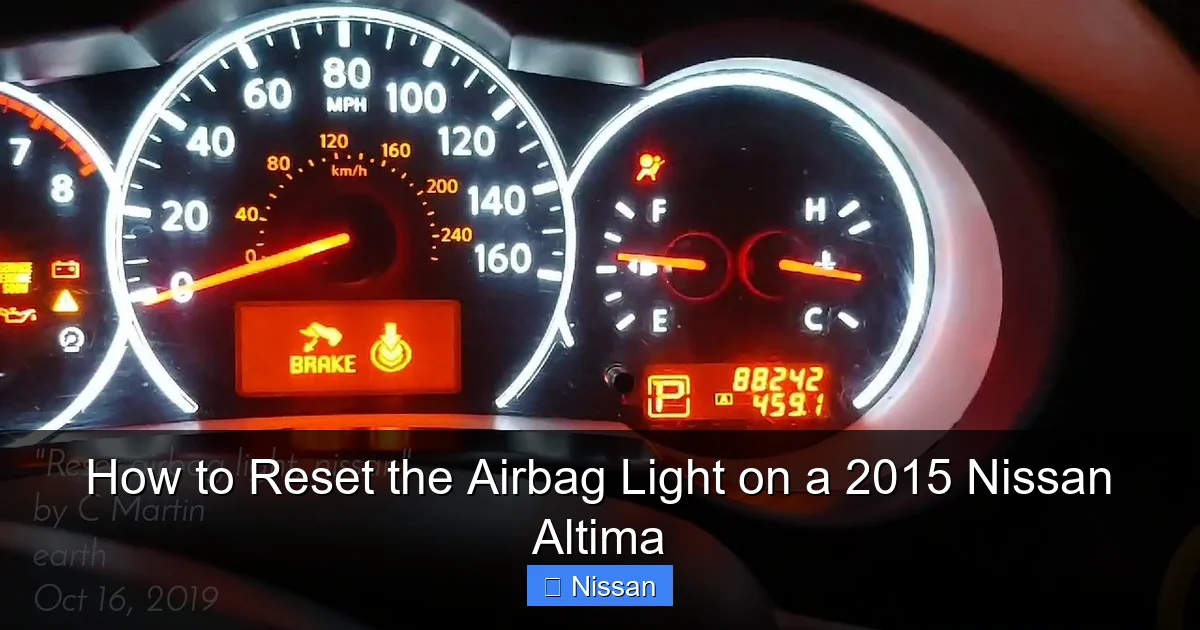
You’re driving down the road, minding your own business, when suddenly—a yellow light flashes on your dashboard. It looks like a person sitting with a deployed airbag. Your heart skips a beat. Is it serious? Should you pull over? Can you still drive?
The airbag light, also known as the SRS (Supplemental Restraint System) warning light, is designed to alert you when there’s a problem with your vehicle’s airbag system. In a 2015 Nissan Altima, this system includes front and side airbags, seatbelt pretensioners, impact sensors, and a central control module. When any part of this network isn’t communicating properly, the light comes on—and it won’t go away on its own.
Ignoring this light is risky. Airbags are a critical safety feature, and if they don’t deploy in a crash, the consequences can be severe. But before you panic, know that not every airbag light means a major failure. Sometimes, it’s something simple—like a loose wire under the seat or a weak battery. The good news? Many of these issues can be diagnosed and fixed, and in some cases, the light can be reset at home.
In this guide, we’ll walk you through everything you need to know about resetting the airbag light on a 2015 Nissan Altima. We’ll cover the most common causes, step-by-step reset methods, tools you’ll need, and when it’s time to call in a professional. Whether you’re a DIY enthusiast or just want to understand what’s going on under the hood, this article will give you the confidence to tackle the problem safely and effectively.
Understanding the 2015 Nissan Altima Airbag System
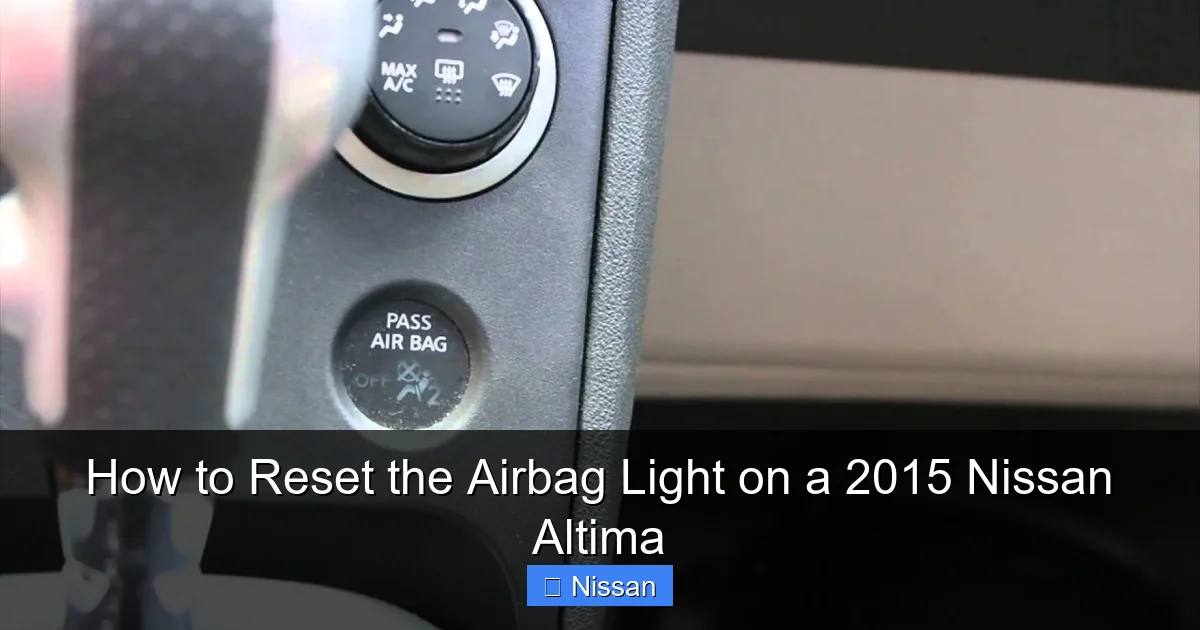
Before you try to reset the airbag light, it helps to understand how the system works. The 2015 Nissan Altima uses a sophisticated SRS that relies on multiple components working together. At the heart of the system is the airbag control module, often located under the center console or front seats. This module constantly monitors sensors and circuits to ensure everything is ready to deploy in the event of a collision.
Visual guide about How to Reset the Airbag Light on a 2015 Nissan Altima
Image source: i.ytimg.com
Key Components of the SRS
- Airbag modules: Located in the steering wheel, dashboard, and side pillars, these inflate rapidly during a crash.
- Seatbelt pretensioners: These tighten the seatbelts instantly upon impact to secure occupants.
- Impact sensors: Placed at the front and sides of the vehicle, they detect sudden deceleration.
- Clockspring: A coiled wire behind the steering wheel that maintains electrical connection as you turn the wheel.
- Wiring harnesses and connectors: Especially under the front seats, these can wear out or become loose over time.
The system is designed to be self-diagnosing. When you start your car, the airbag light should illuminate for a few seconds and then turn off. If it stays on, flashes, or comes on while driving, the control module has detected a fault. It stores a diagnostic trouble code (DTC) that can be read with the right tool.
How the System Detects Problems
The airbag module checks for continuity, resistance, and communication across all circuits. For example, if a seat sensor detects an open circuit (like a broken wire), it assumes the airbag might not deploy and triggers the warning light. Similarly, if the clockspring is damaged—common after steering wheel removal or wear—the connection to the driver’s airbag is lost, and the light comes on.
Even minor issues, like a loose connector under the passenger seat, can cause the system to think the seat is unoccupied when it’s not. This can prevent the airbag from deploying for that passenger, which is why the light stays on until the issue is resolved and the system is reset.
Understanding this helps you appreciate why simply disconnecting the battery or pressing a button won’t always fix the problem. The system needs to be told—via a proper reset—that the fault has been corrected. Otherwise, it will continue to flag the issue.
Common Causes of the Airbag Light in a 2015 Nissan Altima
Now that you know how the system works, let’s look at the most common reasons the airbag light comes on in a 2015 Nissan Altima. Identifying the root cause is the first step toward a successful reset.
Visual guide about How to Reset the Airbag Light on a 2015 Nissan Altima
Image source: i.ytimg.com
1. Loose or Damaged Wiring Under the Seats
This is one of the top culprits. The front seats in the Altima are equipped with weight sensors and seatbelt switches that communicate with the airbag module. Over time, the connectors under the seats can become loose, corroded, or damaged—especially if the seats are frequently moved or adjusted.
For example, if you’ve recently installed seat covers, cleaned under the seats, or had a child seat installed, a connector might have been bumped loose. Even normal wear and tear can cause pins to bend or sockets to wear out. When the system detects an open or short circuit, it assumes the seat is unoccupied or the airbag is faulty, and the light comes on.
2. Faulty Clockspring
The clockspring is a ribbon cable located behind the steering wheel. It allows the horn, audio controls, and airbag to function while the wheel turns. If the clockspring is damaged—often due to age, steering wheel removal, or impact—it can break the electrical connection to the driver’s airbag.
Symptoms include the airbag light staying on, the horn not working, or cruise control buttons failing. Replacing the clockspring requires removing the steering wheel, which should be done with the battery disconnected to avoid accidental airbag deployment.
3. Weak or Dying Battery
It might surprise you, but a low battery can trigger the airbag light. The SRS requires stable voltage to operate correctly. If the battery is weak, failing, or has been recently replaced, the system may not receive enough power to complete its self-check, causing the light to stay on.
This is especially common after jump-starting or replacing the battery. The system may need to be reset once the battery is fully charged. In some cases, a voltage drop during startup can cause a temporary fault code that clears after a few drive cycles—but if the light persists, it’s worth investigating further.
4. Recent Repairs or Maintenance
Have you recently had your car serviced? Replacing the battery, removing seats, or working on the steering column can inadvertently trigger the airbag light if connectors aren’t reseated properly. Even something as simple as disconnecting the battery without following proper procedures can cause the system to flag a fault.
For instance, if a technician removed the driver’s seat to access the transmission and didn’t reconnect the seat sensor harness, the airbag module will detect an open circuit and illuminate the light. Always double-check connections after any under-dash or seat work.
5. Faulty Airbag Control Module
While less common, the airbag control module itself can fail. This is the “brain” of the system, and if it malfunctions, it may not communicate properly with other components. Signs include the light staying on despite no obvious wiring issues, or the light flashing in a specific pattern (which indicates a stored code).
Module failure often requires professional diagnosis and replacement. In some cases, the module can be reprogrammed or reset, but this usually requires specialized equipment and software.
6. Seatbelt Pretensioner or Sensor Issues
The seatbelt pretensioners are part of the SRS and are designed to tighten the belt during a crash. If a pretensioner circuit is open or shorted—due to a broken wire or faulty switch—the system will detect a fault. This is more common in older vehicles or those with high mileage.
Similarly, the seatbelt buckle switch (which detects if the belt is fastened) can fail over time. If the switch sends incorrect signals, the airbag module may assume the seat is occupied when it’s not, or vice versa, triggering the warning light.
Tools You’ll Need to Reset the Airbag Light
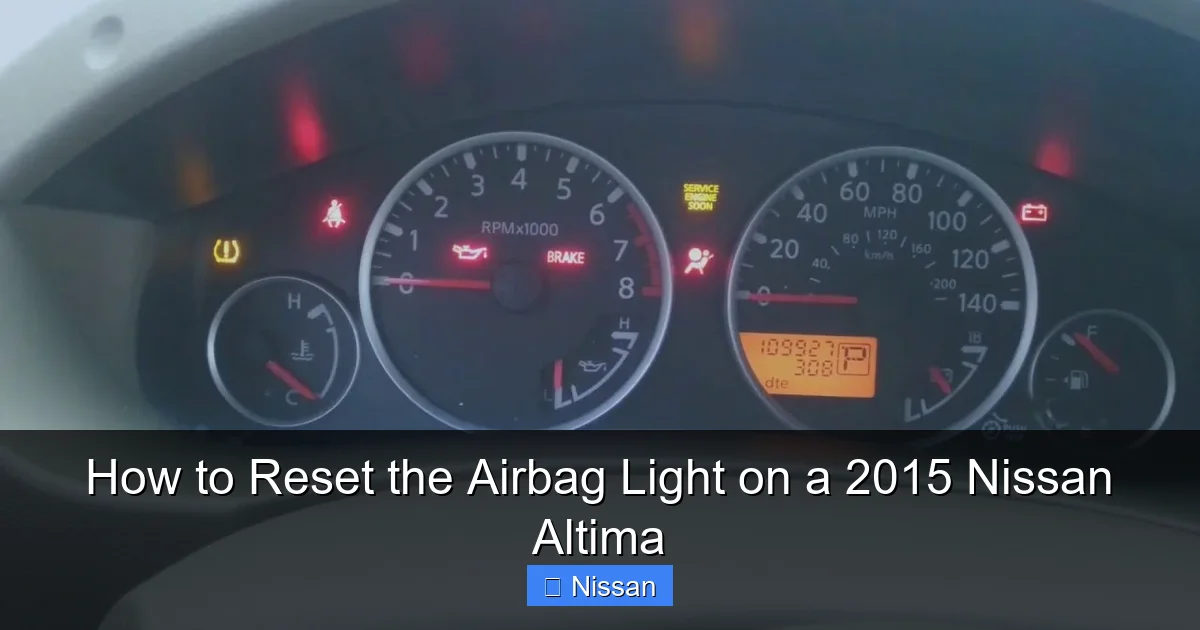
Resetting the airbag light isn’t as simple as pressing a button. You’ll need the right tools to diagnose and clear the fault codes. Here’s what you’ll need, depending on your approach.
Visual guide about How to Reset the Airbag Light on a 2015 Nissan Altima
Image source: i.ytimg.com
OBD2 Scanner with SRS Capability
This is the most important tool. A standard OBD2 scanner can read engine codes, but it won’t access the airbag system. You need a scanner that supports SRS (Supplemental Restraint System) diagnostics. Look for models like:
- Autel MaxiCOM MK808
- Launch CRP129X
- Foxwell NT510
- Innova 3160g
These scanners can read and clear SRS codes, view live data, and sometimes even reset the system after repairs. Prices range from $150 to $500, but they’re worth the investment if you plan to work on your car regularly.
Basic Hand Tools
You’ll also need a few basic tools for inspection and repairs:
- Socket set (especially 10mm for seat bolts)
- Screwdrivers (Phillips and flathead)
- Trim removal tools (to avoid damaging panels)
- Multimeter (to test continuity and voltage)
- Electrical contact cleaner (for cleaning connectors)
Battery Disconnect Tools (Optional)
If you’re trying the battery reset method, you’ll need a wrench to disconnect the negative terminal. However, this method is not recommended as a primary solution—it’s more of a temporary workaround.
Repair Manual or Online Guide
Having a repair manual for the 2015 Nissan Altima—such as the factory service manual or a trusted online resource—can help you locate components, understand wiring diagrams, and follow proper procedures. Websites like Nissan’s official service portal or forums like NissanForums.com can be helpful.
Remember: Safety first. Always disconnect the battery and wait at least 15 minutes before working on airbag components to prevent accidental deployment. Never probe airbag connectors with a multimeter or test light unless you’re certain the system is disarmed.
Step-by-Step Guide to Resetting the Airbag Light
Now that you know the causes and have the tools, let’s walk through the actual process of resetting the airbag light on your 2015 Nissan Altima. We’ll cover three methods: using an OBD2 scanner, disconnecting the battery, and seeking professional help.
Method 1: Using an OBD2 Scanner (Recommended)
This is the most reliable and safest way to reset the airbag light. It allows you to read the specific fault code, fix the underlying issue, and then clear the code properly.
Step 1: Locate the OBD2 Port
The OBD2 port in the 2015 Altima is usually under the dashboard, to the left of the steering wheel. It’s a 16-pin connector that’s easy to access.
Step 2: Connect the Scanner
Plug your SRS-capable OBD2 scanner into the port. Turn the ignition to the “ON” position (but don’t start the engine). The scanner should power up and detect the vehicle.
Step 3: Access the SRS Menu
Navigate to the “SRS” or “Airbag” section on the scanner. Select “Read Codes” or “Scan for Faults.” The scanner will retrieve any stored DTCs.
Step 4: Interpret the Code
For example, you might see a code like “B1015 – Driver Airbag Circuit Open.” This points to a problem with the driver’s airbag connection—possibly the clockspring or wiring. Write down the code and research what it means.
Step 5: Fix the Issue
Based on the code, perform the necessary repair. This might involve checking under-seat connectors, inspecting the clockspring, or testing seatbelt switches. Use your multimeter to check for continuity and proper resistance.
Step 6: Clear the Code
Once the repair is complete, return to the scanner and select “Clear Codes” or “Reset SRS.” The scanner will send a command to the airbag module to erase the fault.
Step 7: Test the System
Turn the ignition off, wait 10 seconds, then restart the car. The airbag light should come on briefly and then turn off. If it stays on, the problem wasn’t fully resolved—repeat the process or seek help.
Method 2: Disconnecting the Battery (Temporary Fix)
This method can reset the system by cutting power to the control module, but it’s not always effective and won’t fix underlying issues.
Step 1: Turn Off the Engine
Park the car, turn off the engine, and remove the key.
Step 2: Disconnect the Negative Terminal
Use a wrench to loosen the negative battery cable and remove it from the terminal. Wait at least 15 minutes to ensure the system’s capacitors are fully discharged.
Step 3: Reconnect the Battery
Reattach the negative cable and tighten it securely. Turn the ignition to “ON” and check if the airbag light resets. If it does, start the engine and drive for a few minutes to see if it stays off.
Warning: This method may reset other systems (radio, clock, ECU), and the light may return if the original fault still exists. It’s best used as a last resort or for temporary relief.
Method 3: Visit a Professional
If you’re uncomfortable working on the airbag system or the light keeps coming back, it’s time to see a certified technician. Dealerships and independent shops with Nissan expertise have advanced diagnostic tools and can perform a thorough inspection.
They can also perform tasks like clockspring replacement, module reprogramming, or wiring repairs that are difficult to do at home. While it may cost $100–$200, it ensures the job is done safely and correctly.
Tips to Prevent the Airbag Light from Coming Back
Once you’ve reset the airbag light, you’ll want to keep it off. Here are some practical tips to prevent future issues.
Check Under-Seat Connections Regularly
Every time you clean your car or adjust the seats, take a moment to check the connectors under the front seats. Make sure they’re fully seated and not damaged. Use electrical contact cleaner if they look dirty or corroded.
Avoid Unnecessary Steering Wheel Work
If you’re installing a new horn, audio controls, or steering wheel cover, be careful not to damage the clockspring. Always disconnect the battery first and follow proper removal procedures.
Keep the Battery in Good Condition
Replace your battery every 4–5 years and check the terminals for corrosion. A healthy battery ensures stable voltage for all electronic systems, including the SRS.
Use Genuine or High-Quality Parts
If you need to replace a sensor, connector, or module, use OEM (Original Equipment Manufacturer) or high-quality aftermarket parts. Cheap components may not meet the system’s specifications and can cause faults.
Don’t Ignore Warning Lights
If the airbag light comes on again, don’t assume it’s a glitch. Have it checked as soon as possible. The sooner you address the issue, the less likely it is to cause bigger problems.
Conclusion
Resetting the airbag light on a 2015 Nissan Altima doesn’t have to be intimidating. With the right tools and knowledge, you can diagnose and fix many common issues yourself. Start by understanding the system, identifying the cause, and using an SRS-capable OBD2 scanner to read and clear codes. Avoid quick fixes like battery disconnection unless absolutely necessary, and always prioritize safety.
Remember, the airbag system is there to protect you in a crash. Ignoring the warning light puts you and your passengers at risk. Whether you tackle the repair at home or visit a professional, taking action ensures your Altima remains safe and reliable. With this guide, you’re now equipped to handle the airbag light with confidence—and get back to driving worry-free.
Frequently Asked Questions
Can I drive my 2015 Nissan Altima with the airbag light on?
Yes, you can drive the car, but it’s not recommended. The airbag system may not function properly in a crash, increasing the risk of injury. Have the issue diagnosed and fixed as soon as possible.
Will disconnecting the battery reset the airbag light?
It might temporarily reset the light, but it won’t fix the underlying problem. The light will likely return if the fault still exists. Use an OBD2 scanner for a proper reset.
How much does it cost to reset the airbag light?
A professional reset typically costs $50–$150. DIY with an SRS scanner costs more upfront but saves money in the long run if you plan to work on your car regularly.
Can a bad battery cause the airbag light to come on?
Yes, a weak or failing battery can cause voltage drops that trigger the airbag light. Replacing or recharging the battery may resolve the issue, but a reset is often needed.
How do I know if my clockspring is bad?
Symptoms include the airbag light staying on, the horn not working, or steering wheel controls failing. A diagnostic scan can confirm a clockspring-related fault code.
Is it safe to reset the airbag light myself?
Yes, as long as you use the proper tools and follow safety procedures. Always disconnect the battery before working on airbag components to prevent accidental deployment.
