
Can a Subaru Forester Tow a Camper

The Subaru Forester can tow a camper, but only certain lightweight models—typically under 2,300 lbs. With proper equipment and careful planning, it’s a capable option for small pop-up campers, teardrop trailers, and compact RVs.
Key Takeaways
- Towing capacity varies by model year: Most Subaru Foresters (2014–2024) have a towing capacity of 1,500 to 2,300 lbs, depending on drivetrain and factory options.
- Only lightweight campers are suitable: The Forester is best suited for pop-up campers, teardrop trailers, and small travel trailers under 2,300 lbs.
- Factory tow package is recommended: Models with the optional factory-installed tow package (available on certain trims) offer enhanced cooling, wiring, and hitch prep.
- Proper hitch and equipment are essential: A Class II or Class III hitch, weight-distribution system (if needed), and brake controller improve safety and control.
- Driving dynamics change when towing: Expect reduced acceleration, longer braking distances, and decreased fuel economy—drive cautiously and allow extra space.
- Check camper weight carefully: Always verify the camper’s dry weight, cargo, water, and gear to ensure you stay within the Forester’s limits.
- Regular maintenance is crucial: Towing increases strain on the engine, transmission, and brakes—keep up with oil changes, coolant checks, and brake inspections.
📑 Table of Contents
- Can a Subaru Forester Tow a Camper? The Honest Answer
- Understanding the Subaru Forester’s Towing Capacity
- Types of Campers the Forester Can Tow
- Essential Equipment for Towing a Camper with a Forester
- Driving Tips and Safety Considerations
- Real-World Examples: Forester Owners Who Tow Campers
- Maintenance Tips for Towing with a Forester
- Conclusion: Yes, But Do It Right
Can a Subaru Forester Tow a Camper? The Honest Answer
If you’re a Subaru Forester owner dreaming of weekend getaways in a cozy camper, you’re not alone. The Forester is one of the most popular compact SUVs in North America, praised for its all-wheel drive, reliability, and rugged versatility. But when it comes to towing—especially a camper—many owners wonder: *Can my Forester really handle it?*
The short answer is yes, but with important caveats. The Subaru Forester can tow a camper, but only certain types. It’s not built for heavy travel trailers or large fifth wheels. Instead, it excels at pulling lightweight, compact campers that match its towing capacity. Think pop-up campers, teardrop trailers, and small A-frame models. With the right setup and realistic expectations, the Forester can be a fantastic companion for your camping adventures.
But before you hitch up and hit the road, it’s essential to understand the limits, requirements, and best practices. Towing isn’t just about power—it’s about safety, preparation, and knowing your vehicle’s capabilities. In this guide, we’ll walk you through everything you need to know about towing a camper with a Subaru Forester, from towing capacity and equipment to real-world tips and common mistakes to avoid.
Understanding the Subaru Forester’s Towing Capacity
One of the first things you need to know is your Forester’s towing capacity. This number tells you the maximum weight your vehicle can safely pull. Exceeding it can lead to mechanical failure, poor handling, and dangerous driving conditions.
Most Subaru Foresters built between 2014 and 2024 have a towing capacity of **1,500 to 2,300 pounds**, depending on the model year, engine, and whether it has the optional factory tow package.
2014–2018 Subaru Forester Towing Capacity
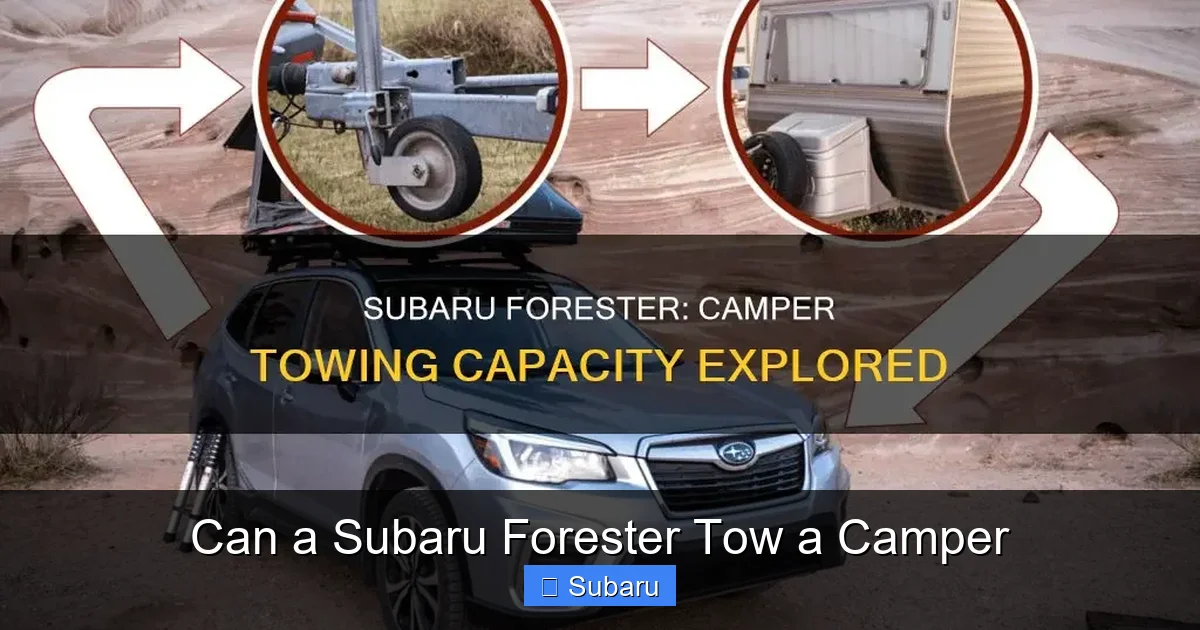
For the 2014–2018 models, the standard towing capacity is **1,500 lbs**. However, if your Forester has the optional factory-installed tow package (available on higher trims like the Limited and Touring), the capacity increases to **2,300 lbs**. This package includes a transmission cooler, pre-wired harness, and reinforced mounting points—key upgrades for safe towing.
Visual guide about Can a Subaru Forester Tow a Camper
Image source: shunauto.com
2019–2024 Subaru Forester Towing Capacity
The 2019 redesign brought a new platform and improved towing capability. All 2019–2024 Foresters come standard with a towing capacity of **2,300 lbs**, thanks to the standard all-wheel drive and stronger chassis. No tow package is required—though Subaru still offers a dealer-installed tow package with a hitch receiver, wiring, and other accessories.
Why the Difference Matters
The jump from 1,500 to 2,300 lbs opens up more camper options. A 1,500-lb limit restricts you to very small trailers—like basic teardrops or minimalist pop-ups. But with 2,300 lbs, you can consider slightly larger pop-ups, A-frame trailers, or even small hard-sided campers, as long as the total weight (including cargo) stays under the limit.
Types of Campers the Forester Can Tow
Now that you know the towing capacity, let’s talk about what kinds of campers are realistic for a Subaru Forester. The key is matching the camper’s weight to your Forester’s limits.
Pop-Up Campers (Best Fit)
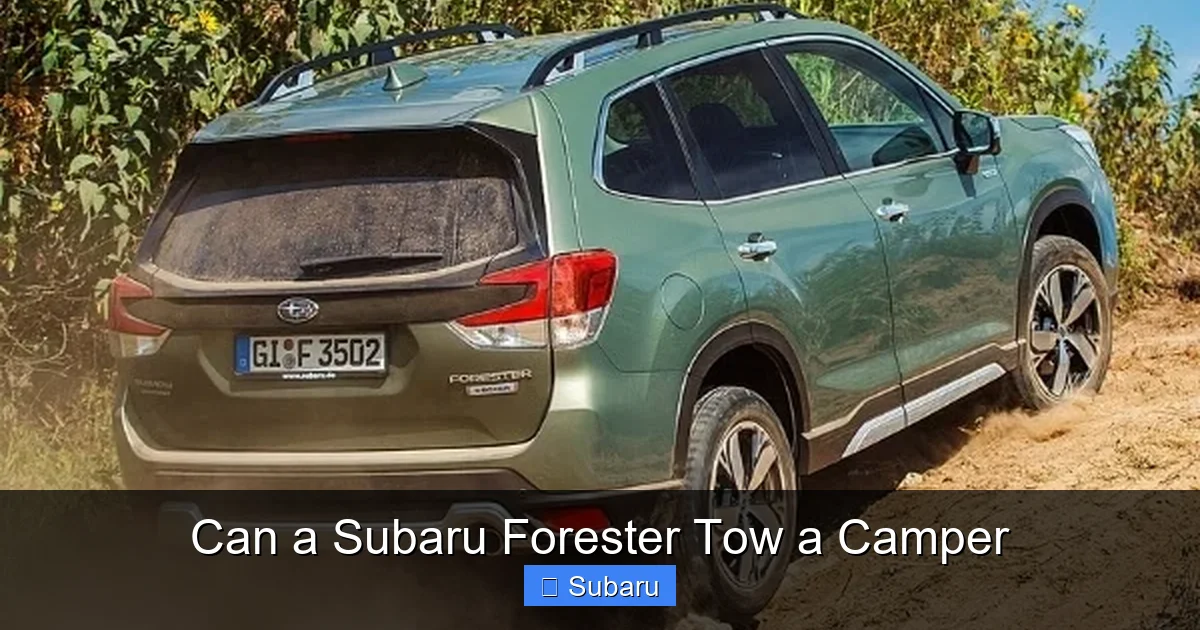
Pop-up campers are the most popular choice for Forester owners. These lightweight trailers fold down for easy towing and expand into comfortable sleeping and living spaces. Most pop-ups weigh between 1,200 and 2,200 lbs when fully loaded, making them ideal for the Forester’s 2,300-lb capacity.
Visual guide about Can a Subaru Forester Tow a Camper
Image source: rvandplaya.com
Popular models like the Jayco Jay Series, Forest River Rockwood, and Aliner A-frame are excellent matches. For example, the Aliner A-frame weighs around 1,800 lbs dry and can sleep up to four people. With a little gear, you’re still well under 2,300 lbs.
Teardrop Trailers (Great for Couples)
Teardrop trailers are compact, stylish, and efficient. They typically feature a small sleeping area in the back and a galley (kitchen) in the front. Most weigh between 800 and 1,500 lbs, leaving plenty of room for cargo and comfort.
Brands like Tear Drop Trailers by Little Guy, Hiker Trailer, and Scamp offer models that are perfect for Forester owners. These campers are aerodynamic, fuel-efficient to tow, and easy to maneuver—even on mountain roads.
A-Frame and Small Travel Trailers (Use Caution)
A-frame trailers (like the Aliner or Chalet) are rigid-sided but lightweight, usually under 2,000 lbs. They’re a step up from pop-ups and offer better insulation and durability. However, you’ll need to be very careful with cargo. Even a small amount of water, gear, or propane can push you over the limit.
Hard-sided travel trailers over 2,000 lbs are generally not recommended. While some very small models (like the Casita Spirit Deluxe at 1,900 lbs) might work, you’ll have almost no room for supplies. It’s better to stay under 2,000 lbs total to allow for safety margin.
What About Fifth Wheels or Large Trailers?
Absolutely not. Fifth wheels require a pickup truck with a specialized hitch. Large travel trailers (over 3,000 lbs) are far beyond the Forester’s capabilities and would severely strain the engine, transmission, and brakes. Stick to lightweight options for safety and longevity.
Essential Equipment for Towing a Camper with a Forester
Towing isn’t just about hitching up and driving. You need the right equipment to do it safely and legally. Here’s what every Forester owner should have when towing a camper.
Class II or Class III Hitch Receiver
The hitch is the foundation of your towing setup. Most Foresters use a Class II hitch (rated for up to 3,500 lbs gross trailer weight), which is more than enough for a 2,300-lb camper. Some owners upgrade to a Class III hitch for added strength and versatility.
Visual guide about Can a Subaru Forester Tow a Camper
Image source: rvandplaya.com
Popular brands include Curt, Draw-Tite, and U-Haul. Make sure the hitch is specifically designed for your Forester’s model year. A professional installation is recommended to ensure proper alignment and safety.
Wiring Harness and Trailer Lights
Your camper’s brake lights, turn signals, and running lights must sync with your Forester. A 4-pin or 7-pin wiring harness connects the trailer to the vehicle’s electrical system. Many Foresters come pre-wired, but you may need a plug-and-play adapter.
Always test the lights before hitting the road. A broken brake light on a trailer can lead to accidents or tickets.
Weight Distribution Hitch (Optional but Helpful)
If your camper is close to 2,000 lbs or has a long tongue weight, a weight distribution hitch can improve stability. It redistributes the trailer’s weight across all four tires, reducing sag and improving steering control.
This is especially useful on highways or windy conditions. However, for lighter campers (under 1,500 lbs), a standard ball mount is usually sufficient.
Brake Controller (If Required)
Some states require trailers over 1,500 lbs to have electric brakes. If your camper has them, you’ll need a brake controller installed in your Forester. This device lets you adjust brake force from the driver’s seat.
Subaru doesn’t offer a factory brake controller, but aftermarket units from Redarc, Tekonsha, or Hopkins work well. Installation is straightforward and can be done by a mechanic or DIYer.
Sway Control Devices
Trailer sway—when the camper fishtails behind the vehicle—is a common danger. A sway control bar or dual-cam sway control can minimize this risk. These devices attach to the hitch and apply resistance to keep the trailer aligned.
Even with a light camper, crosswinds or passing trucks can cause sway. It’s a small investment for big peace of mind.
Driving Tips and Safety Considerations
Towing changes how your Forester handles. It’s heavier, slower, and less responsive. Here’s how to drive safely and confidently.
Slow Down and Allow Extra Space
Your Forester will accelerate slower and take longer to stop. Reduce your speed by 10–15 mph when towing. Leave at least 3–4 seconds of following distance behind other vehicles.
On highways, use the right lane when possible. Avoid sudden lane changes or hard braking.
Use Lower Gears on Hills
When climbing steep grades, shift into a lower gear (use the manual mode on CVT models). This reduces strain on the transmission and prevents overheating. Descending? Use engine braking to avoid overheating the brakes.
Subaru’s Symmetrical AWD helps with traction, but gravity is still a force to respect.
Check Tire Pressure and Load Distribution
Underinflated tires can overheat and fail. Check your Forester’s tire pressure before every trip—especially the rear tires, which carry more load when towing.
Distribute weight evenly in the camper. Heavy items should be low and centered over the axle. Avoid loading too much in the rear, which can cause sway.
Monitor Transmission Temperature
Towing puts extra heat on the transmission. If your Forester has a transmission temperature gauge (or you’ve installed an aftermarket one), keep an eye on it. If it climbs too high, pull over and let it cool.
Consider installing an auxiliary transmission cooler if you plan to tow frequently or in hot climates.
Practice Before You Go
If you’ve never towed before, practice in an empty parking lot. Practice backing up, turning, and braking. It takes time to get used to the extra length and weight.
Remember: backing up a trailer is counterintuitive. Turn the wheel in the opposite direction you want the trailer to go.
Real-World Examples: Forester Owners Who Tow Campers
Still not sure? Let’s look at real stories from Forester owners who’ve successfully towed campers.
Case Study 1: Sarah’s Weekend Teardrop Adventures
Sarah owns a 2020 Forester and pulls a 1,200-lb teardrop trailer for weekend trips to state parks. She uses a Curt Class II hitch and a 4-pin wiring harness. “It handles great,” she says. “I barely notice it’s back there. I get about 22 mpg on the highway—down from 28, but still respectable.”
She packs light, uses a roof box for extra gear, and always checks her hitch before driving.
Case Study 2: Mike’s Family Pop-Up Camping Trips
Mike has a 2017 Forester with the factory tow package. He tows a 2,100-lb pop-up camper for family vacations. “We’ve driven over 10,000 miles with it,” he says. “No issues. We avoid mountain passes in summer, but otherwise, it’s been reliable.”
He uses a weight distribution hitch and checks his transmission fluid every 3,000 miles.
Case Study 3: Lisa’s Mistake—and What She Learned
Lisa bought a 2,400-lb travel trailer for her 2015 Forester (1,500-lb capacity). “I thought I could make it work,” she admits. “But the car struggled on hills, and the brakes got hot. I had to turn back.”
She traded the trailer for a lighter pop-up and now enjoys stress-free trips. “Know your limits,” she says. “It’s not worth the risk.”
Maintenance Tips for Towing with a Forester
Towing puts extra stress on your vehicle. Regular maintenance is key to avoiding breakdowns.
Transmission Care
The CVT (continuously variable transmission) in Foresters is durable but sensitive to heat. Towing increases fluid temperature. Change the transmission fluid every 30,000–60,000 miles if you tow regularly.
Engine and Cooling System
Check coolant levels before long trips. Consider upgrading to a high-performance radiator or auxiliary cooler if you live in a hot climate or tow often.
Brake Inspections
Towing wears out brake pads faster. Have them inspected every 10,000 miles. Replace rotors if they show signs of warping or cracking.
Suspension and Alignment
Heavy loads can sag the rear suspension. Consider upgrading to heavy-duty shocks or air helper springs. Get a wheel alignment after installing a hitch or towing frequently.
Conclusion: Yes, But Do It Right
So, can a Subaru Forester tow a camper? Absolutely—if you choose the right camper, use the right equipment, and drive responsibly. The Forester isn’t a heavy-duty tow rig, but it’s more than capable of handling lightweight pop-ups, teardrops, and small A-frames.
The key is realism. Don’t push the limits. Stay under 2,300 lbs, pack smart, and maintain your vehicle. With proper preparation, your Forester can take you on countless camping adventures—safely and reliably.
Whether you’re exploring national parks, lakeside cabins, or mountain trails, the Forester can be your trusty travel companion. Just remember: it’s not about how much you can tow—it’s about how well you can enjoy the journey.
Frequently Asked Questions
What is the towing capacity of a Subaru Forester?
Most Subaru Foresters (2014–2024) can tow between 1,500 and 2,300 pounds. Models from 2019 onward have a standard 2,300-lb capacity, while earlier models may require the optional tow package to reach that limit.
Can a 2022 Subaru Forester tow a pop-up camper?
Yes, a 2022 Forester can safely tow most pop-up campers, as long as the total weight (including cargo) stays under 2,300 lbs. Popular models like the Jayco Jay Series or Aliner are excellent matches.
Do I need a special hitch to tow with a Subaru Forester?
Yes, you’ll need a Class II or Class III hitch receiver designed for your Forester’s model year. A professional installation is recommended for safety and proper alignment.
Can I tow a camper without the factory tow package?
Yes, but only if your Forester has the 2,300-lb capacity (standard on 2019+ models). For older models, the factory tow package increases capacity from 1,500 to 2,300 lbs and includes important cooling and wiring upgrades.
How does towing affect fuel economy in a Forester?
Towing reduces fuel economy by 20–30%. Expect around 18–22 mpg when towing a camper, compared to the normal 26–30 mpg. The exact drop depends on camper weight, terrain, and driving style.
Is it safe to tow a camper with a Subaru Forester?
Yes, as long as you stay within the towing capacity, use proper equipment, and drive cautiously. The Forester’s all-wheel drive and stability control help maintain control, but always allow extra time and space when towing.
