
Can a Subaru Forester Tow a Trailer?

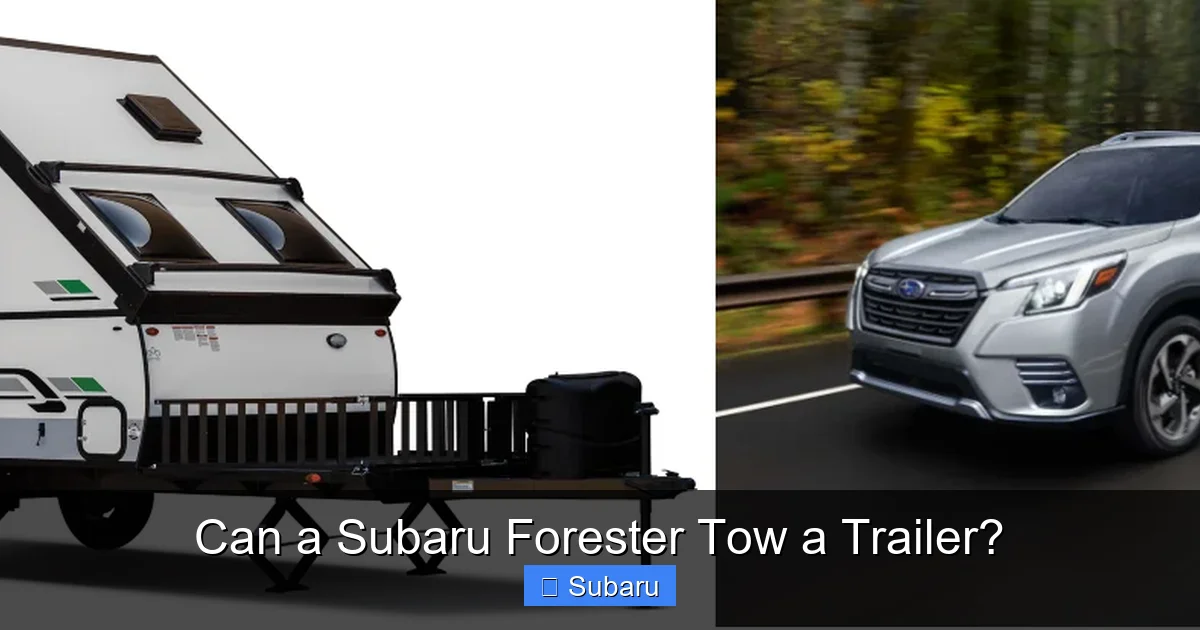
Yes, a Subaru Forester can tow a trailer—but with important limits. Depending on the model year and drivetrain, towing capacity ranges from 1,500 to 2,000 pounds. With proper equipment and smart loading, it’s great for small campers, utility trailers, or gear hauling.
So, you’ve got a Subaru Forester—maybe it’s your daily driver, your weekend adventurer, or your trusty family hauler. It’s reliable, roomy, and handles like a dream on backroads and city streets alike. But now you’re wondering: *Can a Subaru Forester tow a trailer?* Maybe you’re planning a camping trip with a small pop-up camper, need to haul a utility trailer full of gear, or want to tow a lightweight boat to the lake. Whatever your reason, you’re not alone. Thousands of Forester owners ask this same question every year.
The short answer? Yes—but with some important caveats. The Subaru Forester isn’t built to be a heavy-duty workhorse like a pickup truck or full-size SUV. It’s a compact crossover designed for comfort, efficiency, and all-weather capability. That said, it *can* tow, and many owners do so safely and successfully—so long as they understand its limits and prepare properly. In this guide, we’ll break down everything you need to know about towing with a Forester: from towing capacity and required equipment to real-world tips and common mistakes to avoid.
Whether you’re a first-time tower or a seasoned road warrior, this article will help you make smart, safe decisions. We’ll cover model-specific details, explain how to calculate safe loads, and share practical advice from experienced Forester owners. By the end, you’ll know exactly what your Forester can—and can’t—handle when it comes to towing a trailer.
Key Takeaways
- Towing capacity varies by model year and trim: Most modern Foresters (2014–2024) can tow between 1,500 and 2,000 pounds when properly equipped.
- All-wheel drive helps, but doesn’t increase towing: Subaru’s standard AWD improves traction but doesn’t boost the official towing rating.
- Factory-installed towing package is recommended: Includes hitch receiver, wiring harness, and cooling upgrades for safer, more reliable towing.
- Weight distribution matters: Keep tongue weight at 10–15% of total trailer weight to maintain stability and control.
- Fuel economy drops when towing: Expect a 20–30% reduction in MPG, especially on hills or at highway speeds.
- Not ideal for large RVs or boats: The Forester excels with lightweight trailers like pop-up campers, small cargo boxes, or kayak racks.
- Regular maintenance is crucial: Check brakes, tires, fluids, and suspension before and after towing trips.
📑 Table of Contents
Understanding Subaru Forester Towing Capacity
When it comes to towing, the most important number to know is your vehicle’s **towing capacity**—the maximum weight it can safely pull. For the Subaru Forester, this number isn’t one-size-fits-all. It depends on several factors, including the model year, engine type, transmission, and whether you have the optional towing package.
From 2014 to 2024, the Forester has consistently offered a towing capacity of **1,500 to 2,000 pounds** when properly equipped. Earlier models (pre-2014) had slightly lower ratings, often capped at 1,500 pounds. The jump to 2,000 pounds came with the introduction of the 2.5L four-cylinder engine and improved cooling systems in later trims.
Here’s a quick breakdown by recent model years:
– **2014–2018 Forester:** 1,500 lbs (standard), 2,000 lbs (with towing package)
– **2019–2024 Forester:** 2,000 lbs (with towing package), 1,500 lbs (without)
It’s important to note that **not all Foresters are created equal** when it comes to towing. The 2,000-pound rating only applies if your vehicle has the factory-installed towing package. This package typically includes a Class II hitch receiver, a 4-pin wiring harness, and enhanced cooling for the transmission and engine. Without it, your towing capacity drops to 1,500 pounds—even if you add an aftermarket hitch later.
Why the difference? Subaru engineers design the towing package to handle the extra stress of pulling a load. The added cooling helps prevent overheating, especially in stop-and-go traffic or on long climbs. The hitch receiver is rated for the higher weight, and the wiring ensures your trailer lights work safely.
So, how do you know if your Forester has the towing package? Check your owner’s manual, look for a hitch receiver under the rear bumper, or contact a Subaru dealer with your VIN. If you’re buying used, ask for documentation or have a mechanic inspect it.
Why Towing Capacity Isn’t Just About Horsepower
You might be thinking, “But my Forester has 182 horsepower—shouldn’t that be enough to pull more?” While horsepower plays a role, towing capacity is about more than just engine power. It’s a combination of:
– **Engine torque:** The twisting force that gets things moving. The Forester’s 2.5L engine produces around 176 lb-ft of torque, which is decent for its class but not robust.
– **Transmission strength:** CVT (continuously variable transmission) systems, like the one in most Foresters, are efficient but can overheat under heavy load.
– **Brake system:** Your brakes must stop both the vehicle and the trailer. Overloading can overwhelm the braking system.
– **Suspension and frame:** The Forester’s unibody design is great for ride comfort but not as strong as a truck’s frame for heavy towing.
– **Cooling capacity:** Towing generates extra heat. Without proper cooling, the engine and transmission can overheat, leading to damage.
That’s why Subaru limits the Forester’s towing capacity—even though it might *seem* capable of more. Safety and long-term reliability come first.
Real-World Examples of What You Can Tow
So, what does 1,500 to 2,000 pounds actually look like? Here are some common trailers and their approximate weights:
– **Pop-up camper:** 1,000–1,800 lbs (lightly loaded)
– **Small utility trailer (4×6 or 5×8):** 500–1,000 lbs (empty), up to 1,500+ lbs when loaded
– **Kayak or canoe trailer:** 200–400 lbs
– **Motorcycle trailer:** 300–600 lbs
– **Small teardrop camper:** 1,200–1,800 lbs
– **Boat (aluminum, under 14 feet):** 1,000–1,800 lbs (including trailer and gear)
As you can see, the Forester is best suited for lightweight, compact trailers. It’s not meant for large travel trailers, heavy cargo loads, or full-sized boats. But for weekend adventures, gear hauling, or light recreational use, it’s more than capable.
Required Equipment for Towing with a Forester

Visual guide about Can a Subaru Forester Tow a Trailer?
Image source: thetowcarawards.com
You can’t just hook up any trailer and hit the road. To tow safely and legally, you need the right equipment. Here’s what every Forester owner should have before towing:
Factory or Aftermarket Towing Package
As mentioned earlier, the factory towing package is the best option. It’s engineered specifically for your Forester and includes:
– **Class II hitch receiver:** Rated for up to 3,500 lbs gross trailer weight (GTW) and 350 lbs tongue weight—more than enough for the Forester’s 2,000-lb limit.
– **4-pin wiring harness:** Powers trailer lights (brake, turn, tail).
– **Transmission cooler:** Helps prevent overheating during prolonged towing.
– **Engine oil cooler (on some models):** Adds extra protection under load.
If your Forester didn’t come with the package, you can install an aftermarket hitch and wiring kit. Popular brands include Curt, Draw-Tite, and U-Haul. However, even with an aftermarket hitch, your towing capacity remains 1,500 lbs unless the vehicle was originally equipped with the factory package. Subaru’s official stance is that the 2,000-lb rating only applies to vehicles with the factory-installed system.
Trailer Hitch and Ball Mount
You’ll need a hitch ball that matches your trailer’s coupler size—most small trailers use a 2-inch or 1-7/8-inch ball. The ball mount should be the correct height to keep the trailer level when hitched. A level trailer improves handling and reduces strain on the hitch.
Safety Chains and Breakaway System
Always cross the safety chains under the hitch tongue to catch the trailer if it detaches. For trailers over 1,500 lbs, a breakaway system (a battery-powered brake actuator) is required by law in most states. It activates the trailer brakes if the trailer becomes unhitched.
Trailer Brakes (If Needed)
Trailers under 1,500 lbs typically don’t require brakes, but anything heavier should have them—especially if you’re driving in hilly areas or towing frequently. The Forester doesn’t have a built-in brake controller, so you’ll need an aftermarket one if your trailer has electric brakes.
Proper Tires and Load Rating
Make sure your trailer tires are in good condition and rated for the load. Underinflated or worn tires can fail, especially when hot. Check the tire pressure before every trip.
How to Safely Tow with Your Forester

Visual guide about Can a Subaru Forester Tow a Trailer?
Image source: suvhelp.com
Having the right equipment is only half the battle. Safe towing also requires smart driving habits and proper loading.
Distribute Weight Correctly
The **tongue weight**—the downward force on the hitch—should be 10–15% of the total trailer weight. Too little, and the trailer can sway; too much, and it can overload the rear suspension and affect steering.
To check tongue weight, use a bathroom scale or a tongue weight scale. Place the coupler on the scale while the trailer is level. If it’s too high or low, adjust the load inside the trailer. Heavier items should be centered over the axle or slightly forward.
Secure Your Load
Loose cargo can shift during transit, changing the weight distribution and causing instability. Use ratchet straps, bungee cords, or cargo nets to secure everything. Don’t overload the trailer—stay under the Forester’s towing limit, including the weight of the trailer itself, cargo, and any passengers or gear in the vehicle.
Drive Smoothly and Allow Extra Distance
Towing changes how your Forester handles. It will accelerate slower, brake later, and take longer to stop. Here are some tips:
– **Accelerate gradually:** Avoid sudden starts.
– **Brake early:** Give yourself extra stopping distance.
– **Take turns wide:** Trailers can swing out or tip if you turn too sharply.
– **Avoid sudden lane changes:** Sway is more likely at highway speeds.
– **Use lower gears on hills:** This reduces strain on the transmission and brakes.
Monitor Temperature and Performance
Keep an eye on your dashboard gauges, especially the engine temperature and transmission fluid temperature (if your model has a gauge). If you notice overheating, pull over safely and let the engine cool. Avoid towing in extreme heat or for long distances without breaks.
Practice Before You Go
If you’ve never towed before, practice in an empty parking lot. Get used to backing up, turning, and braking with a trailer attached. It takes time to learn how the trailer responds.
Fuel Economy and Maintenance Considerations
Visual guide about Can a Subaru Forester Tow a Trailer?
Image source: d33wubrfki0l68.cloudfront.net
Towing takes a toll on your Forester—both in terms of fuel and wear and tear.
Reduced Fuel Efficiency
Expect a **20–30% drop in fuel economy** when towing. A Forester that normally gets 28 MPG might drop to 20 MPG or less with a loaded trailer. Factors like wind resistance, terrain, and speed all play a role. To save fuel:
– Drive at moderate speeds (55–65 mph).
– Use cruise control on flat highways.
– Remove the trailer when not in use to reduce drag.
Increased Wear on Components
Towing puts extra stress on:
– **Brakes:** They work harder to stop the combined weight.
– **Suspension:** Rear springs and shocks may sag under load.
– **Transmission:** CVTs can overheat if pushed too hard.
– **Tires:** Both vehicle and trailer tires wear faster.
To minimize damage:
– Rotate tires regularly.
– Replace worn suspension parts.
– Use synthetic transmission fluid.
– Avoid towing near the maximum capacity for long trips.
Pre-Trip and Post-Trip Checks
Before every towing trip, inspect:
– Trailer lights and connections
– Tire pressure (vehicle and trailer)
– Hitch and safety chains
– Brake fluid and engine oil
After the trip, check for signs of overheating, leaks, or unusual noises. Clean the hitch and store it properly.
Common Mistakes to Avoid
Even experienced drivers make towing mistakes. Here are the most common ones Forester owners should avoid:
Overloading the Trailer
It’s tempting to pack everything you need, but exceeding the towing capacity is dangerous. It can cause loss of control, brake failure, or transmission damage. Always weigh your loaded trailer at a public scale if you’re unsure.
Ignoring Tongue Weight
A trailer that’s too light in the front will fishtail. Too heavy, and it can lift the rear wheels of the Forester, reducing traction. Use a weight distribution hitch if needed, though most small trailers don’t require one.
Towing Without the Right Equipment
Don’t rely on a cheap hitch or makeshift wiring. Use quality parts that meet safety standards. A failed hitch or blown fuse can leave you stranded or cause an accident.
Driving Too Fast
High speeds increase sway and reduce reaction time. Keep it steady and slow, especially in windy conditions or on rough roads.
Neglecting Maintenance
Towing accelerates wear. Skip the oil change or ignore a squeaky brake at your peril. Regular maintenance keeps your Forester reliable.
Alternatives If You Need More Towing Power
If you regularly need to tow more than 2,000 pounds, the Forester might not be the right vehicle for you. Consider these alternatives:
– **Subaru Ascent:** Subaru’s largest SUV, with a 5,000-lb towing capacity.
– **Toyota RAV4 Hybrid:** Up to 3,500 lbs with towing package.
– **Honda CR-V:** 1,500 lbs (similar to Forester), but some trims offer more.
– **Ford Escape:** Up to 3,500 lbs with turbo engine and tow package.
But if your needs are light—weekend camping, hauling gear, or towing a small boat—the Forester is a capable, efficient, and affordable choice.
Conclusion
So, can a Subaru Forester tow a trailer? Absolutely—**if you do it right**. With a towing capacity of 1,500 to 2,000 pounds, the Forester is perfect for small campers, utility trailers, and lightweight recreational gear. It’s not built for heavy-duty work, but for everyday adventures, it’s more than up to the task.
The key is preparation. Equip your Forester with the right hitch, wiring, and cooling systems. Load your trailer correctly, drive carefully, and maintain your vehicle. Respect the limits, and your Forester will serve you well for years to come.
Whether you’re heading to the mountains, the beach, or just the local hardware store, towing with your Forester can be safe, smart, and stress-free. Just remember: it’s not about how much you can pull—it’s about how safely you can get there.
Frequently Asked Questions
Can a Subaru Forester tow a pop-up camper?
Yes, most pop-up campers weigh between 1,000 and 1,800 pounds, which falls within the Forester’s towing capacity. Just make sure your model has the towing package and that the camper is properly loaded.
Do I need a special license to tow with a Forester?
No, a standard driver’s license is sufficient for towing trailers under 10,000 pounds in most states. However, check your local laws for any specific requirements.
Can I install a towing package on an older Forester?
You can add an aftermarket hitch and wiring, but the 2,000-lb towing rating only applies to vehicles originally equipped with the factory towing package. Older models are typically limited to 1,500 lbs.
Will towing void my Subaru warranty?
No, towing within the manufacturer’s guidelines will not void your warranty. However, damage caused by overloading or improper towing may not be covered.
How do I know if my trailer is too heavy?
Add the weight of the trailer, cargo, and any fluids. If the total exceeds your Forester’s towing capacity (check your owner’s manual), it’s too heavy. Use a public scale to weigh your loaded trailer if unsure.
Can I tow in snow or rain with a Forester?
Yes, the Forester’s all-wheel drive helps in slippery conditions. However, towing in snow or rain requires extra caution—reduce speed, increase following distance, and avoid sudden maneuvers.
