
Are Subaru Catalytic Converters Worth Anything?

Subaru catalytic converters do have real value, especially due to the precious metals they contain like platinum, palladium, and rhodium. While not the highest-paying on the market, they’re still worth recycling—particularly for newer models or high-mileage vehicles nearing end-of-life.
If you’ve ever popped the hood of your Subaru or taken it in for an emissions test, you’ve probably noticed that little metal canister tucked under the car near the exhaust manifold. That’s your catalytic converter—and yes, it might be worth more than you think. While Subarus aren’t typically the first brand that comes to mind when people talk about high-value catalytic converters (that title often goes to Toyota or Honda), they still pack a surprising punch in terms of scrap value.
So, are Subaru catalytic converters worth anything? The short answer is: absolutely. But the real value depends on several factors—your model year, engine size, whether you have one or two converters, and even the current market price of precious metals. In this guide, we’ll break down everything you need to know about the worth of Subaru catalytic converters, from how they work to how much you can realistically expect to earn if you decide to sell one.
Whether you’re dealing with a failed emissions test, planning to scrap an old Legacy, or just curious about what’s under your Forester, understanding the value of your catalytic converter can save you money—or even put some cash in your pocket. Let’s dive in.
Key Takeaways
- Subaru catalytic converters contain valuable precious metals such as platinum, palladium, and rhodium, which drive their scrap value.
- Newer Subaru models (2010 and later) tend to be more valuable because they use higher concentrations of these metals to meet stricter emissions standards.
- The location of the catalytic converter matters—Subarus with dual exhaust systems (like the WRX or Outback) often have two cats, doubling potential scrap value.
- Damaged or clogged converters still hold value as long as the internal honeycomb structure is intact and not melted or crushed.
- Selling to a reputable scrap yard or recycler ensures fair payment and helps avoid scams or underpayment based on outdated pricing.
- Rhodium prices fluctuate significantly, so timing your sale during market highs can increase your payout by 20–40%.
- Never remove a catalytic converter yourself unless legally allowed—it’s illegal in most U.S. states to drive without one, and tampering can lead to fines.
📑 Table of Contents
- What Is a Catalytic Converter and Why Does It Matter?
- Why Are Subaru Catalytic Converters Valuable?
- How Much Are Subaru Catalytic Converters Worth?
- How to Determine Your Subaru Catalytic Converter’s Value
- Legal and Safety Considerations
- Tips for Getting the Most Money for Your Subaru Catalytic Converter
- Conclusion
What Is a Catalytic Converter and Why Does It Matter?
Before we talk dollars and cents, it helps to understand what a catalytic converter actually does. Think of it as your car’s pollution filter. As exhaust gases exit the engine, they pass through the catalytic converter, where a chemical reaction converts harmful pollutants like carbon monoxide, nitrogen oxides, and unburned hydrocarbons into less harmful substances like carbon dioxide, nitrogen, and water vapor.
This process happens inside a ceramic honeycomb structure coated with precious metals—primarily platinum, palladium, and rhodium. These metals act as catalysts (hence the name), speeding up the chemical reactions without being consumed in the process. Because these metals are rare and expensive, the catalytic converter becomes a target for thieves and a valuable item for recyclers.
In Subarus, catalytic converters are typically located close to the engine for faster warm-up and better efficiency. Many models, especially performance-oriented ones like the WRX or turbocharged Outbacks, feature dual catalytic converters—one for each bank of cylinders in the boxer engine. This design not only improves emissions control but also increases the total amount of precious metals, boosting the overall scrap value.
Why Are Subaru Catalytic Converters Valuable?
Visual guide about Are Subaru Catalytic Converters Worth Anything?
Image source: dudazps6njn84.cloudfront.net
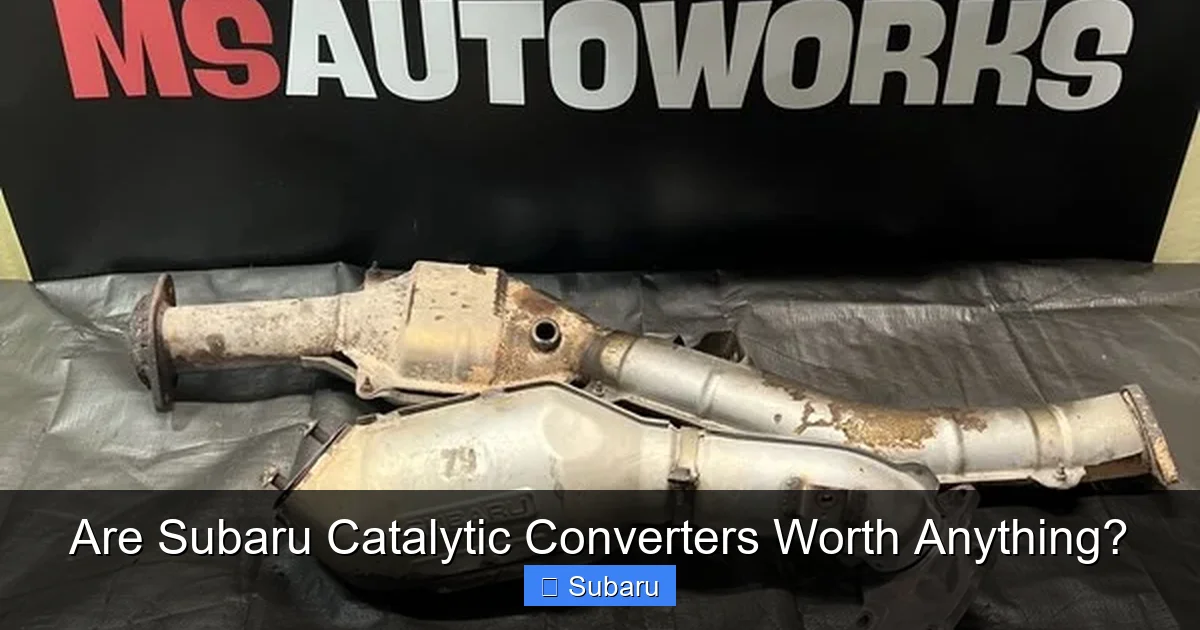
The value of any catalytic converter comes down to one thing: the precious metals it contains. Platinum, palladium, and rhodium are all used in varying amounts depending on the vehicle’s make, model, and year. Subaru catalytic converters are no exception.
Precious Metals Breakdown
Platinum has long been the backbone of catalytic converters, prized for its durability and effectiveness in reducing emissions. Palladium became more widely used in the 2000s as a cheaper alternative, especially in gasoline engines. Rhodium, the rarest and most expensive of the three, is used in smaller quantities but can significantly drive up value due to its high market price.
In Subaru vehicles, the exact composition varies. For example:
– A 2005 Subaru Impreza with a 2.5L engine might contain around 2–3 grams of platinum and 1–2 grams of palladium.
– A 2018 Subaru WRX STI with a turbocharged engine could have 4–6 grams of combined platinum, palladium, and rhodium—especially if it has dual converters.
These numbers may seem small, but when you consider that rhodium has traded for over $10,000 per troy ounce in recent years, even a fraction of a gram can be worth $50–$100 or more.
Model Year and Emissions Standards
Newer Subaru models are generally more valuable because they were built to meet stricter emissions regulations. Starting around 2010, the U.S. Environmental Protection Agency (EPA) tightened standards, requiring automakers to use more efficient and longer-lasting catalytic converters. This often meant increasing the amount of precious metals used.
For instance, a 2020 Subaru Ascent with a 2.4L turbo engine will likely have a higher metal content than a 2002 Forester with a naturally aspirated 2.5L engine. The newer model not only has more advanced engineering but also uses more rhodium, which is critical for reducing nitrogen oxide emissions in turbocharged engines.
Dual vs. Single Catalytic Converters
One of the biggest factors affecting value is whether your Subaru has one or two catalytic converters. Subaru’s signature boxer engine layout—where cylinders lie flat and oppose each other—often requires dual exhaust systems. This means two catalytic converters: one for each side of the engine.
Vehicles like the WRX, STI, Outback XT, and Legacy GT typically come with dual cats. Having two converters essentially doubles the amount of precious metals, which can significantly increase scrap value. For example, if a single converter from a 2015 WRX is worth $200, having two could bring the total to $350–$400, depending on condition and market prices.
How Much Are Subaru Catalytic Converters Worth?
Visual guide about Are Subaru Catalytic Converters Worth Anything?
Image source: s3.amazonaws.com
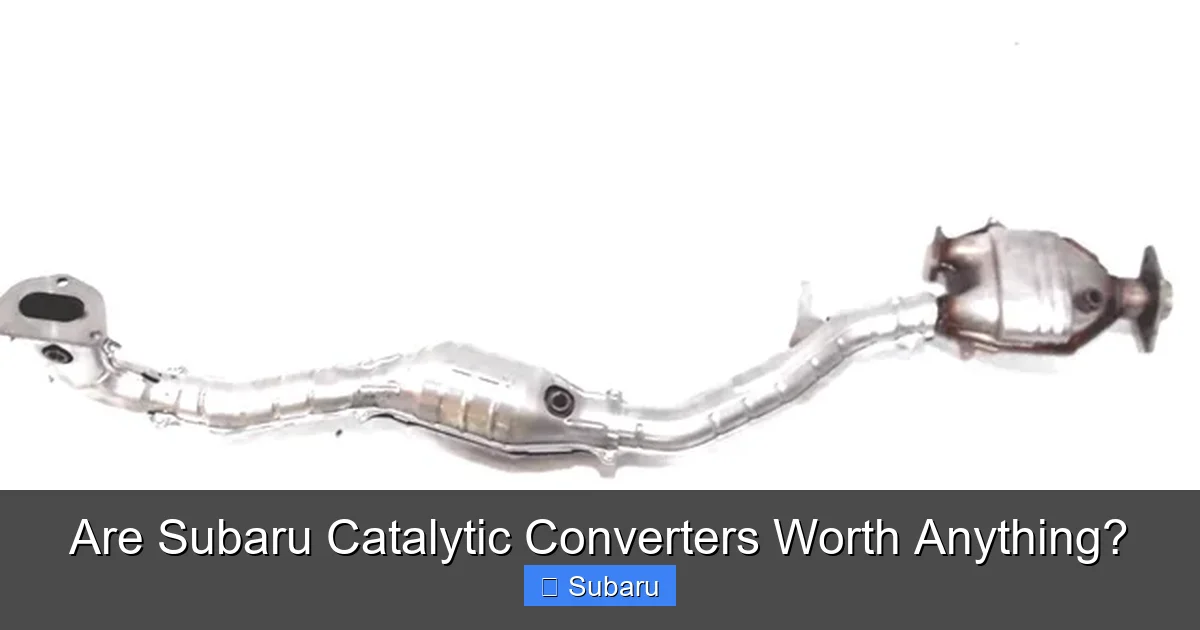
Now for the million-dollar question: how much can you actually get for a Subaru catalytic converter? The answer isn’t fixed—it depends on several variables, including market conditions, converter condition, and where you sell it.
Average Scrap Values by Model
While prices fluctuate, here are some general estimates based on recent scrap market data:
– **2000–2005 Subaru Impreza (single cat):** $80–$150
These older models have lower metal content and are less sought after, but still contain enough platinum and palladium to be worth recycling.
– **2006–2010 Subaru Forester or Outback (single or dual cat):** $120–$250
Slightly newer and often with higher palladium content, these models see moderate demand.
– **2011–2015 Subaru WRX or Legacy GT (dual cat):** $250–$400
Turbocharged engines and dual converters make these some of the more valuable Subaru cats on the market.
– **2016–2023 Subaru Ascent, Outback, or WRX STI (dual cat):** $350–$600+
These newer models use more rhodium and are built to last longer, making them highly desirable for recyclers.
Keep in mind that these are scrap values—what a recycling center will pay you for the converter as-is. If you’re selling to a private buyer or a specialized metal refiner, you might get more, but that requires more effort and knowledge of the market.
Factors That Affect Value
Several things can increase or decrease the value of your Subaru catalytic converter:
– **Condition:** A converter that’s intact, not melted, and has a clean honeycomb structure will fetch a higher price. If the internal ceramic is broken or the shell is crushed, value drops significantly.
– **Serial Number:** Some converters have stamped serial numbers that recyclers use to verify authenticity and origin. A readable number can increase value.
– **Market Prices:** The value of platinum, palladium, and rhodium changes daily. When rhodium prices spike (as they did in 2021), even older converters can become more valuable.
– **Location:** Scrap yards in urban areas or regions with high theft rates may offer lower prices due to oversupply. Shopping around can help you get a better deal.
Real-World Example
Let’s say you have a 2017 Subaru WRX with dual catalytic converters. You take it to a local scrap yard, and they test the metals. Based on current market rates (as of mid-2024), they offer you $380 for both converters. That breaks down to about $190 per cat. If rhodium prices rise in the next few months, that same converter could be worth $220–$240 each—so timing matters.
Alternatively, you could sell it to an online recycler like Catalytic Recycling or Greentec Auto, which often pay more because they have direct access to refineries. They might offer $420–$450 for the same pair, minus shipping costs.
How to Determine Your Subaru Catalytic Converter’s Value
Visual guide about Are Subaru Catalytic Converters Worth Anything?
Image source: s3.amazonaws.com
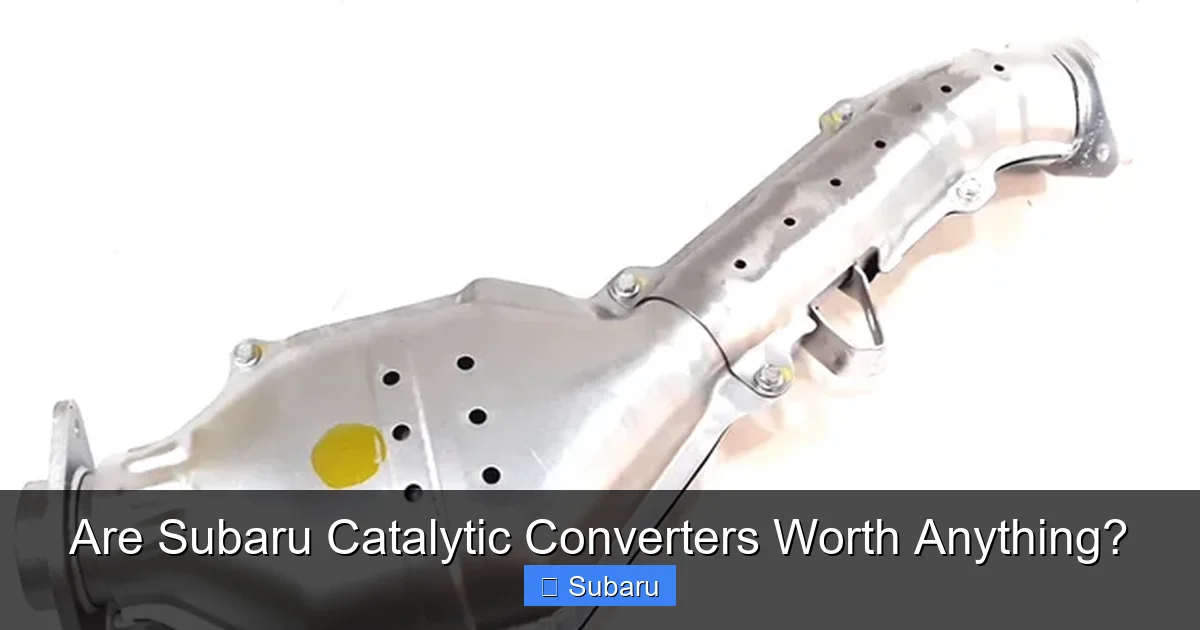
If you’re thinking about selling your catalytic converter, the first step is figuring out how much it’s worth. Here’s a simple process to follow:
Step 1: Identify Your Model and Year
Start by checking your vehicle’s year, make, model, and engine size. This information is usually on your registration or insurance card. You can also look up your VIN online using a free decoder tool.
For example, a 2014 Subaru Outback with a 3.6L H6 engine will have a different converter than a 2014 Impreza with a 2.0L flat-four. The larger engine often means a larger or dual converter setup.
Step 2: Check for Dual Converters
Lift your Subaru (safely, with jack stands) and look underneath. If you see two separate catalytic converters—one on each side of the exhaust manifold—you’ve got dual cats. This is common in turbocharged or six-cylinder Subarus.
Step 3: Look for the Stamped Number
Most catalytic converters have a serial number stamped on the metal casing. This number helps recyclers identify the exact model and metal content. Write it down or take a clear photo.
You can use this number on websites like CatalyticConverterPrice.com or RecycleYourCats.com to get an estimated value. These sites maintain databases of thousands of converters and update prices regularly.
Step 4: Get Multiple Quotes
Don’t settle for the first offer. Call or visit at least three local scrap yards or auto recyclers. Some may specialize in catalytic converters and offer better rates. Be sure to ask if they test on-site—some places use XRF (X-ray fluorescence) scanners to measure metal content accurately.
Step 5: Consider Selling Online
If local offers are low, consider selling online. Platforms like eBay or specialized converter buyers often pay more because they have access to international markets where precious metals are in higher demand. Just be aware of shipping costs and the risk of damage during transit.
Legal and Safety Considerations
Before you remove or sell your catalytic converter, it’s important to understand the legal and safety implications.
Is It Legal to Remove a Catalytic Converter?
In most U.S. states, it is illegal to remove or disable a catalytic converter unless the vehicle is being scrapped or used off-road. The Clean Air Act requires all vehicles to have functioning emissions control systems. Tampering with your converter can result in fines, failed inspections, or even registration suspension.
Some states, like California, have even stricter rules. If you’re replacing a faulty converter, it must be EPA-compliant or CARB-certified.
Can You Drive Without a Catalytic Converter?
Technically, yes—but it’s not recommended. Your car may run, but you’ll likely trigger a check engine light, fail emissions tests, and increase harmful emissions. Plus, many modern Subarus have oxygen sensors that monitor converter efficiency. Removing the cat can cause performance issues or even damage the engine over time.
Safety Tips for Removal
If you’re legally removing a converter (e.g., for scrap), take precautions:
– Let the exhaust system cool completely—converters can stay hot for hours.
– Use proper jack stands and wheel chocks—never work under a car supported only by a jack.
– Wear gloves and eye protection—metal edges can be sharp.
– Use the right tools—a reciprocating saw or torch may be needed, but be careful not to damage surrounding components.
Tips for Getting the Most Money for Your Subaru Catalytic Converter
If you’re ready to sell, here are some pro tips to maximize your payout:
Sell When Metal Prices Are High
Keep an eye on precious metal markets. Websites like Kitco or MetalsDaily provide real-time prices for platinum, palladium, and rhodium. If rhodium spikes, it might be a good time to sell—even if your converter is from an older Subaru.
Clean the Converter (But Don’t Wash It)
Remove dirt, grease, and rust from the exterior. A clean converter looks more valuable and makes it easier for recyclers to inspect. But don’t pressure-wash it—water can damage the internal ceramic.
Keep the Heat Shields Intact
Some recyclers pay more for converters with intact heat shields or brackets. These parts can be reused or recycled separately.
Avoid “Cash for Cats” Scams
Beware of fly-by-night buyers who offer quick cash but pay far below market value. Always get a written quote and ask for proof of testing. Reputable recyclers will show you the results.
Consider Selling as Part of a Full Car Scrap
If you’re scrapping your entire Subaru, some yards offer bonus payments for catalytic converters. You might get more overall than selling the cat separately.
Conclusion
So, are Subaru catalytic converters worth anything? The answer is a resounding yes. While they may not top the charts like some Toyota or Honda models, Subaru converters—especially from newer or turbocharged vehicles—contain enough platinum, palladium, and rhodium to be valuable in the scrap market.
Whether you’re dealing with a failed emissions test, upgrading your exhaust system, or simply scrapping an old car, knowing the worth of your catalytic converter can put real money in your pocket. By understanding your model, checking for dual converters, and timing your sale with market conditions, you can get the best possible price.
Just remember: never remove a catalytic converter unless it’s legal and safe to do so. And when you do sell, choose a reputable buyer who tests on-site and pays fairly. With a little research and caution, your Subaru’s catalytic converter could be more than just a pollution filter—it could be a small but meaningful payday.
Frequently Asked Questions
How much is a Subaru catalytic converter worth in scrap?
A Subaru catalytic converter’s scrap value typically ranges from $80 to $600, depending on the model year, engine type, and whether it has one or two converters. Newer turbocharged models with dual cats tend to be the most valuable.
Are older Subaru catalytic converters worth less?
Generally, yes. Older models (pre-2010) use less precious metal and are less efficient, so they fetch lower prices. However, even older converters still contain platinum and palladium, making them worth recycling.
Can I sell a damaged Subaru catalytic converter?
Yes, as long as the internal ceramic honeycomb isn’t melted or completely crushed. Recyclers can still extract metals from damaged units, though the payout may be reduced.
Do all Subarus have two catalytic converters?
No. Only certain models—like the WRX, STI, Outback XT, and some six-cylinder Legacy or Ascent models—have dual converters. Most base models have a single converter.
Is it illegal to sell a catalytic converter?
No, it’s legal to sell a catalytic converter as long as it was removed legally (e.g., from a scrapped vehicle). However, selling stolen converters is a crime in most states.
How can I find the value of my specific Subaru catalytic converter?
Use online databases like CatalyticConverterPrice.com, enter your converter’s stamped serial number, or get quotes from multiple scrap yards. Always compare offers to ensure fair pricing.
