
How to Open Subaru Outback Trunk with Dead Battery

Even with a dead battery, you can still access your Subaru Outback trunk using built-in manual release features or emergency tools. This guide walks you through step-by-step solutions, from the interior release lever to the hidden keyhole, so you’re never stuck.
Have you ever been ready to load groceries, camping gear, or luggage into your Subaru Outback—only to find the trunk won’t open because the battery is dead? It’s a frustrating scenario that can leave you stranded, especially if you’re in a hurry or far from help. The good news? Subaru designed the Outback with several fail-safes to ensure you can still access your trunk even when the electronics go dark.
Modern vehicles rely heavily on electrical systems, and the Subaru Outback is no exception. From keyless entry to power liftgates, many functions depend on a healthy battery. But what happens when that battery dies unexpectedly—perhaps from leaving the lights on, extreme temperatures, or simply old age? While it might seem like you’re locked out, Subaru has built in mechanical overrides that let you open the trunk manually. Whether you’re dealing with a 2010 model or a brand-new 2024 Outback, there are reliable ways to get inside without calling a tow truck.
In this comprehensive guide, we’ll walk you through every method to open your Subaru Outback trunk with a dead battery. We’ll cover the interior release lever, the hidden keyhole behind the license plate, jump-starting options, and preventive tips to avoid this problem in the future. You’ll also learn how to identify your model year’s specific features and what tools to keep on hand for emergencies. By the end, you’ll feel confident knowing exactly what to do—no matter where you are or how dead the battery is.
Key Takeaways
- Use the interior trunk release lever: Located near the driver’s seat, this mechanical lever works even when the battery is dead.
- Access the hidden keyhole behind the license plate: Most Outback models have a physical key slot that allows manual trunk opening.
- Jump-start the vehicle to restore power: If you have jumper cables and another vehicle, you can revive the battery temporarily to use electronic trunk release.
- Keep a portable jump starter handy: A compact lithium-ion jump starter can save you in emergencies without needing another car.
- Know your model year differences: Trunk access methods vary slightly between older and newer Outback generations—check your owner’s manual.
- Prevent future issues with regular maintenance: Test your battery annually and replace it every 3–5 years to avoid unexpected failures.
- Store emergency tools in the glove box: Include a flashlight, gloves, and a flat-head screwdriver for quick access during trunk emergencies.
📑 Table of Contents
- Understanding Why the Trunk Won’t Open with a Dead Battery
- Method 1: Using the Interior Trunk Release Lever
- Method 2: Accessing the Hidden Keyhole Behind the License Plate
- Method 3: Jump-Starting the Vehicle to Restore Power
- Model-Specific Differences and Tips
- Preventing Future Battery and Trunk Issues
- Conclusion
Understanding Why the Trunk Won’t Open with a Dead Battery
Before diving into solutions, it’s important to understand why a dead battery prevents the trunk from opening in the first place. The Subaru Outback uses an electronic latch system controlled by the vehicle’s central computer. When you press the trunk release button on the key fob, inside the cabin, or on the liftgate itself, a signal is sent to the Body Control Module (BCM), which then sends power to the trunk latch solenoid. If the battery is completely dead, there’s no power to activate that solenoid—so the electronic release fails.
This doesn’t mean the trunk is permanently sealed. Subaru engineers anticipated this issue and included mechanical backups. However, many drivers aren’t aware of these features, leading to panic when the trunk won’t respond. The key is knowing where to look and what steps to take.
It’s also worth noting that some newer Outback models (2020 and later) come with a power liftgate that can be opened via foot sensor or touchpad. These features also rely on battery power, so they won’t work if the battery is dead. But again, Subaru has provided manual alternatives. The goal isn’t to disable modern convenience—it’s to ensure you’re never truly locked out.
How the Electronic Trunk Release Works
The electronic trunk release in the Subaru Outback is a smart system designed for ease of use. When the vehicle has sufficient battery power, pressing the trunk button on the key fob sends a wireless signal to the car’s receiver. The BCM verifies the signal and activates the latch motor, which pulls the lock mechanism and allows the trunk to pop open. The same process happens when you press the interior release button near the driver’s seat or use the touchpad on the liftgate.
This system is convenient but vulnerable to power loss. If the battery voltage drops below a certain threshold—typically around 11.5 volts—the BCM may not function properly. Even if the battery isn’t completely dead, a weak charge can cause intermittent failures. That’s why it’s not uncommon for the trunk to work one day and not the next, especially in cold weather when battery performance declines.
Why Mechanical Overrides Are Essential
Mechanical overrides exist precisely for situations like this. They bypass the electrical system entirely, relying on physical levers, cables, or keys to release the latch. Subaru has included these features across multiple generations of the Outback, though their location and operation may vary slightly. The most common mechanical methods include:
– The interior trunk release lever (a pull handle near the driver’s seat)
– The hidden keyhole behind the rear license plate
– Manual release via the emergency trunk release inside the trunk itself (useful if a child gets locked in)
These systems are simple, reliable, and don’t require any power. They’re your best friends when the battery dies unexpectedly. The trick is knowing where they are and how to use them—especially under stress.
Method 1: Using the Interior Trunk Release Lever
Visual guide about How to Open Subaru Outback Trunk with Dead Battery
Image source: trucksauthority.com
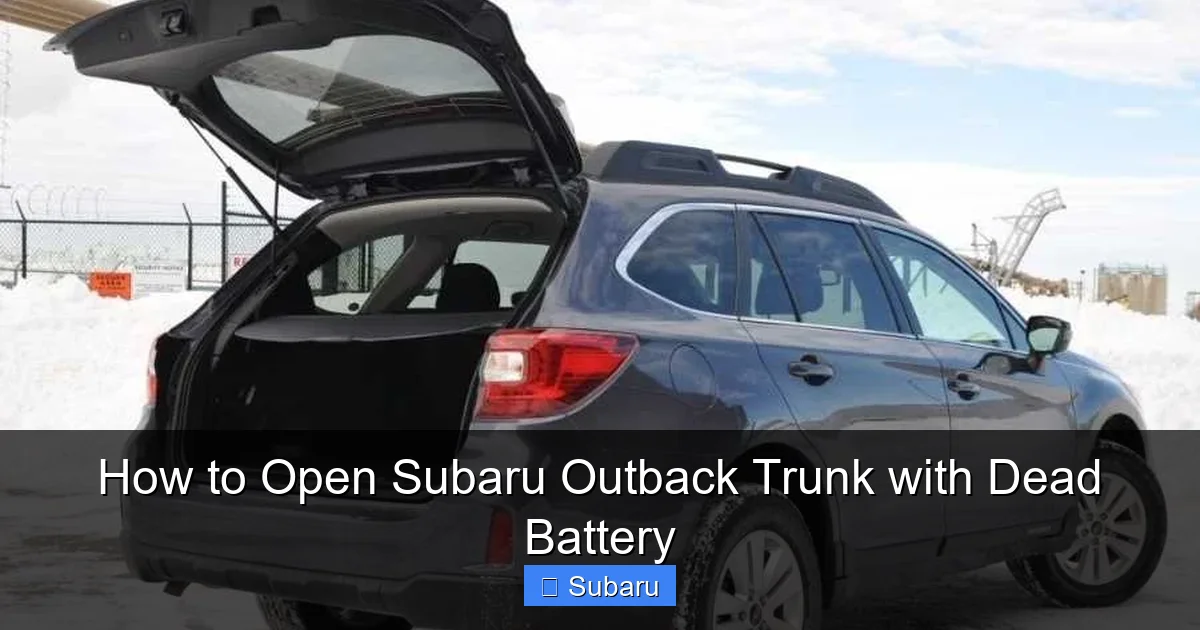
The easiest and most reliable way to open your Subaru Outback trunk with a dead battery is by using the interior trunk release lever. This feature has been standard on Outback models for years and works independently of the electrical system. It’s a mechanical cable connected directly to the trunk latch, so it functions even when the car is completely dead.
Where to Find the Interior Release Lever
The interior trunk release lever is typically located on the driver’s side, near the floor—just to the left of the driver’s seat. Look for a small, black or gray handle, often labeled with a trunk icon or the word “TRUNK.” It’s usually mounted on the side of the center console or the lower part of the dashboard trim. On some models, it may be tucked behind a small access panel.
To confirm its location, check your owner’s manual or look for a small diagram near the lever. If you can’t find it, try feeling along the side of the driver’s footwell—it’s often recessed to avoid accidental activation.
How to Use the Lever
Using the lever is simple:
1. Sit in the driver’s seat and locate the trunk release handle.
2. Pull the handle firmly toward you. You should feel a distinct “click” or “pop” as the cable releases the latch.
3. Exit the vehicle and go to the rear. The trunk should now be unlocked and able to be lifted open manually.
It’s important to pull the lever with enough force. The cable can stiffen over time, especially in cold weather, so a firm tug is often necessary. If the lever feels loose or doesn’t move, double-check that you’ve found the correct one—some models have similar handles for other functions, like the fuel door release.
Tips for Success
– Practice using the lever when your battery is working so you know what to expect.
– If the lever feels stuck, try jiggling it slightly or applying a bit more pressure.
– Keep the area around the lever clean and free of debris—dirt or ice can interfere with movement.
– If you frequently drive in snowy or muddy conditions, consider spraying a small amount of silicone lubricant on the cable mechanism annually to prevent freezing.
This method works on nearly all Outback models from 2000 onward. Even if your car has a power liftgate, the interior lever should still function as a mechanical backup.
Method 2: Accessing the Hidden Keyhole Behind the License Plate
Visual guide about How to Open Subaru Outback Trunk with Dead Battery
Image source: vehiclerides.com
If the interior lever doesn’t work—or if you can’t access the driver’s seat—your next best option is the hidden keyhole located behind the rear license plate. This feature is available on most Subaru Outback models, especially those from 2010 and later. It allows you to manually unlock the trunk using the physical key that came with your vehicle.
Locating the Hidden Keyhole
The keyhole is cleverly concealed behind the license plate bracket. To find it:
1. Remove the rear license plate. It’s usually held in place by four screws—two on the top and two on the bottom.
2. Use a Phillips-head screwdriver to unscrew them. Keep the screws safe so you don’t lose them.
3. Once the plate is removed, you’ll see a small, rectangular slot behind it. This is the keyhole for the trunk lock.
On some models, the keyhole may be covered by a small rubber flap or plastic cover. Gently pry it open with your fingernail or a flat tool.
Using the Physical Key
Your Subaru Outback came with two keys: one electronic fob and one physical key. The physical key is usually stored inside the fob—press the release button on the fob to slide it out. If you’ve lost the physical key, check your glove box, center console, or keychain—it’s often kept as a backup.
To unlock the trunk:
1. Insert the physical key into the hidden keyhole.
2. Turn it clockwise (to the right) about 90 degrees.
3. You should hear a click as the lock disengages.
4. Pull the trunk open manually.
Note: This method only unlocks the trunk—it doesn’t automatically open it. You’ll still need to lift the lid by hand.
Important Considerations
– Not all Outback models have this feature. Older models (pre-2008) may not include a hidden keyhole. Check your owner’s manual to confirm.
– If your key is worn or damaged, it may not turn smoothly. Try wiggling it gently or applying a small amount of graphite lubricant (never oil, which can attract dirt).
– After opening the trunk, remember to reattach the license plate securely. Driving without it can result in a traffic citation.
This method is especially useful if you’re locked out of the car entirely—say, if the doors won’t open due to a dead battery. It gives you direct access to the trunk without needing to enter the cabin.
Method 3: Jump-Starting the Vehicle to Restore Power
Visual guide about How to Open Subaru Outback Trunk with Dead Battery
Image source: vehiclerides.com
If you have access to jumper cables and another vehicle—or a portable jump starter—you can revive your Subaru Outback’s battery enough to use the electronic trunk release. This method is ideal if you need to open the trunk quickly and don’t want to use manual methods.
How to Jump-Start a Subaru Outback
Jump-starting a Subaru Outback is similar to most vehicles, but there are a few important details:
1. **Locate the jump points:** The Outback doesn’t have traditional battery terminals under the hood. Instead, use the positive (+) jump point near the fuse box (usually marked with a red cover) and the negative (-) ground point on the engine block or chassis.
2. **Connect the cables:** Attach the red clamp to the positive jump point, then to the donor vehicle’s positive terminal. Attach the black clamp to the donor’s negative terminal, then to an unpainted metal surface on your Outback (not the negative battery terminal).
3. **Start the donor vehicle:** Let it run for 5–10 minutes to charge your battery.
4. **Attempt to start your Outback:** If it starts, let it run for at least 15 minutes to recharge the battery.
5. **Disconnect cables in reverse order.**
Once the engine is running, the electrical system should be active. You can now use the key fob, interior button, or liftgate touchpad to open the trunk electronically.
Using a Portable Jump Starter
A portable jump starter is a compact, battery-powered device that can jump-start your car without another vehicle. These are ideal for emergencies, especially if you’re alone or in a remote area.
To use one:
1. Turn off the Outback’s ignition and all electronics.
2. Connect the jump starter’s clamps to the correct jump points (red to positive, black to ground).
3. Turn on the jump starter and wait for the indicator light to show it’s ready.
4. Start the Outback. If successful, disconnect the clamps and drive to recharge the battery.
Many modern jump starters also include USB ports, flashlights, and air compressors—making them versatile emergency tools.
Safety Tips
– Always wear safety glasses and gloves when jump-starting.
– Never connect the cables to the wrong terminals—this can damage electronics or cause sparks.
– If the battery is swollen, leaking, or smells like sulfur, do not attempt to jump-start it. Call a professional.
Model-Specific Differences and Tips
Not all Subaru Outback models are identical when it comes to trunk access. Features and locations can vary by year, trim level, and region. Knowing your specific model can save you time and frustration.
2000–2009 Outback Models
Older Outbacks typically have a simple mechanical trunk release lever inside the cabin. Some models may not have a hidden keyhole, so the interior lever is your primary option. The lever is usually located near the driver’s seat, as described earlier.
2010–2019 Outback Models
These models often include both the interior lever and the hidden keyhole behind the license plate. The keyhole became more common during this period, especially on higher trims. Some 2015+ models also feature a power liftgate, but the manual overrides remain functional.
2020–2024 Outback Models
The latest Outbacks come with advanced features like hands-free power liftgates and smartphone app integration. However, Subaru still includes the interior release lever and hidden keyhole for emergencies. The keyhole may be slightly repositioned or covered by a different type of flap, so consult your manual.
Checking Your Owner’s Manual
Your owner’s manual is the best resource for model-specific instructions. Look for sections titled “Trunk Release,” “Emergency Trunk Release,” or “Manual Trunk Opening.” Many manuals include diagrams showing the exact location of levers and keyholes.
If you’ve lost your manual, you can download a digital copy from Subaru’s official website using your VIN.
Preventing Future Battery and Trunk Issues
While knowing how to open the trunk with a dead battery is essential, it’s even better to avoid the problem altogether. A few simple habits can keep your Outback running smoothly and prevent unexpected lockouts.
Regular Battery Maintenance
Car batteries typically last 3–5 years, but extreme temperatures, short trips, and electrical drains can shorten their life. To extend battery life:
– Have your battery tested annually, especially before winter.
– Clean the battery terminals to prevent corrosion.
– Avoid leaving lights, infotainment, or accessories on when the engine is off.
– Use a battery maintainer if you don’t drive frequently.
Keep Emergency Tools Handy
Store a small emergency kit in your glove box or center console. Include:
– A flashlight with extra batteries
– Jumper cables or a portable jump starter
– A flat-head screwdriver (for removing the license plate)
– Work gloves
– A copy of your physical key (if not stored in the fob)
These tools can make a big difference in an emergency.
Test Your Trunk Release Regularly
Once a month, test both the electronic and manual trunk release methods. This ensures everything is working and helps you remember how to use the manual options under stress.
Conclusion
Getting locked out of your Subaru Outback trunk due to a dead battery is inconvenient, but it doesn’t have to be a disaster. With the right knowledge and tools, you can access your trunk safely and quickly—no matter where you are. Whether you use the interior release lever, the hidden keyhole, or a jump-start, Subaru has designed multiple ways to keep you from being stranded.
The key is preparation. Know your model’s features, keep emergency tools on hand, and perform regular maintenance to avoid battery failure. By following the steps in this guide, you’ll be ready for any situation—whether you’re loading gear for a weekend trip or dealing with an unexpected breakdown.
Remember: modern convenience shouldn’t come at the cost of reliability. Subaru’s blend of technology and mechanical backups ensures you’re never truly stuck. So the next time your battery dies, take a deep breath, grab your tools, and open that trunk like a pro.
Frequently Asked Questions
Can I open the Subaru Outback trunk if the battery is completely dead?
Yes, you can still open the trunk using the interior release lever or the hidden keyhole behind the license plate. These mechanical methods don’t require battery power.
Where is the interior trunk release lever located?
The lever is usually found near the driver’s seat, on the side of the center console or lower dashboard. Look for a small handle labeled “TRUNK” or with a trunk icon.
Do all Subaru Outback models have a hidden keyhole?
Most models from 2010 onward include a hidden keyhole behind the license plate. Older models may not have this feature, so check your owner’s manual.
Can I use the key fob to open the trunk with a dead battery?
No, the key fob requires battery power to send a signal. If the car battery is dead, the fob won’t work unless you jump-start the vehicle.
What should I do if the interior lever doesn’t work?
Try the hidden keyhole method or jump-start the car. If neither works, check for obstructions or mechanical issues with the latch cable.
How can I prevent my Outback battery from dying?
Test your battery annually, avoid leaving lights on, and replace it every 3–5 years. Consider using a battery maintainer if you don’t drive often.
