
Does the Subaru Crosstrek Have Blind Spot Monitoring

The Subaru Crosstrek offers blind spot monitoring (BSM) on most trims starting from 2020, but availability depends on the model year and package. This advanced safety feature helps drivers detect vehicles in adjacent lanes, reducing the risk of side collisions.
Key Takeaways
- Blind Spot Monitoring is available on most Crosstrek trims from 2020 onward. It’s standard on higher trims like Limited and optional on others with specific packages.
- Earlier models (pre-2020) may not include BSM. Always check the vehicle’s trim and equipment list before assuming it has this feature.
- BSM works alongside other Subaru safety tech. It integrates with Rear Cross-Traffic Alert and Lane Change Assist for enhanced awareness.
- The system uses radar sensors in the rear bumper. These detect vehicles in your blind spots and alert you with visual and audible warnings.
- Drivers should still perform shoulder checks. BSM is a helpful aid, not a replacement for safe driving habits.
- Upgrading to a higher trim adds more safety features. Consider the Limited or Sport trims for the best tech package.
- Always test the system during a test drive. Confirm that BSM is active and functioning properly before purchasing.
📑 Table of Contents
- Does the Subaru Crosstrek Have Blind Spot Monitoring?
- What Is Blind Spot Monitoring and Why Does It Matter?
- Which Subaru Crosstrek Models Include Blind Spot Monitoring?
- How Does Subaru’s Blind Spot Monitoring System Work?
- Blind Spot Monitoring vs. Other Subaru Safety Features
- Should You Buy a Crosstrek Without Blind Spot Monitoring?
- Conclusion: Is Blind Spot Monitoring Worth It in the Subaru Crosstrek?
Does the Subaru Crosstrek Have Blind Spot Monitoring?
If you’re shopping for a compact SUV that blends rugged capability with modern safety tech, the Subaru Crosstrek is likely on your shortlist. Known for its standard all-wheel drive, impressive ground clearance, and fuel-efficient design, the Crosstrek has become a favorite among outdoor enthusiasts and city drivers alike. But when it comes to advanced safety features like blind spot monitoring (BSM), many buyers wonder: does the Subaru Crosstrek actually have it?
The short answer is yes—but with some important caveats. Blind spot monitoring is available on most Subaru Crosstrek models, especially from 2020 onward. However, it’s not standard on every trim level, and older models may lack this feature entirely. Whether you’re buying new or used, understanding which Crosstreks come equipped with BSM can save you from unexpected surprises and help you make a smarter, safer choice.
In this guide, we’ll break down everything you need to know about blind spot monitoring in the Subaru Crosstrek. We’ll cover which model years and trims include the feature, how the system works, and why it matters for your daily driving. Whether you’re navigating busy highways, merging onto freeways, or backing out of tight parking spots, knowing what your Crosstrek can—and can’t—do is essential. Let’s dive in.
What Is Blind Spot Monitoring and Why Does It Matter?
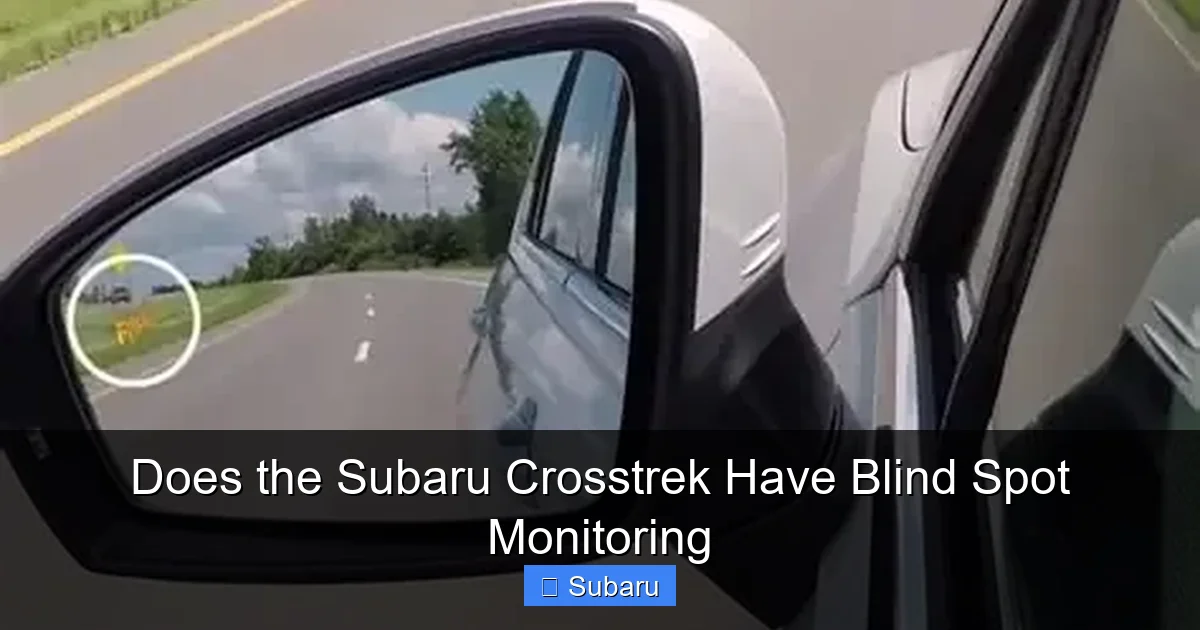
Visual guide about Does the Subaru Crosstrek Have Blind Spot Monitoring
Image source: autozonic.com
Before we get into the specifics of the Crosstrek, let’s talk about what blind spot monitoring actually is—and why it’s such a big deal. Blind spot monitoring is a driver assistance technology designed to help you detect vehicles that are riding alongside you, especially in areas your mirrors can’t fully cover. These “blind spots” exist on both sides of your vehicle, typically just behind and to the side of the rear wheels. Even with properly adjusted side mirrors, there’s always a small zone where another car can hide from view.
That’s where BSM comes in. Using radar or ultrasonic sensors mounted in the rear bumper, the system continuously scans the areas beside and slightly behind your vehicle. When another car enters your blind spot—especially if you signal to change lanes—the system alerts you. This usually happens through a small warning light on your side mirror, sometimes accompanied by a chime or vibration in the steering wheel.
Why does this matter? Because lane changes are one of the most common causes of side collisions. According to the National Highway Traffic Safety Administration (NHTSA), blind spot-related crashes account for thousands of injuries and hundreds of fatalities each year. BSM helps reduce these risks by giving drivers an extra set of electronic “eyes.” It’s especially useful in heavy traffic, at highway speeds, or when driving larger vehicles that naturally have bigger blind zones.
But here’s the thing: BSM isn’t a magic solution. It’s a support tool, not a substitute for safe driving habits. You should still check your mirrors and perform a quick shoulder check before changing lanes. However, when used correctly, blind spot monitoring can significantly improve your awareness and reduce the chances of a dangerous mistake.
Which Subaru Crosstrek Models Include Blind Spot Monitoring?

Visual guide about Does the Subaru Crosstrek Have Blind Spot Monitoring
Image source: carpursuits.com
Now that you understand what BSM does, let’s get into the nitty-gritty: which Subaru Crosstreks actually have it? The availability of blind spot monitoring has evolved over the years, so it’s important to know what to look for based on the model year and trim level.
Starting with the 2020 model year, Subaru made significant updates to the Crosstrek’s safety suite. That’s when blind spot monitoring became more widely available across the lineup. Here’s a breakdown by trim:
2020–2024 Crosstrek Trims with BSM
- Base (2020–2021): Blind spot monitoring was not standard on the base trim in these years. However, it could be added as part of the optional EyeSight Driver Assist Technology package, which also includes adaptive cruise control and pre-collision braking.
- Premium: BSM became available on the Premium trim starting in 2020, typically included when you added the optional Technology Package. This package also brought features like a larger touchscreen, upgraded audio, and rear cross-traffic alert.
- Sport: The Sport trim, introduced in 2020, came standard with blind spot monitoring and rear cross-traffic alert. This made it a popular choice for buyers who wanted more tech without stepping up to the Limited.
- Limited: The top-tier Limited trim has included BSM as standard equipment since 2020. It also comes with additional safety and comfort features like leather upholstery, a power moonroof, and a premium Harman Kardon audio system.
2025 and Beyond: What’s Changed?
As of the 2025 model year, Subaru has continued to expand its safety offerings. Blind spot monitoring is now standard on all Crosstrek trims except the base model, where it remains optional with certain packages. This reflects Subaru’s commitment to making advanced safety tech more accessible across its lineup.
Pre-2020 Models: Proceed with Caution
If you’re shopping for a used Crosstrek from 2019 or earlier, blind spot monitoring was not widely available. The 2018 and 2019 models did not offer BSM on any trim level. The only way to get similar functionality was through aftermarket systems, which are less reliable and not integrated with the vehicle’s electronics.
So, if you’re considering an older Crosstrek, don’t assume it has BSM—even if it has other safety features. Always check the vehicle’s window sticker, owner’s manual, or use a VIN decoder to confirm what’s included.
How Does Subaru’s Blind Spot Monitoring System Work?
Visual guide about Does the Subaru Crosstrek Have Blind Spot Monitoring
Image source: i.ytimg.com
Now that you know which Crosstreks have it, let’s talk about how Subaru’s blind spot monitoring system actually functions. Understanding the technology behind BSM can help you use it more effectively and troubleshoot any issues that might come up.
Subaru’s BSM uses radar sensors located in the rear bumper, typically on both the left and right sides. These sensors emit radio waves that bounce off nearby objects, allowing the system to detect vehicles in your blind spots. The system is active whenever the vehicle is in motion, usually above 15–20 mph, which is when lane changes are most common.
When another vehicle enters your blind spot, the system triggers a visual alert. This usually appears as a small icon or light on the corresponding side mirror. For example, if a car is in your right blind spot, the warning light on your right mirror will illuminate. Some higher trims may also include an audible alert or steering wheel vibration if you signal to change lanes while a vehicle is detected.
One of the standout features of Subaru’s BSM is its integration with other safety systems. For instance, the system works hand-in-hand with Rear Cross-Traffic Alert (RCTA), which warns you of approaching vehicles when you’re backing out of a parking spot. It also supports Lane Change Assist (LCA), which activates when you signal to change lanes and a vehicle is in your blind spot.
Real-World Example: Merging onto the Highway
Imagine you’re driving on a busy highway and need to merge into the left lane. You check your mirrors, signal, and begin to change lanes—but you don’t see the sedan that’s riding just behind your left rear quarter. Without BSM, that car could be in your blind spot, leading to a dangerous sideswipe.
With Subaru’s BSM, the system detects the sedan and flashes a warning light on your left mirror. If you still attempt to change lanes, the system may emit a chime or vibrate the steering wheel. This gives you a second chance to abort the lane change and avoid a collision.
Tips for Using BSM Effectively
- Don’t rely on it alone. Always perform a shoulder check before changing lanes. BSM can’t detect motorcycles, bicycles, or objects outside its range.
- Keep sensors clean. Dirt, snow, or ice on the rear bumper can block the radar sensors and reduce effectiveness. Clean them regularly, especially in winter.
- Test it during a test drive. When shopping for a Crosstrek, ask the dealer to demonstrate BSM. Have someone drive alongside you while you signal to change lanes.
- Understand its limitations. BSM works best at highway speeds. It may not detect very slow-moving vehicles or those approaching at extreme angles.
Blind Spot Monitoring vs. Other Subaru Safety Features
Blind spot monitoring doesn’t work in isolation. It’s part of a broader suite of safety technologies that Subaru calls EyeSight and STARLINK Safety Plus. Understanding how BSM fits into this ecosystem can help you appreciate its value—and make better decisions when choosing a Crosstrek.
EyeSight Driver Assist Technology
EyeSight is Subaru’s flagship driver assistance package, available on most Crosstrek trims. It includes features like:
- Adaptive Cruise Control
- Pre-Collision Braking
- Lane Departure and Sway Warning
- Lane Keep Assist
While EyeSight focuses on forward-facing safety, BSM covers your sides and rear. Together, they provide 360-degree awareness, making your drive safer in nearly every scenario.
STARLINK Safety Plus
This connected services package includes automatic collision notification, SOS emergency assistance, and stolen vehicle recovery. While not directly related to BSM, it enhances overall safety by ensuring help is available when you need it.
Rear Cross-Traffic Alert (RCTA)
RCTA is often bundled with BSM and uses the same rear sensors. It alerts you when vehicles are approaching from the side while you’re reversing—perfect for parking lots and driveways.
Lane Change Assist (LCA)
LCA is essentially an extension of BSM. It activates when you signal to change lanes and a vehicle is in your blind spot. It’s especially useful on multi-lane highways.
Practical Tip: Choose the Right Package
If you want the full suite of safety features, consider the Technology Package on the Premium trim or go straight for the Limited. These packages bundle BSM, RCTA, LCA, and EyeSight into one convenient upgrade.
Should You Buy a Crosstrek Without Blind Spot Monitoring?
Now for the big question: is it worth buying a Subaru Crosstrek that doesn’t have blind spot monitoring? The answer depends on your priorities, budget, and driving habits.
If you’re buying a used 2018 or 2019 Crosstrek, you’ll likely have to live without BSM. In that case, consider whether the vehicle’s other strengths—like standard AWD, fuel efficiency, and cargo space—outweigh the lack of this feature. You could also explore aftermarket blind spot systems, though they’re not as seamless or reliable as factory-installed tech.
On the other hand, if you’re buying new or a recent used model, there’s little reason to skip BSM. The added safety and peace of mind are well worth the small price difference, especially if you frequently drive on highways or in heavy traffic.
Who Benefits Most from BSM?
- Commuters: Daily highway driving increases the chances of blind spot incidents.
- New drivers: Less experienced drivers may not always check blind spots thoroughly.
- Families: Parents driving with kids may be more distracted and benefit from extra alerts.
- Older drivers: Reduced neck mobility can make shoulder checks difficult.
Final Verdict
While the Crosstrek is a safe vehicle even without BSM, adding this feature significantly enhances its safety profile. If it’s available and within your budget, it’s a smart investment.
Conclusion: Is Blind Spot Monitoring Worth It in the Subaru Crosstrek?
So, does the Subaru Crosstrek have blind spot monitoring? Yes—on most models from 2020 onward, especially the Sport and Limited trims. While earlier models and base trims may lack this feature, it’s increasingly common and often included in popular option packages.
Blind spot monitoring is more than just a convenience; it’s a proven safety tool that can prevent accidents and save lives. When combined with Subaru’s other advanced safety systems, it creates a comprehensive protection network that supports you on every drive.
If you’re shopping for a Crosstrek, prioritize models with BSM—especially if you spend a lot of time on the road. And remember: no technology replaces good driving habits. Always check your mirrors, signal early, and stay alert.
In the end, the Subaru Crosstrek is a well-rounded SUV that continues to improve with each model year. With blind spot monitoring now widely available, it’s easier than ever to enjoy the brand’s legendary reliability with modern safety peace of mind.
Frequently Asked Questions
Is blind spot monitoring standard on all Subaru Crosstrek models?
No, blind spot monitoring is not standard on all Crosstrek models. It became widely available starting in 2020 and is standard on the Sport and Limited trims. On the Premium trim, it’s typically included with the optional Technology Package.
Can I add blind spot monitoring to an older Crosstrek?
Factory-installed BSM cannot be added to older Crosstreks, but you can install aftermarket blind spot detection systems. These are less integrated and may not work as smoothly as Subaru’s original equipment.
How do I know if my Crosstrek has blind spot monitoring?
Check your side mirrors for small warning lights, look for BSM in the vehicle’s feature list, or consult the owner’s manual. You can also use your VIN to decode the vehicle’s original equipment.
Does blind spot monitoring work in bad weather?
Yes, Subaru’s BSM uses radar sensors that work in rain, snow, and fog. However, heavy buildup of dirt or ice on the sensors can reduce effectiveness, so keep them clean.
Can I turn off blind spot monitoring in the Crosstrek?
Yes, you can usually disable BSM through the vehicle settings menu. However, it’s not recommended unless you have a specific reason, as it reduces your safety awareness.
Does the Crosstrek’s BSM work when towing?
Blind spot monitoring may be less effective when towing a trailer, as the added length and width can alter sensor coverage. Always exercise extra caution when changing lanes while towing.
