
How Much Can a Mazda Cx-30 Tow

The Mazda CX-30 has a maximum towing capacity of 2,000 pounds when properly equipped, making it suitable for light-duty tasks like small trailers, jet skis, or pop-up campers. While not designed for heavy towing, it offers a balanced blend of efficiency, style, and capability for everyday adventurers who need modest hauling power.
If you’re considering the Mazda CX-30 as your next compact SUV, you might be wondering: *How much can a Mazda CX-30 tow?* It’s a fair question—especially if you enjoy weekend adventures, need to haul gear, or plan to tow a small trailer or watercraft. While the CX-30 isn’t built like a full-size truck or heavy-duty SUV, it does offer respectable towing capability for its class. In fact, with the right setup, this stylish and efficient crossover can handle light-duty towing tasks with confidence.
The Mazda CX-30 strikes a unique balance between urban sophistication and practical utility. It’s known for its premium interior, responsive handling, and fuel-efficient performance—qualities that make it a favorite among drivers who want more than just basic transportation. But when it comes to towing, many buyers are surprised to learn that this compact SUV isn’t just a city cruiser. With the optional factory tow package, the CX-30 can pull up to 2,000 pounds. That’s enough to tow a small utility trailer, a pair of jet skis, a lightweight pop-up camper, or even a small fishing boat. While it won’t replace a pickup truck for heavy hauling, it’s more than capable for the kinds of tasks most compact SUV owners actually need.
Key Takeaways
- Towing Capacity: The Mazda CX-30 can tow up to 2,000 pounds when equipped with the optional factory tow package, which includes a transmission cooler and wiring harness.
- Engine and Drivetrain: Both the standard 2.5L four-cylinder and the available turbocharged 2.5L engine can tow the same 2,000 lbs, but the turbo offers better low-end torque for smoother towing.
- Trim Level Matters: Only certain trims (like the Premium and Premium Plus) support towing; base models may not be rated for towing even with aftermarket hitches.
- Proper Equipment Required: A Class I hitch receiver, brake controller (if needed), and correct wiring are essential for safe and legal towing.
- Real-World Use Cases: Ideal for lightweight trailers, small boats, ATVs, or camping gear—perfect for weekend getaways without overloading the vehicle.
- Fuel Efficiency Impact: Towing reduces fuel economy significantly; expect a drop of 20–30% in MPG when hauling near max capacity.
- Safety First: Always distribute weight evenly, use sway control, and avoid sudden maneuvers to maintain stability while towing.
📑 Table of Contents
- Understanding the Mazda CX-30’s Towing Capacity
- Which CX-30 Trims Can Tow?
- Real-World Towing Scenarios: What Can You Actually Tow?
- Essential Towing Equipment and Setup
- Impact on Fuel Economy and Driving Dynamics
- Safety Tips for Towing with the CX-30
- Conclusion: Is the Mazda CX-30 Right for Your Towing Needs?
Understanding the Mazda CX-30’s Towing Capacity
So, how much can a Mazda CX-30 tow exactly? The official answer from Mazda is **2,000 pounds** when the vehicle is properly equipped. This number applies to all CX-30 models from recent model years (2021–2024), provided they have the optional tow package installed. It’s important to note that not every CX-30 comes ready to tow—this capability depends on both the trim level and the presence of specific equipment.
The 2,000-pound limit is considered a “braked” towing capacity, meaning the trailer must have its own braking system if it exceeds 1,000 pounds. For trailers under 1,000 pounds, brakes aren’t legally required in most states, but they’re still strongly recommended for safety. This distinction is crucial because it affects how you prepare your trailer and what kind of hitch and wiring you’ll need.
Mazda’s towing rating is conservative compared to some competitors, but that’s actually a good thing. It reflects real-world engineering limits and helps protect the vehicle’s transmission, suspension, and drivetrain from excessive strain. Unlike some SUVs that advertise high towing numbers but require heavy-duty packages or specific engine configurations, the CX-30’s 2,000-pound limit is consistent across eligible trims—making it easier for buyers to understand what their vehicle can handle.
What Does “Properly Equipped” Mean?
When Mazda says the CX-30 can tow 2,000 pounds when “properly equipped,” they’re referring to a specific set of factory-installed components. The most important of these is the **optional tow package**, which includes:
– A Class I trailer hitch receiver (typically rated for 2,000 lbs)
– A 4-pin wiring harness for trailer lights
– A transmission cooler (critical for preventing overheating during towing)
– Reinforced mounting points and electrical connections
This package is not standard on all trims. It’s usually available on higher-end models like the CX-30 Premium, Premium Plus, and Carbon Edition. Base models such as the CX-30 Base or Select may not support towing at all—even with an aftermarket hitch—because they lack the necessary cooling and electrical systems.
If you’re buying a used CX-30, always check the window sticker or ask the dealer whether the tow package was included. Installing an aftermarket hitch alone won’t enable safe towing if the vehicle wasn’t designed for it. The transmission cooler, in particular, is essential—without it, prolonged towing can cause the transmission fluid to overheat, leading to premature wear or failure.
Engine Options and Towing Performance
The Mazda CX-30 comes with two engine choices: the standard 2.5L naturally aspirated four-cylinder and the available 2.5L turbocharged four-cylinder. Despite the performance difference between them, **both engines have the same 2,000-pound towing capacity** when equipped with the tow package.
So why does Mazda allow the same towing limit for both engines? The answer lies in how towing capacity is determined. It’s not just about horsepower or torque—it’s about the entire vehicle system: cooling, suspension, brakes, and drivetrain durability. While the turbo engine (available on Premium trims) produces up to 250 horsepower and 320 lb-ft of torque (compared to 186 hp and 186 lb-ft for the base engine), the CX-30’s chassis and cooling systems are designed to handle the same maximum load regardless of engine type.
That said, the turbocharged engine offers a noticeable advantage in real-world towing scenarios. Its higher low-end torque makes it easier to get a loaded trailer moving from a stop, especially on inclines. It also provides smoother acceleration when merging onto highways with a trailer in tow. If you plan to tow frequently or in hilly terrain, the turbo engine is worth the upgrade—not because it increases towing capacity, but because it improves drivability and reduces strain on the vehicle.
Which CX-30 Trims Can Tow?
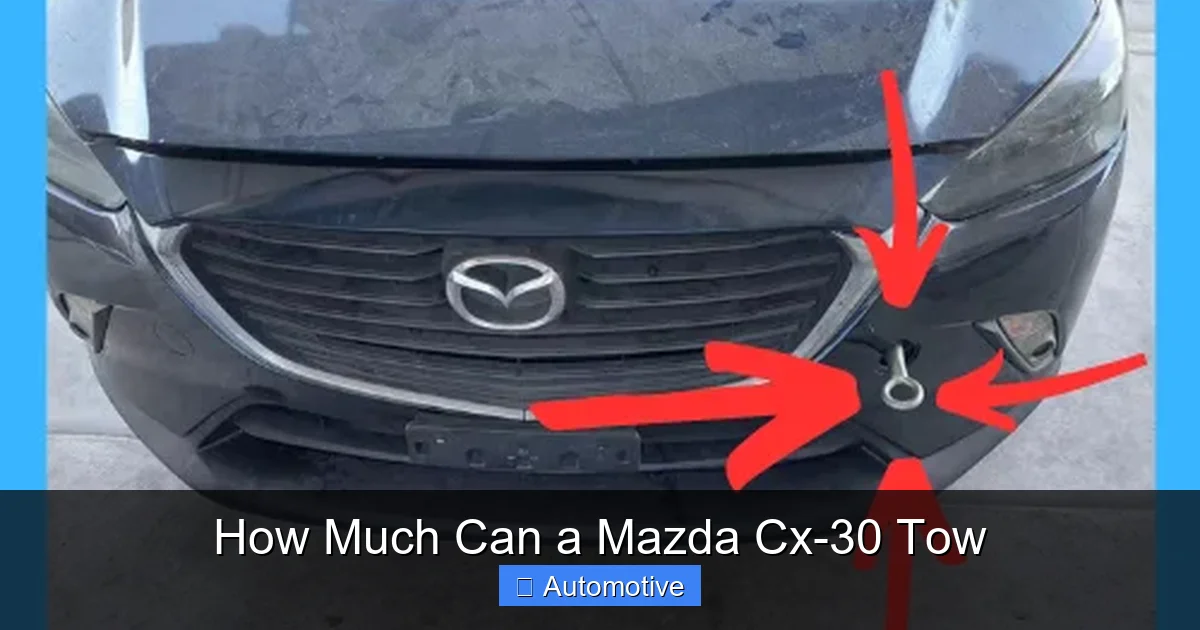
Visual guide about How Much Can a Mazda Cx-30 Tow
Image source: down-my.img.susercontent.com
Not every Mazda CX-30 is created equal when it comes to towing. The ability to tow 2,000 pounds is **only available on trims that support the optional tow package**. Here’s a breakdown by trim level (based on 2023–2024 models):
– **CX-30 Base**: No towing capability. Lacks tow package and necessary cooling systems.
– **CX-30 Select**: No factory towing. May accept aftermarket hitches, but not recommended for towing due to lack of transmission cooler.
– **CX-30 Preferred**: Tow package not available. Not rated for towing.
– **CX-30 Carbon Edition**: Tow package available as an option. Can tow up to 2,000 lbs when equipped.
– **CX-30 Premium**: Tow package available. Full 2,000-pound towing capacity.
– **CX-30 Premium Plus**: Includes tow package on most builds. Full towing capability.
This means that if you want to tow with your CX-30, you’ll need to opt for at least the Carbon Edition trim and ensure the tow package is selected at purchase. Unfortunately, Mazda doesn’t offer a retrofit option for the tow package on lower trims, so buying a used CX-30 without it may limit your towing options.
It’s also worth noting that all-wheel drive (AWD) is standard on higher trims and can be added to lower ones. While AWD doesn’t increase towing capacity, it does improve traction when launching a trailer on wet or loose surfaces—making it a smart choice if you plan to tow in variable weather or off-road conditions.
Real-World Towing Scenarios: What Can You Actually Tow?
Now that we know the Mazda CX-30 can tow up to 2,000 pounds, let’s put that number into context. What kinds of trailers and loads are realistic for this compact SUV?
Small Utility Trailers
A typical 4×8 or 5×8 single-axle utility trailer weighs around 500–700 pounds empty. Loaded with landscaping materials, furniture, or camping gear, it can easily reach 1,200–1,800 pounds. This is well within the CX-30’s towing range and a common use case for owners. Whether you’re moving mulch for your garden or hauling supplies for a DIY project, the CX-30 handles these tasks with ease.
Pop-Up Campers and Light Travel Trailers
Many pop-up campers weigh between 1,000 and 2,000 pounds when fully loaded. Popular models like the Jayco Jay Series or Forest River R-Pod (in smaller sizes) fall into this range. With careful packing and weight distribution, the CX-30 can tow these campers for weekend trips or short vacations. However, always check the camper’s gross vehicle weight rating (GVWR) and ensure it doesn’t exceed 2,000 pounds—including water, gear, and propane.
Jet Skis and Small Boats
A single jet ski with a trailer typically weighs 800–1,200 pounds. Two jet skis can push the total to 1,600–2,000 pounds, which is right at the CX-30’s limit. Small aluminum fishing boats (like a 14-foot Jon boat) with a motor and trailer usually weigh 1,200–1,800 pounds. These are ideal for the CX-30, especially if you’re launching at a ramp with a gentle slope.
ATVs and Side-by-Sides
A single ATV with a trailer weighs around 1,000–1,400 pounds. A lightweight side-by-side (like a Polaris RZR or Can-Am Maverick in compact form) with trailer can reach 1,800–2,000 pounds. These are feasible for the CX-30, but again, weight distribution and braking are critical. Never exceed the 2,000-pound limit—even if the trailer feels light.
What You Should Avoid Towing
The CX-30 is not designed for heavy loads. Avoid towing:
– Full-sized travel trailers (most exceed 3,000 lbs)
– Large boats (over 16 feet)
– Multiple ATVs or vehicles
– Cargo trailers loaded beyond 2,000 lbs
Exceeding the towing capacity can damage the transmission, suspension, and brakes. It also increases the risk of trailer sway, loss of control, and accidents—especially at highway speeds.
Essential Towing Equipment and Setup
Towing safely with a Mazda CX-30 requires more than just a hitch. Here’s what you’ll need to get started:
Class I Hitch Receiver
The CX-30 uses a Class I hitch, which is rated for up to 2,000 pounds gross trailer weight (GTW) and 200 pounds tongue weight. This hitch bolts directly to the vehicle’s frame and includes a 1-1/4” or 2” receiver tube. Always use a hitch that’s specifically designed for the CX-30 and matches the factory tow package specifications.
Wiring Harness
A 4-pin flat connector is standard for most small trailers. It powers the trailer’s brake lights, turn signals, and running lights. Mazda’s factory harness plugs into the vehicle’s electrical system without splicing. If your CX-30 didn’t come with one, you can purchase a plug-and-play harness from Mazda or aftermarket suppliers like Tekonsha or Hopkins.
Brake Controller (If Needed)
Trailers over 1,000 pounds must have brakes in most states. If your trailer has electric brakes, you’ll need a brake controller mounted inside the CX-30. The controller allows you to adjust brake force and activate the trailer brakes independently. Popular options include the Tekonsha Voyager or Prodigy P2.
Weight Distribution and Sway Control
Even with a light load, improper weight distribution can cause trailer sway. Follow these tips:
– Keep 60% of the trailer’s weight in the front half.
– Ensure the trailer rides level—not nose-up or nose-down.
– Use a sway control device if towing in windy conditions or at high speeds.
– Never exceed the 200-pound tongue weight limit.
Towing Mirrors
The CX-30’s side mirrors may not provide enough visibility when towing a wide trailer. Consider adding extended towing mirrors for better rearward visibility, especially when changing lanes or reversing.
Impact on Fuel Economy and Driving Dynamics
Towing with any vehicle reduces fuel efficiency, and the CX-30 is no exception. Under normal driving conditions, the CX-30 achieves around 26–28 MPG combined. When towing near its 2,000-pound limit, expect a drop of **20–30% in fuel economy**—bringing MPG down to 18–22, depending on terrain and speed.
This reduction happens because the engine works harder to overcome aerodynamic drag, rolling resistance, and the added weight. Highway driving with a trailer is especially taxing, as wind resistance increases exponentially with speed. To maximize efficiency:
– Drive at or below 60 mph when towing.
– Avoid sudden acceleration or hard braking.
– Use cruise control on flat highways (but disable it on hills).
– Remove the trailer when not in use to reduce weight and drag.
In terms of handling, the CX-30 remains stable when towing within its limits. However, you’ll notice:
– Slower acceleration, especially from a stop.
– Increased stopping distance—allow extra space when braking.
– Slight body roll in corners; take turns more slowly.
– Reduced visibility due to the trailer blocking rear views.
Always perform a pre-tow inspection: check tire pressure (on both vehicle and trailer), lights, hitch connections, and fluid levels. A few minutes of preparation can prevent breakdowns and accidents.
Safety Tips for Towing with the CX-30
Towing safely is about more than just staying under the weight limit. Here are essential safety practices for CX-30 owners:
Perform a Pre-Trip Inspection
Before every tow, check:
– Trailer tire condition and pressure
– Hitch and coupler security
– Safety chains (crossed under the tongue)
– Brake and signal lights
– Fluid levels in the CX-30 (especially transmission and coolant)
Practice Backing Up
Backing a trailer is tricky, even for experienced drivers. Practice in an empty parking lot to get a feel for how the trailer responds. Remember: turn the steering wheel in the opposite direction you want the trailer to go.
Use Safety Chains and Breakaway Systems
Always connect safety chains in a crisscross pattern under the trailer tongue. If the coupler fails, the chains will catch the trailer and prevent it from detaching completely. For trailers with brakes, ensure the breakaway system is charged and functional.
Avoid Overloading the Rear
Never load heavy items at the back of the trailer. This shifts weight away from the axle, increasing tongue weight and the risk of sway. Keep heavy items low and centered over the axle.
Be Mindful of Weather Conditions
Wind, rain, and snow affect towing stability. High winds can push a lightweight trailer sideways, especially on open highways. Reduce speed and increase following distance in bad weather.
Know Your Limits
The CX-30 is not a truck. It’s designed for light-duty towing. If you frequently tow heavy loads, consider upgrading to a larger SUV like the Mazda CX-50 (which can tow up to 3,500 lbs) or a pickup truck.
Conclusion: Is the Mazda CX-30 Right for Your Towing Needs?
So, how much can a Mazda CX-30 tow? The answer is clear: **up to 2,000 pounds when properly equipped**. This makes it a capable companion for light-duty hauling, weekend adventures, and small recreational towing. Whether you’re pulling a jet ski to the lake, a pop-up camper to the mountains, or a utility trailer full of gear, the CX-30 handles the task with confidence—provided you follow the guidelines and use the right equipment.
While it won’t replace a heavy-duty tow vehicle, the CX-30 offers a rare blend of style, efficiency, and practicality in the compact SUV segment. Its towing capability is a bonus for drivers who value versatility without sacrificing driving enjoyment. Just remember: towing safely means respecting the limits, preparing properly, and driving with awareness.
If you’re in the market for a CX-30 and plan to tow, opt for a higher trim with the factory tow package. Avoid cutting corners with aftermarket solutions that bypass essential systems like the transmission cooler. And always prioritize safety—your vehicle, your trailer, and everyone on the road will thank you.
For most urban and suburban drivers, the Mazda CX-30’s towing capacity is more than enough. It’s not about how much you can tow—it’s about how well you can enjoy the journey. And with the CX-30, that journey is always a pleasure.
Frequently Asked Questions
Can the Mazda CX-30 tow a small camper?
Yes, the Mazda CX-30 can tow small pop-up campers or lightweight travel trailers up to 2,000 pounds when properly equipped with the factory tow package. Always check the camper’s GVWR and ensure it doesn’t exceed the vehicle’s towing limit.
Does towing reduce the CX-30’s fuel economy?
Absolutely. Towing near the 2,000-pound limit can reduce fuel economy by 20–30%, dropping MPG from around 26–28 down to 18–22. Driving at moderate speeds and removing the trailer when not in use helps minimize the impact.
Can I install an aftermarket hitch on a base CX-30 for towing?
You can install an aftermarket hitch, but it’s not recommended for towing unless the vehicle has the factory tow package. Base models lack the transmission cooler and reinforced systems needed for safe towing.
What’s the difference between braked and unbraked towing?
Braked towing means the trailer has its own braking system, required for trailers over 1,000 pounds in most states. Unbraked towing applies to lighter trailers without brakes. The CX-30’s 2,000-pound limit assumes a braked trailer.
Can the turbocharged CX-30 tow more than the base engine?
No. Both the standard 2.5L and turbo 2.5L engines have the same 2,000-pound towing capacity. The turbo offers better performance and torque, making towing feel easier, but it doesn’t increase the official limit.
Is all-wheel drive necessary for towing with the CX-30?
AWD isn’t required for towing, but it improves traction when launching a trailer on wet, snowy, or uneven surfaces. It’s a helpful feature if you tow in variable weather or off-road conditions.
