
How Much Is a 2008 Honda Civic Worth?

The 2008 Honda Civic remains a reliable, fuel-efficient compact car with strong resale value. Depending on trim, mileage, condition, and location, it typically sells for $3,000 to $7,000 today. This guide breaks down pricing trends, depreciation, and tips to get the best deal.
Key Takeaways
- Average market value: Most 2008 Honda Civics sell between $3,000 and $7,000, with well-maintained models reaching up to $8,000.
- Mileage matters: Low-mileage examples (under 80,000 miles) command higher prices, while high-mileage cars (over 150,000) drop significantly in value.
- Trim level impact: Higher trims like the EX, EX-L, and Si offer more features and retain value better than base LX models.
- Condition is critical: Clean titles, full service records, and no accident history can increase value by 15–25%.
- Regional price differences: Prices vary by state due to demand, climate, and local market conditions—urban areas often pay more.
- Private vs. dealer pricing: Private sellers usually offer better deals than dealerships, but dealers may include warranties or inspections.
- Future value outlook: While depreciation continues, the Civic’s reputation for reliability helps it hold value longer than many competitors.
📑 Table of Contents
- How Much Is a 2008 Honda Civic Worth? A Complete Guide
- Average Market Value of the 2008 Honda Civic
- Factors That Affect the 2008 Honda Civic’s Value
- How to Determine the Value of Your 2008 Honda Civic
- Tips for Buying a 2008 Honda Civic
- Tips for Selling Your 2008 Honda Civic
- Is the 2008 Honda Civic Still a Good Buy?
- Conclusion
How Much Is a 2008 Honda Civic Worth? A Complete Guide
If you’re looking to buy or sell a 2008 Honda Civic, one of the first questions you’ll ask is: “How much is it really worth?” This compact car has been a favorite among drivers for years, thanks to its reliability, fuel efficiency, and low cost of ownership. But after more than 15 years on the road, its value has changed—and it’s not the same across the board.
The truth is, the worth of a 2008 Honda Civic depends on a mix of factors. Mileage, trim level, condition, location, and even the time of year can all influence its price. Some well-kept models still fetch a solid price, while others with high mileage or damage may barely break $2,500. Understanding these variables will help you make a smart decision, whether you’re shopping for one or trying to get top dollar when selling.
In this guide, we’ll walk you through everything you need to know about the 2008 Honda Civic’s value. From average pricing trends to what affects resale, plus tips for buyers and sellers, we’ve got you covered. Let’s dive in and figure out exactly how much this dependable Honda is worth today.
Average Market Value of the 2008 Honda Civic
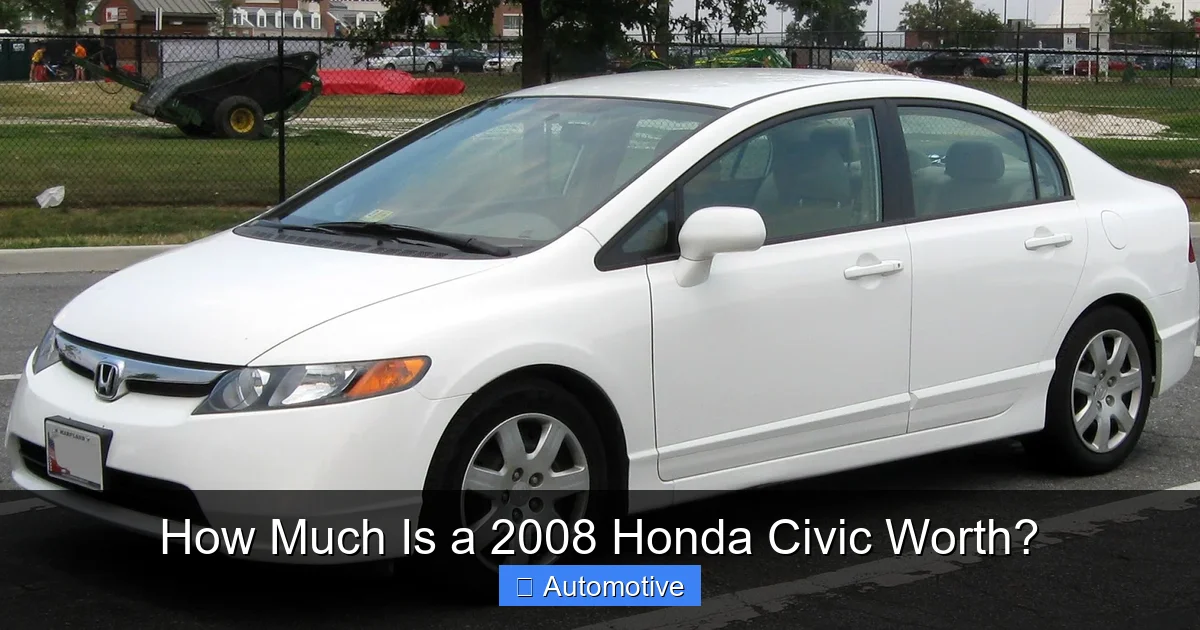
Visual guide about How Much Is a 2008 Honda Civic Worth?
Image source: 4.bp.blogspot.com
So, what’s the going rate for a 2008 Honda Civic in 2024? Based on recent sales data from platforms like Kelley Blue Book (KBB), Edmunds, and Autotrader, the average price range falls between $3,000 and $7,000. That’s a wide window, but it reflects the variety of conditions and configurations available.
For example, a base-model LX sedan with around 120,000 miles and average wear might sell for $3,500 to $4,500. On the other hand, a well-maintained EX-L coupe with under 80,000 miles and a clean title could easily go for $6,500 to $7,500. The sporty Si model, with its 197-horsepower engine and performance upgrades, often commands a premium—sometimes reaching $8,000 if it’s in excellent shape.
It’s also important to note that private sales tend to be cheaper than dealer listings. A private seller might ask $4,200 for a reliable Civic, while a dealership could price the same car at $5,500, citing reconditioning, warranties, or certification. However, dealers often have more accountability, which can be worth the extra cost for some buyers.
Keep in mind that these are general estimates. Actual prices can vary based on your local market. In cities like Los Angeles or Seattle, where public transit is limited and parking is tight, demand for compact cars like the Civic can drive prices up. In rural areas or regions with harsh winters (where salted roads cause rust), values may be lower.
Price Ranges by Trim and Condition
Let’s break it down further by trim level and condition:
– LX (Base Model): Typically the most affordable. Expect $3,000–$4,500 for a decent example with 100,000–140,000 miles. These come with basic features like air conditioning, power steering, and a 4-speaker stereo, but lack upgrades like power windows or a sunroof.
– EX and EX-L: These mid-to-high trims add power windows, locks, mirrors, a sunroof (on EX), and upgraded audio. The EX-L includes leather seats and heated front seats. Prices range from $4,500 to $6,500, depending on mileage and condition.
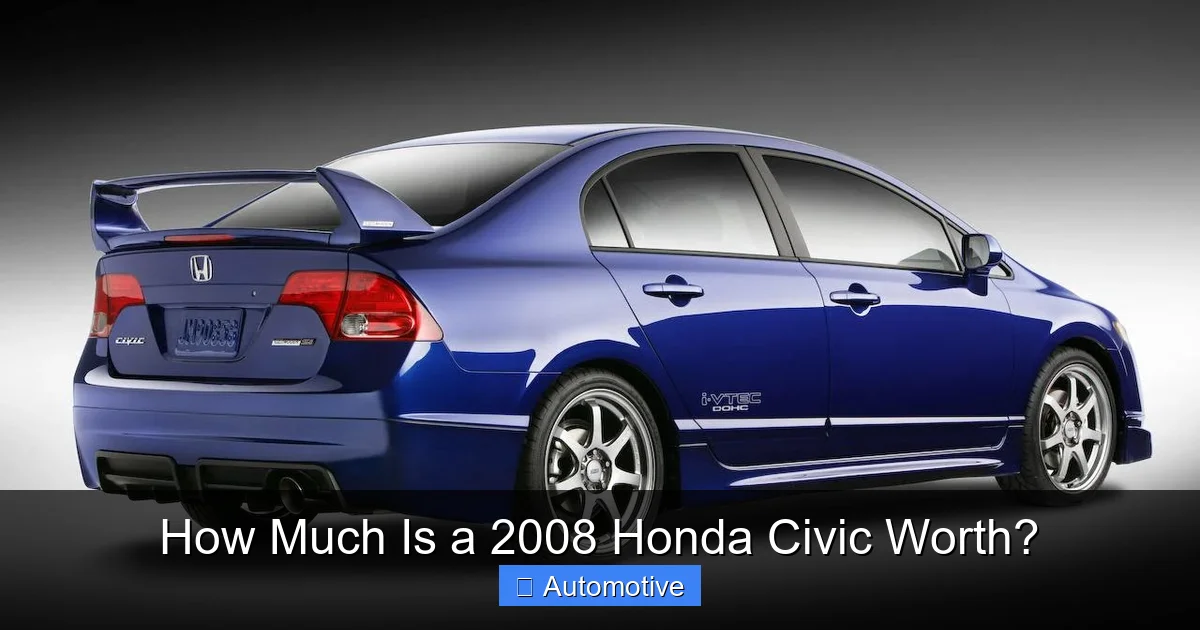
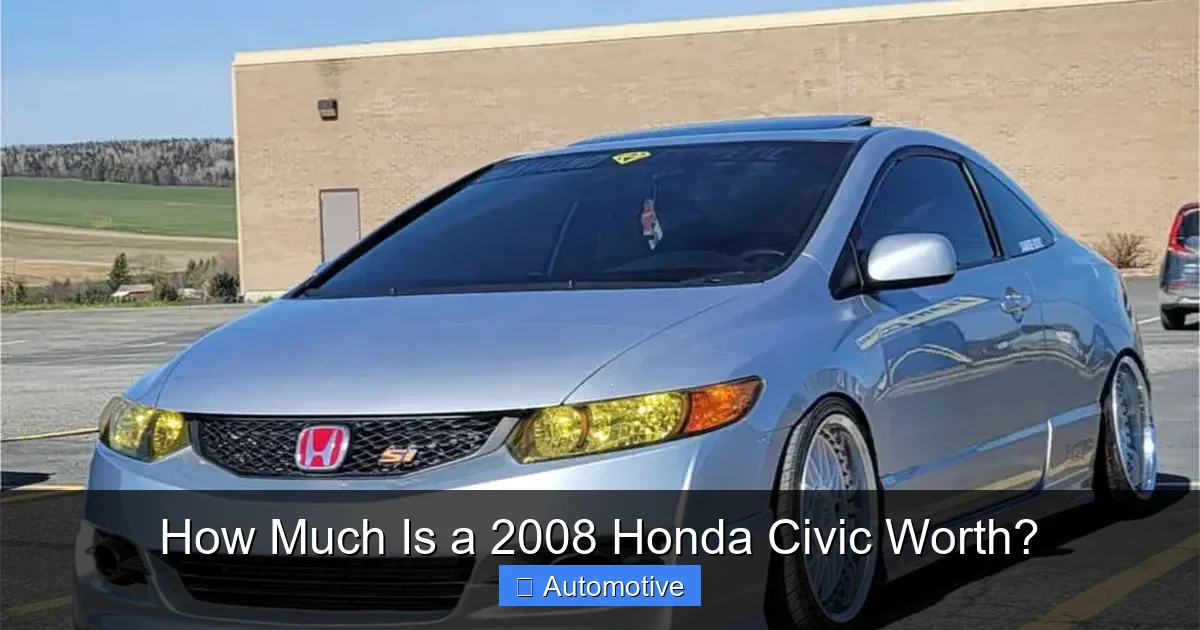
– Si (Sport): The performance-oriented Si model features a 2.0L 4-cylinder engine with 197 hp, a 6-speed manual transmission, sport-tuned suspension, and unique styling. Because of its enthusiast appeal, Si models hold value better. A clean, low-mileage Si can sell for $6,000–$8,000.
– Hybrid: The 2008 Civic Hybrid offers excellent fuel economy (around 40 mpg) and a quieter ride. However, battery degradation over time can be a concern. Well-maintained hybrids with recent battery replacements may sell for $4,000–$5,500, but those with failing batteries could drop below $3,000.
Condition plays a huge role. A Civic with a clean Carfax report, full maintenance records, and no accidents will always be worth more than one with a salvage title or unknown history. Even small things like clean upholstery, working AC, and good tires can boost value.
Factors That Affect the 2008 Honda Civic’s Value
Visual guide about How Much Is a 2008 Honda Civic Worth?
Image source: 1.bp.blogspot.com
Now that you know the average price range, let’s look at what actually determines where your Civic falls on that scale. Several key factors influence how much a 2008 Honda Civic is worth—some you can control, others you can’t. Understanding these will help you price your car fairly or spot a good deal when buying.
Mileage: The Biggest Price Driver
Mileage is one of the most important factors in determining value. The 2008 Civic was built to last, but like any car, it wears out over time. The average driver puts about 12,000 to 15,000 miles per year, so a 2008 model with 150,000 miles has seen typical use. But lower mileage means less wear on the engine, transmission, and suspension.
Here’s a quick breakdown:
– Under 80,000 miles: Considered low mileage for a 16-year-old car. These models often sell at the high end of the range—$6,000 to $8,000—especially if well-maintained.
– 80,000–120,000 miles: This is the sweet spot for many buyers. The car has plenty of life left, and prices reflect that: $4,500 to $6,500.
– 120,000–150,000 miles: Still reasonable, but expect some wear. Prices drop to $3,500–$5,000.
– Over 150,000 miles: High mileage reduces value significantly. These cars may sell for $2,500–$4,000, depending on condition.
Keep in mind that mileage isn’t everything. A 140,000-mile Civic with a documented service history and no major repairs can be a better buy than a 90,000-mile car with unknown maintenance.
Vehicle Condition and Maintenance History
A car’s physical and mechanical condition is just as important as mileage. A Civic that’s been garaged, regularly serviced, and driven gently will always be worth more than one that’s been neglected or abused.
Look for signs of good care:
– Clean engine bay with no leaks
– Smooth-running engine and transmission
– No unusual noises or vibrations
– Intact interior with minimal wear
– Recent brake, tire, and fluid changes
Service records are a huge plus. If the seller can show receipts for oil changes, timing belt replacements (if applicable), and brake work, it builds trust and justifies a higher price. The 2008 Civic doesn’t have a timing belt—it uses a timing chain, which typically lasts the life of the engine—but other maintenance like spark plugs, air filters, and transmission fluid still matter.
On the flip side, red flags include:
– Rust (especially on wheel wells, undercarriage, or door sills)
– Check engine light or other warning lights
– Smoke from the exhaust
– Transmission slipping or hesitation
– Water damage or musty smells (signs of flooding)
Even cosmetic issues like dents, scratches, or faded paint can lower value, though they’re easier to fix than mechanical problems.
Trim Level and Features
Not all 2008 Civics are created equal. The trim level determines what features come standard, and those features affect resale value.
The LX is the most basic, with manual windows and locks, cloth seats, and a basic radio. It’s reliable but lacks modern conveniences.
The EX adds power windows, locks, and mirrors, a sunroof, and an upgraded audio system. The EX-L includes leather upholstery and heated seats—luxuries that appeal to buyers and boost value.
The Si is the performance king, with a sport-tuned suspension, larger wheels, and a more powerful engine. Enthusiasts love it, and that demand helps it hold value.
The Hybrid offers top fuel economy but comes with the risk of battery failure. A new hybrid battery can cost $1,500–$2,500, so buyers are cautious unless it’s been recently replaced.
In general, higher trims with more features and better performance retain value better than base models.
Accident History and Title Status
A clean title is essential for maximum value. Cars with salvage, rebuilt, or flood titles are worth significantly less—sometimes 30–50% less—because they’ve been severely damaged or declared total losses by insurers.
Even minor accidents can affect value if they weren’t repaired properly. Poorly aligned body panels, mismatched paint, or frame damage are warning signs. Always check the vehicle history report (like Carfax or AutoCheck) before buying.
If you’re selling, be honest about any accidents. Hiding damage can lead to legal trouble and hurt your reputation.
Location and Market Demand
Where you live plays a big role in pricing. In urban areas with high gas prices and limited parking, fuel-efficient cars like the Civic are in demand. In cities like San Francisco, New York, or Chicago, you might see higher prices.
In rural areas or regions with harsh winters, rust and road salt can damage cars over time, lowering values. Also, if public transportation is readily available, demand for used cars may be lower.
Seasonality matters too. Convertibles and coupes often sell for more in spring and summer, while demand for reliable commuters like the Civic peaks in late summer and fall as students head back to school.
How to Determine the Value of Your 2008 Honda Civic
Visual guide about How Much Is a 2008 Honda Civic Worth?
Image source: images.customwheeloffset.com
Whether you’re buying or selling, knowing how to accurately assess value is crucial. Here’s a step-by-step approach to figuring out how much a 2008 Honda Civic is worth.
Use Online Valuation Tools
Start with trusted resources like Kelley Blue Book (KBB), Edmunds, and NADA Guides. These tools let you input your car’s VIN, mileage, trim, condition, and location to get an estimated value.
For example, on KBB, you’ll choose between “Private Party,” “Dealer Retail,” and “Trade-In” values. Private party is usually the most accurate for direct sales, while dealer retail reflects what a dealership might charge.
Keep in mind that these tools provide estimates. They don’t account for unique upgrades, rare colors, or local market quirks. But they’re a great starting point.
Check Recent Sales Data
Look at actual listings on Autotrader, Cars.com, Facebook Marketplace, and Craigslist. Filter by year, make, model, and mileage to see what similar Civics are selling for in your area.
Pay attention to how long listings stay active. A car that’s been listed for months at $6,000 might be overpriced, while one that sells quickly at $5,200 could indicate strong demand.
Get a Professional Inspection
If you’re buying, consider paying $100–$150 for a pre-purchase inspection by a trusted mechanic. They’ll check the engine, transmission, suspension, brakes, and undercarriage for hidden issues.
For sellers, a pre-listing inspection can help you identify problems before they scare off buyers. Fixing small issues upfront can increase your sale price.
Adjust for Condition and Upgrades
Once you have a baseline value, adjust it based on your car’s condition. Add value for:
– Low mileage
– Clean title and no accidents
– Recent major repairs (timing chain, brakes, tires)
– Upgrades (alloy wheels, premium audio, aftermarket stereo)
Subtract value for:
– High mileage
– Mechanical issues
– Cosmetic damage
– Salvage title
Be realistic. Overpricing your car will lead to it sitting on the market for months.
Tips for Buying a 2008 Honda Civic
If you’re in the market for a used 2008 Civic, here are some smart tips to help you get the best deal.
Set a Budget and Stick to It
Decide how much you’re willing to spend—including taxes, registration, and potential repairs. Don’t let a seller talk you into stretching your budget.
A good rule of thumb: aim for a car priced at or below the average market value for its condition. If similar models are selling for $5,000, don’t pay $6,500 unless it has exceptional features or history.
Focus on Reliability Over Looks
A shiny exterior doesn’t mean a healthy engine. Prioritize mechanical condition over cosmetics. A car with minor scratches but a solid drivetrain is a better long-term investment.
Test Drive Thoroughly
Take the car for a 15–20 minute drive on different road types—highways, city streets, hills. Listen for unusual noises, feel for vibrations, and test the brakes and steering.
Pay attention to:
– Engine smoothness
– Transmission shifts (especially in automatics)
– Brake responsiveness
– Suspension comfort
If anything feels off, walk away.
Negotiate Smartly
Use your research to negotiate. If you find similar cars priced lower, mention it. Point out any flaws or needed repairs as reasons to lower the price.
Most private sellers expect some negotiation. Start with an offer 10–15% below asking and be prepared to meet in the middle.
Consider Certified Pre-Owned (CPO)
Some dealerships offer CPO 2008 Civics, which come with inspections, warranties, and peace of mind. While they cost more, they can be worth it if you want extra protection.
Tips for Selling Your 2008 Honda Civic
If you’re selling, your goal is to get the highest price in the shortest time. Here’s how to do it right.
Clean and Detail Your Car
First impressions matter. Wash the exterior, vacuum the interior, clean the windows, and remove personal items. Consider professional detailing—it can add $200–$500 to your sale price.
Fix Minor Issues
Replace burnt-out bulbs, fix cracked windshields, and touch up paint chips. These small fixes show you care and can justify a higher price.
Gather Documentation
Have your title, registration, service records, and owner’s manual ready. A well-documented car builds trust and sells faster.
Take High-Quality Photos
Use good lighting and shoot from multiple angles—exterior, interior, engine bay, trunk. Highlight clean areas and any upgrades.
Price Competitively
Price your car fairly based on market research. Overpricing leads to low interest; underpricing leaves money on the table.
Choose the Right Platform
List on multiple sites: Facebook Marketplace, Craigslist, Autotrader, and local classifieds. Respond quickly to inquiries and be honest in your description.
Is the 2008 Honda Civic Still a Good Buy?
After all this, you might be wondering: is a 2008 Honda Civic still worth buying in 2024?
The short answer is yes—especially if you’re looking for an affordable, reliable commuter car.
The 2008 Civic earned high marks for safety, fuel economy, and durability. It scored well in crash tests and came standard with dual front airbags, ABS, and stability control (on most trims). Its 1.8L 4-cylinder engine delivers around 25–30 mpg in mixed driving, making it cheap to fuel.
It’s also known for lasting well over 200,000 miles with proper care. Many owners report trouble-free driving for decades.
However, it’s not perfect. Some common issues include:
– Cracked dashboard (due to sun exposure)
– Faulty ignition coils (can cause misfires)
– AC compressor failures
– Rust in certain climates
But these are manageable with regular maintenance.
Compared to newer cars, the 2008 Civic lacks modern tech like Apple CarPlay, advanced safety features, or turbocharged engines. But for budget-conscious buyers, it’s a solid choice.
Conclusion
So, how much is a 2008 Honda Civic worth? The answer isn’t one-size-fits-all. Most models sell for $3,000 to $7,000, with well-maintained, low-mileage examples reaching up to $8,000. Value depends on mileage, trim, condition, location, and market demand.
Whether you’re buying or selling, do your homework. Use online tools, check local listings, and inspect the car thoroughly. A little effort can save you hundreds—or even thousands—of dollars.
The 2008 Honda Civic may be over 15 years old, but it’s still a reliable, efficient, and practical choice. With proper care, it can serve you well for many more years. And now, you know exactly what it’s worth.
Frequently Asked Questions
What is the average price of a 2008 Honda Civic in 2024?
The average price ranges from $3,000 to $7,000, depending on trim, mileage, and condition. Well-maintained, low-mileage models can reach $8,000.
Does the 2008 Honda Civic hold its value well?
Yes, the 2008 Civic holds value better than many competitors due to its reputation for reliability, fuel efficiency, and low maintenance costs.
What trim of the 2008 Civic is worth the most?
The Si and EX-L trims typically command the highest prices because of their performance features, upgraded interiors, and stronger resale demand.
How many miles is too many for a 2008 Honda Civic?
Over 150,000 miles is considered high, but a well-maintained Civic with 180,000+ miles can still be a good buy if it has a solid service history.
Should I buy a 2008 Honda Civic Hybrid?
The Hybrid offers great fuel economy, but check the battery condition. A failing battery can cost $1,500–$2,500 to replace, so factor that into your decision.
Can I negotiate the price of a used 2008 Honda Civic?
Yes, most private sellers expect negotiation. Use comparable listings and any needed repairs as leverage to lower the price.
