
How Much Weight Can a Subaru Crosstrek Tow

The Subaru Crosstrek has a towing capacity of up to 1,500 to 2,000 pounds depending on the model year and drivetrain. While not built for heavy trailers, it’s perfect for small campers, jet skis, or utility trailers when properly equipped.
[FEATURED_IMAGE_PLACEOLDER]
If you’re the proud owner of a Subaru Crosstrek—or thinking about becoming one—you’ve probably fallen in love with its rugged styling, standard all-wheel drive, and impressive fuel efficiency. It’s the kind of vehicle that feels at home on a mountain trail just as much as it does in city traffic. But what if you want to bring along a small camper for a weekend getaway, tow a jet ski to the lake, or haul a utility trailer full of gear? That’s where the question comes up: How much weight can a Subaru Crosstrek tow?
The short answer? It depends. The Crosstrek isn’t designed to pull massive fifth-wheel trailers or heavy equipment like some full-size trucks, but it’s surprisingly capable for a compact crossover. With the right setup, it can handle light to moderate towing tasks with confidence. Whether you’re planning a cross-country camping trip or just need to move some furniture, understanding your Crosstrek’s towing limits is essential for safety, performance, and longevity of your vehicle.
In this guide, we’ll break down everything you need to know about towing with your Subaru Crosstrek—from official towing capacities by model year to real-world tips, equipment recommendations, and driving best practices. We’ll also cover common mistakes to avoid and answer frequently asked questions so you can tow with peace of mind.
Key Takeaways
- Towing capacity varies by model year: Earlier models (pre-2018) typically tow up to 1,500 lbs, while newer models (2018+) with the optional towing package can handle up to 2,000 lbs.
- All-wheel drive is standard: The Crosstrek’s symmetrical AWD system provides excellent traction, making it more capable than many front-wheel-drive compact SUVs when towing.
- Manual vs. automatic transmission matters: Automatic transmission models generally have higher towing ratings than manual ones due to better cooling and control.
- Proper equipment is essential: A factory or aftermarket towing package—including a hitch receiver, wiring harness, and brake controller—is required for safe towing.
- Payload and tongue weight matter: Always account for passenger weight, cargo, and tongue weight (typically 10–15% of trailer weight) to avoid overloading.
- Driving dynamics change when towing: Expect reduced acceleration, longer braking distances, and decreased fuel economy—drive cautiously and allow extra space.
- Regular maintenance improves towing safety: Check transmission fluid, brakes, tires, and cooling systems before and during towing trips.
📑 Table of Contents
Understanding Subaru Crosstrek Towing Capacity
When it comes to towing, the first thing you need to know is your vehicle’s official towing capacity. This number isn’t just a suggestion—it’s the maximum weight your Crosstrek can safely pull under normal driving conditions. Exceeding this limit can lead to mechanical failure, loss of control, or even accidents.
So, what’s the magic number for the Subaru Crosstrek?
For most model years, the towing capacity ranges between 1,500 and 2,000 pounds. The exact figure depends on several factors, including the year of manufacture, engine type, transmission, and whether the vehicle is equipped with a factory towing package.
Towing Capacity by Model Year
Let’s take a closer look at how towing capacity has evolved over the years:
– 2013–2017 Subaru Crosstrek: These early models were rated to tow up to 1,500 pounds when properly equipped. This applied to both the 2.0L four-cylinder engine and the available manual or automatic CVT (continuously variable transmission) options. However, manual transmission models often had slightly lower ratings due to less robust cooling systems.
– 2018–2023 Subaru Crosstrek: Starting in 2018, Subaru introduced an optional towing package that increased the maximum towing capacity to 2,000 pounds for automatic transmission models. This upgrade was a big deal for outdoor enthusiasts and small trailer owners. Manual transmission versions still maxed out at 1,500 pounds.
– 2024 Subaru Crosstrek: The latest model continues the trend, with automatic transmission models capable of towing up to 2,000 pounds when equipped with the optional towing package. Manual models remain at 1,500 pounds.
It’s important to note that these numbers assume the vehicle is properly equipped. That means having the right hitch, wiring, and cooling systems in place. We’ll dive deeper into equipment requirements later.
Why the Difference Between Models?
You might be wondering why there’s a 500-pound difference between older and newer models—or between automatic and manual transmissions. The answer lies in engineering improvements and component durability.
Automatic transmissions, especially the CVT used in most Crosstreks, are better at managing heat and torque when towing. They also allow for smoother power delivery, which reduces strain on the drivetrain. Subaru also upgraded the cooling systems and reinforced certain components in later models to handle the extra load.
Manual transmissions, while fun to drive, generate more heat under load and require more driver input to manage speed and gear changes. This makes them less ideal for sustained towing, hence the lower rating.
What Can You Actually Tow with a Crosstrek?
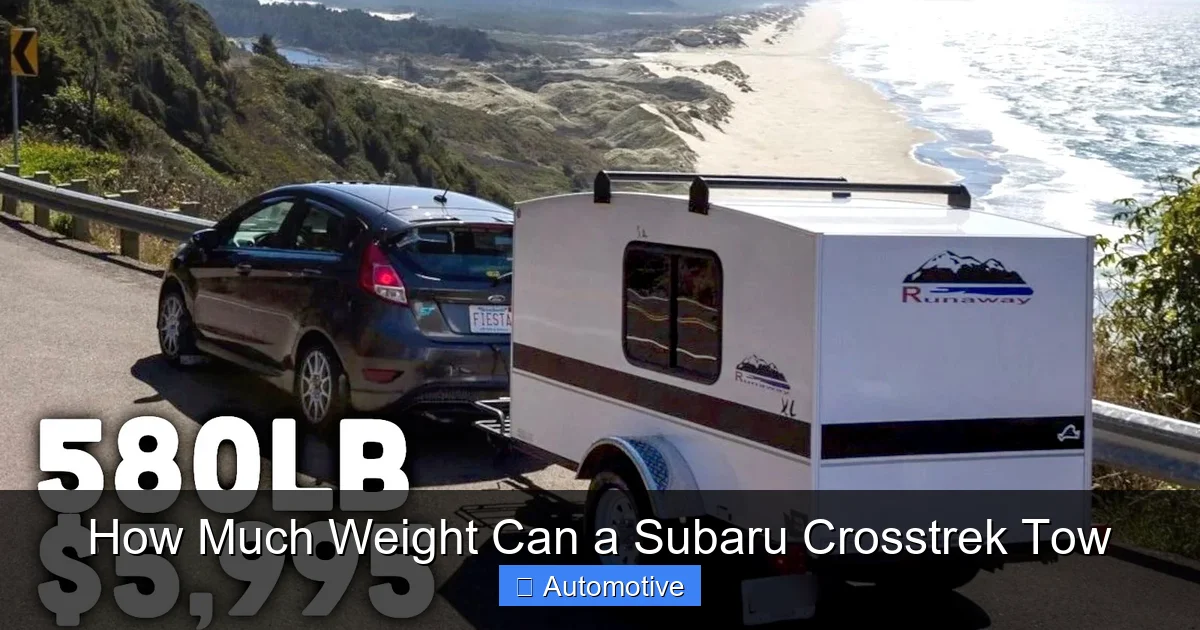
Visual guide about How Much Weight Can a Subaru Crosstrek Tow
Image source: images-stag.jazelc.com
Now that you know the numbers, let’s talk about real-world applications. What kinds of trailers and loads can you realistically pull with your Crosstrek?
The good news is that 1,500 to 2,000 pounds opens up a surprising range of possibilities—especially for outdoor adventures and light hauling.
Small Camping Trailers
One of the most popular uses for Crosstrek towing is hauling small travel trailers or teardrop campers. These lightweight units typically weigh between 1,000 and 1,800 pounds, making them a perfect match for the Crosstrek’s capabilities.
For example:
– The Airstream Base Camp 550 weighs around 1,600 pounds and is a favorite among Crosstrek owners.
– The Casita Spirit Deluxe comes in at about 1,400 pounds and offers full amenities in a compact package.
– Pop-up campers like the Jayco Jay Series or Forest River R-Pod (in smaller sizes) are also viable options.
These trailers are designed for fuel-efficient vehicles and often feature aerodynamic shapes to reduce drag—perfect for a vehicle like the Crosstrek.
Watercraft and ATVs
Love spending time on the water? The Crosstrek can tow a single jet ski, a small fishing boat, or even a lightweight pontoon boat.
– A typical jet ski (like a Yamaha WaveRunner or Sea-Doo) weighs between 700 and 900 pounds, well within the Crosstrek’s range.
– A 14-foot aluminum fishing boat with a small outboard motor might weigh around 1,200 pounds.
– A single ATV or UTV (like a Polaris Sportsman or Kawasaki Mule) can weigh 600–1,000 pounds, depending on the model.
Just remember: the trailer itself adds weight. A single-axle trailer for a jet ski might weigh 300–400 pounds, so factor that into your total.
Utility and Cargo Trailers
Need to move furniture, landscaping materials, or camping gear? A small utility trailer is a great solution.
– A 4×6 foot enclosed trailer might weigh 500–700 pounds empty and can carry another 1,000+ pounds of cargo.
– A 5×8 foot open utility trailer is lightweight and ideal for hauling mulch, firewood, or camping supplies.
These trailers are easy to maneuver and store, making them a practical choice for weekend projects.
What You Should Avoid Towing
While the Crosstrek is versatile, it’s not built for heavy-duty towing. Avoid pulling:
– Large travel trailers (over 2,000 lbs)
– Dual-axle trailers
– Boats over 16 feet
– Heavy equipment like generators or construction tools
– Any load that exceeds the vehicle’s payload capacity (typically around 1,000–1,200 lbs including passengers and cargo)
Overloading your Crosstrek can lead to transmission overheating, brake failure, suspension damage, and unsafe handling.
Essential Towing Equipment for Your Crosstrek
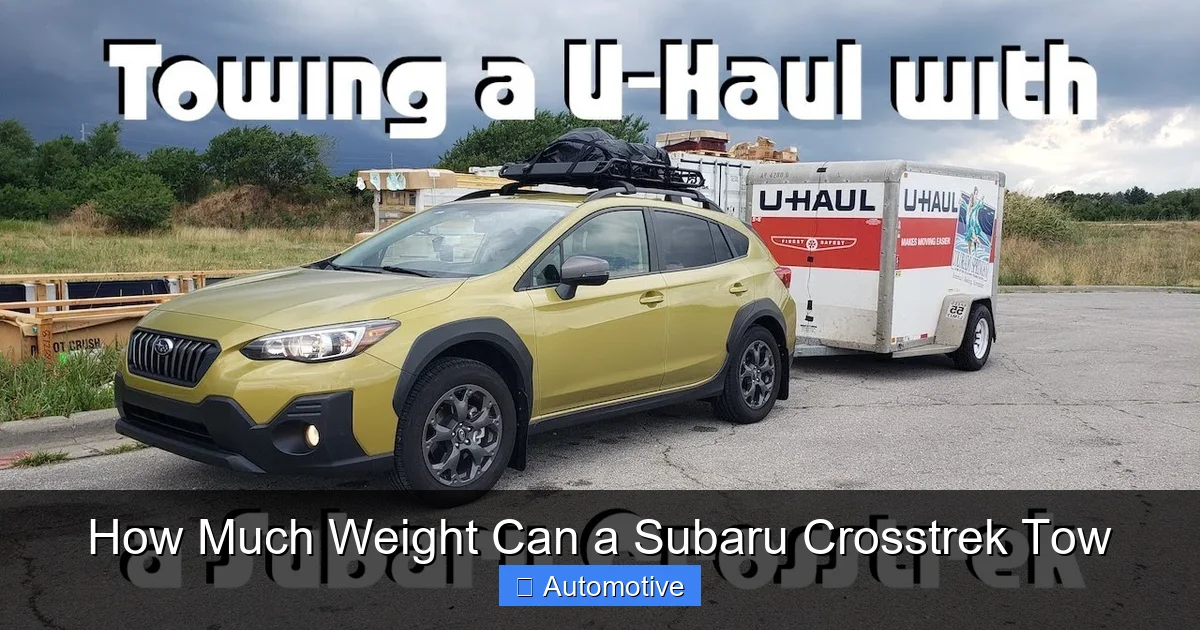
Visual guide about How Much Weight Can a Subaru Crosstrek Tow
Image source: i.ytimg.com
Towing isn’t just about hooking up a trailer and hitting the road. To do it safely and legally, you need the right equipment. Subaru offers a factory towing package, but aftermarket options are also available.
Factory Towing Package (Recommended)
For 2018 and newer Crosstreks, Subaru offers an optional towing package that includes:
– Class II hitch receiver (2-inch)
– 4-pin wiring harness
– Transmission cooler (for automatic models)
– Upgraded radiator fan
– Towing instructions and safety guide
This package is highly recommended because it’s designed specifically for your vehicle and ensures all components work together seamlessly. It also maintains your warranty coverage.
Aftermarket Towing Solutions
If your Crosstrek doesn’t have the factory package, you can install aftermarket equipment. Popular brands include:
– Curt Manufacturing: Offers hitch receivers, wiring kits, and brake controllers.
– Draw-Tite: Known for durable hitches and easy installation.
– Reese: Provides complete towing systems for compact SUVs.
When choosing aftermarket parts, make sure they’re rated for your vehicle’s weight and compatible with your model year.
Hitch Receiver and Ball Mount
The hitch receiver is the metal frame that attaches to your Crosstrek’s chassis. A Class II receiver (rated for up to 3,500 lbs) is more than sufficient for the Crosstrek’s needs.
You’ll also need a ball mount with the correct rise or drop to ensure the trailer sits level when hitched. A 2-inch ball is standard for most small trailers.
Wiring Harness
A wiring harness connects your Crosstrek’s electrical system to the trailer’s lights (brake, turn, and tail lights). Subaru’s factory harness plugs directly into the vehicle’s wiring, while aftermarket kits may require splicing.
Always test your lights before hitting the road.
Brake Controller (Optional but Recommended)
While not required for trailers under 1,500 lbs in most states, a brake controller is a smart addition if you’re towing near your vehicle’s limit. It allows you to manually activate the trailer’s brakes from the driver’s seat, improving control on hills and in emergencies.
Driving Tips for Towing with a Crosstrek
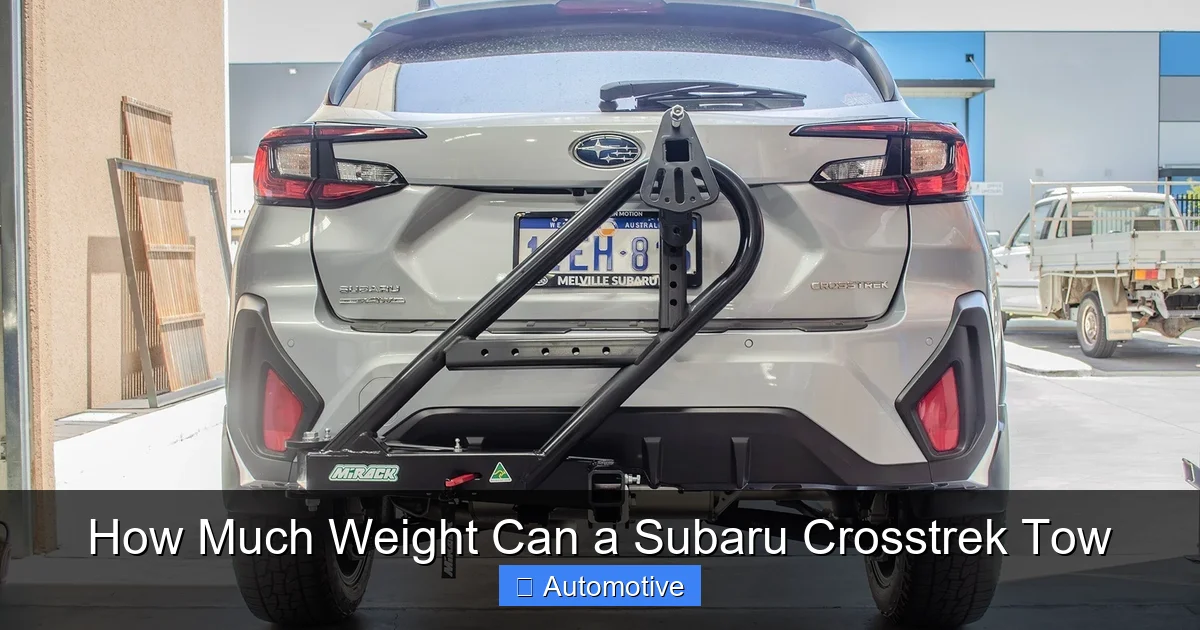
Visual guide about How Much Weight Can a Subaru Crosstrek Tow
Image source: mirack.com.au
Towing changes how your vehicle behaves. Even with a light load, you’ll notice differences in acceleration, braking, and handling. Here’s how to drive safely when towing.
Plan Your Route
Avoid steep mountain passes, narrow roads, and heavy traffic if possible. The Crosstrek isn’t built for high-speed towing, so take it slow and steady.
Use GPS apps that factor in towing (like RV LIFE or CoPilot) to find trailer-friendly routes.
Check Your Load
Before you leave, make sure your trailer is loaded correctly:
– Place 60% of the weight in the front half of the trailer.
– Secure all cargo to prevent shifting.
– Check tire pressure on both the vehicle and trailer.
Mind the Tongue Weight
Tongue weight is the downward force the trailer exerts on the hitch. It should be 10–15% of the total trailer weight.
For a 1,500-pound trailer, that’s 150–225 pounds. Too little tongue weight can cause swaying; too much can overload the rear suspension.
Use a tongue weight scale or bathroom scale to measure it.
Drive Smoothly
– Accelerate and brake gently.
– Allow extra following distance (at least 4–6 seconds behind the vehicle in front).
– Take turns wider than usual to avoid clipping curbs.
Watch for Overheating
Towing puts extra strain on your engine and transmission. If you’re driving in hot weather or up long hills, monitor your temperature gauge.
Pull over if you notice signs of overheating: steam, warning lights, or reduced power.
Use Lower Gears on Hills
On inclines, shift into a lower gear (or use manual mode on the CVT) to maintain speed without overworking the engine.
On descents, use engine braking to reduce wear on your brakes.
Maintenance and Safety Checks
Regular maintenance is crucial when towing. The extra load accelerates wear on key components.
Pre-Tow Inspection
Before every trip, check:
– Tire condition and pressure (including spare)
– Brake function (vehicle and trailer)
– Hitch and safety chains
– Lights and signals
– Fluid levels (engine oil, coolant, transmission)
Post-Tow Maintenance
After a long trip, especially in dusty or muddy conditions:
– Wash the undercarriage to remove salt and debris
– Inspect the hitch and suspension for damage
– Check transmission fluid (if equipped with a dipstick)
Service Intervals
If you tow frequently, consider shortening your maintenance intervals:
– Change transmission fluid every 30,000 miles (instead of 60,000)
– Rotate tires every 5,000 miles
– Inspect brakes every 10,000 miles
Common Mistakes to Avoid
Even experienced drivers make towing errors. Here are some to watch out for:
Ignoring the Owner’s Manual
Your Crosstrek’s manual contains specific towing guidelines. Always refer to it for capacity, equipment, and safety tips.
Overloading the Trailer
Just because your trailer can hold 2,000 pounds doesn’t mean your Crosstrek can pull it. Stay within the vehicle’s limits.
Forgetting Safety Chains
Always cross the safety chains under the hitch tongue. This creates a cradle that can catch the trailer if it detaches.
Towing Without a Break-In Period
If you’ve just installed a new hitch or trailer, take a short test drive in a safe area before hitting the highway.
Neglecting Weight Distribution
Unevenly loaded trailers can cause swaying or fishtailing. Use a weight distribution hitch if needed.
Conclusion
The Subaru Crosstrek may not be the most powerful towing vehicle on the road, but it’s more capable than many people realize. With a towing capacity of up to 2,000 pounds (on properly equipped models), it’s perfect for small campers, jet skis, ATVs, and utility trailers. Its standard all-wheel drive, fuel efficiency, and rugged design make it an excellent choice for outdoor enthusiasts who want versatility without sacrificing daily drivability.
However, towing safely requires more than just knowing the numbers. You need the right equipment, proper loading techniques, and smart driving habits. Always respect your vehicle’s limits, perform regular maintenance, and plan your trips carefully.
Whether you’re heading to the mountains for a weekend of camping or hauling gear to a job site, your Crosstrek can be a reliable partner—as long as you treat it right. So go ahead, hitch up that trailer, and enjoy the journey. Just remember: slow and steady wins the towing race.
Frequently Asked Questions
Can a Subaru Crosstrek tow a camper?
Yes, a Subaru Crosstrek can tow small campers like teardrop trailers or lightweight pop-ups, as long as the total weight stays within the vehicle’s towing capacity (1,500–2,000 lbs). Always check the trailer’s dry weight and factor in cargo.
Do I need a special package to tow with my Crosstrek?
For 2018 and newer models, Subaru offers an optional towing package that includes a hitch, wiring, and cooling upgrades. While not mandatory, it’s highly recommended for safe and reliable towing.
Can a manual transmission Crosstrek tow 2,000 pounds?
No, manual transmission models are limited to 1,500 pounds, even with the towing package. Only automatic transmission Crosstreks can reach the 2,000-pound limit.
How do I check my Crosstrek’s towing capacity?
Refer to your owner’s manual or look up your specific model year and trim on Subaru’s official website. The capacity depends on engine, transmission, and equipment.
Is it safe to tow in snow or rain with a Crosstrek?
Yes, the Crosstrek’s all-wheel drive provides excellent traction in adverse conditions. However, towing in snow or rain requires extra caution—reduce speed, increase following distance, and avoid sudden maneuvers.
Can I install a hitch on my Crosstrek myself?
Yes, many aftermarket hitches are designed for DIY installation. However, for safety and warranty reasons, it’s best to have it installed by a professional, especially if you’re adding wiring or a brake controller.
