
What Does H4l Mean on a Toyota 4runner?

H4L stands for High Range 4-Wheel Drive Lock on a Toyota 4Runner. It locks the front and rear axles together for improved traction on slippery or uneven terrain, but should only be used at low speeds.
If you’ve ever glanced at the transfer case shifter or dashboard display in your Toyota 4Runner and seen “H4L,” you might have wondered what it means—and more importantly, when and how to use it. You’re not alone. Many 4Runner owners, especially new ones, find the 4WD system a bit mysterious. But understanding what H4L stands for and how it works can make a big difference in your driving experience, especially when you’re heading off the beaten path.
The Toyota 4Runner is built for adventure. Whether you’re tackling mountain trails, driving through snow-covered roads, or just navigating a muddy campsite, the 4Runner’s part-time 4WD system is designed to give you confidence and control. H4L is one of the key modes in that system, and it plays a crucial role in helping you maintain traction when the going gets tough. But like any advanced feature, it’s only effective when used correctly.
In this guide, we’ll break down exactly what H4L means, how it differs from other 4WD modes, when to use it, and how to operate it safely. We’ll also cover common mistakes, maintenance tips, and real-world examples so you can get the most out of your 4Runner’s capabilities. By the end, you’ll feel confident knowing when to flip that switch and when to leave it in standard 2WD.
Key Takeaways
- H4L means High Range 4-Wheel Drive Lock: It engages all four wheels in high gear with a locked center differential for balanced power delivery.
- Use H4L on moderate off-road conditions: Ideal for gravel, snow, mud, or wet roads where extra traction is needed without sacrificing speed.
- Do not use H4L on dry pavement: Driving on smooth, dry roads in H4L can cause drivetrain binding and damage.
- Switch between H2 and H4L while moving: Most 4Runners allow you to shift into H4L at speeds up to 55 mph, but always come to a complete stop before switching to 4L.
- H4L improves stability and control: It helps prevent wheel slip and keeps the vehicle moving steadily over challenging surfaces.
- Understand the full 4WD system: The 4Runner offers H2 (2WD), H4L (4WD High Lock), and L4L (4WD Low Lock)—each for different driving scenarios.
- Regular use maintains system health: Engaging 4WD modes occasionally helps keep seals lubricated and components functioning properly.
📑 Table of Contents
What Does H4L Stand For?
H4L stands for High Range 4-Wheel Drive Lock. Let’s unpack that phrase piece by piece to understand what it really means.
First, “High Range” refers to the gear ratio in the transfer case. In high range, the engine’s power is delivered to the wheels at normal driving speeds—similar to regular 2WD or 4WD high modes in other vehicles. This means you can drive at highway speeds without straining the engine or transmission.
Next, “4-Wheel Drive” means that power is sent to all four wheels simultaneously. Unlike 2WD (which powers only the rear wheels), 4WD distributes torque to both the front and rear axles, improving grip and stability.
Finally, “Lock” refers to the center differential being locked. In a typical 4WD system, the center differential allows the front and rear axles to rotate at different speeds—important when turning on pavement, where the outside wheels travel farther than the inside ones. But when the center differential is locked, both axles are forced to turn at the same speed. This ensures that power is evenly split between front and rear, maximizing traction when one or more wheels start to slip.
So, H4L essentially means: All four wheels are powered, the center differential is locked, and you’re in high gear—ideal for moderate off-road conditions or slippery surfaces where you still want to maintain reasonable speed.
How H4L Differs from H2 and L4L
To fully grasp H4L, it helps to compare it with the other drive modes available on the 4Runner: H2 and L4L.
H2 (High Range 2-Wheel Drive): This is the default mode for everyday driving. Power goes only to the rear wheels, which improves fuel efficiency and reduces wear on the drivetrain. Use H2 on dry pavement, city streets, and highways.
H4L (High Range 4-Wheel Drive Lock): As explained, this mode sends power to all four wheels with the center differential locked. It’s perfect for slippery conditions like snow, rain, gravel, or light mud—where you need extra traction but don’t need to crawl over rocks.
L4L (Low Range 4-Wheel Drive Lock): This is the heavy-duty mode. It uses a lower gear ratio to multiply torque, giving you maximum pulling power at very low speeds. Use L4L for steep climbs, deep mud, rock crawling, or when you’re stuck and need to inch your way out. You should only use L4L at speeds under 15–20 mph and never on dry pavement.
In short: H2 is for normal driving, H4L is for slippery or uneven terrain at normal speeds, and L4L is for extreme off-roading at very low speeds.
When Should You Use H4L?
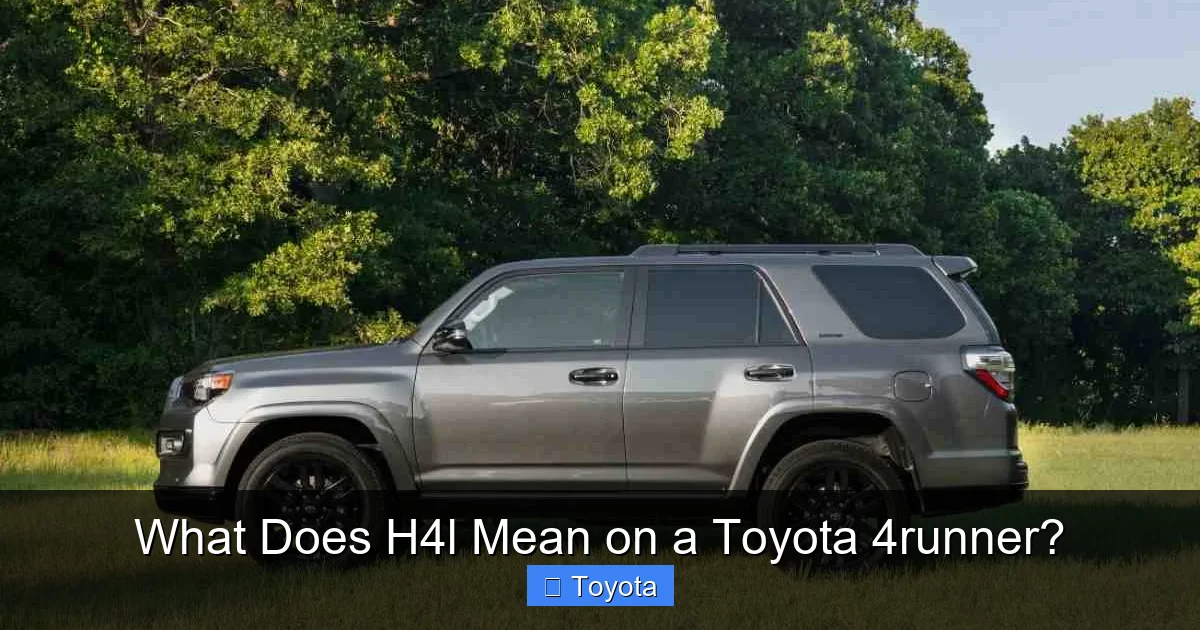
Visual guide about What Does H4l Mean on a Toyota 4runner?
Image source: fourwheeltrends.com
Knowing when to engage H4L is just as important as understanding what it does. Using it at the wrong time can damage your vehicle or reduce control. Here are the most common scenarios where H4L is beneficial.
Off-Roading on Gravel or Dirt Roads
If you’re driving on unpaved roads—especially those with loose gravel, sand, or dirt—H4L can significantly improve traction. The locked center differential ensures that even if one wheel starts to slip, the others will keep turning, helping you maintain momentum.
For example, imagine you’re driving up a gravel hill. In H2, the rear wheels might spin as they lose grip. But in H4L, power is sent to all four wheels, reducing the chance of getting stuck.
Driving in Snow or Ice
Winter driving can be tricky, especially in mountainous regions where 4Runners are popular. Snow and ice reduce tire grip, making it easy to lose control. H4L helps by distributing power evenly, reducing the likelihood of wheel spin during acceleration.
Tip: If you’re driving in light to moderate snow, H4L is often the best choice. But if you’re in deep snow or need to climb a steep, icy hill, switch to L4L for maximum torque.
Muddy or Wet Conditions
Rain-slicked roads or muddy trails can be just as challenging as snow. Water reduces friction between tires and the road, increasing the risk of hydroplaning or slipping. H4L helps by ensuring all wheels are working together to maintain traction.
A real-world example: You’re driving through a forest trail after a heavy rain. The ground is soft and muddy. In H2, your rear wheels might dig in and spin. But in H4L, the front wheels help pull you through, keeping you moving forward.
Traversing Uneven Terrain
Even on relatively flat ground, uneven surfaces—like ruts, potholes, or rocks—can cause one wheel to lift off the ground. When that happens, a 2WD vehicle might lose all traction. But in H4L, the locked differential ensures that power still reaches the wheels that are in contact with the ground.
This is especially useful when crossing streams, driving over logs, or navigating rocky paths where wheel articulation is key.
Highway Driving in Adverse Weather
While you should never use H4L on dry pavement, it’s perfectly safe—and often recommended—to use it on wet or snowy highways. Many 4Runner owners switch to H4L during winter storms for added stability and control.
Just remember: H4L is not a substitute for safe driving. Always reduce speed in bad weather, maintain a safe following distance, and avoid sudden maneuvers.
How to Engage H4L on a Toyota 4Runner
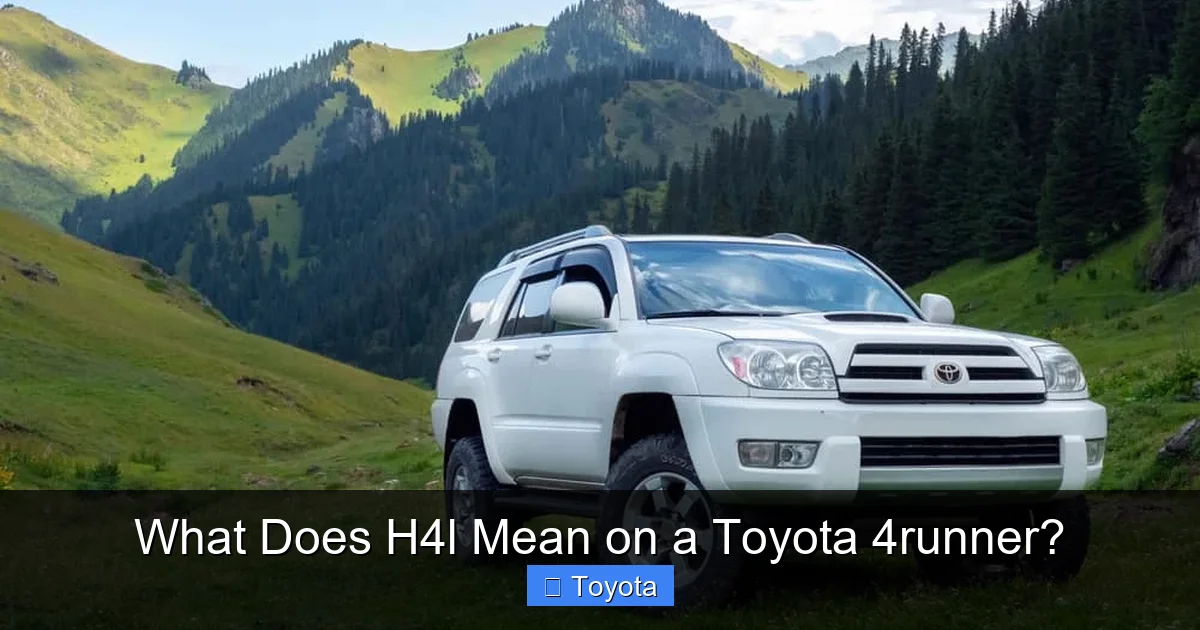
Visual guide about What Does H4l Mean on a Toyota 4runner?
Image source: fourwheeltrends.com
Engaging H4L is simple, but it’s important to follow the correct procedure to avoid damaging your drivetrain.
Step-by-Step Guide
- Come to a complete stop (recommended): While many 4Runners allow you to shift into H4L while moving (up to 55 mph), it’s safest to stop first—especially if you’re new to 4WD.
- Shift the transfer case lever: Locate the 4WD shifter (usually a floor-mounted lever or a dial near the gear shifter). Move it from “H2” to “H4L.”
- Listen for engagement: You may hear a clunk or feel a slight vibration as the front axle engages. This is normal.
- Check the dashboard: A light or indicator should appear showing “4WD” or “H4L” is active.
- Drive normally: You can now drive at normal speeds, but avoid sharp turns on dry pavement.
Can You Shift While Moving?
Yes—most modern 4Runners (2003 and newer) allow you to shift from H2 to H4L while driving at speeds up to 55 mph. This is called “shift-on-the-fly” and is a convenient feature for sudden changes in road conditions.
However, always come to a complete stop before shifting into or out of L4L. The low range requires a full stop due to the high torque involved.
Switching Back to H2
To disengage H4L, simply shift the lever back to H2. You can do this while driving at any speed, though it’s smoother if you ease off the accelerator briefly during the shift.
Tip: If you’re unsure whether H4L is engaged, try making a slow, tight turn on gravel or dirt. If the vehicle feels like it’s “binding” or hopping, it’s likely still in H4L. Shift back to H2 for normal driving.
Common Mistakes to Avoid with H4L
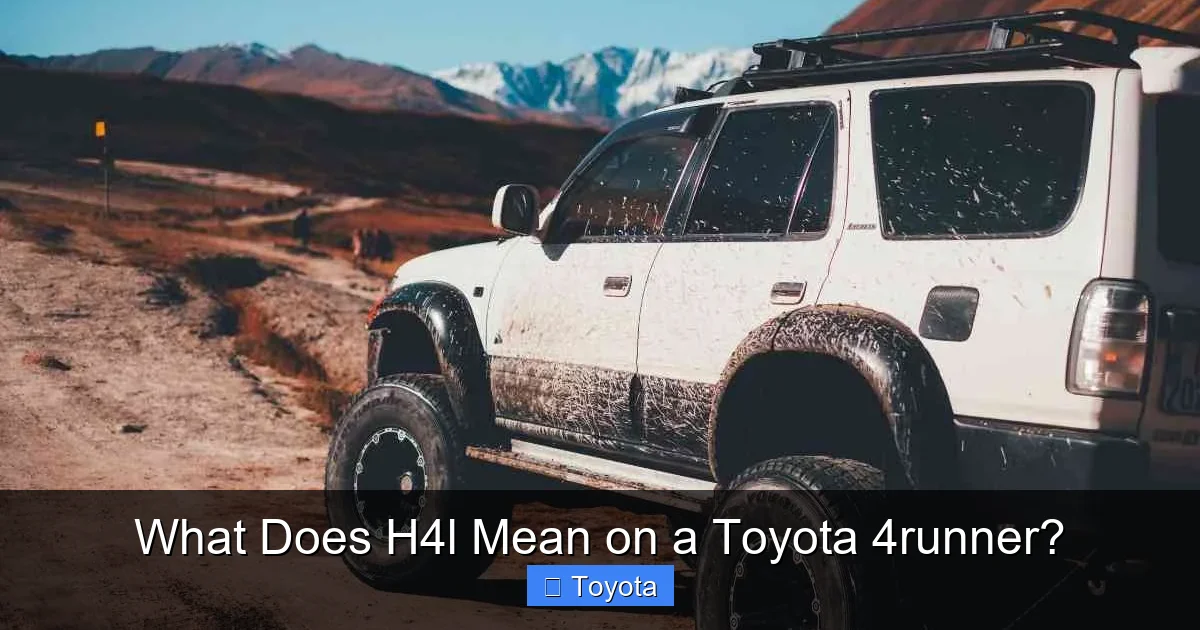
Visual guide about What Does H4l Mean on a Toyota 4runner?
Image source: fourwheeltrends.com
Even experienced drivers can make mistakes when using 4WD modes. Here are some common pitfalls and how to avoid them.
Using H4L on Dry Pavement
This is the #1 mistake. Driving in H4L on dry, smooth roads causes “drivetrain binding”—a condition where the front and rear axles are forced to turn at the same speed, but the wheels need to rotate at different speeds during turns. This creates stress on the transfer case, axles, and differentials, potentially leading to costly repairs.
Solution: Only use H4L on loose, slippery, or uneven surfaces. If you’re driving on asphalt or concrete, stick with H2.
Forgetting to Disengage H4L
Some drivers engage H4L for a snowy drive and forget to switch back. Over time, this can wear out components and reduce fuel efficiency.
Tip: Make it a habit to check your drive mode when road conditions improve. If you’re back on dry pavement, shift to H2.
Confusing H4L with L4L
H4L and L4L sound similar, but they serve very different purposes. Using L4L at high speeds can destroy your transmission. Conversely, using H4L in extreme off-road situations might not give you enough torque.
Remember: H4L = high speed, moderate traction. L4L = low speed, maximum torque.
Not Using 4WD Regularly
If you only use 4WD once a year, seals and components can dry out or seize. It’s recommended to engage H4L or L4L for a few minutes every month—even if you’re just driving in a parking lot.
This keeps the system lubricated and ensures it’s ready when you need it.
Maintenance Tips for Your 4Runner’s 4WD System
To keep your 4Runner’s 4WD system—including H4L—working smoothly, regular maintenance is key.
Check Fluids Regularly
The transfer case and front/rear differentials require specific fluids. Over time, these can break down or leak. Check the levels and condition during oil changes or at least twice a year.
Refer to your owner’s manual for the correct fluid type and capacity. Toyota typically recommends Toyota Genuine Differential Gear Oil or equivalent.
Inspect for Leaks
Look under your 4Runner for signs of fluid leaks around the transfer case, axles, and differentials. A small drip might not seem serious, but it can lead to low fluid levels and component damage.
If you spot a leak, have it inspected by a qualified mechanic.
Test the 4WD System
Once a month, take your 4Runner to a safe, open area (like an empty parking lot or gravel road) and test each 4WD mode:
- Shift into H4L and drive in a straight line, then make slow turns.
- Shift into L4L (only after coming to a complete stop) and drive forward slowly.
- Listen for unusual noises and feel for vibrations.
This helps ensure everything is engaging properly.
Keep the Shifter Clean
Dirt and grime can build up around the transfer case shifter, making it harder to move. Wipe it down regularly and apply a light lubricant if needed.
Avoid using WD-40 or similar sprays, as they can attract more dirt. Use a silicone-based lubricant instead.
Real-World Examples: H4L in Action
Let’s look at a few scenarios where H4L makes a real difference.
Example 1: Winter Commute
Sarah lives in Colorado and drives her 4Runner to work every day. During winter, roads are often icy or snow-covered. She switches to H4L each morning and notices her vehicle feels more stable during acceleration and braking. She avoids wheel spin and arrives safely—even when other cars are sliding.
Example 2: Camping Trip
Mike takes his 4Runner on a weekend camping trip. The last mile to the campsite is a rough dirt road with potholes and loose gravel. He shifts into H4L before starting the climb. The added traction helps him navigate the uneven terrain without getting stuck, and he arrives at the site with no issues.
Example 3: Beach Driving
Lisa drives her 4Runner on a sandy beach. The soft sand causes her rear wheels to spin in H2. She switches to H4L, and the front wheels help pull her forward. She’s able to drive along the shoreline without sinking.
These examples show how H4L enhances safety and capability in everyday and recreational driving.
Conclusion
Understanding what H4L means on a Toyota 4Runner is essential for getting the most out of your vehicle’s 4WD system. H4L—High Range 4-Wheel Drive Lock—provides balanced power to all four wheels with a locked center differential, making it ideal for slippery, uneven, or off-road conditions where you still want to maintain normal driving speeds.
Use H4L in snow, mud, gravel, or wet conditions, but avoid it on dry pavement to prevent drivetrain damage. Always follow the correct shifting procedure, and remember to switch back to H2 when conditions improve. Regular maintenance and occasional use of 4WD modes will keep your system in top shape.
Whether you’re a weekend warrior or a daily driver, knowing when and how to use H4L gives you confidence behind the wheel. Your 4Runner is built for adventure—make sure you’re using all its tools to explore safely and effectively.
Frequently Asked Questions
Can I drive in H4L on the highway?
Yes, you can drive in H4L on the highway as long as the road is wet, snowy, or icy. However, do not use H4L on dry pavement, as it can cause drivetrain damage.
Is it bad to leave my 4Runner in H4L all the time?
Yes, leaving your 4Runner in H4L on dry roads can cause binding and wear on the drivetrain. Only use H4L when needed and switch back to H2 for normal driving.
Can I shift into H4L while driving?
Yes, most 4Runners allow you to shift from H2 to H4L while moving at speeds up to 55 mph. Always come to a complete stop before shifting into L4L.
What’s the difference between H4L and 4H?
H4L and 4H are essentially the same—both refer to high-range 4WD with a locked center differential. Toyota uses “H4L” in the 4Runner, while other brands may use “4H.”
Should I use H4L in the rain?
Yes, H4L can improve traction on wet roads, especially during acceleration. It’s safer than 2WD in heavy rain, but avoid sharp turns to prevent skidding.
How often should I use 4WD modes?
Engage H4L or L4L for a few minutes at least once a month to keep the system lubricated and functioning properly, even if you don’t go off-road.
