
How Much Is a Transmission for a 2014 Nissan Altima?

Replacing or repairing a transmission in a 2014 Nissan Altima can cost between $1,800 and $4,500, depending on the type of transmission and labor rates. This guide breaks down pricing, common issues, and money-saving tips so you can make an informed decision without overspending.
If your 2014 Nissan Altima is jerking, slipping, or refusing to shift, you might be facing one of the most dreaded car repairs: a transmission replacement. And let’s be honest—nobody wants to hear that word. But before you panic, it’s important to understand what you’re dealing with. The 2014 Nissan Altima, a popular mid-size sedan known for its fuel efficiency and smooth ride, comes equipped with a continuously variable transmission (CVT). While CVTs offer better gas mileage and seamless acceleration, they’re also more complex and, unfortunately, more prone to failure than traditional automatic transmissions.
So, how much is a transmission for a 2014 Nissan Altima? The short answer: it depends. But the long answer—the one that will actually help you budget and make smart decisions—requires a deeper dive. In this guide, we’ll walk you through everything you need to know about transmission costs for your 2014 Altima, from average prices and labor fees to repair options and money-saving tips. Whether you’re dealing with a slipping transmission, delayed shifting, or a complete failure, this article will help you navigate the repair process with confidence.
We’ll also explore the common issues that plague the 2014 Altima’s CVT, explain the differences between rebuilt, used, and new transmissions, and offer practical advice on how to avoid costly mistakes. By the end, you’ll have a clear picture of what to expect—and how to protect your wallet while keeping your Altima on the road.
Key Takeaways
- Transmission cost varies widely: Expect to pay $1,800–$4,500 for a 2014 Nissan Altima transmission, including parts and labor.
- CVT is standard: Most 2014 Altimas use a continuously variable transmission (CVT), which is more prone to issues than traditional automatics.
- Labor is a major expense: Labor costs typically range from $800 to $1,500, depending on location and shop type.
- Rebuilt vs. used vs. new: Rebuilt transmissions offer the best balance of cost and reliability, often costing 30–50% less than new ones.
- Warranty matters: Always choose a repair shop that offers a warranty—ideally 12–24 months—on both parts and labor.
- Preventive maintenance helps: Regular fluid changes and avoiding overheating can extend your CVT’s lifespan.
- Get multiple quotes: Prices vary significantly between dealerships, independent shops, and transmission specialists.
📑 Table of Contents
Understanding the 2014 Nissan Altima Transmission
The 2014 Nissan Altima was offered with two engine options: a 2.5-liter 4-cylinder and a 3.5-liter V6. Both engines were paired with Nissan’s Xtronic CVT—a type of continuously variable transmission designed to improve fuel economy and deliver smoother acceleration. Unlike traditional automatics that use fixed gear ratios, a CVT uses a belt and pulley system to provide an infinite number of gear ratios, allowing the engine to operate at its most efficient RPM at all times.
While this technology sounds impressive—and it is—it’s also more delicate. CVTs generate more heat and stress on internal components, especially under heavy loads or aggressive driving. Over time, this can lead to wear and failure. In fact, the 2014 Altima has been the subject of multiple complaints and even a class-action lawsuit related to CVT problems, including shuddering, hesitation, and complete transmission failure.
One of the most common signs of CVT trouble is a “jerking” or “shuddering” sensation during acceleration, especially from a stop. You might also notice delayed engagement when shifting from park to drive, or the transmission slipping out of gear. In severe cases, the car may go into “limp mode,” limiting speed and power to protect the transmission.
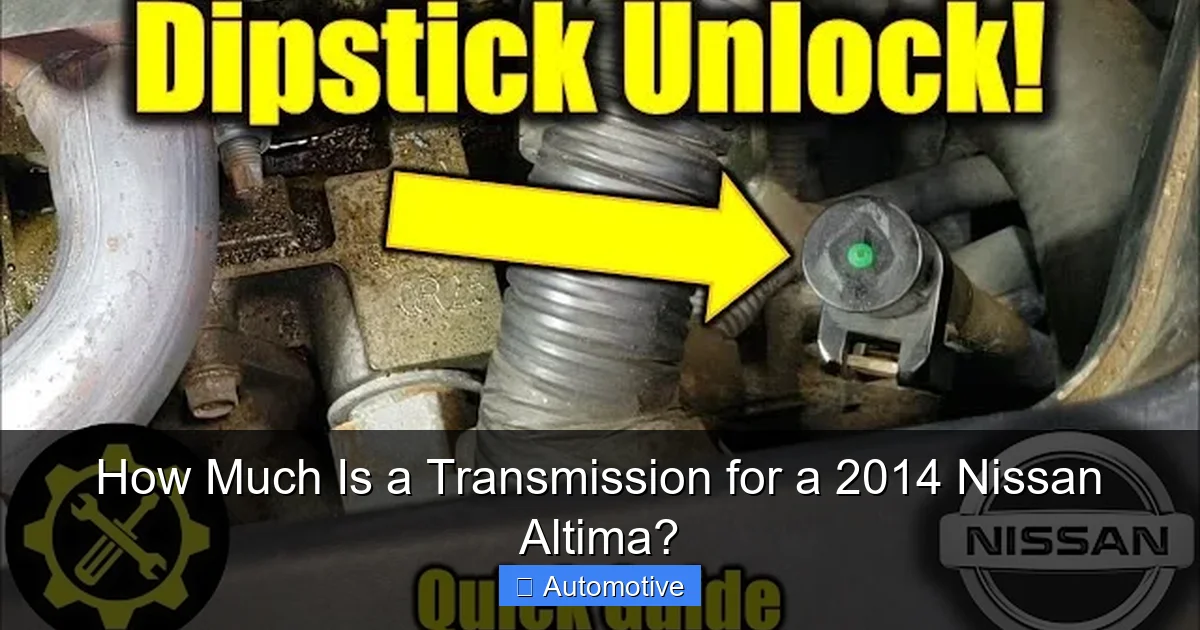
It’s also worth noting that the 2014 Altima’s CVT doesn’t have a traditional dipstick for checking fluid levels. Instead, Nissan uses a sealed system that requires special tools and procedures to inspect and refill. This makes DIY maintenance difficult and increases reliance on professional service—another factor that can drive up repair costs.
Why CVTs Fail in the 2014 Altima
Several factors contribute to CVT failure in the 2014 Nissan Altima. First, the transmission fluid is critical to its operation. CVT fluid is specially formulated to handle high friction and heat, but it breaks down over time. Nissan recommends changing the CVT fluid every 30,000 to 60,000 miles, but many owners skip this service, leading to sludge buildup and component wear.
Second, the belt and pulley system is under constant stress. If the belt slips or the pulleys wear unevenly, the transmission can lose power or fail entirely. In some cases, the torque converter—a component that transfers engine power to the transmission—can also fail, causing shuddering or stalling.
Third, software issues have been reported. The transmission control module (TCM) manages shift points and torque delivery, and outdated or buggy software can cause erratic behavior. Nissan has issued several technical service bulletins (TSBs) and even extended warranties for certain CVT-related problems, but not all issues are covered.
Finally, driving habits play a role. Towing, frequent stop-and-go traffic, and aggressive acceleration can overheat the transmission and accelerate wear. If you live in a hot climate or frequently drive in hilly areas, your CVT may be under extra strain.
Average Cost to Replace a 2014 Nissan Altima Transmission

Visual guide about How Much Is a Transmission for a 2014 Nissan Altima?
Image source: uploads.dailydot.com
So, how much is a transmission for a 2014 Nissan Altima? The total cost depends on several factors, including the type of transmission, labor rates, and whether you choose a new, rebuilt, or used unit. On average, you can expect to pay between $1,800 and $4,500 for a complete transmission replacement.
Let’s break that down:
– **Parts:** A new OEM (original equipment manufacturer) transmission from Nissan can cost $2,500 to $3,500. A rebuilt transmission—where the old unit is disassembled, cleaned, and reassembled with new parts—typically runs $1,500 to $2,500. A used transmission from a salvage yard or online seller might cost $800 to $1,500, but comes with more risk.
– **Labor:** Labor is often the biggest expense. Replacing a transmission is a complex job that can take 8 to 12 hours, depending on the shop and the vehicle’s condition. Labor rates vary by location and shop type:
– Dealerships: $120–$180 per hour
– Independent repair shops: $80–$140 per hour
– Transmission specialists: $100–$160 per hour
At 10 hours of labor, you’re looking at $800 to $1,800 just for the installation.
– **Additional costs:** You may also need to replace the transmission fluid, filter, torque converter, and mounts. These can add $100 to $300 to the total bill. Some shops include these in their quote, while others charge separately.
Here’s a real-world example: A customer in Dallas, Texas, paid $3,200 for a rebuilt CVT from a local transmission shop, including parts, labor, and a 18-month warranty. Another customer in Portland, Oregon, opted for a used transmission from a salvage yard and paid $1,900 total—but had to return twice for adjustments, adding $300 in extra labor.
New vs. Rebuilt vs. Used Transmissions
Choosing the right type of transmission is crucial. Here’s a comparison of your options:
– **New OEM transmission:** This is the most reliable option, with a full factory warranty (usually 12–24 months). However, it’s also the most expensive. Ideal if you plan to keep the car long-term and want peace of mind.
– **Rebuilt transmission:** A rebuilt unit has been professionally restored using new seals, gaskets, clutches, and other wear items. It’s often sourced from a reputable remanufacturer and comes with a warranty. This is usually the best value—offering near-new performance at a lower price.
– **Used transmission:** A used transmission is pulled from a salvage vehicle and sold “as-is.” While it’s the cheapest option, it comes with no warranty and unknown mileage or condition. Only consider this if you’re on a tight budget and willing to take the risk.
Tip: Always ask for a warranty, even on used transmissions. Some salvage yards offer 30- to 90-day guarantees, which can save you from a total loss if the unit fails.
Labor Costs and Where to Get the Work Done
Visual guide about How Much Is a Transmission for a 2014 Nissan Altima?
Image source: carobjective.com
Labor costs can make or break your repair budget. As mentioned, replacing a transmission is a labor-intensive job that requires removing the engine or dropping the subframe. Most shops charge by the hour, and rates vary widely.
Dealerships tend to be the most expensive, but they use factory-trained technicians and OEM parts. They also have access to Nissan’s technical databases and software updates, which can be helpful for diagnosing CVT issues.
Independent repair shops are usually more affordable and often just as skilled. Look for shops that specialize in transmissions or have experience with Nissan vehicles. Many offer free diagnostics and detailed quotes.
Transmission specialists focus exclusively on transmissions and often have faster turnaround times and better warranties. They may also have rebuilt units in stock, reducing wait times.
To save money, get at least three quotes from different types of shops. Be sure to ask:
– What’s included in the quote?
– Is there a warranty on parts and labor?
– Do you use OEM or aftermarket parts?
– How long will the repair take?
Avoid shops that give vague estimates or pressure you to decide immediately. A reputable shop will explain the process and give you time to think.
DIY vs. Professional Repair
Can you replace the transmission yourself? Technically, yes—but it’s not recommended unless you’re an experienced mechanic with the right tools and workspace. The job requires a transmission jack, engine support bar, and possibly a lift. You’ll also need to drain and refill fluids, reprogram the TCM, and perform a test drive to ensure proper operation.
Even if you save on labor, mistakes can be costly. A misaligned transmission can damage the engine or drivetrain. Incorrect fluid levels can cause overheating and failure. And if you don’t reset the TCM, the car may not shift properly.
If you’re determined to DIY, consider hiring a mobile mechanic to assist or supervise. Some offer flat-rate diagnostic and installation services that are cheaper than a full shop visit.
Common Transmission Problems in the 2014 Altima
Visual guide about How Much Is a Transmission for a 2014 Nissan Altima?
Image source: images.simplepart.com
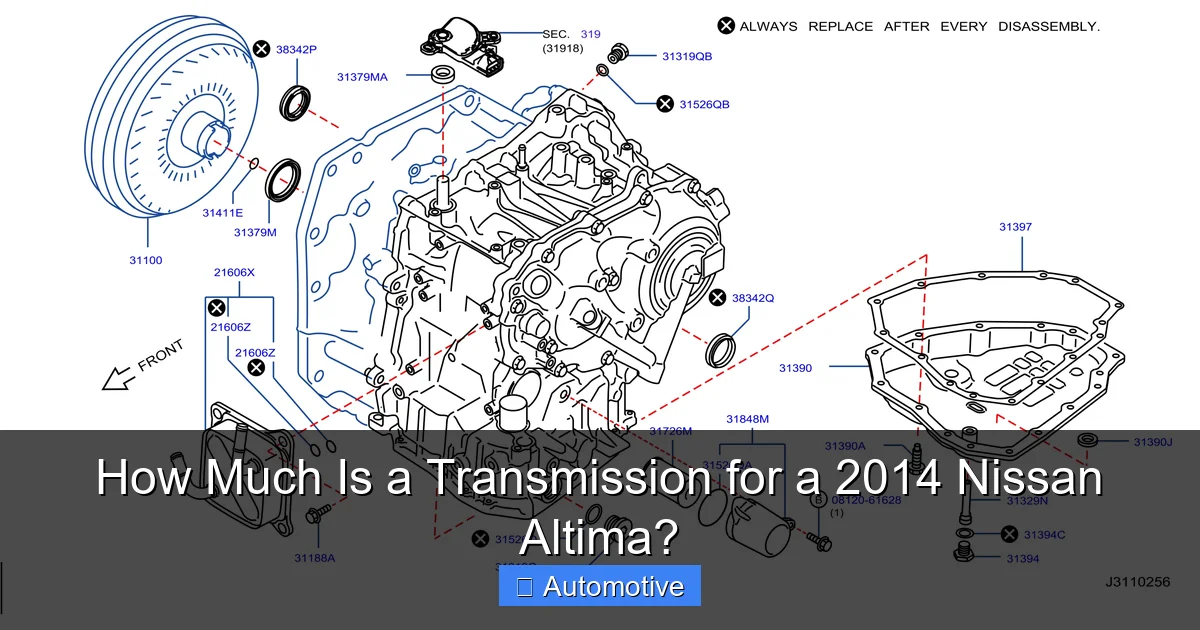
The 2014 Nissan Altima’s CVT has a reputation for reliability issues. Here are the most common problems owners report:
– **Shuddering or jerking during acceleration:** This is often caused by a failing torque converter or contaminated fluid. It may feel like the car is “bucking” or “hiccupping” when you press the gas.
– **Delayed engagement:** When you shift from park to drive, the car may hesitate for several seconds before moving. This can be due to low fluid, a worn clutch pack, or a faulty solenoid.
– **Transmission slipping:** The engine revs but the car doesn’t accelerate. This is a serious sign of internal wear and should be addressed immediately.
– **Overheating:** CVTs are sensitive to heat. If the transmission temperature warning light comes on, pull over and let the car cool down. Continuing to drive can cause permanent damage.
– **Check engine light with CVT-related codes:** Common codes include P0841 (transmission fluid pressure sensor), P1777 (CVT belt slip), and P2769 (torque converter clutch circuit).
If you notice any of these symptoms, don’t wait. Early diagnosis can prevent a full transmission failure and save you thousands.
Extended Warranties and Recalls
Nissan has acknowledged CVT issues in the 2014 Altima and has extended warranties for certain models. In 2019, a class-action lawsuit resulted in a settlement that extended the powertrain warranty to 8 years or 120,000 miles for CVT-related problems. If your Altima is still under this coverage, you may be eligible for a free repair or replacement.
Check your VIN on Nissan’s website or contact a dealership to see if your vehicle is covered. Even if the warranty has expired, some dealerships may offer goodwill repairs, especially if you’ve maintained the car well.
Tips to Save Money on Transmission Repairs
Transmission repairs are expensive, but there are ways to reduce the cost:
1. **Get multiple quotes:** Prices can vary by $1,000 or more between shops. Don’t settle for the first estimate.
2. **Consider a rebuilt transmission:** It’s often the best balance of cost and reliability.
3. **Ask about warranties:** A 12- to 24-month warranty can save you money if problems arise later.
4. **Check for recalls or extended warranties:** You might qualify for a free repair.
5. **Maintain your transmission:** Regular fluid changes and avoiding overheating can prevent failure.
6. **Negotiate labor rates:** Some shops may offer discounts for cash payments or referrals.
7. **Use a repair financing option:** Many shops offer payment plans through third-party lenders like Synchrony or CareCredit.
Preventive Maintenance for Your CVT
The best way to avoid a transmission replacement is to take care of your CVT. Here’s how:
– **Change the fluid every 30,000 to 60,000 miles.** Use only Nissan NS-2 or NS-3 CVT fluid.
– **Avoid towing or hauling heavy loads.** The 2014 Altima isn’t designed for towing.
– **Let the car warm up in cold weather.** Cold fluid is thicker and can cause shifting issues.
– **Don’t “rock” the car out of snow or mud.** This puts extra stress on the transmission.
– **Use the parking brake.** This reduces strain on the transmission parking pawl.
Regular maintenance can add years to your CVT’s life—and save you thousands in repairs.
Conclusion
So, how much is a transmission for a 2014 Nissan Altima? The answer isn’t simple, but with the right information, you can make a smart, cost-effective decision. Expect to pay between $1,800 and $4,500 for a replacement, depending on the type of transmission and labor costs. Rebuilt units offer the best value, while used transmissions come with more risk.
The 2014 Altima’s CVT is known for its fuel efficiency—but also for its potential problems. Shuddering, slipping, and delayed engagement are common signs of trouble. If you notice any of these symptoms, act quickly to avoid a complete failure.
To save money, get multiple quotes, choose a reputable shop with a solid warranty, and consider a rebuilt transmission. And don’t forget preventive maintenance—regular fluid changes and careful driving can go a long way in protecting your investment.
While a transmission replacement is never fun, it doesn’t have to be a financial disaster. With the right approach, you can get your 2014 Nissan Altima back on the road—smoothly and affordably.
Frequently Asked Questions
How much does it cost to replace a transmission in a 2014 Nissan Altima?
The average cost to replace a transmission in a 2014 Nissan Altima ranges from $1,800 to $4,500, including parts and labor. Prices vary based on the type of transmission and shop location.
Is the 2014 Nissan Altima transmission a CVT?
Yes, all 2014 Nissan Altimas come equipped with a continuously variable transmission (CVT), which is known for smooth acceleration but can be prone to issues over time.
Can I drive with a slipping transmission?
No, driving with a slipping transmission can cause further damage and leave you stranded. Have it inspected immediately to avoid costly repairs.
Does Nissan offer any warranty coverage for CVT problems?
Yes, Nissan extended the powertrain warranty to 8 years or 120,000 miles for CVT-related issues due to a class-action lawsuit. Check your VIN to see if your vehicle is covered.
Should I choose a rebuilt or used transmission?
A rebuilt transmission is generally the best choice—it’s more reliable than a used one and cheaper than a new OEM unit, often with a solid warranty.
How often should I change the CVT fluid in my 2014 Altima?
Nissan recommends changing the CVT fluid every 30,000 to 60,000 miles to maintain performance and prevent premature wear.
