
Why Does My Toyota Camry Make a Whining Noise?

If your Toyota Camry is making a whining noise, it’s often a sign of a mechanical issue that needs attention. From power steering problems to transmission concerns, identifying the source early can save you time and money. This guide breaks down the most common causes and what you can do about them.
Key Takeaways
- Power steering issues are a top cause: Low fluid or a failing pump can create a high-pitched whine, especially when turning.
- Transmission problems may be to blame: Whining during acceleration or gear shifts could signal low fluid or internal wear.
- Serpentine belt wear leads to noise: A loose or worn belt can squeal or whine, particularly at startup or under load.
- Alternator strain causes electrical whining: A failing alternator may produce a whining sound due to bearing wear or electrical load.
- Wheel bearings affect driving noise: A whine that changes with speed may point to worn wheel bearings needing replacement.
- Air intake or vacuum leaks create unusual sounds: Hissing or whining from the engine bay could indicate a leak in the intake system.
- Regular maintenance prevents noise issues: Checking fluids, belts, and components during routine service helps catch problems early.
📑 Table of Contents
Why Does My Toyota Camry Make a Whining Noise?
You’re cruising down the highway in your reliable Toyota Camry, enjoying the smooth ride and quiet cabin—until you hear it. A faint whining noise starts to creep in, growing louder when you turn the wheel or accelerate. Your first thought? “Is this normal?” Probably not. While the Camry is known for its durability and quiet operation, unexpected noises like whining should never be ignored.
Whining sounds in your Toyota Camry can come from several sources, ranging from minor maintenance issues to more serious mechanical problems. The good news? Most causes are identifiable and fixable—especially if you catch them early. Whether the noise happens at startup, during turns, or while driving at highway speeds, understanding where it’s coming from is the first step toward a solution.
In this guide, we’ll walk you through the most common reasons your Toyota Camry might be making a whining noise. We’ll explain what each sound means, how to diagnose it, and what you can do to fix it. From power steering hiccups to transmission troubles, we’ve got you covered. Let’s dive in and get your Camry back to its whisper-quiet best.
Common Causes of Whining Noise in a Toyota Camry
Visual guide about Why Does My Toyota Camry Make a Whining Noise?
Image source: psychoautos.com
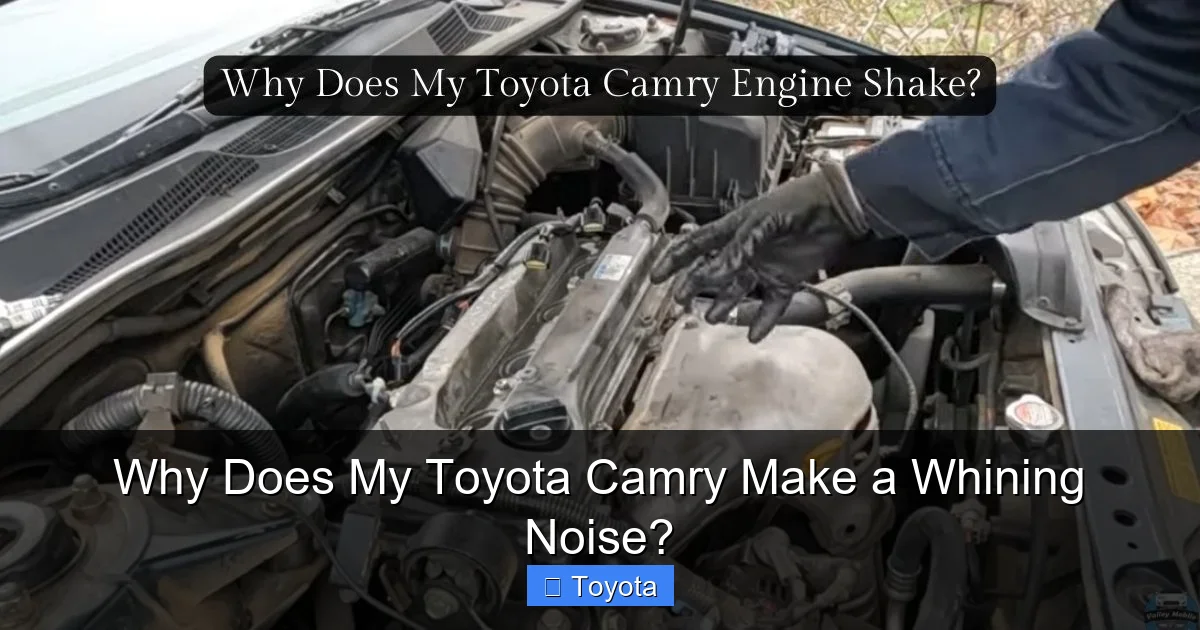
When your Toyota Camry starts making a whining noise, it’s easy to feel overwhelmed. But don’t worry—most causes fall into a few familiar categories. Let’s break down the most common culprits so you can start narrowing down the source.
One of the first things to consider is the power steering system. If the whining gets louder when you turn the steering wheel—especially at low speeds—it’s likely related to the power steering pump or fluid level. Low fluid can cause the pump to work harder, creating that high-pitched whine you’re hearing.
Another frequent offender is the serpentine belt. This belt powers multiple components under the hood, including the alternator, water pump, and air conditioning compressor. If it’s loose, worn, or glazed, it can slip and produce a whining or squealing sound, particularly when the engine is cold or under load.
Transmission issues are also a possibility, especially if the whining changes with your speed or gear shifts. Low transmission fluid, worn gears, or a failing torque converter can all contribute to unusual noises. And while less common, problems with the alternator or wheel bearings can also manifest as a whine.
The key is to listen carefully. Does the noise happen only when turning? Does it get louder with engine RPMs? Or does it change as you drive faster? These clues will help you and your mechanic pinpoint the issue faster.
Power Steering System Problems
The power steering system is one of the most common sources of whining in a Toyota Camry. This system uses hydraulic pressure to make steering easier, and when something goes wrong, it often announces itself with a loud, high-pitched whine.
One of the simplest causes is low power steering fluid. Over time, fluid levels can drop due to small leaks or evaporation. When the fluid is low, the pump has to work harder to generate pressure, which can create a whining noise—especially when you turn the wheel. You might notice the sound is loudest when parking or making sharp turns at low speeds.
Another possibility is air in the system. If the power steering fluid has been low or recently topped off, air bubbles can get trapped in the lines. These bubbles compress differently than fluid, causing the pump to cavitate and produce a whining or groaning sound. This is often referred to as “air lock” and can be resolved by bleeding the system.
Worn or failing power steering pumps are also a culprit. The pump contains internal bearings and vanes that can wear down over time. As these components degrade, they may produce a constant whine, even when the car is idling. In some cases, the noise may come and go, depending on temperature or steering input.
Leaks in the power steering system can also lead to noise. Common leak points include the hoses, seals, and the pump itself. A visible puddle of reddish or brown fluid under your car is a clear sign of a leak. Even small leaks can reduce fluid pressure and cause the pump to whine.
If you suspect a power steering issue, start by checking the fluid level. The reservoir is usually located near the engine and has a dipstick or sight glass. Make sure the fluid is at the correct level and looks clean—not dark or burnt. If it’s low, top it off with the manufacturer-recommended fluid. But be cautious: overfilling can also cause problems.
If the noise persists after topping off the fluid, it’s time to inspect for leaks or consider a pump replacement. A mechanic can perform a pressure test to check the pump’s performance and determine if it’s failing. In many cases, replacing the pump resolves the whining issue completely.
Serpentine Belt and Tensioner Issues
The serpentine belt is a long, ribbed belt that wraps around several pulleys under the hood. It drives essential components like the alternator, water pump, air conditioning compressor, and power steering pump. Because it’s under constant tension and exposed to heat and friction, it’s prone to wear over time.
A worn or loose serpentine belt is a frequent cause of whining in the Toyota Camry. As the belt ages, it can develop cracks, become glazed (shiny and smooth), or lose tension. When this happens, it may slip on the pulleys, especially under load—like when you turn on the AC or accelerate. This slipping creates a high-pitched whine or squeal.
The noise is often most noticeable at startup, when the engine is cold and the belt is stiffer. It may also get louder when you use accessories like the heater, defroster, or headlights, as these increase the load on the belt.
Another related issue is a failing belt tensioner. The tensioner is a spring-loaded pulley that keeps the belt tight. Over time, the spring can weaken or the pulley bearing can wear out. A loose tensioner allows the belt to slip, leading to whining or chirping sounds. In some cases, the tensioner itself may make noise due to a bad bearing.
To check the serpentine belt, visually inspect it for cracks, fraying, or glazing. Press down on the belt midway between two pulleys—it should only deflect about half an inch. If it’s too loose or too tight, it may need adjustment or replacement.
If the belt looks fine but the noise persists, the tensioner may be the issue. Listen for grinding or rumbling sounds from the tensioner pulley, which indicate bearing wear. A mechanic can test the tensioner’s operation and replace it if needed.
Replacing the serpentine belt is a relatively straightforward job, but it’s important to use the correct belt for your Camry’s model and engine. Many auto parts stores can help you find the right one. If you’re not comfortable doing it yourself, a quick visit to a trusted mechanic can have you back on the road in under an hour.
Transmission-Related Whining
If your Toyota Camry’s whining noise changes with your speed or gear shifts, the transmission could be the source. The transmission is responsible for transferring engine power to the wheels, and when it’s not functioning properly, it can produce a variety of sounds—including a persistent whine.
One of the most common transmission-related causes is low fluid. Transmission fluid lubricates the internal components, cools the system, and helps with hydraulic pressure. If the fluid level is low, the transmission may not operate smoothly, leading to whining, especially during acceleration or gear changes.
Low fluid can result from leaks, evaporation, or simply not checking it regularly. Unlike engine oil, transmission fluid isn’t consumed in the combustion process, so low levels usually indicate a leak. Common leak points include the transmission pan gasket, cooler lines, or the output shaft seal.
Another possibility is degraded or burnt fluid. Over time, transmission fluid breaks down due to heat and contamination. When this happens, it loses its lubricating properties and can cause internal components to wear prematurely. A burnt smell or dark, gritty fluid is a red flag.
Internal wear is another concern. Components like the torque converter, planetary gears, or bearings can wear out over time. A failing torque converter, for example, may produce a whining or grinding noise, particularly when the engine is under load. Worn bearings in the transmission can also create a high-pitched whine that increases with speed.
If you suspect a transmission issue, start by checking the fluid level and condition. On most Camry models, you’ll need to check the fluid with the engine running and the transmission in park. The dipstick will show the level and color—healthy fluid is usually bright red and translucent. If it’s dark, smells burnt, or has metal particles, it’s time for a service.
Low fluid should be topped off, but if there’s a leak, it needs to be repaired. Continuing to drive with low fluid can cause serious damage to the transmission. In cases of internal wear, a transmission service or rebuild may be necessary.
It’s important to note that transmission problems can be complex and expensive to fix. If you’re hearing a whining noise that seems to come from the transmission area, it’s best to have it inspected by a qualified mechanic as soon as possible. Early diagnosis can prevent more costly repairs down the road.
Alternator and Electrical System Noise
While less common, the alternator can also be a source of whining in your Toyota Camry. The alternator charges the battery and powers the electrical system while the engine is running. It contains bearings and a rotor that spin at high speeds, and when these components wear out, they can produce a whining or grinding noise.
A failing alternator bearing is one of the most frequent causes. As the bearing wears, it creates friction and vibration, leading to a high-pitched whine that may increase with engine RPMs. You might also notice electrical issues, such as dimming headlights, a weak battery, or warning lights on the dashboard.
Another possibility is electrical load-induced noise. Some alternators produce a faint whine under heavy electrical demand—like when the AC, headlights, and stereo are all running. This is usually normal, but if the noise is loud or persistent, it could indicate a problem.
To diagnose an alternator issue, listen for the whine near the front of the engine. If it changes with electrical load or engine speed, the alternator is a likely suspect. You can also use a multimeter to test the alternator’s output. A healthy alternator should produce around 13.5 to 14.5 volts when the engine is running.
If the alternator is failing, it should be replaced as soon as possible. A bad alternator can leave you stranded with a dead battery, and it can also damage other electrical components. Most alternator replacements take a few hours and are best left to a professional.
Wheel Bearings and Suspension Components
A whining noise that changes with your speed—getting louder as you go faster—may point to worn wheel bearings. Wheel bearings allow the wheels to spin smoothly, and when they wear out, they can produce a whining, humming, or grinding sound.
Unlike engine noises, wheel bearing noise is usually more noticeable at higher speeds and may change when you turn. For example, if the noise gets louder when you turn left, the right wheel bearing may be failing, and vice versa. This is because turning shifts the load to the opposite side.
Other suspension components, such as CV joints or struts, can also produce noise, but they typically make clicking or knocking sounds rather than a whine. Still, it’s worth having the entire suspension system inspected if you’re hearing unusual noises.
Replacing wheel bearings is a job that requires special tools and knowledge, so it’s usually best left to a mechanic. However, catching the problem early can prevent further damage to the hub or axle.
Air Intake and Vacuum Leaks
Less commonly, a whining noise may come from the air intake or vacuum system. A vacuum leak occurs when unmetered air enters the engine, disrupting the air-fuel mixture. This can cause a hissing or whining sound, especially at idle or under acceleration.
Common leak points include cracked hoses, loose connections, or a damaged intake manifold gasket. These leaks can also cause poor engine performance, rough idling, or a check engine light.
A mechanic can perform a smoke test to locate vacuum leaks. Once found, they can be repaired by replacing hoses or gaskets.
How to Diagnose the Whining Noise
Visual guide about Why Does My Toyota Camry Make a Whining Noise?
Image source: psychoautos.com
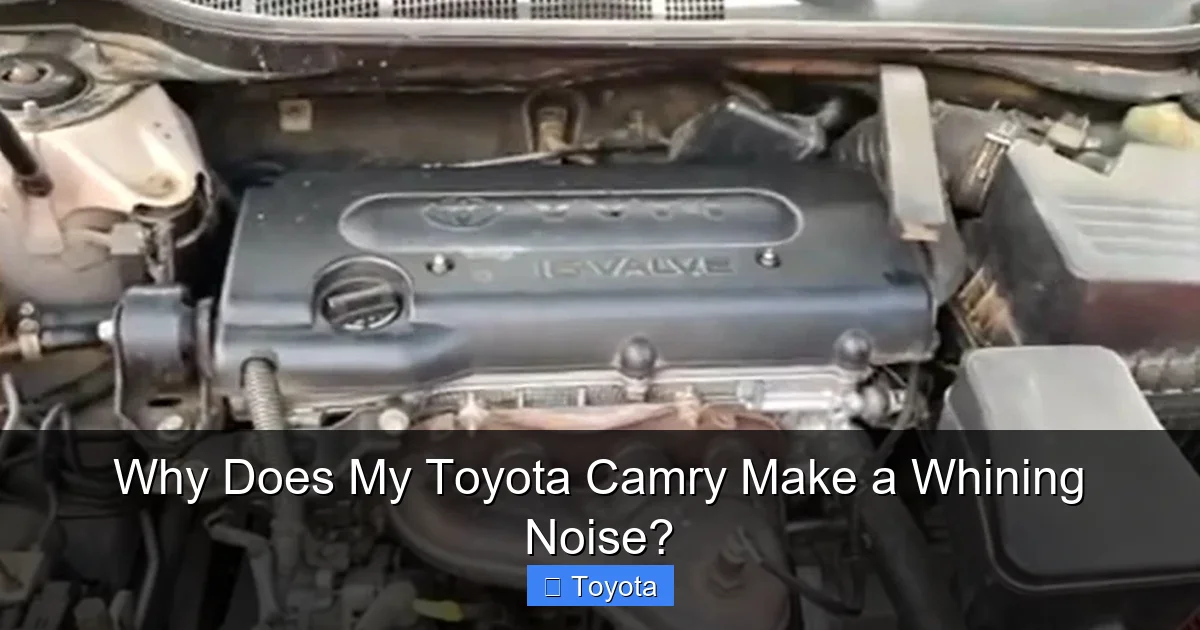
Diagnosing a whining noise in your Toyota Camry starts with careful observation. Pay attention to when the noise occurs, where it seems to come from, and how it changes with driving conditions.
Start by noting the conditions under which the noise appears. Does it happen only when turning? Does it get louder with engine RPMs? Or does it increase with vehicle speed? These details can help narrow down the source.
Next, try to locate the general area of the noise. Is it coming from the front, rear, left, or right side? Is it under the hood or underneath the car? Listening with the engine off, then on, and while driving can help pinpoint the location.
You can also perform simple checks at home. Check fluid levels—power steering, transmission, and engine oil. Inspect the serpentine belt for wear. Look for visible leaks under the car.
If you’re unsure, don’t hesitate to visit a trusted mechanic. They have the tools and experience to diagnose the issue quickly and accurately.
When to See a Mechanic
Visual guide about Why Does My Toyota Camry Make a Whining Noise?
Image source: psychoautos.com
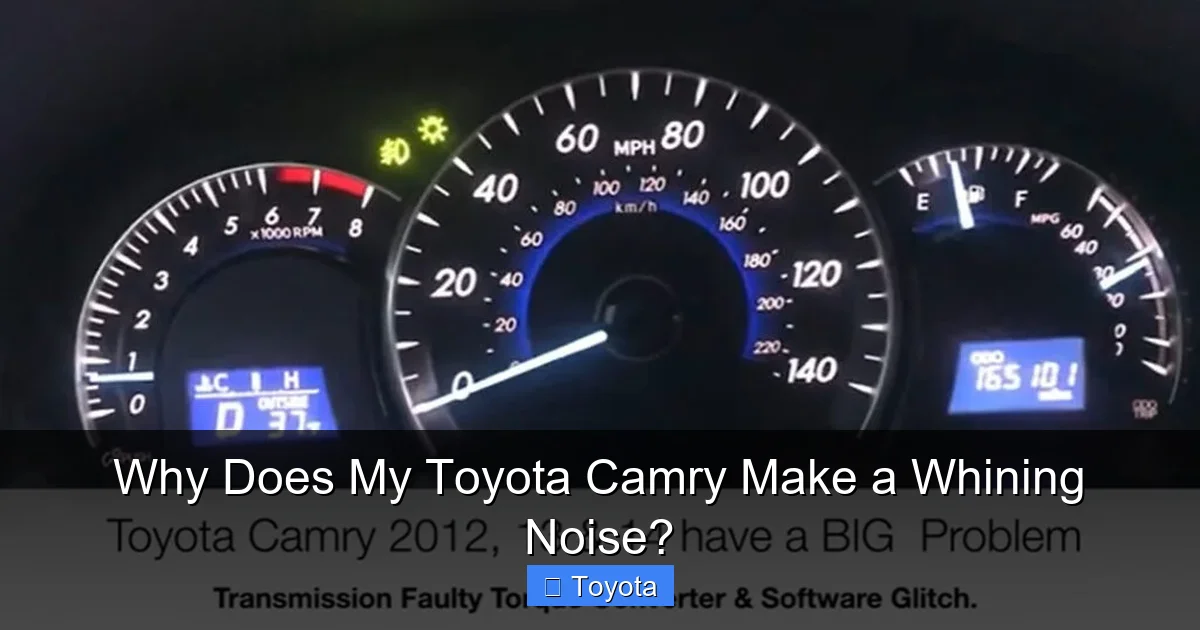
While some whining noises can be resolved with simple fixes, others require professional attention. If the noise is persistent, getting worse, or accompanied by other symptoms—like warning lights, poor performance, or fluid leaks—it’s time to see a mechanic.
Ignoring the problem can lead to more serious damage and higher repair costs. For example, driving with low transmission fluid can destroy the transmission, and a failing alternator can leave you stranded.
A qualified mechanic can perform a thorough inspection, run diagnostic tests, and recommend the best course of action. Regular maintenance and early intervention are key to keeping your Toyota Camry running smoothly.
Conclusion
A whining noise in your Toyota Camry is rarely something to ignore. While it can stem from a variety of causes—power steering issues, belt wear, transmission problems, or electrical faults—most are fixable with timely attention.
By understanding the common sources and knowing when to act, you can protect your vehicle’s performance and longevity. Regular maintenance, fluid checks, and prompt repairs go a long way in preventing noise issues and keeping your Camry quiet and reliable for years to come.
Frequently Asked Questions
Why does my Toyota Camry whine when I turn the steering wheel?
This is often due to low power steering fluid or a failing power steering pump. The noise is most noticeable at low speeds and can be resolved by checking and topping off the fluid or replacing the pump.
Can a bad serpentine belt cause a whining noise?
Yes, a loose, worn, or glazed serpentine belt can slip on the pulleys and produce a high-pitched whine, especially when the engine is cold or under load.
Is transmission whining serious?
It can be. A whining noise from the transmission may indicate low fluid, internal wear, or a failing torque converter. It’s best to have it inspected promptly to avoid costly damage.
How do I check my power steering fluid?
Locate the power steering reservoir near the engine. With the engine off, check the dipstick or sight glass. The fluid should be at the correct level and appear clean—not dark or burnt.
Can a vacuum leak cause a whining noise?
Yes, a vacuum leak can create a hissing or whining sound, especially at idle. It may also cause rough engine performance and trigger a check engine light.
Should I drive my Camry if it’s making a whining noise?
If the noise is mild and you’ve identified a simple fix like low fluid, it’s usually safe to drive short distances. However, if the noise is loud, worsening, or accompanied by other symptoms, have it checked immediately.
