
How to Turn Off Seatbelt Alarm Toyota Highlander 2022

Turning off the seatbelt alarm in a 2022 Toyota Highlander is possible through specific procedures, but it should only be done for valid reasons and with safety in mind. This guide walks you through the correct methods, safety considerations, and legal implications to help you make informed decisions.
Key Takeaways
- Understand the purpose of the seatbelt alarm: It’s designed to promote safety by reminding drivers and passengers to buckle up, reducing injury risk in accidents.
- Check your owner’s manual first: Toyota provides official guidance on seatbelt alarm settings and customization options for the 2022 Highlander.
- Use the Multi-Information Display (MID): The most common and safe method to disable the alarm temporarily via the vehicle’s onboard system.
- Avoid illegal or unsafe bypass methods: Tampering with safety systems can void warranties, violate laws, or compromise passenger safety.
- Consider professional assistance: If unsure, consult a certified Toyota technician to adjust settings safely and correctly.
- Know your state laws: Some states prohibit disabling seatbelt alarms, so always verify local regulations before making changes.
- Prioritize safety over convenience: Even if the alarm is bothersome, wearing a seatbelt remains the best way to protect yourself and others.
📑 Table of Contents
- Why Does the Seatbelt Alarm Exist in the 2022 Toyota Highlander?
- Understanding Your 2022 Toyota Highlander’s Seatbelt System
- Step-by-Step Guide: How to Turn Off the Seatbelt Alarm
- Safety, Legal, and Ethical Considerations
- When It Might Be Acceptable to Disable the Alarm
- Alternatives to Disabling the Alarm
- Conclusion
Why Does the Seatbelt Alarm Exist in the 2022 Toyota Highlander?
The seatbelt alarm in the 2022 Toyota Highlander isn’t just a nagging sound—it’s a critical safety feature designed to save lives. When you start the vehicle without fastening your seatbelt, the system triggers a visual warning on the dashboard and an audible chime that repeats until the belt is secured. This feature is standard across all trims of the Highlander and aligns with federal safety standards and Toyota’s commitment to occupant protection.
Seatbelts reduce the risk of fatal injury by up to 45% for front-seat passengers and by 60% for those in rear seats, according to the National Highway Traffic Safety Administration (NHTSA). The alarm serves as a constant reminder, especially for drivers who may forget or choose to ignore this simple but vital habit. In the 2022 Highlander, the system is integrated with the vehicle’s advanced safety suite, including Toyota Safety Sense 2.0, which monitors driver behavior and environmental conditions.
But why does it matter so much? Imagine driving down a quiet suburban street at low speed—do you really need a seatbelt? The truth is, most serious accidents happen close to home and at speeds under 30 mph. A sudden stop, a pothole, or an unexpected animal crossing the road can turn a routine drive into a dangerous situation in seconds. The seatbelt keeps you in place, prevents ejection, and works with airbags to minimize injury.
Toyota engineers designed the alarm to be persistent but not overwhelming. It typically sounds for about 90 seconds after the ignition is turned on or when the vehicle reaches a certain speed (usually around 15–20 mph). The goal is to encourage compliance without causing frustration. However, some drivers find the chime annoying, especially during short trips or when using the vehicle for tasks like moving items in a driveway.
That said, disabling the alarm should never be taken lightly. While it’s technically possible, doing so removes an important layer of protection. Before you consider turning it off, ask yourself: Is the inconvenience worth the risk? For most drivers, the answer is no. But if you have a legitimate reason—such as a medical condition or a need to move the vehicle frequently without passengers—there are safe and legal ways to manage the alarm.
Understanding Your 2022 Toyota Highlander’s Seatbelt System
Visual guide about How to Turn Off Seatbelt Alarm Toyota Highlander 2022
Image source: diycarexpert.com
The 2022 Toyota Highlander comes equipped with a sophisticated seatbelt reminder system that monitors both the driver and front passenger. Each seat has a sensor that detects whether someone is sitting down and whether the belt is fastened. When the engine starts and the driver’s seatbelt isn’t buckled, the system activates a series of alerts: a warning light on the instrument cluster, a message on the Multi-Information Display (MID), and an intermittent chime.
This system is part of Toyota’s broader safety philosophy. The Highlander earned a Top Safety Pick+ rating from the Insurance Institute for Highway Safety (IIHS) in 2022, thanks in part to its robust occupant protection features. The seatbelt alarm is just one component of a network that includes pre-collision braking, lane departure warning, and adaptive cruise control.
One key feature of the 2022 model is the ability to customize certain alerts through the MID. Unlike older vehicles where disabling safety features required physical modifications or aftermarket tools, the Highlander allows some user adjustments through its digital interface. This gives drivers more control without compromising the integrity of the safety system.
It’s also important to note that the alarm behaves differently depending on the situation. For example:
– If the driver fastens the seatbelt after the alarm starts, the chime will stop immediately.
– If a passenger sits in the front seat but doesn’t buckle up, a separate warning may appear.
– The alarm may not activate if the vehicle is in park and the engine is idling, such as when waiting in a drive-thru.
Understanding these nuances helps you interact with the system more effectively. For instance, if you’re loading groceries and don’t want the alarm to go off every time you step out, you can turn off the ignition or shift into park. These small actions can prevent unnecessary alerts without disabling the system entirely.
How the Seatbelt Sensor Works
The seatbelt sensor in the 2022 Highlander uses a combination of pressure detection and buckle status monitoring. When someone sits in the driver’s seat, a weight sensor in the seat cushion sends a signal to the vehicle’s computer. If the seatbelt isn’t fastened within a few seconds of starting the engine, the alarm activates.
The buckle itself contains a small switch that detects whether the latch is inserted. This switch is connected to the vehicle’s body control module (BCM), which processes the signal and triggers the appropriate response. The system is designed to be reliable and resistant to false alarms, though extreme temperatures or moisture can occasionally affect performance.
If the alarm malfunctions—such as sounding even when the seatbelt is fastened—it could indicate a faulty sensor or wiring issue. In such cases, it’s best to visit a Toyota service center for diagnosis and repair. Attempting to disable the alarm to mask a problem can lead to bigger safety risks down the road.
Customization Options in the 2022 Highlander
One of the advantages of the 2022 Highlander is its user-friendly interface. Through the Multi-Information Display (MID), located between the speedometer and tachometer, you can access various vehicle settings—including those related to safety alerts.
To navigate to the seatbelt alarm settings:
1. Press the “DISP” button on the steering wheel to cycle through display options.
2. Use the arrow buttons to select “Settings.”
3. Scroll to “Vehicle Settings” and then “Safety.”
4. Look for “Seatbelt Reminder” or a similar option.
From here, you may be able to adjust the volume of the chime, disable it temporarily, or set it to only activate at higher speeds. However, complete deactivation is typically not allowed for the driver’s seat due to safety regulations. Some models allow you to turn off the passenger reminder, but this varies by region and trim level.
Always refer to your owner’s manual for model-specific instructions. Toyota frequently updates software and settings across model years, so what works for a 2021 Highlander might not apply to a 2022.
Step-by-Step Guide: How to Turn Off the Seatbelt Alarm
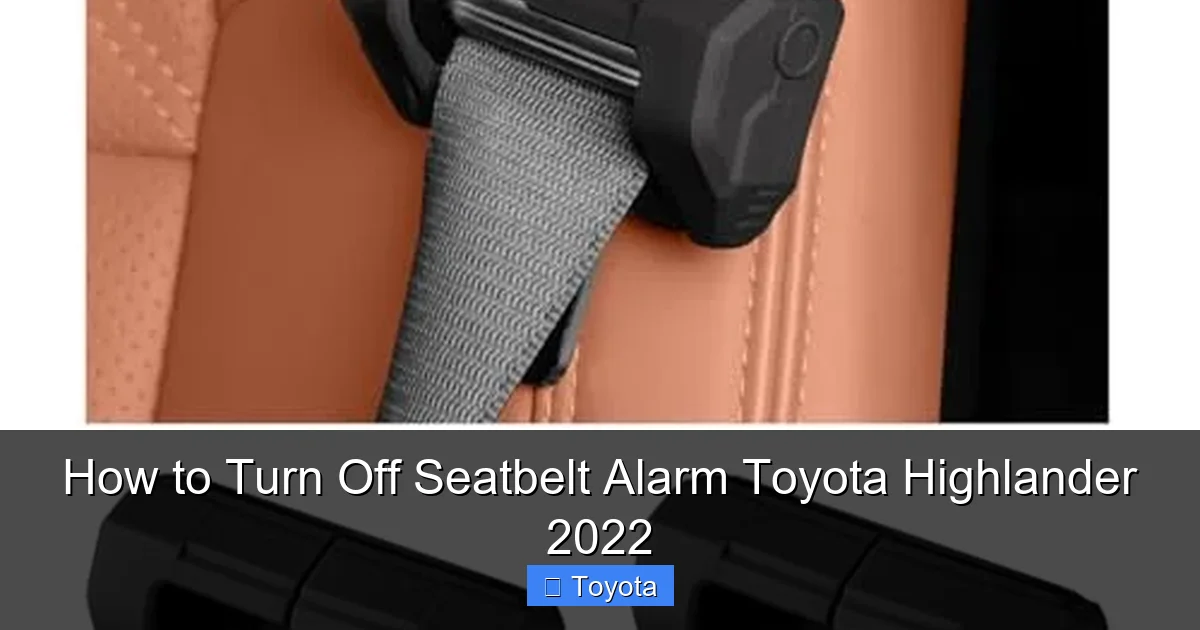
Visual guide about How to Turn Off Seatbelt Alarm Toyota Highlander 2022
Image source: m.media-amazon.com
If you’ve decided to disable the seatbelt alarm in your 2022 Toyota Highlander—perhaps for a short period or under specific circumstances—here’s how to do it safely and correctly. Remember, this should only be done when necessary and with full awareness of the risks.
Method 1: Using the Multi-Information Display (MID)
The safest and most recommended way to manage the seatbelt alarm is through the vehicle’s built-in settings. This method doesn’t require any tools or modifications and can be reversed at any time.
Follow these steps:
1. Start your vehicle and ensure it’s in park.
2. Press the “DISP” button on the right side of the steering wheel until you see the “Settings” menu on the MID.
3. Use the up/down arrow buttons to navigate to “Vehicle Settings.”
4. Select “Safety” from the submenu.
5. Look for “Seatbelt Reminder” or “Driver Seatbelt Chime.”
6. Toggle the setting to “Off” or “Low” (depending on your model).
Note: In most 2022 Highlanders, you cannot completely disable the driver’s seatbelt chime due to federal regulations. However, you may be able to reduce its volume or set it to only activate above a certain speed (e.g., 20 mph). The passenger reminder can often be turned off entirely.
After making changes, test the system by starting the vehicle without fastening your seatbelt. If the alarm still sounds, double-check the settings or consult your owner’s manual.
Method 2: Temporary Workarounds (Not Recommended for Regular Use)
Some drivers use temporary tricks to avoid the alarm, such as:
– Buckling the seatbelt behind your back (dangerous and ineffective).
– Using a seatbelt clip or extender (illegal in many states and compromises safety).
– Sitting slightly off-center to avoid triggering the weight sensor (unreliable and unsafe).
These methods are strongly discouraged. They not only defeat the purpose of the safety system but can also lead to injury in a crash. Seatbelts are designed to be worn correctly—across the chest and over the shoulder—with the lap belt low and snug on the hips.
If you’re having trouble with the seatbelt mechanism itself—such as a stiff retractor or tangled webbing—have it inspected by a professional. A malfunctioning belt is a serious issue that should never be ignored.
Method 3: Professional Deactivation (Advanced Option)
In rare cases, such as for individuals with certain medical conditions or disabilities, a certified Toyota technician may be able to adjust or disable the seatbelt alarm using specialized diagnostic tools. This process involves connecting the vehicle to a Toyota Techstream scanner, which allows access to deeper system settings.
This option should only be pursued with a valid reason and documentation from a healthcare provider. Even then, Toyota may refuse to disable the driver’s alarm due to liability and regulatory concerns. If approved, the change is usually logged in the vehicle’s service history.
Always weigh the pros and cons before requesting this service. While it may solve an immediate problem, it could affect resale value, insurance coverage, or future safety inspections.
Safety, Legal, and Ethical Considerations
Visual guide about How to Turn Off Seatbelt Alarm Toyota Highlander 2022
Image source: img.hondask.com
Disabling the seatbelt alarm isn’t just a technical decision—it’s a moral and legal one. Seatbelts are one of the most effective safety devices ever invented, and their use is mandated by law in all 50 states. While enforcement varies, driving without a seatbelt can result in fines, points on your license, and increased insurance premiums.
Legal Implications by State
Most states have primary seatbelt laws, meaning officers can pull you over solely for not wearing a seatbelt. A few states have secondary laws, where you can only be ticketed if stopped for another violation. However, disabling the alarm doesn’t exempt you from these laws. In fact, tampering with safety equipment may lead to additional penalties.
For example:
– In California, modifying or disabling a seatbelt alarm can result in a fine of up to $250.
– In New York, vehicles must have functioning seatbelt reminders, and disabling them may fail an inspection.
– In Texas, while there’s no specific law against disabling the chime, driving unbelted is still illegal.
Always check your state’s Department of Motor Vehicles (DMV) website for the latest regulations.
Insurance and Warranty Concerns
Modifying your vehicle’s safety systems can void parts of your warranty, especially if the change leads to an accident or malfunction. Insurance companies may also deny claims if they determine the vehicle was altered in a way that increased risk.
For instance, if you’re in a crash and weren’t wearing a seatbelt because the alarm was disabled, the insurer might argue negligence. This could reduce your compensation or lead to higher premiums in the future.
Ethical Responsibility
As a driver, you’re responsible not only for your safety but also for your passengers’. Children, elderly individuals, and people with disabilities may rely on you to ensure they’re properly secured. Disabling the alarm sets a poor example and increases the risk for everyone in the vehicle.
Even if you’re a confident driver, you can’t control other road users. A distracted driver, a sudden obstacle, or adverse weather can turn a safe trip into a disaster in an instant. The seatbelt is your last line of defense.
When It Might Be Acceptable to Disable the Alarm
While the general rule is to keep the seatbelt alarm active, there are rare situations where temporary deactivation may be justified:
– **Medical Conditions:** Some people with arthritis, spinal injuries, or sensory processing disorders may find the seatbelt physically painful or triggering. In such cases, consult your doctor and consider adaptive equipment rather than disabling the alarm.
– **Vehicle Maintenance:** Mechanics or detailers may need to move the vehicle frequently without passengers. Turning off the alarm temporarily can prevent constant interruptions.
– **Off-Road or Farm Use:** In rural areas where vehicles are used for short, low-speed tasks (e.g., checking fences), the alarm may be overly sensitive. However, even in these cases, wearing a seatbelt is still recommended.
In all these scenarios, the goal should be to minimize risk, not eliminate protection. If you must disable the alarm, do so only for the shortest time necessary and reactivate it as soon as possible.
Alternatives to Disabling the Alarm
Instead of turning off the seatbelt alarm, consider these safer alternatives:
– **Make Buckling Up a Habit:** The more you do it, the less you’ll notice the alarm. Try to fasten your seatbelt as soon as you sit down, before starting the engine.
– **Use a Seatbelt Comfort Pad:** If the belt feels uncomfortable, a padded cover can reduce irritation without compromising safety.
– **Adjust the Seat and Belt Position:** Ensure the seat is positioned correctly so the belt crosses your shoulder and chest naturally. Avoid tucking the belt under your arm.
– **Educate Passengers:** Remind family members and guests to buckle up. The alarm is there to help, not annoy.
These small changes can make a big difference in your driving experience—without sacrificing safety.
Conclusion
The seatbelt alarm in the 2022 Toyota Highlander is a vital safety feature designed to protect you and your passengers. While it’s possible to adjust or temporarily disable it using the vehicle’s settings, doing so should be a last resort—not a convenience.
Always prioritize safety over comfort. The few seconds it takes to buckle up could save your life. If the alarm is bothersome, explore alternatives like adjusting your seat or using comfort accessories. And if you have a legitimate reason to disable it, consult a professional and ensure you’re complying with local laws.
Remember: the goal of the seatbelt alarm isn’t to annoy you—it’s to remind you that you matter. Every time you hear that chime, it’s your car saying, “Please stay safe.” Listen to it.
Frequently Asked Questions
Can I permanently disable the seatbelt alarm in my 2022 Toyota Highlander?
No, you cannot permanently disable the driver’s seatbelt alarm in the 2022 Highlander due to federal safety regulations. However, you may be able to reduce the chime volume or adjust activation settings via the Multi-Information Display.
Is it illegal to turn off the seatbelt alarm?
It depends on your state. While disabling the alarm itself may not be explicitly illegal everywhere, driving without a seatbelt is against the law in all states. Tampering with safety systems can also lead to fines or inspection failures.
Why does my seatbelt alarm keep going off even when I’m buckled?
This could indicate a faulty sensor, a damaged buckle switch, or moisture in the seat mechanism. Have your vehicle inspected by a Toyota technician to diagnose and fix the issue.
Can I disable the passenger seatbelt alarm?
Yes, in most 2022 Highlander models, you can turn off the passenger seatbelt reminder through the vehicle settings. Navigate to “Safety” in the Multi-Information Display and toggle the passenger chime off.
Will disabling the alarm void my warranty?
Modifying safety systems can affect your warranty, especially if the change leads to damage or malfunction. Always consult your dealer before making any alterations.
What should I do if the alarm won’t turn off?
First, check that the seatbelt is fully latched and the seat isn’t obstructed. If the problem persists, visit a Toyota service center for professional diagnosis and repair.
