
How to Lock a Toyota Highlander with the Engine Running

Locking your Toyota Highlander while the engine is running is not only possible but also useful in certain situations like warming up the car or using accessories. With the right steps and understanding of your vehicle’s features, you can do this safely and effectively.
Key Takeaways
- Engine running lock is supported: Most modern Toyota Highlanders allow you to lock the doors while the engine is on, using the key fob or manual lock button.
- Key fob is essential: You must have the key fob inside the vehicle or nearby to lock the doors with the engine running—otherwise, the system may prevent locking for safety.
- Manual override works: If the key fob battery is dead, use the physical key blade or interior door lock switch to secure the vehicle.
- Safety first: Never leave the vehicle unattended with the engine running and doors unlocked, especially in public areas or extreme weather.
- Model year matters: Features vary slightly between model years (2014–2024), so check your owner’s manual for specific instructions.
- Anti-theft system remains active: Locking the Highlander with the engine on does not disable the immobilizer or alarm system.
- Remote start compatibility: If equipped, remote start allows you to start and lock the vehicle from a distance—ideal for cold mornings.
📑 Table of Contents
- Why Would You Want to Lock a Toyota Highlander with the Engine Running?
- Understanding Your Toyota Highlander’s Locking System
- Step-by-Step Guide: How to Lock a Toyota Highlander with the Engine Running
- Safety Tips and Best Practices
- Troubleshooting Common Issues
- Model-Specific Considerations
- Conclusion
Why Would You Want to Lock a Toyota Highlander with the Engine Running?
Imagine it’s a freezing winter morning. You’ve just started your Toyota Highlander to let it warm up while you finish your coffee. You step inside your house for just a minute—but you’re worried about leaving the car running and unlocked. Or maybe you’re parked at a drive-thru, engine on, and need to quickly lock the doors while keeping the climate control active. These are real-life scenarios where knowing how to lock a Toyota Highlander with the engine running becomes incredibly useful.
Many drivers assume that once the engine is on, the doors automatically unlock or that locking them isn’t possible. But that’s not true. Toyota has designed the Highlander with smart safety and convenience features that allow you to secure your vehicle even while it’s running. Whether you’re using the key fob, the interior controls, or remote start, there are multiple ways to lock your Highlander without turning off the engine. This capability is especially helpful for maintaining cabin temperature, charging devices, or running accessories while keeping your vehicle secure.
Understanding Your Toyota Highlander’s Locking System
Before diving into the steps, it’s important to understand how the locking system in your Toyota Highlander works. The Highlander uses a combination of electronic and mechanical systems to control door locks. The primary method is through the key fob, which communicates wirelessly with the vehicle’s central locking system. When you press the lock button on the fob, it sends a signal to lock all doors—even if the engine is running.

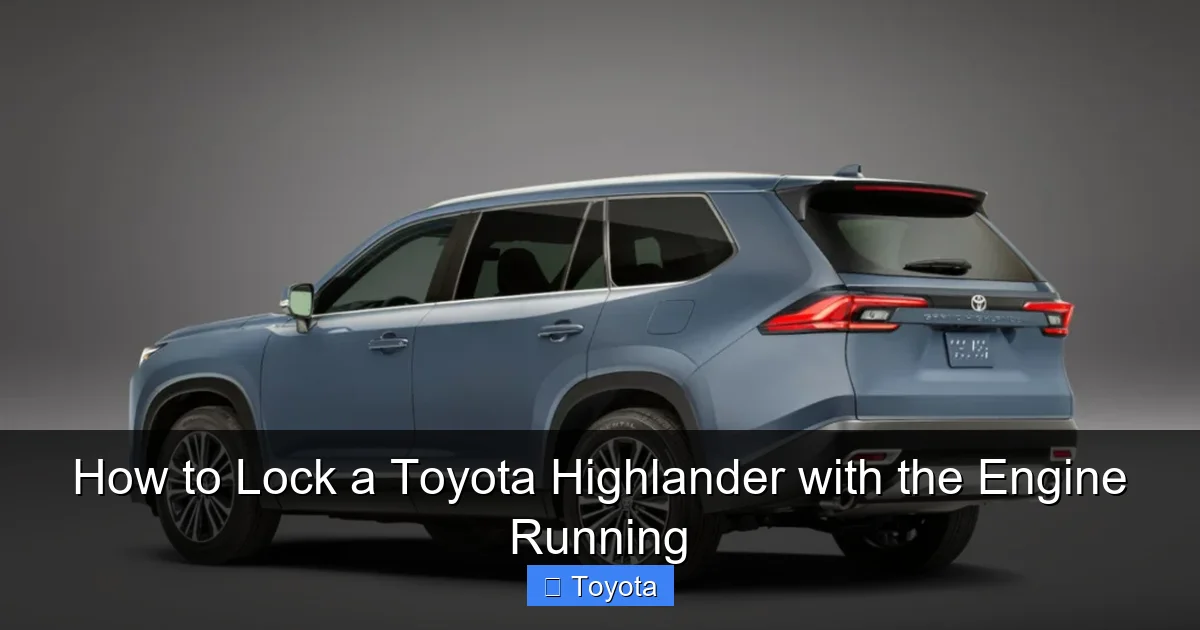
Visual guide about How to Lock a Toyota Highlander with the Engine Running
Image source: 2025toyota.com
Key Fob and Smart Entry Features
Most Highlanders from 2014 onward come equipped with a smart key system. This means you can lock and unlock the doors without physically inserting the key, as long as the fob is within range (usually a few feet of the vehicle). The fob also enables push-button start, allowing you to start the engine without turning a traditional key. When the engine is running, the fob must still be inside the vehicle or nearby for the locking system to function properly. If the fob is removed from the vehicle while the engine is on, the car may prevent locking to avoid accidental lockouts.
Interior Lock Controls
In addition to the key fob, your Highlander has interior lock controls. These are typically located on the driver’s side door panel and include buttons to lock and unlock all doors. These switches work regardless of whether the engine is running, making them a reliable backup method. Some models also feature a manual lock toggle on each door, which can be used in emergencies or if the electronics fail.
Anti-Theft and Immobilizer Systems
Your Highlander is equipped with an advanced anti-theft system that includes an immobilizer. This system prevents the engine from starting unless the correct key fob is present. Importantly, locking the doors with the engine running does not disable this system. The immobilizer remains active, and the alarm system will still trigger if someone tries to break in. This ensures your vehicle stays protected even when it’s running and locked.
Step-by-Step Guide: How to Lock a Toyota Highlander with the Engine Running
Now that you understand the basics, let’s walk through the actual process of locking your Highlander while the engine is on. The method you use will depend on your model year, key fob type, and whether you’re inside or outside the vehicle. Below are the most common and effective ways to do it.
Visual guide about How to Lock a Toyota Highlander with the Engine Running
Image source: 2025toyota.com
Method 1: Using the Key Fob (Most Common)
The easiest and most reliable way to lock your Highlander with the engine running is by using the key fob. Here’s how:
- Start the engine using the push-button start or by turning the key (depending on your model).
- Ensure the key fob is inside the vehicle or within close range (within 3–5 feet).
- Press the lock button on the key fob once. You should hear a beep and see the hazard lights flash, indicating the doors are locked.
- Verify the doors are locked by gently pulling on a door handle (if equipped with smart entry, the handle may not respond if locked).
This method works on all Highlander models from 2014 to 2024. However, if the key fob battery is low, the signal may be weak, and the lock may not engage. In that case, try holding the fob near the driver’s side door handle or use an alternative method.
Method 2: Using the Interior Door Lock Button
If you’re inside the vehicle and prefer not to use the key fob, you can lock the doors using the interior controls. Here’s how:
- Start the engine and ensure all passengers are seated and doors are closed.
- Locate the door lock button on the driver’s side door panel. It usually has a padlock icon.
- Press the lock button once. All doors should lock simultaneously.
- Confirm the doors are locked by checking the indicator light (if your model has one) or by trying to open a door from the outside.
This method is especially useful if the key fob is out of range or the battery is dead. It’s also a good option if you’re parked and want to lock the car quickly while keeping the engine on for climate control.
Method 3: Manual Locking with the Physical Key
In rare cases—such as a dead key fob battery or electronic malfunction—you may need to lock the doors manually. Here’s how:
- Start the engine and ensure the key fob is inside the vehicle (even if the battery is dead, the immobilizer may still recognize it).
- Exit the vehicle, but leave the driver’s door open.
- Use the physical key blade (stored inside the key fob) to manually lock the driver’s door by turning the key in the door lock cylinder.
- Once the driver’s door is locked, the other doors may lock automatically, or you may need to lock them individually using the interior switches before exiting.
Note: On some newer Highlanders, manually locking one door may not trigger a full lock of all doors. Always double-check each door to ensure they’re secure.
Method 4: Using Remote Start (If Equipped)
If your Highlander has remote start functionality (common on higher trims like Limited or Platinum), you can start and lock the vehicle from a distance. Here’s how it works:
- From outside the vehicle, press the lock button on the key fob once.
- Within 5 seconds, press the remote start button (usually a circular arrow icon) twice.
- The engine will start, and the doors will automatically lock.
- The vehicle will run for a preset time (usually 5, 10, or 15 minutes) before shutting off, unless you extend the timer or enter the vehicle.
This feature is perfect for pre-warming or cooling your Highlander before you get in. Just remember that remote start only works if the hood is closed, the fuel level is adequate, and there are no warning lights on the dashboard.
Safety Tips and Best Practices
While locking your Highlander with the engine running is convenient, it’s important to do so safely. Leaving a vehicle running unattended can pose risks, including theft, carbon monoxide buildup in enclosed spaces, or accidental acceleration. Follow these best practices to stay safe:

Visual guide about How to Lock a Toyota Highlander with the Engine Running
Image source: 2025toyota.com
Never Leave the Vehicle Unattended in Public
Even if your Highlander is locked, never leave it running and unattended in a public place like a parking lot or gas station. Thieves can use relay attacks or signal boosters to clone your key fob signal and steal the vehicle. If you must leave the car running, stay nearby or use remote start only when you can monitor the vehicle.
Avoid Running the Engine in Enclosed Spaces
Never run your Highlander in a garage, even with the door open. Carbon monoxide is odorless and deadly, and it can accumulate quickly in enclosed areas. If you’re warming up the car, do it outside and away from buildings or windows.
Check for Children or Pets
If you’re using remote start or leaving the engine on, always ensure no children or pets are left inside the vehicle. Temperatures can rise or drop rapidly, creating dangerous conditions. Use climate control wisely and never assume the car is safe just because it’s locked.
Monitor Fuel and Battery Levels
Running the engine for extended periods consumes fuel and can drain the battery if accessories are used heavily. Avoid idling for more than 10–15 minutes unless necessary. If you’re using remote start frequently, consider investing in a battery maintainer or trickle charger.
Know Your Model’s Limitations
Not all Highlander models have the same features. Older models (pre-2014) may not support remote start or smart entry. Always refer to your owner’s manual for model-specific instructions. You can usually find a digital copy on Toyota’s official website by entering your VIN.
Troubleshooting Common Issues
Sometimes, you may encounter problems when trying to lock your Highlander with the engine running. Here are some common issues and how to fix them.
Doors Won’t Lock with Engine On
If pressing the lock button doesn’t work, check the following:
- Is the key fob inside the vehicle? The system may prevent locking if it detects the fob is missing.
- Is the fob battery low? Replace the battery if the signal is weak.
- Are any doors ajar? The system won’t lock if a door, trunk, or hood is open.
- Is there a fault in the locking system? Check for warning lights or error messages on the dashboard.
If none of these resolve the issue, consult your dealer or a certified Toyota technician.
Remote Start Not Working
If remote start fails, ensure:
- The hood is fully closed (most systems won’t allow remote start if the hood is open).
- The fuel level is above 1/4 tank.
- There are no active warning lights (like check engine or low oil).
- The key fob is within range and has a good battery.
Some models also require you to have locked the vehicle manually before using remote start.
Key Fob Not Recognized
If the vehicle doesn’t recognize the key fob, try:
- Holding the fob near the start button or driver’s door handle.
- Replacing the fob battery (typically a CR2032 coin cell).
- Using the physical key to unlock and start the vehicle.
In rare cases, the fob may need to be reprogrammed by a dealer.
Model-Specific Considerations
While the general process is similar across Highlander models, there are some differences based on year and trim level.
2014–2019 Toyota Highlander
These models typically have a traditional key fob with lock/unlock buttons. Smart entry is available on higher trims. Remote start may require an aftermarket installation unless factory-equipped. The interior lock button is standard on all trims.
2020–2024 Toyota Highlander
Newer models feature enhanced smart key systems, improved remote start, and better integration with Toyota’s app (if equipped). The 2020 redesign introduced a more intuitive interface and better security features. Some trims also offer proximity locking, where the doors lock automatically when you walk away with the fob.
Hybrid Models
Highlander Hybrid models operate similarly to gas-only versions. However, because the engine may not run continuously (it shuts off when the battery is charged), locking the doors while the engine is “off” but the vehicle is in “Ready” mode is still possible. The same key fob and interior controls apply.
Conclusion
Locking your Toyota Highlander with the engine running is a safe and practical feature that enhances convenience and security. Whether you’re warming up the car on a cold day, running errands with the climate control on, or using remote start, knowing how to lock the doors properly ensures your vehicle stays protected. By using the key fob, interior controls, or remote start—and following safety best practices—you can make the most of your Highlander’s smart locking system.
Remember, always prioritize safety: never leave your vehicle unattended in public, avoid enclosed spaces, and keep an eye on fuel and battery levels. If you encounter any issues, consult your owner’s manual or contact a Toyota service center. With the right knowledge, you can confidently lock your Highlander with the engine running—anytime, anywhere.
Frequently Asked Questions
Can I lock my Toyota Highlander with the engine running?
Yes, you can lock your Toyota Highlander with the engine running using the key fob, interior lock button, or remote start (if equipped). The vehicle’s system allows this for convenience and safety.
Why won’t my Highlander lock when the engine is on?
This may happen if the key fob is not inside the vehicle, the fob battery is dead, a door is ajar, or there’s a system fault. Check these factors and consult your owner’s manual or a technician if the issue persists.
Is it safe to leave my Highlander running and locked?
It’s safe if done responsibly—never in enclosed spaces, always in well-ventilated areas, and never unattended in public. Avoid leaving children or pets inside, and monitor fuel levels.
Does remote start automatically lock the doors?
Yes, when you use remote start, the doors typically lock automatically as part of the sequence. This helps secure the vehicle while it’s running.
What if my key fob battery is dead?
Use the physical key blade to manually lock the driver’s door, or use the interior lock button if you’re inside the vehicle. You can also replace the fob battery (usually a CR2032) to restore full functionality.
Do all Toyota Highlander models support locking with the engine on?
Most models from 2014 onward support this feature, but capabilities vary by trim and year. Always check your owner’s manual for model-specific details.
