
Does a Red Car Increase Insurance?

Despite popular belief, the color of your car—whether red, blue, or silver—does not directly affect your insurance rates. Insurance companies base premiums on factors like vehicle make, model, age, driving history, and safety features, not paint color. However, certain colors may be associated with riskier driver stereotypes, indirectly influencing perceptions.
Key Takeaways
- Car color does not directly impact insurance premiums: Insurers don’t use paint color as a rating factor in calculating your rate.
- Red cars are not inherently more expensive to insure: Myth stems from stereotypes linking red cars to speeding or aggressive driving.
- Vehicle type and performance matter more: Sports cars, regardless of color, often cost more to insure due to higher repair costs and theft rates.
- Demographics and location play a bigger role: Young male drivers in urban areas pay more, regardless of car color.
- Red may influence perception, not pricing: Some studies suggest red cars are more noticeable, potentially reducing accidents, but this isn’t factored into insurance math.
- Focus on safety and driving habits: Maintaining a clean record and choosing a safe vehicle are the best ways to lower premiums.
- Shop around for the best rates: Comparing quotes from multiple insurers can save you hundreds, no matter what color your car is.
📑 Table of Contents
- Does a Red Car Increase Insurance? The Truth Behind the Myth
- Why the Red Car Insurance Myth Exists
- What Actually Determines Your Car Insurance Rate?
- Do Red Cars Get Into More Accidents?
- How to Lower Your Car Insurance—Regardless of Color
- The Bottom Line: Color Doesn’t Matter—But Perception Might
- Final Thoughts: Drive What You Love
Does a Red Car Increase Insurance? The Truth Behind the Myth
You’ve probably heard it before: “Don’t buy a red car—it’ll cost more to insure!” This common piece of advice has been passed down through generations of car buyers, often whispered in dealerships or shared among friends. But is there any truth to it? Does a red car really increase insurance?
The short answer is no—your car’s color doesn’t directly affect your insurance premium. Insurance companies don’t look at whether your vehicle is red, blue, black, or white when calculating your rate. Instead, they focus on concrete, data-driven factors like the make and model of your car, its age, safety ratings, repair costs, theft rates, and your personal driving history.
So where did this myth come from? It likely stems from a mix of pop culture, psychological associations, and outdated stereotypes. Red is often linked with speed, passion, and aggression—think of classic sports cars like Ferraris or Mustangs, many of which are painted red. Over time, this association may have led people to believe that red cars are more likely to be involved in accidents or driven recklessly, thus costing more to insure.
But modern insurance underwriting doesn’t rely on color-based assumptions. Instead, it uses advanced algorithms and vast databases to assess risk. If you drive a red sedan that’s ten years old and has a perfect safety record, your premium will likely be lower than someone driving a brand-new, high-performance sports car in silver—even if the silver car seems “safer” in color.
In this article, we’ll dive deep into the factors that actually influence car insurance costs, debunk the red car myth once and for all, and give you practical tips to keep your premiums low—no matter what color your ride is.
Why the Red Car Insurance Myth Exists
Visual guide about Does a Red Car Increase Insurance?
Image source: thedailyautomotive.com
To understand why so many people believe red cars cost more to insure, we need to explore the origins of this myth. It’s not entirely baseless—there are psychological, cultural, and historical reasons why red has become synonymous with higher risk.
The Psychology of Color
Color plays a powerful role in human perception. Red is one of the most attention-grabbing colors in the visible spectrum. It’s associated with urgency, danger, and excitement. Think about stop signs, fire trucks, and warning labels—all use red to signal importance or caution.
This psychological impact extends to how we perceive red cars. Studies have shown that drivers may subconsciously view red vehicles as faster or more aggressive. A 2007 study published in the journal *Emotion* found that athletes wearing red were perceived as more dominant and were more likely to win in competitive sports. While this doesn’t directly apply to cars, it shows how color can influence behavior and perception.
In traffic, red cars may stand out more, making them more noticeable to other drivers. Some research suggests that increased visibility could actually reduce the risk of accidents—especially in low-light conditions. However, this potential benefit isn’t factored into insurance calculations.
Pop Culture and Media Influence
Movies, TV shows, and advertising have long reinforced the idea that red cars are for speed demons. From James Bond’s Aston Martin to Lightning McQueen in *Cars*, red is often the color of choice for high-performance vehicles. These portrayals create a cultural stereotype: red = fast = risky.
Even in real life, many sports cars and high-end performance vehicles come in red. Brands like Ferrari, Lamborghini, and Porsche frequently offer red as a signature color. Because these cars are expensive to repair and more likely to be driven aggressively, they naturally come with higher insurance premiums. But the cost isn’t due to the color—it’s due to the vehicle’s performance, value, and repair costs.
So when people see a red sports car getting pulled over or involved in an accident, they may mistakenly attribute the incident to the color rather than the car’s inherent characteristics.
Historical Insurance Practices
In the early days of auto insurance, underwriting was less sophisticated. Some insurers may have used broad stereotypes or anecdotal data to assess risk. While there’s no solid evidence that red cars were ever systematically charged more, it’s possible that isolated cases or regional practices contributed to the myth.
Today, however, insurance companies rely on actuarial science—using statistical models to predict risk. These models are based on real-world data, not color-based assumptions. If red cars were truly more expensive to insure, we’d see consistent data across multiple insurers and regions. But we don’t.
What Actually Determines Your Car Insurance Rate?

Visual guide about Does a Red Car Increase Insurance?
Image source: auburninsurance.org
Now that we’ve debunked the red car myth, let’s look at the real factors that influence your insurance premium. Understanding these can help you make smarter decisions when buying a car and shopping for coverage.
Vehicle Make and Model
This is one of the biggest factors. Insurers look at the specific make, model, and year of your car. High-performance vehicles, luxury cars, and models with high theft rates typically cost more to insure. For example, a red Toyota Camry will be much cheaper to insure than a red Porsche 911—even though they’re the same color.
Why? Because the Porsche is more expensive to repair, more likely to be stolen, and often driven at higher speeds. The color is irrelevant.
Age and Value of the Vehicle
Newer, more expensive cars cost more to insure because they’re pricier to repair or replace. If your car is older and has depreciated significantly, your comprehensive and collision coverage may cost less.
However, if your older car is a classic or has been modified, it could actually increase your premium due to higher replacement value or increased risk.
Driving History and Record
Your personal driving record is one of the most important factors. Accidents, speeding tickets, DUIs, and other violations can significantly increase your premium. A clean record, on the other hand, can help you qualify for discounts.
Insurers also look at your mileage—how many miles you drive per year. Lower mileage often means lower risk, which can reduce your rate.
Location and Environment
Where you live plays a major role in your insurance cost. Urban areas with high traffic density, crime rates, and accident frequency tend to have higher premiums. Rural areas, with less traffic and lower theft rates, often have lower rates.
Even your neighborhood matters. If you park your car on a busy street instead of in a garage, your risk of theft or vandalism increases—raising your premium.
Credit Score and Financial History
In most states, insurers use your credit-based insurance score to help determine your rate. People with higher credit scores are statistically less likely to file claims, so they often pay less.
This isn’t about judging your financial responsibility—it’s about predicting risk based on historical data.
Coverage Level and Deductible
The type and amount of coverage you choose directly affect your premium. Full coverage (liability, collision, comprehensive) costs more than minimum liability-only coverage. Choosing a higher deductible—the amount you pay out of pocket before insurance kicks in—can lower your monthly payment.
But be careful: a high deductible means more financial risk if you’re in an accident.
Demographics: Age, Gender, and Marital Status
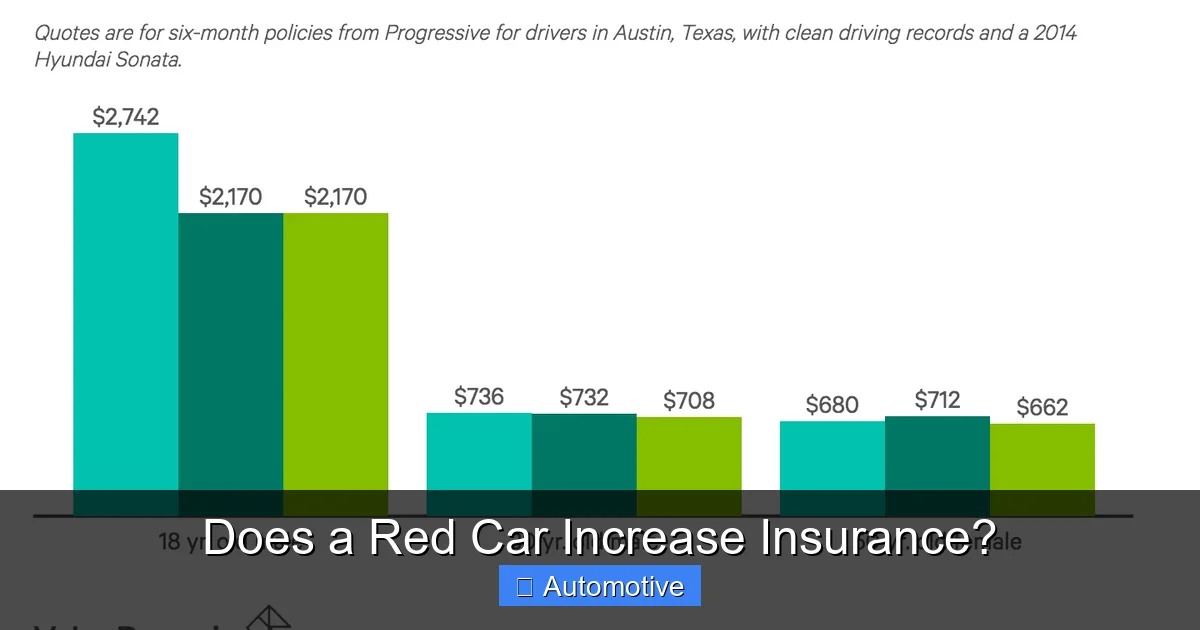
Younger drivers, especially males under 25, pay the highest premiums due to higher accident rates. Married drivers often pay less than single drivers, as they’re seen as more responsible.
Gender can also play a role—though some states have banned its use. In general, young men have higher claim frequencies, leading to higher rates.
Do Red Cars Get Into More Accidents?
Visual guide about Does a Red Car Increase Insurance?
Image source: averyhall.com
One argument often made in favor of the red car myth is that red cars are more likely to be involved in accidents. But what does the data say?
Visibility and Accident Rates
Some studies have explored whether car color affects accident rates. A 2010 study by the Monash University Accident Research Center in Australia analyzed over 10,000 vehicles and found that red cars were actually involved in fewer accidents than cars of other colors—especially in daylight conditions.
The researchers suggested that red’s high visibility makes it easier for other drivers to see, reducing the risk of collisions. However, the difference was small and not statistically significant enough to impact insurance pricing.
Other studies have shown mixed results. Some found no correlation between color and accident rates, while others suggested that white, silver, and yellow cars may be slightly safer due to better visibility in low-light conditions.
The Role of Driver Behavior
It’s possible that the type of person who chooses a red car behaves differently behind the wheel. For example, someone who prefers bold colors might also be more likely to take risks or drive aggressively.
But this is speculative. There’s no conclusive evidence that red car owners are worse drivers. In fact, many red car owners are simply expressing personal style—just like someone who chooses blue, black, or green.
Insurance Claims Data
Major insurance companies like State Farm, GEICO, and Progressive have publicly stated that they do not use car color as a factor in determining premiums. Their claims data shows no consistent pattern linking red cars to higher claim frequencies or costs.
If red cars were truly riskier, we’d see it in the numbers—but we don’t.
How to Lower Your Car Insurance—Regardless of Color
Now that you know color doesn’t matter, here are practical steps to reduce your insurance costs.
Choose a Safe, Practical Vehicle
Opt for a car with high safety ratings, low repair costs, and a low theft rate. SUVs and sedans with advanced safety features (like automatic braking and lane departure warnings) often qualify for discounts.
Avoid high-performance vehicles unless you’re prepared for higher premiums.
Maintain a Clean Driving Record
Safe driving is the best way to keep your rates low. Avoid speeding, distracted driving, and aggressive maneuvers. Many insurers offer safe driver discounts for accident-free periods.
Take Advantage of Discounts
Ask your insurer about available discounts. Common ones include:
– Multi-car discount
– Bundling home and auto insurance
– Good student discount
– Low-mileage discount
– Defensive driving course completion
Increase Your Deductible
Raising your deductible from $500 to $1,000 can reduce your premium by 10–20%. Just make sure you can afford the higher out-of-pocket cost if you need to file a claim.
Improve Your Credit Score
Pay bills on time, reduce debt, and check your credit report for errors. A higher credit score can lead to lower insurance rates in most states.
Shop Around Annually
Insurance rates change frequently. Compare quotes from at least three insurers each year to ensure you’re getting the best deal. Use online comparison tools or work with an independent agent.
Consider Usage-Based Insurance
Some insurers offer programs that track your driving habits via a mobile app or device. Safe drivers can earn significant discounts based on actual behavior.
The Bottom Line: Color Doesn’t Matter—But Perception Might
So, does a red car increase insurance? The answer is a clear no—your car’s paint color has no direct impact on your premium. Insurance companies base their rates on real, measurable factors like vehicle type, driving history, and location—not stereotypes or color psychology.
However, it’s worth noting that perception can still play a subtle role. If you drive a bright red sports car, other drivers might assume you’re speeding or driving aggressively—even if you’re not. This could lead to more cautious behavior around you, or in rare cases, road rage.
But these social dynamics don’t translate into higher insurance costs. Your premium is determined by data, not assumptions.
The real takeaway? Focus on what actually affects your insurance: choosing a safe, affordable vehicle, driving responsibly, and shopping around for the best rates. Whether your car is red, blue, or rainbow-colored, these habits will save you money.
And if you love the look of a red car—go for it! You can drive with confidence, knowing that your bold choice won’t cost you extra at the insurance office.
Final Thoughts: Drive What You Love
At the end of the day, your car is a reflection of your personality. Whether you prefer the classic elegance of black, the sleek modernity of silver, or the bold statement of red, your choice should be based on what makes you happy—not on outdated myths about insurance.
The red car insurance myth persists because it’s a simple, memorable story. But the truth is more nuanced. Insurance is about risk assessment, not color preferences. By understanding the real factors that influence your premium, you can make informed decisions and avoid unnecessary worry.
So the next time someone tells you that red cars cost more to insure, you can smile and share the facts. Your red ride isn’t a liability—it’s just a reflection of your style.
And who knows? That extra visibility might even help you avoid a fender bender. Now that’s a benefit worth driving for.
Frequently Asked Questions
Does a red car increase insurance premiums?
No, a red car does not increase insurance premiums. Insurers do not use car color as a factor in calculating rates. Premiums are based on vehicle type, driving history, location, and other measurable risk factors.
Why do people think red cars cost more to insure?
The belief stems from cultural stereotypes linking red to speed and aggression, as well as the fact that many sports cars are red. However, the higher cost is due to the car’s performance and value, not its color.
Are red cars more likely to get into accidents?
Studies show mixed results, but most find no significant link between car color and accident rates. Some research even suggests red cars may be more visible and safer in daylight.
What factors actually affect car insurance rates?
Key factors include the make and model of the car, driver’s age and record, location, credit score, coverage level, and deductible. Vehicle safety features and theft rates also play a role.
Can I lower my insurance by changing my car’s color?
No, repainting your car will not affect your insurance premium. Insurers do not track or consider paint color in their calculations.
Should I avoid red cars to save on insurance?
No, you don’t need to avoid red cars to save on insurance. Focus instead on choosing a safe, affordable vehicle and maintaining a clean driving record to keep premiums low.