
Can Someone Tow My Car Without Permission?

Yes, someone can tow your car without your permission—but only under specific legal conditions. Understanding local laws, parking rules, and your rights can help you avoid surprise tows and costly fees.
Key Takeaways
- Private property owners can authorize towing: If your car is parked illegally on private property (like a shopping center or apartment complex), the owner or manager can have it towed without your consent.
- Municipal towing requires signage: In most cities, vehicles can only be towed from public streets if clear “No Parking” or “Tow-Away Zone” signs are posted.
- Emergency situations allow immediate towing: Police or city officials may tow your car if it’s blocking traffic, creating a hazard, or involved in a crime—even without warning.
- You’re responsible for towing and storage fees: Even if you believe the tow was unfair, you’ll likely need to pay to get your car back before disputing the charge.
- Check local ordinances: Towing laws vary by city, state, and country—what’s legal in one area may not be in another.
- Document everything: Take photos of your car, the location, and any signage before and after a tow to support your case if you dispute it.
- Know your rights as a vehicle owner: You have the right to know who towed your car, where it’s stored, and how to retrieve it promptly.
📑 Table of Contents
Can Someone Tow My Car Without Permission?
Imagine this: You park your car in what you thought was a safe spot—maybe near your apartment, outside a friend’s house, or in a quiet corner of a shopping center. You run a quick errand, and when you return, your car is gone. Panic sets in. Did it get stolen? Was it towed? And worse—can someone really tow your car without asking?
The short answer is: yes, under certain circumstances, someone can legally tow your car without your permission. But that doesn’t mean it’s always fair or that you have no recourse. Understanding the rules—both legal and practical—can save you time, money, and a lot of stress.
Towing laws are a patchwork of local ordinances, state regulations, and property rights. What’s allowed in one city might be illegal in another. But the core principle is this: your car can be towed without your consent if it violates parking rules, blocks access, or poses a safety risk—especially on private property or in clearly marked zones.
This guide will walk you through the ins and outs of unauthorized towing, your rights as a vehicle owner, and how to protect yourself from surprise tows. Whether you’re a daily commuter, a renter, or just someone who parks on the street, knowing these rules can make a big difference.
When Is It Legal to Tow a Car Without Permission?
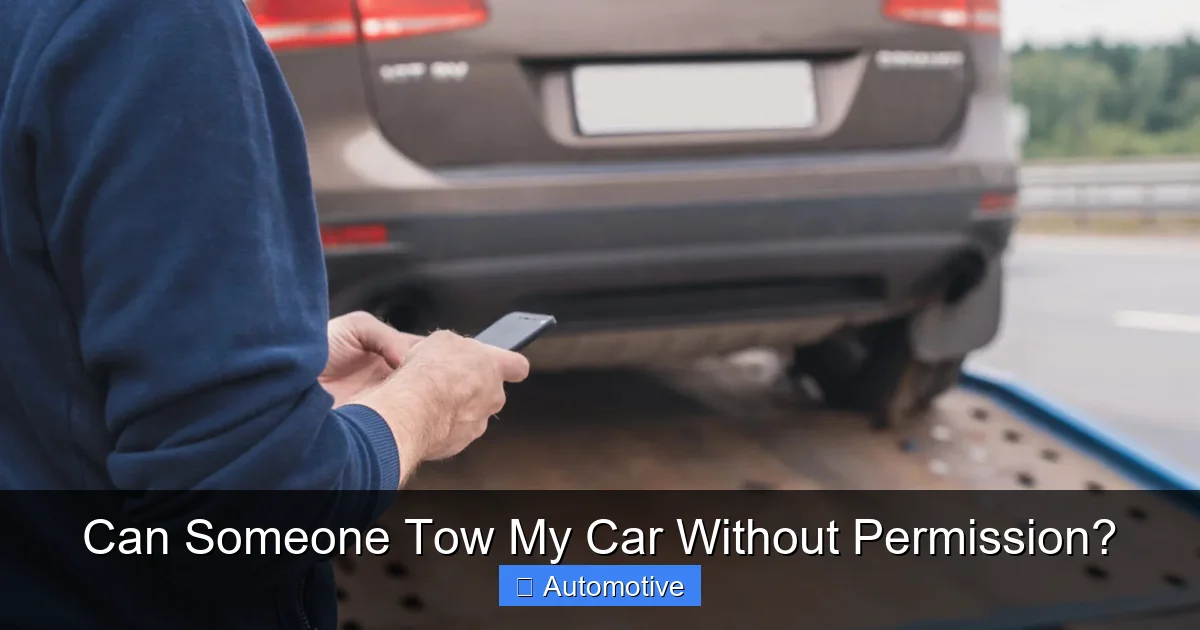
Visual guide about Can Someone Tow My Car Without Permission?
Image source: jerry.ai
The idea of someone hauling away your car without asking sounds like something out of a movie. But in reality, it happens more often than you might think—and in many cases, it’s completely legal.
The key factor is location and context. Towing without permission is generally allowed in three main scenarios: private property, public streets with proper signage, and emergency situations.
Private Property Towing
One of the most common—and legally sound—reasons for a car to be towed without the owner’s permission is when it’s parked on private property without authorization.
Think about shopping malls, apartment complexes, office parks, or even private driveways. These are not public spaces. The property owner has the right to control who parks there and for how long. If you park in a spot reserved for residents, customers, or employees—and you don’t belong to that group—you’re technically trespassing.
In most states, property owners can hire a licensed towing company to remove unauthorized vehicles. They don’t need to call you first or get your permission. In fact, they’re often required by law to post clear signage indicating that unauthorized vehicles will be towed at the owner’s expense.
For example, if you park in a spot marked “Residents Only” at an apartment complex and you’re not a resident, the property manager can have your car towed. The same goes for parking in a fire lane, blocking a dumpster, or taking up a handicapped spot without a permit.
Public Streets and Municipal Towing
On public streets, the rules are a bit more complex. Cities and municipalities can tow vehicles, but they must follow strict guidelines—especially when it comes to signage.
In most places, a car can only be towed from a public street if:
– There are clearly posted “No Parking,” “No Stopping,” or “Tow-Away Zone” signs.
– The vehicle is parked illegally (e.g., too close to a fire hydrant, in a bus zone, or during street cleaning hours).
– The vehicle is abandoned or unregistered.
For instance, if your city has a street sweeping schedule and you leave your car parked during the posted time, it can be towed—even if you didn’t see the sign. The same applies if you park in a loading zone without a permit or block a crosswalk.
However, if there’s no visible signage or the rules aren’t clearly communicated, the tow may be considered illegal. This is where documentation becomes crucial. If you believe your car was towed unfairly from a public street, take photos of the area, note the time and date, and check local parking regulations.
Emergency and Safety-Related Towing
In emergency situations, towing can happen immediately—even without any warning.
Police, fire departments, or city officials may tow a vehicle if it:
– Blocks emergency access (like a fire lane or ambulance entrance).
– Is involved in a crime or accident.
– Poses an immediate danger (e.g., leaking fluids, engine fire, or blocking traffic after a breakdown).
– Is abandoned in a dangerous location.
For example, if your car breaks down in the middle of a busy intersection and you can’t move it, authorities may tow it to clear the road. Similarly, if your vehicle is parked in a way that obstructs a fire truck’s access to a building, it can be towed on the spot—no questions asked.
In these cases, safety takes priority over permission. The goal is to protect people and property, not to punish the driver. But even in emergencies, the towing agency is usually required to notify the vehicle owner as soon as possible and provide details about where the car was taken.
Who Can Authorize a Tow?
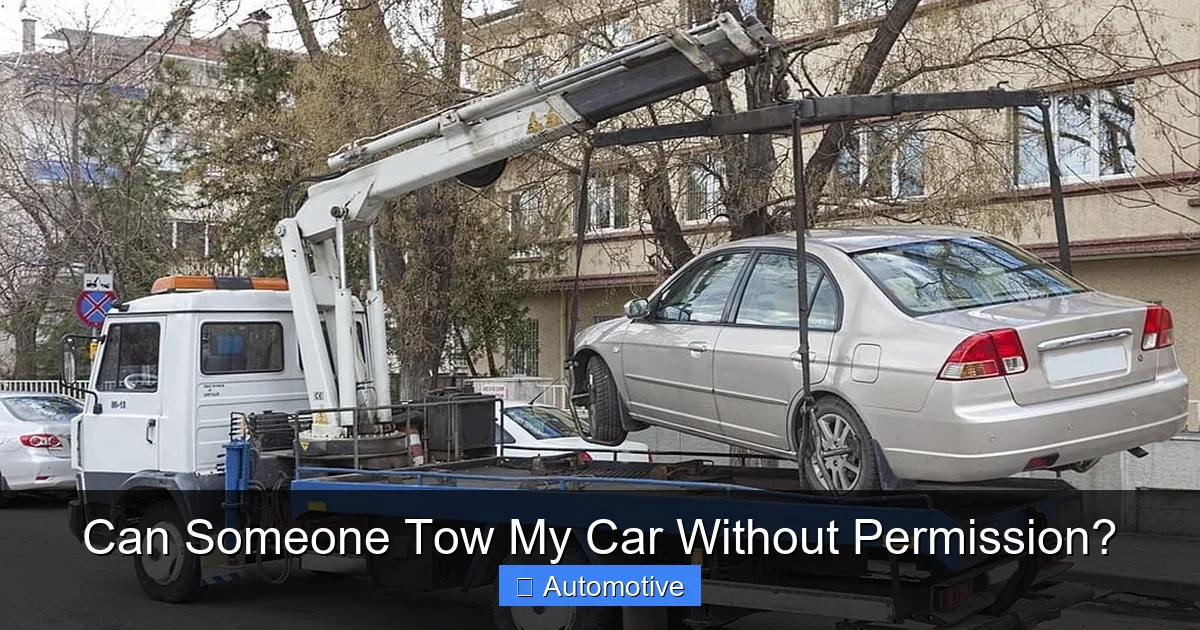
Visual guide about Can Someone Tow My Car Without Permission?
Image source: wptowing.com.au
Not just anyone can call a tow truck and have your car hauled away. There are specific individuals and entities with the legal authority to authorize a tow—even without your consent.
Property Owners and Managers
As mentioned earlier, private property owners—including landlords, business owners, and homeowners’ associations (HOAs)—can authorize towing on their land. This is one of the most common scenarios where a car is towed without the owner’s knowledge.
For example, if you park in a private lot behind a restaurant and the owner has a “Tow Away Zone” sign posted, they can legally have your car removed. The same applies to apartment complexes with assigned parking. If you’re a guest and park in a resident’s spot, the property manager can call a tow truck.
However, there are limits. In many states, property owners must:
– Post visible signage indicating that unauthorized vehicles will be towed.
– Use a licensed towing company.
– Provide a way for vehicle owners to retrieve their cars promptly.
If these conditions aren’t met, the tow may be considered unlawful, and you may have grounds to dispute the charges.
Law Enforcement and City Officials
Police officers, parking enforcement officers, and other city officials have broad authority to tow vehicles—especially on public property.
They can authorize a tow if your car:
– Is parked illegally (e.g., in a no-parking zone, bus stop, or handicapped spot without a permit).
– Is abandoned or unregistered.
– Is involved in a crime or traffic violation.
– Blocks traffic or creates a hazard.
For instance, if you’re pulled over for a traffic violation and your car is deemed unsafe to drive, the officer may have it towed to a impound lot. Similarly, if your vehicle is left on a public street for weeks without moving, it may be classified as abandoned and towed by the city.
Towing Companies (With Authorization)
Towing companies themselves cannot legally tow a vehicle unless they are authorized by a property owner, law enforcement, or city official. They are not allowed to “self-initiate” a tow based on their own judgment.
This means a tow truck driver can’t just see your car parked somewhere and decide to haul it away. They need a valid reason and proper authorization.
However, some unscrupulous towing companies have been known to engage in “predatory towing”—towing vehicles from private lots without clear signage or proper notice. This practice is illegal in many areas and can result in fines or license revocation for the towing company.
If you suspect your car was towed by a rogue operator, contact local authorities and file a complaint.
Your Rights as a Vehicle Owner
Visual guide about Can Someone Tow My Car Without Permission?
Image source: wptowing.com.au
Even if your car is legally towed, you still have rights. Knowing them can help you navigate the process and avoid being taken advantage of.
Right to Know Where Your Car Is
Once your car is towed, the towing company or impound lot is required to notify you—usually within 24 to 48 hours. This notice should include:
– The name and contact information of the towing company.
– The location where your car is stored.
– The reason for the tow.
– Instructions for retrieving your vehicle.
If you can’t find your car, start by calling local police, checking city impound records, or contacting nearby towing companies. Many cities have online databases where you can search for towed vehicles by license plate or VIN.
Right to Retrieve Your Vehicle Promptly
You have the right to get your car back as soon as possible—usually within 24 hours of requesting it. The impound lot cannot hold your vehicle hostage or delay release unnecessarily.
However, you will need to:
– Provide proof of ownership (e.g., registration, driver’s license).
– Pay towing and storage fees (more on that below).
– Show that the vehicle is legally registered and insured.
Some states require impound lots to offer a “release without payment” option if you can prove the tow was unlawful—but this varies by location.
Right to Dispute the Tow
If you believe your car was towed unfairly, you have the right to dispute it. This might involve:
– Filing a complaint with the local police or city transportation department.
– Requesting a hearing or appeal.
– Suing the towing company or property owner for damages (in cases of predatory towing).
For example, if your car was towed from a private lot with no visible signage, you may be able to get the fees waived and even receive compensation.
Keep in mind: You usually need to pay the fees first to get your car back, then pursue a refund through legal channels. This can be frustrating, but it’s often the only way to recover your vehicle quickly.
Towing Fees and Storage Costs
One of the most stressful parts of having your car towed is the cost. Towing and storage fees can add up fast—sometimes totaling hundreds of dollars.
Typical Towing Charges
Towing fees vary by location, distance, and vehicle size, but here’s a general breakdown:
– Local tow (within 10 miles): $75–$150
– Long-distance tow: $10–$20 per mile
– Heavy-duty vehicles (trucks, RVs): $200–$500+
– After-hours or weekend tows: Additional 25–50% surcharge
These fees are set by the towing company and must be disclosed in advance—though you may not see them until you arrive at the impound lot.
Storage Fees
Once your car is in the impound lot, you’ll also be charged daily storage fees. These typically range from $20 to $50 per day, depending on the facility.
The longer you wait to retrieve your car, the more you’ll pay. Some lots charge a flat rate for the first day, then increase the fee after 24 or 48 hours.
Who Pays the Fees?
In most cases, you pay the towing and storage fees—even if the tow was questionable. The idea is that the vehicle owner is responsible for where they park and any consequences that follow.
However, if you can prove the tow was illegal (e.g., no signage, unauthorized towing), you may be able to get reimbursed. This usually requires filing a formal complaint or taking legal action.
Some insurance policies cover towing fees, but only under specific circumstances—like if your car breaks down or is involved in an accident. Routine parking violations are typically not covered.
How to Avoid Unwanted Towing
The best way to deal with towing is to avoid it altogether. Here are some practical tips to keep your car safe:
Read the Signs
Always look for parking signs before leaving your car. Pay attention to:
– “No Parking” or “Tow-Away Zone” warnings.
– Time restrictions (e.g., “2-Hour Parking”).
– Street cleaning schedules.
– Permit requirements.
If you’re unsure, ask a local or check the city’s website.
Know the Rules for Private Property
When parking at apartments, malls, or businesses:
– Only park in designated visitor or customer spots.
– Don’t block driveways, fire lanes, or dumpsters.
– If you’re a guest, ask where it’s okay to park.
Remember: Just because a spot looks empty doesn’t mean it’s free to use.
Use Technology
Apps like ParkWhiz, SpotHero, or your city’s parking app can help you find legal parking spots and avoid violations. Some even send reminders when your time is about to expire.
Keep Your Car Visible and Accessible
If your car is well-lit, clean, and clearly registered, it’s less likely to be mistaken for abandoned. Make sure your license plates and registration sticker are up to date.
Document Your Parking Spot
Before walking away, take a photo of your car, the surrounding area, and any nearby signs. This can serve as evidence if your car is towed unfairly.
What to Do If Your Car Is Towed
If you return to find your car missing, stay calm and follow these steps:
1. Check nearby areas. Sometimes cars are moved just a few blocks away—especially during street cleaning.
2. Call local police. They can tell you if your car was towed and where it was taken.
3. Contact towing companies. Call nearby impound lots or check online databases.
4. Gather your documents. Bring your driver’s license, registration, and proof of insurance.
5. Pay the fees. Be prepared to pay towing and storage costs to get your car back.
6. Dispute if necessary. If you believe the tow was illegal, file a complaint or seek legal advice.
Conclusion
So, can someone tow your car without permission? The answer is yes—but only under specific, legally justified circumstances. Whether it’s private property, public streets with clear signage, or emergency situations, towing without consent is allowed when safety, access, or property rights are at stake.
The key to avoiding a surprise tow is awareness. Know where you’re parking, read the signs, and understand your local laws. And if the worst happens and your car is towed, remember: you have rights. You can find your vehicle, retrieve it promptly, and—if needed—fight unfair charges.
By staying informed and proactive, you can protect yourself from the hassle and expense of unauthorized towing. After all, your car is more than just a vehicle—it’s your freedom, your commute, and your peace of mind.
Frequently Asked Questions
Can my car be towed from my own driveway?
Generally, no—your car cannot be legally towed from your own private driveway unless it’s blocking access (like a shared driveway) or involved in a legal issue. However, if you live in an HOA community, check your rules, as some may have towing policies for abandoned or improperly parked vehicles.
Can a neighbor tow my car from the street?
No, a private individual cannot legally tow your car from a public street. Only property owners (on private land), law enforcement, or authorized city officials can authorize a tow. If a neighbor calls a tow truck without proper authority, it may be considered illegal.
How long can a tow company hold my car?
Most states require impound lots to release your vehicle within 24 hours of your request, provided you pay the fees and show proof of ownership. However, storage fees continue to accrue daily until you retrieve it, so it’s best to act quickly.
Can I sue if my car was towed unfairly?
Yes, if you can prove the tow was unlawful—such as no signage, unauthorized towing, or predatory practices—you may be able to sue for damages, including towing fees, storage costs, and even emotional distress in some cases. Consult a local attorney for advice.
Do I have to pay towing fees if I wasn’t notified?
Yes, you’re still responsible for the fees even if you weren’t notified immediately. However, the towing company is usually required to make a reasonable effort to contact you. If they failed to do so, you may be able to dispute part of the charge.
Can my car be towed for expired registration?
In most places, yes—especially if the registration is expired by several months or the vehicle appears abandoned. Some cities will tow unregistered cars from public streets or private property if they’re deemed a nuisance or safety risk.
