
What Is Audi Dynamic Steering?

Audi Dynamic Steering is an advanced system that adjusts steering response based on speed and driving conditions. It improves handling, reduces driver effort at low speeds, and enhances stability at high speeds for a smoother, safer ride.
Have you ever driven a car that felt like it read your mind? One that made parking a breeze but still hugged the road like a race car on the highway? That’s the magic of Audi Dynamic Steering—a clever piece of engineering that’s quietly transforming how we interact with our vehicles. It’s not just about turning the wheel anymore; it’s about turning the wheel *smarter*.
Audi Dynamic Steering is an advanced steering system that adjusts the relationship between your steering input and the actual movement of the wheels. Unlike traditional steering setups, where one turn of the wheel always results in the same amount of wheel turn, Dynamic Steering changes this ratio in real time. This means the car responds differently depending on how fast you’re going, what road you’re on, and even how aggressively you’re driving. The result? A driving experience that feels more natural, more responsive, and far more comfortable.
But why does this matter? Think about your daily drive. At low speeds—like when you’re parallel parking or navigating a tight driveway—you want the steering to be light and quick. You don’t want to wrestle the wheel just to make a simple turn. On the flip side, when you’re cruising down the highway at 70 mph, you want the steering to feel firm and precise, so small movements don’t send the car swerving. Audi Dynamic Steering delivers both, seamlessly switching between modes without you even noticing. It’s like having two steering systems in one, working together to make every drive smoother and safer.
Key Takeaways
- Adaptive Steering Ratio: The system changes how much the wheels turn based on how far you turn the steering wheel, offering more control at high speeds and easier maneuvering at low speeds.
- Speed-Sensitive Assistance: At parking or city speeds, steering becomes lighter and more responsive. On highways, it firms up for better stability and precision.
- Enhanced Safety: Dynamic Steering works with other driver aids like Electronic Stability Control to correct understeer or oversteer, helping prevent skids or loss of control.
- Improved Comfort: Reduces driver fatigue by minimizing the physical effort needed to steer, especially in tight spaces or during long drives.
- Seamless Integration: The system operates quietly and invisibly, blending with other Audi technologies like Quattro and adaptive suspension for a cohesive driving experience.
- Not Just for Performance: While it enhances sporty driving, it also benefits everyday commuters by making driving smoother and more intuitive.
- Future-Ready Technology: As part of Audi’s electrified and autonomous driving roadmap, Dynamic Steering supports semi-autonomous features and over-the-air updates.
📑 Table of Contents
How Does Audi Dynamic Steering Work?
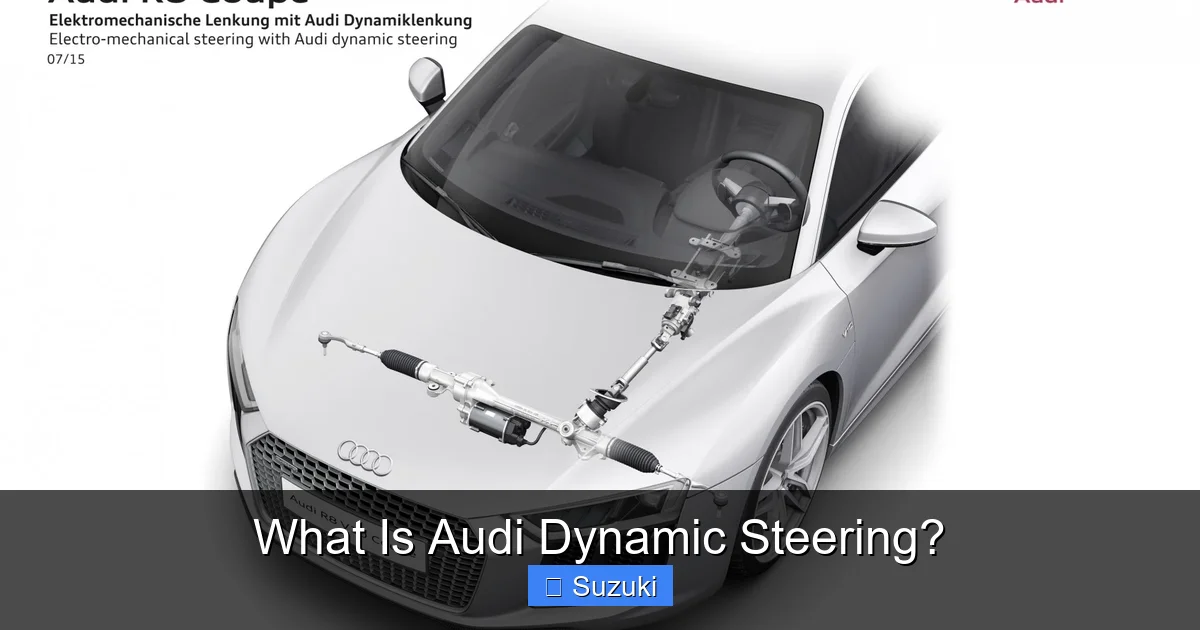
At the heart of Audi Dynamic Steering is a sophisticated electromechanical system that sits between the steering wheel and the steering rack. It uses a combination of sensors, motors, and software to constantly monitor driving conditions and adjust the steering ratio accordingly. But let’s break it down in simple terms—no engineering degree required.
The Core Components
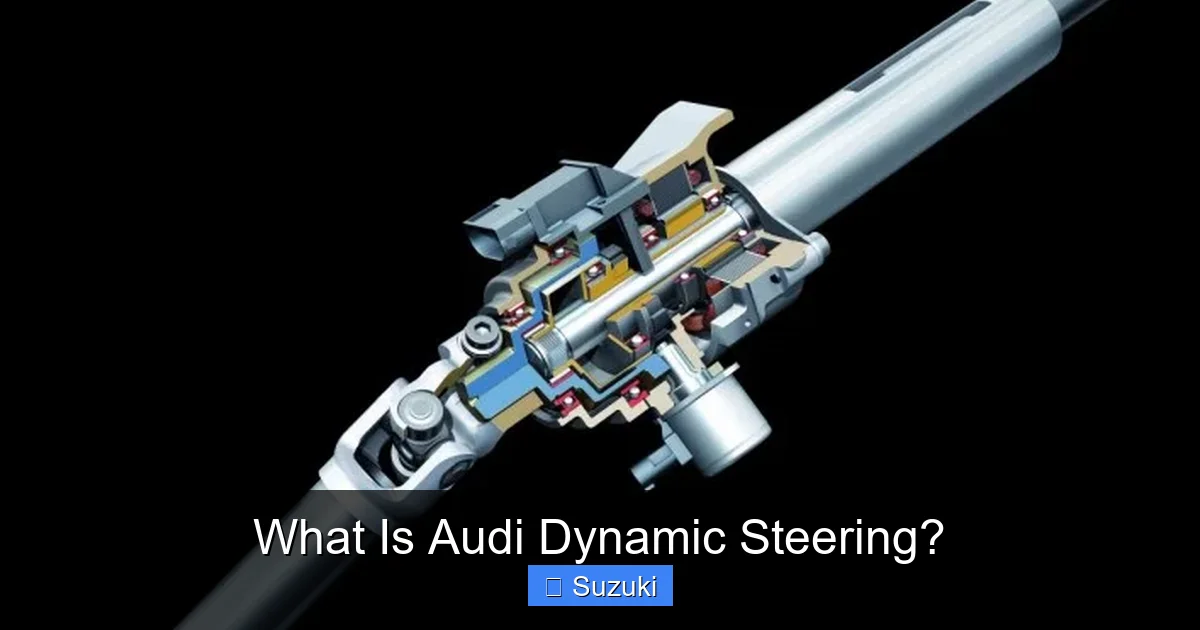
The system relies on three main parts: a planetary gear set, an electric motor, and a control unit. The planetary gear—also known as an epicyclic gear—is the mechanical brain of the operation. It allows the steering input from the driver to be modified before it reaches the wheels. The electric motor fine-tunes this input, either adding or subtracting rotation to change how much the wheels turn. All of this is managed by the control unit, which processes data from various sensors around the car.
These sensors track everything from vehicle speed and steering angle to lateral acceleration and even road surface conditions. For example, if the system detects that you’re driving slowly in a parking lot, it reduces the steering ratio. This means you can turn the wheel just a little to make a big turn—perfect for squeezing into tight spots. But when you hit the highway, the system increases the ratio, so the car responds more gradually to your inputs, improving stability and reducing the chance of overcorrecting.
Real-Time Adaptation
What makes Audi Dynamic Steering truly impressive is its ability to adapt in real time. It’s not just about speed—it also responds to how you’re driving. If you’re taking a corner aggressively, the system might stiffen the steering to give you more feedback and control. If the road is wet or icy, it can compensate for reduced traction by adjusting the steering response to prevent skidding.
This real-time adaptation is powered by Audi’s onboard computer network, which connects Dynamic Steering to other safety and performance systems. For instance, if the Electronic Stability Control (ESC) detects that the car is starting to understeer (pushing wide in a turn), it can signal the steering system to make subtle corrections. This isn’t full autonomous driving—yet—but it’s a big step toward a car that helps you stay in control, even when conditions get tricky.
Electromechanical vs. Hydraulic
You might be wondering how this compares to traditional steering systems. Most older cars use hydraulic power steering, which relies on a pump and fluid to assist your steering. While effective, it’s always on, drawing power from the engine and reducing fuel efficiency. Electric power steering (EPS), which many modern cars use, is more efficient because it only uses power when you turn the wheel.
Audi Dynamic Steering takes EPS a step further. While standard EPS systems provide consistent assistance, Dynamic Steering goes beyond by changing the actual steering ratio. This means it’s not just making steering easier—it’s making it smarter. It’s like the difference between a basic calculator and a smartphone: both can do math, but one can adapt, learn, and respond to your needs in real time.
Benefits of Audi Dynamic Steering
Visual guide about What Is Audi Dynamic Steering?
Image source: content.presspage.com
So, what do you actually get out of this technology? A lot, as it turns out. From improved safety to a more enjoyable drive, the benefits of Audi Dynamic Steering are both practical and noticeable.
Enhanced Maneuverability at Low Speeds
Let’s start with the most obvious advantage: parking. Whether you’re backing into a tight spot or navigating a crowded garage, low-speed maneuverability is where Dynamic Steering shines. By reducing the steering ratio, the system allows you to make sharp turns with minimal effort. You might only need to turn the wheel a quarter turn to swing the car 90 degrees—something that would normally require multiple rotations in a traditional setup.
This isn’t just convenient; it’s also safer. Less physical effort means less fatigue, especially for drivers with mobility issues or those who drive in heavy traffic. And because the car responds quickly, you’re less likely to overcorrect or misjudge a turn, reducing the risk of fender benders.
Improved Stability at High Speeds
On the highway, the story changes. At higher speeds, even small steering inputs can have a big effect on the car’s direction. That’s why Dynamic Steering increases the ratio, making the car less sensitive to minor movements. This gives you a more planted, confident feel when cruising or changing lanes.
Imagine driving on a windy day. Without Dynamic Steering, a sudden gust might cause the car to drift slightly, forcing you to make constant micro-adjustments. With the system active, those corrections are minimized. The steering feels firmer, more precise, and more predictable—exactly what you want when you’re covering long distances at high speed.
Better Handling in Corners
Dynamic Steering also improves cornering performance. When you enter a turn, the system can adjust the steering response to match the angle and speed of the curve. This helps reduce understeer (when the front tires lose grip and the car pushes wide) and oversteer (when the rear tires lose grip and the car swings out).
For example, if you’re taking a tight corner on a mountain road, the system might reduce the steering ratio slightly to give you more direct control. But if the road is slippery, it might increase the ratio to prevent sudden overcorrections. This adaptability makes the car feel more balanced and responsive, whether you’re driving casually or pushing the limits.
Reduced Driver Fatigue
Long drives can be tiring, especially if you’re constantly fighting the steering wheel. Dynamic Steering reduces this fatigue by making steering lighter when needed and firmer when helpful. It’s like having a co-pilot that adjusts the workload based on the situation.
This is especially beneficial for drivers who spend hours on the road—whether for work or leisure. Less physical strain means better focus, fewer mistakes, and a more enjoyable journey overall.
Integration with Driver Assistance Systems
One of the biggest advantages of Dynamic Steering is how well it works with other Audi technologies. It’s not a standalone feature; it’s part of a larger ecosystem designed to make driving safer and easier.
For instance, when paired with Audi’s adaptive cruise control, the system can make subtle steering adjustments to keep the car centered in its lane. If the lane departure warning detects that you’re drifting, Dynamic Steering can gently nudge the wheels back on course. It even works with the Quattro all-wheel-drive system to optimize traction and handling in various conditions.
This integration creates a seamless, cohesive driving experience. You don’t have to think about which systems are active—you just feel the car responding intelligently to your needs.
Audi Dynamic Steering vs. Traditional Steering

Visual guide about What Is Audi Dynamic Steering?
Image source: content.presspage.com
To truly appreciate what Audi Dynamic Steering offers, it helps to compare it to traditional steering systems. Let’s look at the key differences and why they matter.
Fixed vs. Variable Steering Ratio
In a conventional car, the steering ratio is fixed. That means one full turn of the wheel always results in the same amount of wheel turn, regardless of speed or driving conditions. This works fine for most situations, but it’s a compromise. At low speeds, you might need to turn the wheel multiple times to park. At high speeds, even small movements can feel twitchy.
Dynamic Steering eliminates this compromise. By varying the ratio, it gives you the best of both worlds: quick, easy steering when you need it, and stable, precise control when you’re moving fast.
Mechanical vs. Electronic Control
Traditional systems rely on mechanical linkages and hydraulic pressure. They’re reliable, but they can’t adapt. Once the car is built, the steering behavior is set in stone.
Audi Dynamic Steering, on the other hand, is electronically controlled. This means it can be updated, fine-tuned, and even personalized. Some Audi models allow you to choose different driving modes—Comfort, Auto, Dynamic, etc.—each of which adjusts the steering feel. In Comfort mode, the steering is lighter and more relaxed. In Dynamic mode, it’s firmer and more responsive. This level of customization is impossible with traditional systems.
Energy Efficiency
Hydraulic steering systems draw power from the engine, which reduces fuel efficiency. Electric systems, including Dynamic Steering, only use power when you turn the wheel. This not only saves fuel but also reduces emissions—a big win for eco-conscious drivers.
Safety and Responsiveness
Perhaps the most important difference is safety. Traditional steering can’t react to changing conditions. If you hit a patch of ice or take a corner too fast, the car’s response is purely mechanical—and often unpredictable.
Dynamic Steering, however, can intervene. By working with stability control and other systems, it can make micro-adjustments to keep the car on track. This proactive approach helps prevent accidents before they happen, making it a valuable safety feature.
Real-World Applications and Examples
Visual guide about What Is Audi Dynamic Steering?
Image source: content.presspage.com
Let’s put this technology into context with some real-world scenarios. How does Audi Dynamic Steering actually improve your driving experience?
City Driving and Parking
Imagine you’re in downtown Tokyo, trying to parallel park in a space that’s barely longer than your car. Without Dynamic Steering, you’d be wrestling the wheel, turning it back and forth, hoping you don’t bump the car behind you.
With Dynamic Steering, the process is effortless. The system reduces the steering ratio, so you can swing the car into the spot with just a few turns of the wheel. It’s smooth, precise, and stress-free—even in the tightest spaces.
Highway Cruising
Now picture yourself on a long highway stretch, cruising at 70 mph. The wind picks up, and the car starts to drift slightly. In a traditional car, you’d need to make constant small corrections to stay in your lane.
With Dynamic Steering, those corrections are minimized. The system increases the steering ratio, making the car less sensitive to minor inputs. You feel more in control, with less fatigue and greater confidence.
Mountain Roads and Curves
Driving through the Alps or the Pacific Coast Highway? Dynamic Steering shines here too. As you approach a sharp curve, the system adjusts the steering response to match the angle and speed. It helps you stay on line, reducing the risk of understeer or oversteer.
Even if the road is wet or gravelly, the system can compensate, giving you more grip and stability. It’s like having a professional driving coach built into your car.
Towing and Heavy Loads
If you’re towing a trailer or carrying a heavy load, steering can become sluggish and unresponsive. Dynamic Steering counteracts this by adjusting the assistance and ratio to maintain control. Whether you’re backing up a boat trailer or hauling cargo, the system helps keep the car stable and predictable.
Future of Audi Dynamic Steering
Audi isn’t stopping here. As the automotive world moves toward electrification and autonomy, Dynamic Steering is evolving to meet new challenges and opportunities.
Integration with Autonomous Driving
Future versions of Dynamic Steering will play a key role in semi-autonomous and fully autonomous vehicles. By precisely controlling the steering angle, the system can support lane-keeping, automated parking, and even highway autopilot features.
Imagine a car that can park itself in a tight spot—Dynamic Steering makes that possible by allowing fine, accurate control of the wheels.
Over-the-Air Updates
Audi is increasingly using over-the-air (OTA) updates to improve vehicle performance. This means your Dynamic Steering system could get smarter over time, with new algorithms and features delivered remotely.
For example, Audi might release an update that improves low-speed responsiveness or enhances cornering stability based on real-world driving data.
Personalization and AI
In the future, Dynamic Steering could learn your driving style and adapt accordingly. If you prefer a sportier feel, the system could automatically adjust the steering ratio and assistance to match. If you’re driving with passengers, it might soften the response for a smoother ride.
This level of personalization will make the driving experience even more intuitive and enjoyable.
Is Audi Dynamic Steering Right for You?
So, should you care about this technology? If you value comfort, safety, and driving enjoyment, the answer is yes.
Dynamic Steering isn’t just for performance enthusiasts. It benefits everyday drivers by making parking easier, highways smoother, and corners more predictable. It reduces fatigue, improves control, and works quietly in the background to keep you safe.
While it’s currently available on higher-end Audi models, the technology is likely to trickle down to more affordable vehicles in the coming years. And as cars become more connected and intelligent, features like Dynamic Steering will become standard.
In short, it’s not just a luxury—it’s a smarter way to drive.
Conclusion
Audi Dynamic Steering is more than just a fancy feature—it’s a game-changer in how we interact with our vehicles. By intelligently adjusting the steering ratio based on speed, road conditions, and driving style, it delivers a smoother, safer, and more enjoyable driving experience.
From effortless parking to confident highway cruising, the benefits are clear. It reduces driver fatigue, enhances safety, and integrates seamlessly with other advanced systems. And as Audi continues to innovate, Dynamic Steering will only get smarter, more responsive, and more personalized.
Whether you’re a daily commuter, a weekend adventurer, or a performance enthusiast, this technology has something to offer. It’s not just about turning the wheel—it’s about turning the future of driving.
So the next time you slide into an Audi and feel that perfect balance of lightness and precision, remember: it’s not magic. It’s Dynamic Steering.
Frequently Asked Questions
What is Audi Dynamic Steering?
Audi Dynamic Steering is an advanced steering system that adjusts the steering ratio in real time based on vehicle speed and driving conditions. It makes steering lighter at low speeds for easier maneuvering and firmer at high speeds for better stability.
How does Dynamic Steering improve safety?
It works with stability control and other driver aids to correct understeer or oversteer, helping prevent skids or loss of control. It also reduces driver fatigue, leading to fewer mistakes on the road.
Can I feel the difference when driving?
Yes. Most drivers notice easier parking, smoother highway driving, and more precise cornering. The system adapts so seamlessly that the improvement feels natural and intuitive.
Is Dynamic Steering available on all Audi models?
It’s typically offered on higher-end models like the A6, A7, A8, and Q7, often as part of performance or technology packages. Availability may vary by region and model year.
Does it use more fuel or electricity?
No. Unlike hydraulic systems, it’s electrically powered and only uses energy when you steer, making it more efficient and eco-friendly.
Can the system be turned off or customized?
Yes. Many Audi models allow you to adjust steering feel through driving modes like Comfort, Auto, and Dynamic, letting you personalize the experience to your preference.
