
What Happens When Insurance Totals Your Car?

When your car is totaled by insurance, the company declares it a total loss, typically when repair costs exceed a certain percentage of the vehicle’s value. You’ll receive a payout based on the car’s actual cash value minus your deductible, and the insurer takes ownership of the damaged vehicle. This process may leave you with a financial gap if you owe more on the car than its current market value, making gap insurance a smart precaution.
Key Takeaways
- Know the total loss threshold: Insurers declare a car totaled when repair costs exceed a set percentage of its value.
- Receive actual cash value: You’ll be paid the car’s market value, not replacement cost, minus your deductible.
- Salvage rights may apply: You can often buy back the totaled car at salvage value if state laws allow.
- Gap insurance helps: It covers the difference between your loan and the car’s value if you’re upside-down.
- Act quickly on paperwork: Timely response ensures faster payout and avoids delays in resolving the claim.
- Negotiate if needed: Challenge the insurer’s valuation with comparable listings to get a fair settlement.
📑 Table of Contents
- What Happens When Insurance Totals Your Car?
- How Insurance Companies Decide to Total a Car
- What Happens After Your Car Is Declared a Total Loss?
- Can You Keep Your Totaled Car?
- How Much Will You Actually Get Paid?
- What to Do After Your Car Is Totaled
- Common Misconceptions About Totaled Cars
- Data Table: Average Payouts for Luxury Cars After Total Loss
- Final Thoughts: Moving Forward After a Total Loss
What Happens When Insurance Totals Your Car?
Picture this: You’re driving home from work on a rainy Tuesday, humming along to your favorite playlist, when suddenly—bam!—a deer darts across the road. You swerve, hit a pothole, and your front end crumples like a soda can. Your heart races as you assess the damage. The bumper’s hanging off, the hood is buckled, and steam hisses from under the engine. You call your insurance company, hopeful they’ll cover the repairs. But then comes the call you weren’t expecting: “We’re declaring your car a total loss.”
Wait—what does that even mean? Is your car completely destroyed? Do you just lose it forever? And what happens next? If you’ve never been through this before, the whole process can feel overwhelming, confusing, and even a little unfair. You might be wondering: Why can’t they just fix it? or How much will I actually get paid? The truth is, “totaling” a car doesn’t always mean it’s smashed beyond recognition. In fact, many totaled vehicles are still drivable. But once the insurance company makes that call, a whole new set of steps kicks in—steps that affect your finances, your mobility, and even your future car-buying decisions.
In this guide, we’ll walk you through exactly what happens when your car is declared a total loss by insurance. Whether you drive a compact sedan or a luxury Bentley, the process is largely the same—but the stakes can feel much higher when you’re dealing with a high-value vehicle. We’ll explain how insurers decide to total a car, what you can expect in terms of payout, and how to protect yourself during this stressful time. By the end, you’ll know your rights, your options, and how to move forward with confidence.
How Insurance Companies Decide to Total a Car
So, how do insurance companies actually decide whether to repair your car or declare it a total loss? It’s not just about how badly it looks. There’s a formula—and it varies by state. But the core idea is simple: if the cost to repair the car exceeds a certain percentage of its actual cash value (ACV), the insurer will likely total it.

Visual guide about What Happens When Insurance Totals Your Car?
Image source: attorneydesmond.com
The Total Loss Threshold (TLT)
Every state has something called a Total Loss Threshold (TLT). This is the percentage of a car’s value that repair costs must reach before it’s automatically considered a total loss. For example, in California, if repairs cost 75% or more of the car’s ACV, the vehicle is totaled. In other states, like Texas, the threshold is 100%—meaning repairs have to cost as much as the car is worth.
- Example: Your Bentley Continental GT is worth $120,000. If the repair estimate comes in at $95,000, and your state’s TLT is 75%, the insurer will total it because $95,000 is more than 75% of $120,000.
- Tip: Check your state’s insurance department website to find your local TLT. Knowing this number can help you anticipate the insurer’s decision.
Actual Cash Value (ACV) vs. Replacement Cost
Insurance companies base their payout on Actual Cash Value, not what you paid for the car or what you could sell it for today. ACV factors in depreciation—so even if your Bentley was brand new last year, it’s already lost value. The insurer will look at similar models in your area, mileage, condition, and market trends to determine ACV.
Some policies offer replacement cost coverage, which pays enough to buy a similar vehicle new. But this is rare and usually only available for newer cars. Most standard policies stick with ACV, which means you might not get enough to replace your car with the same model.
Structural Damage and Safety Concerns
Even if repair costs are below the TLT, insurers may still total a car if there’s significant structural damage. Why? Because fixing frame or unibody damage on a luxury vehicle like a Bentley requires specialized equipment and certified technicians. If the repair shop can’t guarantee the car will be as safe as it was before, the insurer may decide it’s not worth the risk.
For example, if your Bentley’s frame is bent in a collision, even a perfect repair might not restore its original rigidity. Insurers know that compromised structural integrity can affect handling, crash performance, and resale value—so they often opt to total the vehicle rather than gamble on a repair.
What Happens After Your Car Is Declared a Total Loss?
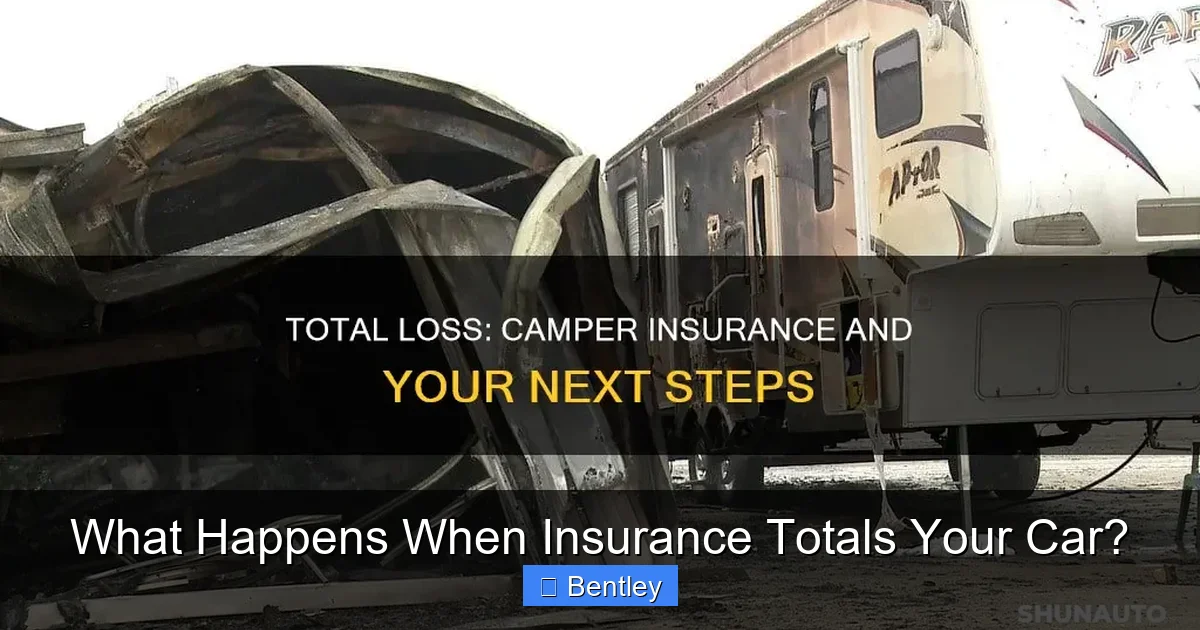
Once the insurer declares your car a total loss, the process moves quickly. But it’s not as simple as handing over the keys and walking away. Here’s what typically happens next.
Visual guide about What Happens When Insurance Totals Your Car?
Image source: shunauto.com
Step 1: The Insurance Adjuster’s Inspection
An insurance adjuster will inspect your vehicle—either in person or via photos—and create a detailed estimate of repair costs. They’ll also research your car’s ACV using databases like Kelley Blue Book, NADA Guides, or proprietary tools. This estimate becomes the basis for your payout.
Pro Tip: Don’t just accept the first number. If you believe your Bentley is worth more—maybe because it has low mileage, premium options, or is in exceptional condition—gather evidence. Get quotes from local dealers for similar models, take photos of the interior and exterior, and document any recent maintenance or upgrades.
Step 2: The Settlement Offer
Within a few days, you’ll receive a settlement offer. This is the amount the insurer is willing to pay to take ownership of your car. It’s usually the ACV minus your deductible (if you have collision coverage).
- Example: Your Bentley’s ACV is $120,000. Your deductible is $1,000. The insurer offers $119,000.
- Important: This offer assumes you’re turning over the car. If you want to keep it, the math changes (more on that below).
Step 3: Accepting or Negotiating the Offer
You don’t have to accept the first offer. If you think it’s too low, you can negotiate. Send your evidence—comparable listings, repair records, photos—and ask for a reassessment. Many insurers will adjust their offer if you present a strong case.
But be realistic. If your car has high mileage, wear and tear, or outdated features, the ACV will reflect that. Don’t expect to get the price of a brand-new model.
Step 4: Signing Over the Title
Once you accept the offer, you’ll sign over the car’s title to the insurance company. They’ll send you a check (or direct deposit), and the car becomes their property. In most cases, the insurer will sell it at auction to a salvage yard or rebuilders.
Note: If you have a loan or lease, the insurer will pay the lender first. Any remaining amount goes to you. If the payout is less than what you owe, you’re responsible for the difference—unless you have gap insurance.
Can You Keep Your Totaled Car?
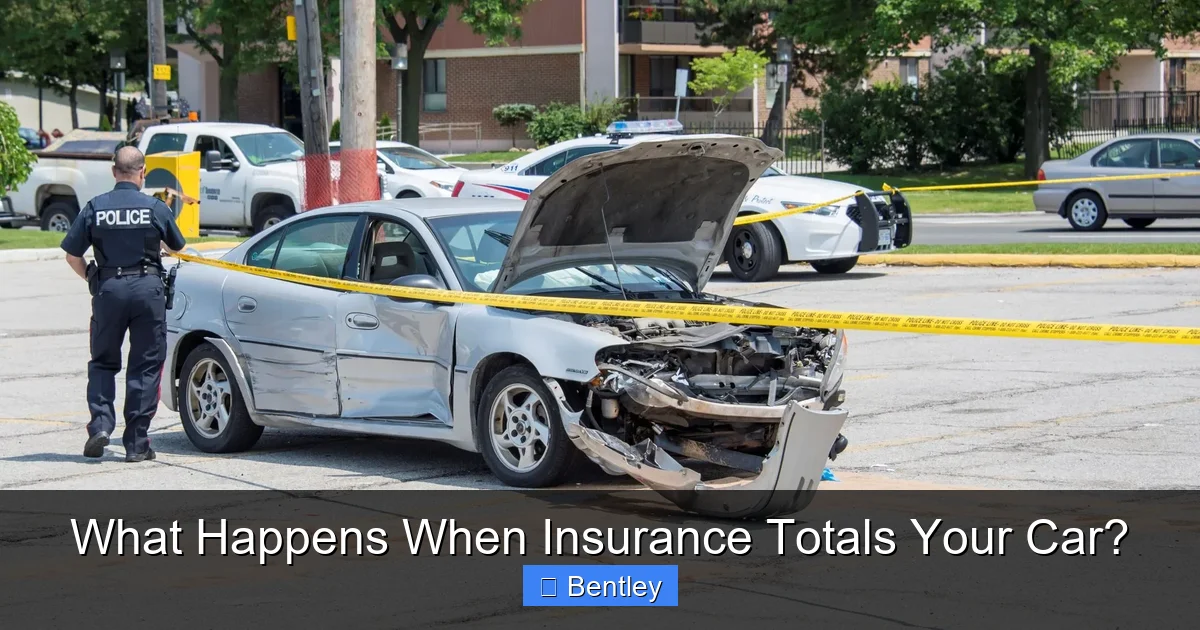
Yes—but it’s not always the best idea, especially with a luxury vehicle like a Bentley.
Visual guide about What Happens When Insurance Totals Your Car?
Image source: motorbiscuit.com
The “Retain Salvage” Option
Some insurers allow you to keep your totaled car in exchange for a reduced payout. This is called “retaining salvage.” Instead of paying you the full ACV, they’ll subtract the car’s salvage value—what it would sell for at auction—and give you the difference.
- Example: Your Bentley’s ACV is $120,000. Its salvage value is $40,000. If you keep the car, you’ll receive $80,000.
- Tip: This only makes sense if you plan to repair the car yourself or have access to affordable, high-quality repairs. Otherwise, you could end up spending more than the car is worth.
Rebuilt Title and Resale Challenges
If you keep and repair a totaled car, it will receive a rebuilt title (also called a “reconstructed” or “salvage rebuild” title). This alerts future buyers that the car was once declared a total loss.
While rebuilt titles are legal to drive, they come with downsides:
- Lower resale value: Most buyers avoid rebuilt-title cars, especially luxury models. A Bentley with a rebuilt title might sell for 30–50% less than a clean-title equivalent.
- Harder to insure: Some insurers won’t cover rebuilt-title vehicles, or they’ll charge higher premiums.
- Financing issues: Banks and credit unions are often reluctant to finance rebuilt-title cars.
So while keeping your Bentley might feel sentimental or practical in the short term, think long-term. Will you be able to sell it later? Will you feel safe driving it? These are important questions to ask.
How Much Will You Actually Get Paid?
This is the million-dollar question—literally, if you drive a Bentley. The payout depends on several factors, and it’s not always what you expect.
Factors That Affect Your Payout
Here’s what insurers consider when calculating your settlement:
- Market value: What similar Bentleys are selling for in your area.
- Mileage: Lower mileage = higher value.
- Condition: Interior wear, paint quality, mechanical issues.
- Options and packages: Premium sound systems, custom interiors, performance upgrades.
- Accident history: Even if your car was repaired well, a prior accident can lower ACV.
Real-World Example: A 2020 Bentley Flying Spur with 15,000 miles, full service records, and the Mulliner package might be valued at $140,000. But if it has a minor accident history and 40,000 miles, the ACV could drop to $110,000.
Deductibles and Loan Balances
Your final check will be reduced by your deductible. If you have a $1,000 deductible, subtract that from the ACV. If you owe more on your loan than the car is worth (“upside-down”), you’ll still owe the difference unless you have gap insurance.
Example: Your Bentley is worth $120,000, but you owe $130,000 on your loan. The insurer pays $119,000 (after deductible). You still owe $11,000 to the bank.
Gap insurance covers this difference, so you’re not out of pocket. If you drive a luxury car with a long loan term, gap insurance is highly recommended.
Taxes and Fees
In some states, you may owe sales tax on the settlement amount if you use it to buy a new car. However, many states waive this tax if the new vehicle is similar in value. Check your local DMV rules.
What to Do After Your Car Is Totaled
The aftermath of a total loss can be chaotic. Here’s how to stay organized and protect your interests.
1. Review the Settlement Carefully
Don’t rush to sign. Read the settlement letter word for word. Make sure the ACV, deductible, and payout amount are correct. If anything seems off, ask for clarification.
2. Negotiate if Necessary
If the offer is low, don’t be afraid to push back. Use comparable listings, recent appraisals, or a professional appraisal to support your case. Many insurers will increase their offer by 5–10% if you present solid evidence.
3. Decide Whether to Keep the Car
Weigh the pros and cons of retaining salvage. If you’re a skilled mechanic or have a trusted repair shop, it might be worth it. But for most Bentley owners, selling to the insurer is the smarter financial move.
4. Arrange Transportation
Once you sign over the car, you’ll need a way to get around. Ask your insurer if they offer a rental car reimbursement. Most policies include this for a limited time (usually 30 days).
5. Shop for a Replacement
Use your settlement to shop for a new or used car. If you’re buying another Bentley, consider certified pre-owned (CPO) models—they come with warranties and have been inspected by the dealer.
6. Update Your Insurance
Once you buy a new car, contact your insurer to update your policy. Make sure you have adequate coverage, especially if your new vehicle is high-value.
Common Misconceptions About Totaled Cars
There’s a lot of misinformation out there. Let’s clear up some common myths.
Myth 1: “Totaled Means the Car Is Destroyed”
False. Many totaled cars are still drivable. The term “total loss” refers to economics, not physical condition. If repairs cost too much, it’s totaled—even if it starts and drives.
Myth 2: “I’ll Get What I Paid for the Car”
Nope. Insurance pays ACV, which includes depreciation. A $200,000 Bentley might be worth $150,000 after one year—even with low mileage.
Myth 3: “The Insurer Has to Fix My Car”
No. The insurer can choose to total the car if it’s more cost-effective than repairing it. You don’t get a vote—unless you want to keep it.
Myth 4: “I Can’t Negotiate the Payout”
You absolutely can. Insurers expect some back-and-forth. The first offer is often a starting point, not a final decision.
Data Table: Average Payouts for Luxury Cars After Total Loss
| Vehicle Make/Model | Model Year | Mileage | Estimated ACV | Typical Payout (After Deductible) |
|---|---|---|---|---|
| Bentley Continental GT | 2021 | 10,000 | $160,000 | $159,000 |
| Bentley Flying Spur | 2020 | 25,000 | $135,000 | $134,000 |
| Range Rover Autobiography | 2022 | 8,000 | $120,000 | $119,000 |
| Mercedes-Maybach S-Class | 2021 | 15,000 | $145,000 | $144,000 |
| Rolls-Royce Ghost | 2020 | 12,000 | $220,000 | $219,000 |
Note: Payouts assume a $1,000 deductible and clean title. Actual values vary by location, condition, and market conditions.
Final Thoughts: Moving Forward After a Total Loss
Having your car totaled is never fun—especially when it’s a luxury vehicle you love. But it’s not the end of the road. With the right knowledge, you can navigate the process smoothly, get a fair payout, and make smart decisions about your next steps.
Remember: Insurance companies use formulas, not emotions. They’re looking at numbers—repair costs, ACV, and state thresholds. Your job is to make sure those numbers reflect the true value of your car. Gather evidence, ask questions, and don’t be afraid to negotiate.
If you drive a Bentley or another high-end vehicle, consider adding gap insurance and keeping detailed records of maintenance and upgrades. These small steps can make a big difference if you ever face a total loss.
And finally, give yourself grace. It’s okay to feel frustrated or sad about losing a car you cherished. But focus on what’s next—whether that’s a new Bentley, a different luxury model, or even a change in lifestyle. The road ahead is still open.
Frequently Asked Questions
What does it mean when insurance totals your car?
When insurance totals your car, it means the cost to repair the vehicle exceeds a certain percentage of its actual cash value, as determined by your insurer. This threshold varies by state but is typically between 70% and 100% of the car’s value.
How do insurance companies decide if a car is totaled?
Insurance companies assess whether a car is totaled by comparing repair costs to the vehicle’s actual cash value before the accident. They also consider safety, structural damage, and local regulations when making the determination.
What happens to my car after the insurance company totals it?
After your car is declared a total loss, the insurance company usually takes ownership and sells it for salvage. You may receive the car back in some states if you pay to re-title it as a salvage vehicle, but it will have a branded title.
Will I get paid the full value of my car if it’s totaled?
You’ll receive the actual cash value (ACV) of your car at the time of the loss, minus your deductible. This amount is based on similar vehicles in your area and may not reflect what you originally paid or still owe on a loan.
Can I keep my totaled car after insurance pays me?
Yes, in many states you can keep your totaled car, but the insurance payout will be reduced by the salvage value. The vehicle will also need to be re-registered with a salvage title, which can affect future resale and insurability.
What should I do if my car is totaled in an accident?
If your car is totaled, contact your insurance company immediately to start the claim process. Gather documentation like the police report and photos, and ask about your options for receiving payment and handling the vehicle.
