
How to Fix Check Vsc on a Lexus Is250

If your Lexus IS250 is showing a “Check VSC” warning, don’t panic—this guide walks you through the most common causes and fixes. From loose gas caps to faulty wheel speed sensors, we’ll help you diagnose and resolve the issue quickly and safely.
Key Takeaways
- Understand what VSC is: Vehicle Stability Control helps maintain traction and stability, especially in slippery conditions.
- Check the gas cap first: A loose or damaged gas cap is one of the most common—and easiest—fixes for the “Check VSC” light.
- Inspect wheel speed sensors: Dirty or faulty sensors can trigger the VSC warning and affect ABS and traction control.
- Scan for trouble codes: Use an OBD2 scanner to read diagnostic trouble codes (DTCs) and pinpoint the exact issue.
- Battery and electrical issues matter: Weak batteries or poor connections can disrupt VSC system communication.
- Reset the system properly: After repairs, reset the VSC system using the correct procedure to ensure it functions correctly.
- Seek professional help when needed: If the problem persists, consult a certified Lexus technician for advanced diagnostics.
📑 Table of Contents
What Does “Check VSC” Mean on a Lexus IS250?
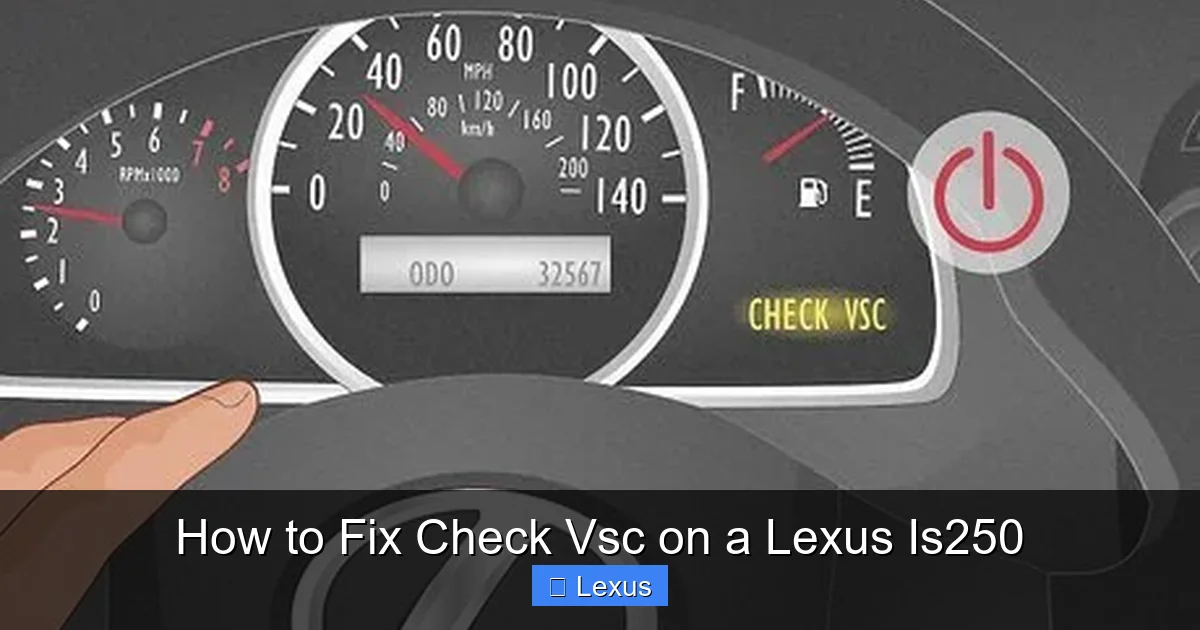
If you’ve ever been driving your Lexus IS250 and suddenly seen the “Check VSC” warning light flash on your dashboard, you’re not alone. This alert can be alarming, especially if you’re not sure what it means or how serious it is. But don’t worry—most of the time, it’s not a major mechanical failure. Instead, it’s your car’s way of saying, “Hey, something’s not right with the stability control system.”
VSC stands for Vehicle Stability Control, a safety feature designed to help you maintain control of your vehicle during sudden maneuvers or slippery road conditions. It works alongside the ABS (Anti-lock Braking System) and traction control to monitor wheel speed, steering angle, and lateral G-forces. If the system detects a loss of traction or instability, it can apply brakes to individual wheels or reduce engine power to help keep you on track.
When the “Check VSC” light comes on, it means the system has detected a fault and has temporarily disabled itself to prevent unsafe operation. This doesn’t mean your car is unsafe to drive—but it does mean you should address the issue soon. Ignoring it could reduce your vehicle’s ability to handle emergency situations, especially in rain, snow, or during sharp turns.
Why Is the VSC Light Important?
The VSC system is a critical part of your Lexus IS250’s safety suite. Without it, you lose an extra layer of protection that helps prevent skidding and loss of control. While you can still drive with the light on, it’s not recommended for long periods—especially in adverse weather. Think of it like driving with your seatbelt off: possible, but riskier.
Additionally, the VSC system is interconnected with other safety systems. A problem with VSC can also affect the ABS and traction control lights, which may also illuminate. This is why diagnosing the root cause quickly is so important.
Common Causes of the “Check VSC” Warning
Now that you understand what VSC does, let’s dive into the most common reasons why your Lexus IS250 might be showing this warning. The good news? Many of these issues are easy to fix—and some don’t even require a mechanic.
Visual guide about How to Fix Check Vsc on a Lexus Is250
Image source: wikihow.com
1. Loose or Faulty Gas Cap
Yes, it sounds too simple to be true, but a loose, damaged, or missing gas cap is one of the top causes of the “Check VSC” light. Your Lexus IS250 has an evaporative emissions system (EVAP) that monitors fuel vapor leaks. If the gas cap isn’t sealed properly, the system detects a leak and triggers a fault code—often affecting the VSC system as a side effect.
How to fix it: Turn off your car, remove the gas cap, and rethread it firmly until you hear it click three times. Wait a few minutes, then restart the engine. In many cases, the light will reset itself after a few drive cycles. If not, you may need a new gas cap—look for an OEM or high-quality aftermarket cap designed for your IS250.
2. Dirty or Faulty Wheel Speed Sensors
Each wheel on your IS250 has a speed sensor that sends data to the VSC and ABS systems. If one of these sensors gets dirty, damaged, or fails, the system can’t accurately monitor wheel speed—leading to a “Check VSC” warning.
These sensors are located near the wheel hubs and can get clogged with dirt, mud, or brake dust. In colder climates, ice buildup can also interfere with their function. A failing sensor might send erratic signals or stop working altogether.
How to fix it: Inspect each wheel speed sensor for visible damage or debris. Clean the sensor and the tone ring (the toothed wheel it reads from) with a soft brush and brake cleaner. If cleaning doesn’t help, you may need to replace the sensor. While this can be done at home with basic tools, it’s often easier to have a mechanic handle it—especially if you’re not familiar with brake components.
3. Low or Weak Battery
Your Lexus IS250’s electrical systems, including VSC, rely on a stable power supply. If your battery is old, weak, or has a poor connection, it can cause voltage drops that confuse the onboard computers. This can trigger false warnings, including the “Check VSC” light.
You might also notice other symptoms, such as dim headlights, slow engine cranking, or erratic dashboard behavior. A battery that’s nearing the end of its life (typically 3–5 years) is a common culprit.
How to fix it: Test your battery voltage with a multimeter. A healthy battery should read around 12.6 volts when the car is off and 13.7–14.7 volts when running. If it’s low, try charging it or replacing it. Also, check the battery terminals for corrosion—clean them with a wire brush and baking soda solution if needed.
4. Faulty Steering Angle Sensor
The steering angle sensor tells the VSC system how much you’re turning the wheel. If this sensor is misaligned or malfunctioning, the system can’t accurately assess your intended direction—leading to false stability warnings.
This often happens after a wheel alignment, tire rotation, or if the car has been in a minor accident. Sometimes, the sensor just needs to be recalibrated.
How to fix it: If you’ve recently had work done on your suspension or steering, the sensor may need to be reset. This usually requires a scan tool that can access the VSC system. Some auto parts stores offer free scans, or you can buy an OBD2 scanner with advanced capabilities. If the sensor is damaged, it will need to be replaced—a job best left to a professional.
5. Wiring or Connector Issues
The VSC system relies on a network of sensors and control modules connected by wiring harnesses. Over time, these wires can become frayed, corroded, or disconnected—especially in areas exposed to moisture or heat, like under the car or near the engine.
Loose connectors at the wheel speed sensors, ABS module, or steering column can also cause intermittent faults.
How to fix it: Visually inspect the wiring around the wheels, under the hood, and near the steering column. Look for cuts, burns, or loose plugs. Reconnect any loose connectors and secure damaged wires with electrical tape or heat shrink tubing. For serious damage, consult a mechanic.
6. Software or System Glitches
Like any computer-controlled system, the VSC can occasionally experience software hiccups. These temporary glitches might cause the light to come on even when nothing is physically wrong.
This is more common after a battery replacement, jump start, or when the car has been sitting for a long time.
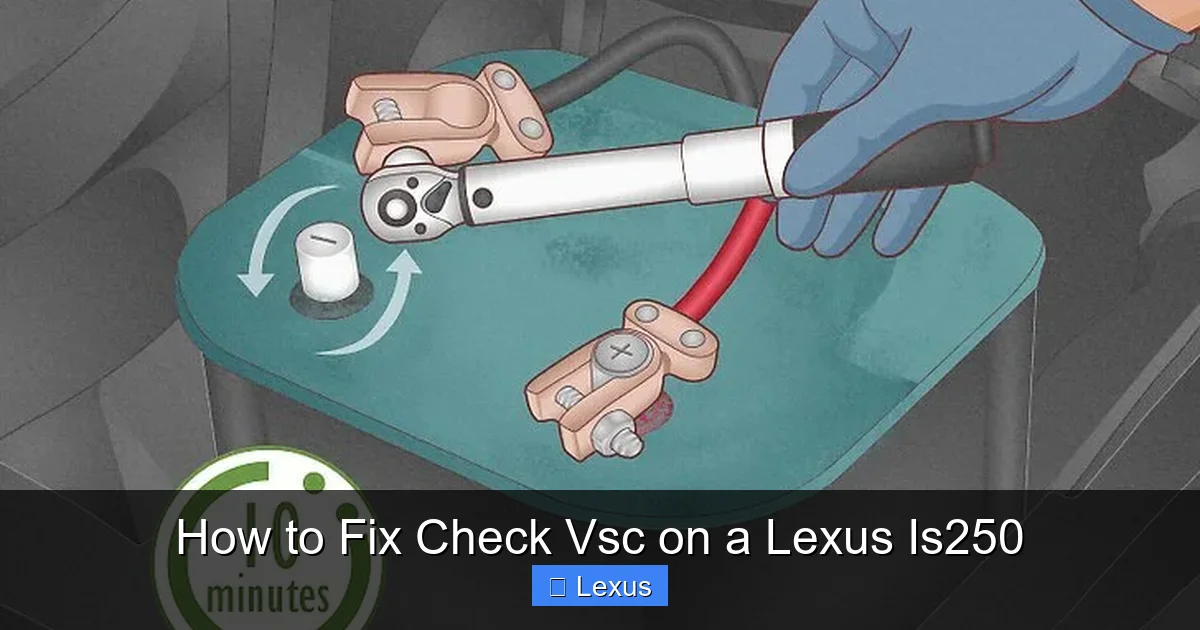
How to fix it: Try resetting the system by turning the ignition on and off several times, or disconnecting the battery for 10–15 minutes. This can clear temporary faults and allow the system to reboot. If the light returns, further diagnosis is needed.
How to Diagnose the “Check VSC” Issue
Now that you know the common causes, the next step is figuring out which one is affecting your IS250. The best way to do this is by reading the diagnostic trouble codes (DTCs) stored in your car’s computer.
Visual guide about How to Fix Check Vsc on a Lexus Is250
Image source: wikihow.com
Using an OBD2 Scanner
An OBD2 (On-Board Diagnostics) scanner is a small device that plugs into your car’s diagnostic port—usually located under the dashboard near the steering wheel. It reads error codes that tell you exactly what’s wrong.
For the “Check VSC” light, you’ll want a scanner that can access the ABS and VSC systems, not just the engine. Basic code readers may only show generic engine codes, so invest in a mid-range scanner like the BlueDriver or Autel MaxiCOM for full functionality.
Steps to scan:
- Turn off the engine and insert the scanner into the OBD2 port.
- Turn the ignition to the “ON” position (don’t start the engine).
- Follow the scanner’s prompts to read codes from the ABS/VSC module.
- Write down any codes displayed (e.g., C1201, C1234).
Once you have the codes, you can look them up online or in a repair manual to understand what they mean. For example, C1201 often indicates a problem with the right front wheel speed sensor.
Interpreting Common VSC Codes
Here are a few common DTCs related to the VSC system in the Lexus IS250:
- C1201: Right front wheel speed sensor malfunction
- C1202: Left front wheel speed sensor malfunction
- C1203: Right rear wheel speed sensor malfunction
- C1204: Left rear wheel speed sensor malfunction
- C1234: Steering angle sensor not initialized
- P0455: Large EVAP leak (often gas cap related)
If you see a P-code (like P0455), it’s likely related to the emissions system—often the gas cap. C-codes usually point to sensor or module issues.
When to Visit a Mechanic
While many VSC issues can be fixed at home, some require specialized tools or expertise. If you’ve tried the basic fixes and the light persists, or if the scanner shows complex codes, it’s time to visit a certified Lexus technician.
They have access to factory-level diagnostic tools and can perform advanced tests, such as checking the ABS pump or recalibrating the steering angle sensor with precision.
Step-by-Step Guide to Fixing “Check VSC” on a Lexus IS250
Ready to tackle the problem yourself? Here’s a practical, step-by-step guide to diagnosing and fixing the “Check VSC” warning on your IS250.
Visual guide about How to Fix Check Vsc on a Lexus Is250
Image source: wikihow.com
Step 1: Check the Gas Cap
Start with the simplest fix. Turn off the engine, remove the gas cap, and screw it back on until you hear three clicks. Drive the car for a few days. If the light goes off, you’re done!
Step 2: Inspect the Battery and Connections
Check the battery voltage and clean the terminals. If the battery is more than 4 years old, consider replacing it. A weak battery can cause all sorts of electrical gremlins.
Step 3: Scan for Trouble Codes
Use an OBD2 scanner to read the codes. Write them down and research what they mean. This will guide your next steps.
Step 4: Inspect Wheel Speed Sensors
Look at each wheel hub. Clean any dirt or debris from the sensors and tone rings. If a sensor looks damaged, replace it.
Step 5: Check Steering Angle Sensor
If you’ve had recent suspension work, the sensor may need recalibration. Use a scanner with steering angle reset capability, or visit a shop.
Step 6: Reset the VSC System
After making repairs, reset the system. Here’s how:
- Turn the ignition to “ON” (don’t start the engine).
- Press and hold the VSC OFF button for 3 seconds until the VSC and ABS lights flash.
- Turn the ignition off, then back on. The system should reset.
Note: Some models may require a specific sequence. Check your owner’s manual for exact steps.
Step 7: Test Drive
Take your IS250 for a short drive on a safe, dry road. Make a few gentle turns and brake applications. If the light stays off, you’ve successfully fixed the issue!
Preventing Future “Check VSC” Warnings
Once you’ve resolved the problem, you’ll want to avoid seeing that light again. Here are some tips to keep your VSC system running smoothly:
Regular Maintenance
Follow your Lexus maintenance schedule. This includes brake inspections, tire rotations, and suspension checks—all of which can affect the VSC system.
Keep Sensors Clean
After driving in muddy or snowy conditions, rinse off the wheel hubs to prevent sensor buildup. Avoid using high-pressure washers directly on sensors.
Use Quality Parts
If you need to replace a sensor or gas cap, choose OEM or high-quality aftermarket parts. Cheap replacements may fail quickly or cause false codes.
Monitor Battery Health
Test your battery annually, especially before winter. Replace it before it fails to avoid electrical issues.
Address Warning Lights Promptly
Don’t ignore dashboard warnings. The sooner you diagnose a problem, the easier and cheaper it is to fix.
Final Thoughts
The “Check VSC” warning on your Lexus IS250 can be frustrating, but it’s rarely a sign of a major breakdown. In most cases, it’s caused by something simple—like a loose gas cap or a dirty sensor—that you can fix yourself with a little patience and the right tools.
By understanding how the VSC system works and knowing the common causes, you can save time and money on unnecessary repairs. And if you do need professional help, you’ll be better prepared to discuss the issue with your mechanic.
Remember: safety first. The VSC system is there to protect you, so don’t ignore it. With regular maintenance and quick action, you can keep your IS250 running smoothly and safely for years to come.
Frequently Asked Questions
Can I drive my Lexus IS250 with the “Check VSC” light on?
Yes, you can drive your car, but it’s not recommended for long periods. The VSC system helps maintain stability, especially in slippery conditions, so driving without it increases your risk of skidding or losing control.
How much does it cost to fix a “Check VSC” issue?
Costs vary widely. A gas cap replacement might be $20, while a wheel speed sensor could cost $100–$300 including labor. Diagnostics at a shop may add $100–$150, but using your own scanner can save money.
Will the “Check VSC” light reset itself?
Sometimes. If the issue was temporary—like a loose gas cap—the light may go off after a few drive cycles. If it stays on, manual reset or repair is needed.
Can a bad tire cause the VSC light to come on?
Yes, if tires are severely worn, underinflated, or mismatched in size, it can affect wheel speed readings and trigger the VSC warning. Always maintain proper tire pressure and tread depth.
Do I need a special scanner to read VSC codes?
Yes, a basic OBD2 scanner may not access ABS/VSC codes. Look for a scanner with enhanced capabilities or visit a shop with professional diagnostic tools.
Is the VSC system the same as traction control?
They’re related but not identical. Traction control prevents wheel spin during acceleration, while VSC helps maintain directional stability during turns or sudden maneuvers. Both work together for safety.
