Which Is Better Lexus or Range Rover?

Choosing between Lexus and Range Rover depends on your priorities—reliability and comfort or off-road prowess and prestige. Lexus excels in long-term dependability and smooth daily driving, while Range Rover offers unmatched luxury and all-terrain capability.
Key Takeaways
- Lexus prioritizes reliability and fuel efficiency: Known for low maintenance costs and high resale value, Lexus vehicles are ideal for daily commuting and long-term ownership.
- Range Rover delivers superior off-road performance: With advanced terrain response systems and powerful engines, Range Rover dominates in rugged environments and challenging conditions.
- Lexus interiors focus on comfort and quietness: Plush seating, intuitive tech, and whisper-quiet cabins make Lexus a top choice for relaxed, long-distance travel.
- Range Rover emphasizes luxury and status: Premium materials, bold design, and a commanding driving position appeal to those seeking prestige and visual impact.
- Lexus offers better value over time: Lower repair frequency and strong warranty support reduce total cost of ownership compared to Range Rover.
- Range Rover has higher depreciation and maintenance costs: While stunning, these vehicles often require expensive servicing and lose value faster than Lexus models.
- Both brands offer strong safety features: Advanced driver-assistance systems are standard across most models, ensuring peace of mind on the road.
📑 Table of Contents
- Introduction: The Luxury SUV Showdown
- Brand Heritage and Philosophy
- Performance and Driving Dynamics
- Interior Quality and Technology
- Reliability and Long-Term Ownership
- Safety and Driver Assistance
- Fuel Efficiency and Environmental Impact
- Which Is Right for You?
- Conclusion: It’s Not About Better—It’s About Fit
Introduction: The Luxury SUV Showdown
When it comes to luxury SUVs, few brands spark as much debate as Lexus and Range Rover. Both represent the pinnacle of automotive refinement, but they take very different paths to get there. Lexus, the luxury division of Toyota, has built its reputation on reliability, comfort, and quiet sophistication. Range Rover, a British icon under Jaguar Land Rover, is synonymous with rugged elegance, off-road mastery, and bold design. So, which is better—Lexus or Range Rover?
The answer isn’t black and white. It depends on what you value most in a vehicle. Are you looking for a dependable daily driver that won’t break the bank on repairs? Or do you crave a statement-making SUV that can conquer mountain trails and city streets with equal flair? This article dives deep into the strengths and weaknesses of both brands, comparing everything from performance and interior quality to long-term ownership costs and real-world usability.
Whether you’re shopping for a family hauler, a weekend adventurer, or a status symbol, understanding the core differences between Lexus and Range Rover will help you make the right choice. Let’s explore how these two luxury giants stack up across key categories.
Brand Heritage and Philosophy
Visual guide about Which Is Better Lexus or Range Rover?
Image source: earnhardtlexus.com
Lexus: The Quiet Performer
Lexus launched in 1989 with a mission to challenge European luxury brands by offering superior reliability and customer service. Born from Toyota’s engineering excellence, Lexus quickly gained a reputation for building vehicles that last—often surpassing 300,000 miles with minimal issues. The brand’s philosophy centers on “The Pursuit of Perfection,” emphasizing meticulous craftsmanship, smooth ride quality, and a focus on the driver’s comfort.
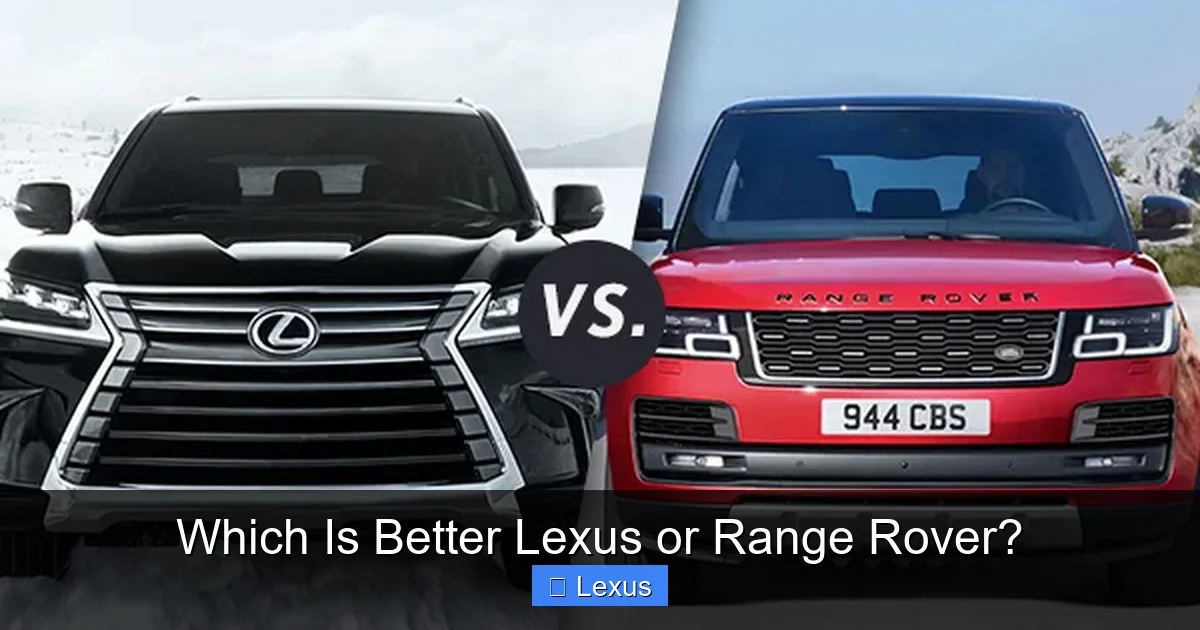
Lexus doesn’t chase flashy headlines or extreme performance figures. Instead, it prioritizes refinement, quiet cabins, and intuitive technology. Models like the RX, GX, and LX are designed to be seamless companions for daily commutes, road trips, and family adventures. The brand’s hybrid offerings, such as the RX 450h, also reflect a commitment to efficiency without sacrificing luxury.
Range Rover: The Rugged Aristocrat
Range Rover, on the other hand, has a legacy rooted in exploration and adventure. Introduced in 1970, it was one of the first vehicles to combine off-road capability with luxury interiors—a concept now known as the “luxury SUV.” Over the decades, Range Rover has become a symbol of status, favored by celebrities, executives, and outdoor enthusiasts alike.
The brand’s identity blends British elegance with go-anywhere toughness. Whether it’s the sleek Range Rover Velar or the full-size Range Rover Autobiography, each model features bold styling, premium materials, and advanced all-terrain technology. Range Rover doesn’t just want to get you there—it wants you to arrive in style, no matter how rough the journey.
Philosophical Differences in Practice
These differing philosophies show up in everyday ownership. A Lexus owner might appreciate the peace of mind that comes with predictable maintenance and a smooth, quiet ride. A Range Rover owner, meanwhile, might value the thrill of conquering a muddy trail or the admiration that comes with pulling up in a vehicle that looks like it belongs on a magazine cover.
Neither approach is wrong—it’s about alignment with your lifestyle. If you value consistency and low stress, Lexus is a natural fit. If you crave adventure and visual impact, Range Rover delivers in spades.
Performance and Driving Dynamics

Visual guide about Which Is Better Lexus or Range Rover?
Image source: marathi.cdn.zeenews.com
Engine Options and Power
When comparing Lexus and Range Rover, performance varies significantly based on model and trim. Lexus typically offers a range of V6 and V8 engines, with hybrid variants available across its SUV lineup. The Lexus LX 600, for example, comes with a 3.4-liter twin-turbo V6 producing 409 horsepower—plenty for highway merging and light towing.
Range Rover, however, leans into higher performance. The standard Range Rover offers a 3.0-liter inline-six with mild-hybrid tech, delivering 395 horsepower. Step up to the Range Rover SV, and you’re looking at a 5.0-liter supercharged V8 pushing over 550 horsepower. For those who want even more, the Range Rover Sport SVR can hit 60 mph in under 4 seconds—faster than many sports cars.
Off-Road Capability
This is where Range Rover truly shines. Every Range Rover model comes equipped with Terrain Response 2, an advanced system that automatically adjusts suspension, throttle, and traction control based on driving conditions. Whether you’re navigating snow, sand, mud, or rocks, the system optimizes performance for maximum grip and stability.
Lexus, particularly the GX and LX models, also offer strong off-road credentials. The GX features a body-on-frame construction, locking rear differential, and crawl control—features borrowed from the Toyota Land Cruiser. However, Lexus doesn’t market itself as an off-road specialist. Its systems are more about confidence in adverse weather than conquering extreme terrain.
On-Road Comfort and Handling
Lexus wins points for on-road refinement. The brand’s suspension tuning prioritizes comfort, absorbing bumps and road imperfections with ease. The RX and NX models, in particular, offer a serene driving experience ideal for city driving and long highway stretches.
Range Rover provides a commanding driving position and smooth ride, but its larger size and stiffer suspension (especially in sportier trims) can make it feel less agile in tight urban environments. That said, the air suspension system does a remarkable job of leveling the vehicle and maintaining composure over uneven surfaces.
Real-World Driving Experience
Imagine driving through a rain-soaked mountain pass. In a Lexus, you’ll feel secure and comfortable, with minimal road noise and predictable handling. In a Range Rover, you’ll feel empowered, with the terrain system adapting seamlessly and the high seating position giving you a clear view of the road ahead.
For daily commuting, the Lexus edge in smoothness and quietness is noticeable. For weekend getaways or off-grid adventures, the Range Rover’s versatility and power are hard to beat.
Interior Quality and Technology
Visual guide about Which Is Better Lexus or Range Rover?
Image source: lexusstevenscreek.com
Materials and Craftsmanship
Both brands use high-quality materials, but their approaches differ. Lexus interiors feature soft-touch plastics, real wood trim, and premium leather. The attention to detail is evident in the stitching, button feel, and overall fit and finish. The cabin design is clean and functional, with controls placed within easy reach.
Range Rover takes luxury a step further with options like semi-aniline leather, aluminum accents, and even sustainable materials like Kvadrat wool blend. The Range Rover Autobiography trim offers massaging seats, heated and cooled surfaces, and ambient lighting that transforms the cabin into a mobile lounge.
Infotainment and User Experience
Lexus has historically lagged in infotainment, but recent models like the 2024 RX feature a modern 14-inch touchscreen with wireless Apple CarPlay and Android Auto. The system is responsive and intuitive, though some users still prefer physical buttons for climate and audio controls.
Range Rover’s Pivi Pro infotainment system is one of the best in the luxury segment. The dual-screen setup (13.1-inch upper, 13.2-inch lower) is sleek and highly customizable. It supports over-the-air updates, voice commands, and seamless smartphone integration. However, the learning curve can be steep for new users.
Comfort and Space
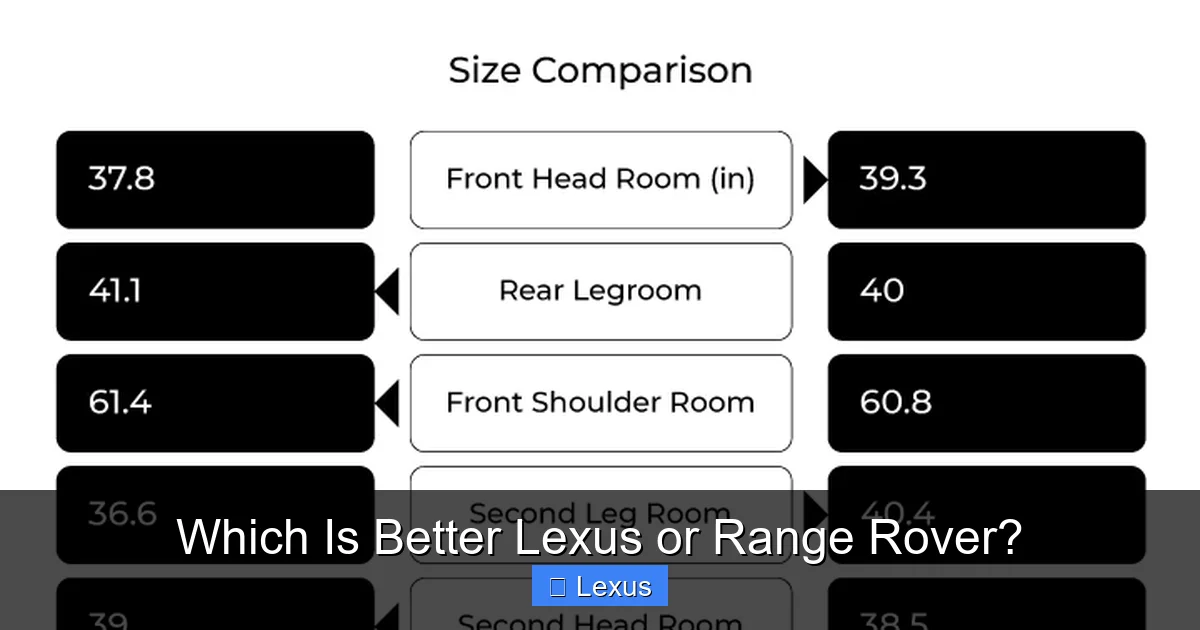
Lexus SUVs are known for their spacious, comfortable cabins. The third-row seating in the GX and LX is usable for adults on short trips, and cargo space is generous. Rear-seat passengers enjoy ample legroom and supportive seating.
Range Rover offers a more luxurious but slightly tighter third row. The focus is on first- and second-row comfort, with power-adjustable seats, heating, ventilation, and massage functions. The panoramic sunroof enhances the sense of openness, though headroom can be limited for taller passengers in the back.
Noise, Vibration, and Harshness (NVH)
Lexus excels in minimizing noise. The brand uses extensive sound insulation, acoustic glass, and active noise cancellation to create a library-quiet cabin. Even at highway speeds, conversations remain easy.
Range Rover is also quiet, but not to the same degree. Wind and road noise are more noticeable, especially in models with larger wheels or sport-tuned suspensions. That said, the overall experience is still far quieter than most non-luxury vehicles.
Reliability and Long-Term Ownership
Lexus: The Reliability King
Lexus consistently ranks at the top of reliability surveys. According to J.D. Power and Consumer Reports, Lexus vehicles are among the least likely to experience mechanical issues. The brand’s reputation for durability is backed by real-world data—many Lexus SUVs remain on the road for decades with proper maintenance.
Common issues are minor, such as infotainment glitches or wear on interior materials. Major repairs like engine or transmission failures are rare. Lexus also offers a comprehensive warranty: 4 years/50,000 miles basic, 6 years/70,000 miles powertrain, and 2 years of complimentary maintenance.
Range Rover: Prestige with a Price
Range Rover’s reliability is more mixed. While build quality has improved in recent years, the brand still lags behind Lexus in long-term dependability. Electrical issues, air suspension problems, and infotainment bugs are more common. According to repair cost databases, Range Rovers often require expensive fixes—sometimes exceeding $2,000 per repair.
The warranty is competitive: 4 years/50,000 miles basic and powertrain coverage. However, out-of-pocket costs can add up quickly, especially after the warranty expires. Owners often recommend purchasing an extended warranty for peace of mind.
Depreciation and Resale Value
Lexus holds its value exceptionally well. The RX, for example, retains over 60% of its value after three years. This strong resale value reduces the total cost of ownership and makes leasing or trading in more favorable.
Range Rover depreciates faster. Some models lose 40-50% of their value in the first three years. While this makes used Range Rovers more affordable, it also means higher monthly payments if you’re leasing or trading in frequently.
Maintenance and Service Costs
Lexus maintenance is straightforward and affordable. Routine services like oil changes, brake pads, and tire rotations are reasonably priced, and parts are widely available. Many owners report spending less than $500 annually on maintenance after the first few years.
Range Rover maintenance is significantly more expensive. Air suspension repairs, electronic system diagnostics, and premium parts drive up costs. Annual maintenance can easily exceed $1,000, and unexpected repairs can be financially painful.
Safety and Driver Assistance
Crash Test Ratings
Both brands perform well in safety tests. The Lexus RX and NX have earned Top Safety Pick+ awards from the IIHS, thanks to strong crash protection and advanced safety features. The Range Rover also scores highly, with good ratings in most categories, though some older models have weaker small overlap front ratings.
Standard Safety Tech
Lexus Safety System+ 3.0 is standard on most models and includes features like:
– Pre-Collision System with Pedestrian Detection
– Lane Departure Alert with Steering Assist
– Dynamic Radar Cruise Control
– Road Sign Assist
Range Rover’s driver assistance suite includes:
– Adaptive Cruise Control with Steering Assist
– Blind Spot Assist
– Lane Keep Assist
– 360-Degree Parking Camera
Both systems are effective, but Lexus’s integration feels more seamless and less intrusive.
Real-World Safety Performance
In everyday driving, Lexus’s conservative tuning helps prevent accidents before they happen. The systems are designed to assist, not override, giving drivers confidence without distraction.
Range Rover’s tech is equally advanced but can feel more complex. The 360-degree camera and parking aids are excellent for maneuvering in tight spaces, but the abundance of alerts can be overwhelming for some users.
Fuel Efficiency and Environmental Impact
Lexus Hybrid Advantage
Lexus offers hybrid versions of nearly every SUV, including the RX 450h, NX 350h, and LX 600h. These models deliver impressive fuel economy—up to 30 mpg combined in the RX 450h—without sacrificing performance. The hybrid system also reduces emissions, making Lexus a more eco-friendly choice.
Range Rover’s Efficiency Efforts
Range Rover has introduced mild-hybrid and plug-in hybrid options, such as the P440e. The P440e can travel up to 48 miles on electric power alone, reducing fuel consumption in city driving. However, overall efficiency still lags behind Lexus hybrids, with combined mpg ratings in the low 20s for most models.
Long-Term Environmental Considerations
For buyers concerned about sustainability, Lexus’s hybrid technology and longer vehicle lifespan reduce environmental impact. Fewer repairs and replacements mean less waste and resource consumption over time.
Range Rover’s larger engines and higher maintenance needs result in a larger carbon footprint. However, the brand is investing in electrification, with plans for a fully electric Range Rover by 2024.
Which Is Right for You?
Choose Lexus If…
– You prioritize reliability and low maintenance costs
– You want a comfortable, quiet daily driver
– You value strong resale value and long-term ownership
– You prefer intuitive technology and straightforward controls
– You drive mostly on paved roads and in urban environments
Choose Range Rover If…
– You want a bold, status-driving vehicle
– You frequently drive off-road or in challenging conditions
– You appreciate cutting-edge luxury and premium materials
– You’re willing to pay more for performance and prestige
– You enjoy advanced tech and customizable driving modes
A Practical Example
Imagine two buyers: Sarah, a busy mom who drives her kids to school and works remotely, values a smooth, reliable SUV that won’t leave her stranded. She chooses the Lexus RX 450h for its hybrid efficiency, quiet cabin, and low repair risk.
Then there’s James, a weekend adventurer who loves camping in remote areas and wants a vehicle that turns heads at the country club. He opts for the Range Rover Sport for its off-road prowess, luxurious interior, and commanding presence.
Both are making smart choices—based on their lifestyles.
Conclusion: It’s Not About Better—It’s About Fit
So, which is better—Lexus or Range Rover? The truth is, neither brand is universally superior. Lexus wins in reliability, comfort, and long-term value. Range Rover excels in luxury, off-road capability, and visual impact. The “better” choice depends entirely on your needs, preferences, and budget.
If you’re looking for a dependable luxury SUV that will serve you well for years with minimal hassle, Lexus is the clear winner. If you’re drawn to adventure, prestige, and cutting-edge design—and are prepared for higher ownership costs—Range Rover is hard to resist.
Ultimately, the best SUV is the one that fits your life. Test drive both, compare ownership costs, and consider how you’ll use the vehicle most. Whether you choose the quiet confidence of Lexus or the bold elegance of Range Rover, you’re getting a vehicle that represents the best of modern luxury.
Frequently Asked Questions
Is Lexus more reliable than Range Rover?
Yes, Lexus consistently ranks higher in reliability studies. Lexus vehicles experience fewer mechanical issues and lower repair costs over time compared to Range Rover.
Can a Range Rover really go off-road?
Absolutely. Range Rover models feature advanced off-road systems like Terrain Response 2, locking differentials, and high ground clearance, making them capable of handling serious trails.
Do Lexus SUVs have good resale value?
Yes, Lexus SUVs retain their value exceptionally well. Models like the RX and GX often retain over 60% of their value after three years, outperforming most competitors.
Are Range Rovers expensive to maintain?
Yes, Range Rovers typically have higher maintenance and repair costs due to complex systems like air suspension and advanced electronics. Extended warranties are often recommended.
Which brand offers better fuel economy?
Lexus, especially with its hybrid models, offers significantly better fuel economy. The RX 450h achieves up to 30 mpg combined, while most Range Rovers average in the low 20s.
Is the Lexus interior as luxurious as Range Rover?
Lexus interiors are high-quality and comfortable, but Range Rover uses more premium materials and offers more customization. Range Rover leans more toward opulence, while Lexus focuses on refined simplicity.