
Does a Maserati Need an Oil Change Every 3

Contrary to popular belief, a Maserati does not require an oil change every 3,000 miles. Modern Maseratis use advanced synthetic oils and engine technology that allow for longer intervals—typically between 7,500 and 10,000 miles, depending on driving conditions. Following the manufacturer’s guidelines and using high-quality oil ensures optimal performance and longevity.
Key Takeaways
- Modern Maseratis use synthetic oil: High-performance synthetic oils last longer and provide better engine protection than conventional oils.
- Oil change intervals are longer: Most Maserati models recommend oil changes every 7,500 to 10,000 miles, not every 3,000.
- Driving conditions matter: Frequent short trips, stop-and-go traffic, or extreme temperatures may require more frequent changes.
- Follow the owner’s manual: Always consult your specific model’s maintenance schedule for accurate guidance.
- Use only approved oils: Maserati requires specific oil grades (like 5W-40 synthetic) to maintain warranty and performance.
- Oil life monitoring systems help: Many newer models have sensors that alert you when an oil change is needed.
- Regular maintenance preserves value: Proper care, including timely oil changes, keeps your Maserati running smoothly and retains resale value.
📑 Table of Contents
- Introduction: The Myth of the 3,000-Mile Oil Change
- Understanding Maserati’s Recommended Oil Change Intervals
- The Role of Synthetic Oil in Modern Maseratis
- How Driving Habits Affect Oil Life
- The Importance of the Oil Life Monitoring System
- DIY vs. Professional Oil Changes: What’s Best for Your Maserati?
- Common Myths About Maserati Oil Changes
- Conclusion: Trust Your Maserati—Not Old Rules
Introduction: The Myth of the 3,000-Mile Oil Change
If you’ve ever owned a car—or even just browsed car forums—you’ve probably heard the old rule: “Change your oil every 3,000 miles.” It’s a piece of advice that’s been passed down for decades, like changing your tires every 50,000 miles or rotating them every 6,000. But when it comes to high-performance luxury vehicles like a Maserati, this rule doesn’t just fall short—it’s completely outdated.
Maserati, the Italian automaker known for its sleek designs, roaring engines, and racing heritage, builds cars that demand precision care. But that doesn’t mean you need to treat your Maserati like a fragile antique. In fact, modern Maserati engines are engineered to run efficiently with advanced synthetic oils that last far longer than the conventional oils of the past. So, does a Maserati need an oil change every 3,000 miles? The short answer is no—and we’re about to explain why.
This article will dive deep into Maserati’s recommended maintenance schedule, the science behind modern engine oils, and how driving habits affect oil life. Whether you’re a proud owner of a Maserati Ghibli, Quattroporte, or Levante, or you’re considering buying one, understanding your car’s oil change needs is essential for performance, reliability, and peace of mind.
Understanding Maserati’s Recommended Oil Change Intervals
Visual guide about Does a Maserati Need an Oil Change Every 3
Image source: boostatv.com
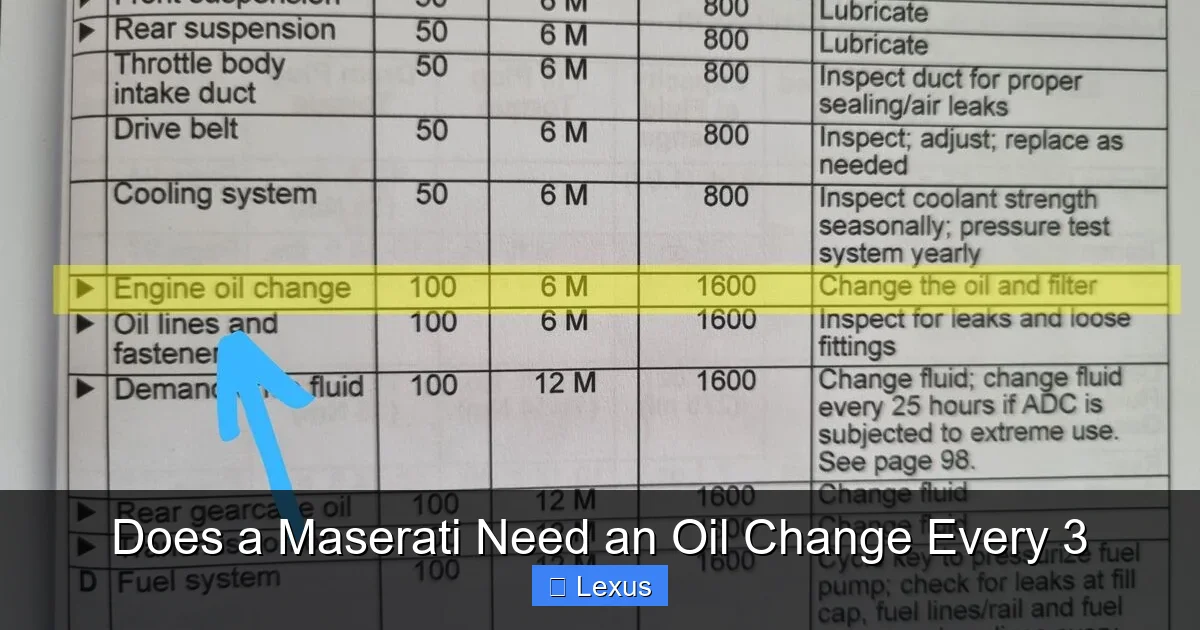
One of the first things any new Maserati owner should do is crack open the owner’s manual. That’s where you’ll find the manufacturer’s official recommendations for oil change intervals. And here’s the key takeaway: Maserati does not recommend changing your oil every 3,000 miles.
Instead, most modern Maserati models—such as the Ghibli, Quattroporte, and Levante—suggest an oil change interval of **7,500 to 10,000 miles**, or once per year, whichever comes first. This is based on normal driving conditions and the use of high-quality synthetic oil.
For example, the 2023 Maserati Ghibli owner’s manual states: “Under normal driving conditions, an oil and filter change is recommended every 10,000 miles or 12 months.” That’s more than three times the distance of the old 3,000-mile rule. And it’s not just Maserati—many luxury and performance brands, including Lexus, BMW, and Mercedes-Benz, have adopted similar intervals.
But why the shift? The answer lies in advancements in both engine technology and oil formulation. Modern engines are built with tighter tolerances, better materials, and more efficient lubrication systems. At the same time, synthetic oils have evolved to resist breakdown, maintain viscosity, and protect against sludge and deposits far longer than conventional oils.
What Counts as “Normal” Driving?
Maserati’s recommended interval assumes “normal” driving conditions. But what does that mean? Normal driving typically includes:
– Highway driving at consistent speeds
– Moderate temperatures (not extreme heat or cold)
– Occasional short trips (but not exclusively)
– Regular use of the vehicle (not sitting idle for long periods)
If your driving habits fall outside this range, you may need to change your oil more frequently. For instance, if you mostly drive in stop-and-go city traffic, take frequent short trips (under 10 minutes), or live in a very hot or cold climate, your oil may degrade faster. In these cases, Maserati recommends reducing the interval to **every 5,000 to 7,500 miles**.
It’s also worth noting that Maserati vehicles equipped with turbocharged engines—like the 3.0L V6 in the Ghibli or the 3.8L V8 in the Quattroporte—may generate more heat and stress on the oil. While synthetic oil handles this well, it’s still wise to monitor oil condition and adjust intervals if needed.
The Role of Synthetic Oil in Modern Maseratis
Visual guide about Does a Maserati Need an Oil Change Every 3
Image source: formuladynamics.com
To understand why Maserati can safely extend oil change intervals, you need to understand the role of synthetic oil. Unlike conventional motor oil, which is derived directly from crude oil, synthetic oil is chemically engineered to deliver superior performance.
Synthetic oils offer several advantages:
– **Higher thermal stability:** They resist breaking down at high temperatures, which is crucial in high-performance engines.
– **Better cold-flow properties:** They flow more easily in cold weather, ensuring faster lubrication during startup.
– **Longer lifespan:** They degrade more slowly, maintaining their protective properties over time.
– **Reduced sludge formation:** They resist oxidation and deposit buildup, keeping the engine cleaner.
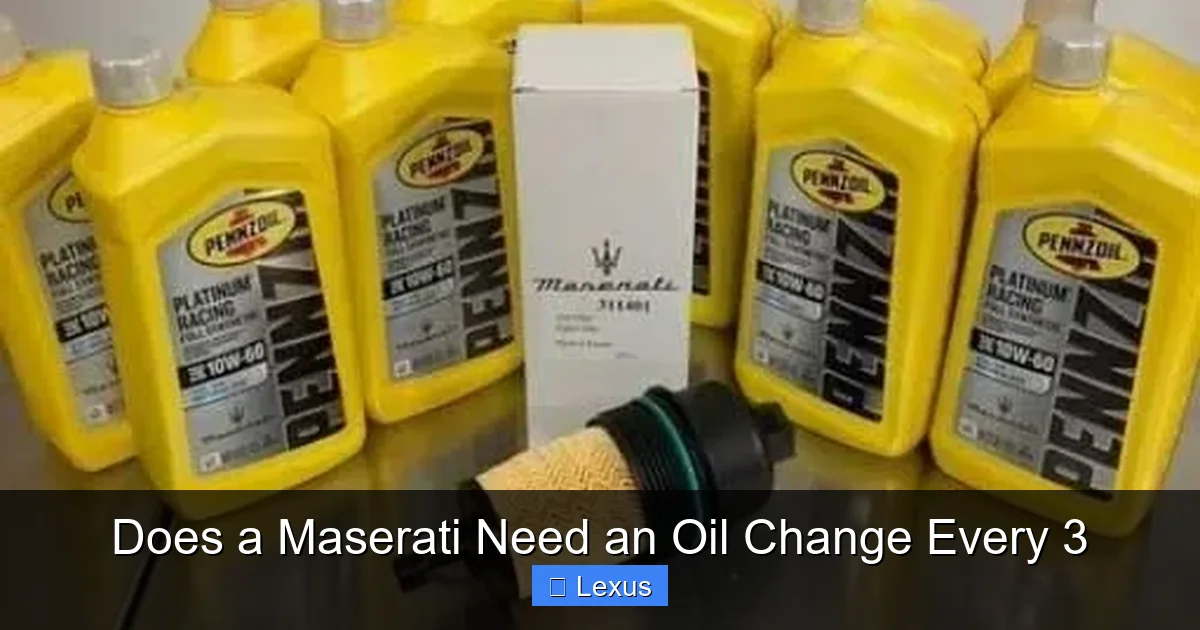
Maserati specifically requires the use of **fully synthetic oil** that meets certain specifications. For most models, this means using a **5W-40 synthetic oil** that meets the **API SN** or **ACEA A3/B4** standards. Some newer models may also require oils that meet Maserati’s own internal specifications, such as **Maserati Genuine Oil** or approved equivalents.
Using the wrong type of oil—such as conventional or semi-synthetic—can void your warranty and potentially damage the engine. That’s why it’s critical to use only oils that meet Maserati’s requirements.
Can You Use Any Synthetic Oil?
While many synthetic oils claim to be “high-performance,” not all are created equal. Maserati engines are precision instruments, and using an oil that doesn’t meet their standards can lead to problems like increased wear, reduced fuel efficiency, or even engine failure.
For example, some aftermarket synthetic oils may not have the right additive package to handle the high shear forces in a Maserati’s turbocharged engine. Others may not maintain viscosity under extreme heat. That’s why Maserati recommends using only oils that are explicitly approved for your vehicle.
You can usually find a list of approved oils in your owner’s manual or by contacting a Maserati service center. Popular brands that meet Maserati’s standards include:
– **Mobil 1 5W-40 European Car Formula**
– **Castrol EDGE 5W-40**
– **Liqui Moly Leichtlauf High Tech 5W-40**
These oils are formulated specifically for European performance engines and provide the protection your Maserati needs.
How Driving Habits Affect Oil Life
Visual guide about Does a Maserati Need an Oil Change Every 3
Image source: dealerinspire-image-library-prod.s3.us-east-1.amazonaws.com
Even with the best synthetic oil and a well-maintained engine, your driving habits play a huge role in how long your oil lasts. Think of it like this: your car’s engine is like an athlete. If you’re training for a marathon, you need the right fuel, rest, and recovery. If you’re sprinting every day without proper care, you’ll burn out faster.
The same logic applies to your Maserati. Here’s how different driving conditions can impact oil life:
Short Trips and City Driving
If you mostly drive short distances—say, less than 10 miles at a time—your engine may never reach optimal operating temperature. This leads to moisture and fuel dilution in the oil, which can cause sludge and reduce lubrication effectiveness.
City driving with frequent stops and starts also increases engine stress. The constant acceleration and braking put more load on the engine, generating heat and wearing down components faster.
In these cases, even with synthetic oil, you may need to change your oil every **5,000 to 7,500 miles** instead of waiting for 10,000.
Highway and Long-Distance Driving
On the flip side, highway driving at steady speeds allows the engine to run efficiently and reach optimal temperature. This helps burn off contaminants and keeps the oil in better condition.
If you regularly take long trips or use your Maserati for road trips, you’re more likely to hit the 10,000-mile mark without issues. In fact, consistent highway driving is one of the best things you can do to extend oil life.
Extreme Temperatures
Living in a very hot or very cold climate also affects oil performance. In hot weather, oil can oxidize faster, leading to sludge and reduced viscosity. In cold climates, thick oil can struggle to flow during startup, increasing wear.
If you live in a desert region like Arizona or a cold area like Minnesota, consider changing your oil closer to the 7,500-mile mark, even if you’re not driving aggressively.
Towing and Performance Driving
If you use your Maserati for towing, track days, or spirited driving, your engine is under much greater stress. High RPMs, heavy loads, and sustained heat can break down oil faster.
In these cases, Maserati recommends more frequent oil changes—possibly as often as every **3,000 to 5,000 miles**. While this brings us closer to the old rule, it’s not because the car “needs” it—it’s because of the extreme conditions.
The Importance of the Oil Life Monitoring System
Many newer Maserati models come equipped with an **oil life monitoring system**—a smart feature that tracks engine operating conditions and calculates when an oil change is needed. This system takes into account factors like:
– Engine temperature
– RPM levels
– Driving duration
– Ambient temperature
– Mileage
Instead of relying on a fixed mileage interval, the system gives you a percentage-based readout (e.g., “Oil Life: 40%”) and alerts you when it’s time for a change.
This is a game-changer for Maserati owners. It means you don’t have to guess or follow a rigid schedule. The car tells you when it’s ready.
For example, if you mostly drive on highways in mild weather, the system might let you go the full 10,000 miles. But if you’ve been doing a lot of city driving or towing, it might alert you at 6,000 miles.
How to Check Oil Life in Your Maserati
The process varies slightly by model, but here’s a general guide:
1. Turn the ignition to “ON” (do not start the engine).
2. Use the steering wheel controls to navigate to the “Vehicle Info” or “Settings” menu.
3. Select “Oil Life” or “Maintenance.”
4. The system will display the remaining oil life percentage.
If the oil life is below 15%, it’s time to schedule a service. Don’t wait until it hits 0%—this could lead to reduced engine protection.
Can You Reset the Oil Life Monitor?
Yes, but only after an oil change. Resetting it prematurely can lead to missed maintenance. The reset procedure is usually outlined in the owner’s manual and may require a specific sequence of button presses or a visit to a service center.
Some Maserati models also allow you to reset the monitor using a diagnostic tool, but it’s best to have a certified technician do this during a service visit.
DIY vs. Professional Oil Changes: What’s Best for Your Maserati?
Now that we’ve covered the “when” and “why” of oil changes, let’s talk about the “how.” Should you change your Maserati’s oil yourself, or take it to a professional?
While DIY oil changes are possible, they come with risks—especially for a high-performance vehicle like a Maserati.
The Case for Professional Service
Maserati engines are complex, and even small mistakes can lead to big problems. A professional service center offers several advantages:
– **Certified technicians:** Trained specifically on Maserati vehicles.
– **Genuine parts:** Use of OEM oil filters and approved synthetic oils.
– **Proper disposal:** Environmentally responsible handling of used oil.
– **Comprehensive inspection:** Technicians can spot other issues during the service.
– **Warranty protection:** Keeps your factory warranty valid.
Most importantly, a professional service ensures that the oil is changed correctly—using the right type, the right amount, and the right filter. Maserati engines often require precise oil levels, and overfilling or underfilling can cause damage.
Can You Do It Yourself?
If you’re experienced with car maintenance and have the right tools, a DIY oil change is possible. But you’ll need:
– The correct synthetic oil (5W-40, API SN or ACEA A3/B4)
– A high-quality oil filter (OEM or equivalent)
– A torque wrench to tighten the drain plug properly
– An oil catch pan and funnel
– Gloves and safety glasses
You’ll also need to reset the oil life monitor afterward, which may require a scan tool.
Keep in mind that DIY oil changes may not be covered under warranty if something goes wrong. And if you make a mistake—like stripping the drain plug or using the wrong oil—it could cost thousands to repair.
Cost Comparison
A professional oil change at a Maserati dealership typically costs between **$150 and $250**, depending on the model and location. Independent shops may charge less, but make sure they use approved oils and filters.
A DIY oil change costs around **$50 to $80** for oil and a filter. While it’s cheaper, the savings may not be worth the risk—especially for a car that costs $70,000 or more.
Common Myths About Maserati Oil Changes
Let’s clear up some misconceptions that still circulate among car owners.
Myth 1: “All Cars Need Oil Changes Every 3,000 Miles”
This rule was created in the 1950s, when engines and oils were far less advanced. Today, with synthetic oils and modern engines, most manufacturers—including Maserati—recommend much longer intervals.
Myth 2: “Changing Oil Early Is Always Better”
While it’s true that clean oil is good, changing it too often is a waste of money and resources. Modern synthetic oils are designed to last. Over-maintaining your car doesn’t improve performance—it just increases costs.
Myth 3: “Any Synthetic Oil Is Fine”
As we’ve discussed, Maserati requires specific oil specifications. Using the wrong oil can void your warranty and damage the engine.
Myth 4: “You Can’t Go Past 3,000 Miles Without Risk”
If your Maserati recommends 10,000-mile intervals, going to 7,500 or even 8,000 miles is perfectly safe—especially with synthetic oil and normal driving.
Conclusion: Trust Your Maserati—Not Old Rules
So, does a Maserati need an oil change every 3,000 miles? The answer is a clear and confident **no**. Thanks to advanced engine technology and high-performance synthetic oils, Maserati vehicles are designed to go much longer between oil changes—typically 7,500 to 10,000 miles under normal conditions.
That said, your driving habits, climate, and usage patterns all play a role. If you’re doing a lot of city driving, short trips, or performance driving, you may need to change your oil more often. And always use only approved synthetic oils and filters.
The best approach? Follow your owner’s manual, pay attention to your oil life monitor, and have your Maserati serviced by qualified professionals. By doing so, you’ll keep your Italian masterpiece running smoothly, protect your investment, and enjoy every mile behind the wheel.
Remember: your Maserati isn’t just a car—it’s a statement. Treat it right, and it will reward you with thrilling performance, timeless style, and years of driving pleasure.
Frequently Asked Questions
How often should I change the oil in my Maserati?
Most modern Maserati models recommend an oil change every 7,500 to 10,000 miles or once per year, whichever comes first. This assumes normal driving conditions and the use of approved synthetic oil.
Can I use conventional oil in my Maserati?
No. Maserati requires fully synthetic oil that meets specific standards (like 5W-40, API SN, or ACEA A3/B4). Using conventional oil can void your warranty and damage the engine.
What happens if I don’t change my Maserati’s oil on time?
Over time, old oil loses its ability to lubricate and protect the engine. This can lead to increased wear, sludge buildup, reduced performance, and potentially costly repairs.
Does driving style affect oil change intervals?
Yes. Frequent short trips, stop-and-go traffic, towing, or extreme temperatures can degrade oil faster. In these cases, change your oil every 5,000 to 7,500 miles.
Can I reset the oil life monitor myself?
Some Maserati models allow you to reset the monitor using the dashboard controls, but others require a scan tool. Check your owner’s manual or consult a service center.
Is it worth paying for a professional oil change?
Yes. Professional service ensures the correct oil and filter are used, the system is reset properly, and your warranty remains valid. For a high-value car like a Maserati, it’s a smart investment.
