
Tire Size 305 in Inches

Tire size 305 in inches refers to a tire width of approximately 12 inches, commonly used on trucks, SUVs, and performance vehicles. This size offers a balance of stability, traction, and ride comfort, making it ideal for both off-road adventures and highway driving.
Key Takeaways
- Tire size 305 means 305 millimeters in width: This metric measurement converts to roughly 12 inches, making it one of the wider tire sizes available for consumer vehicles.
- Commonly used on trucks and SUVs: Vehicles like the Ford F-150, Chevrolet Silverado, and Jeep Wrangler often come equipped with 305-width tires for enhanced grip and load capacity.
- Aspect ratio and rim diameter matter: A full tire size includes more than just width—look for numbers like 305/60R18 to understand sidewall height and wheel size.
- Improved traction and stability: Wider tires like the 305 provide better contact with the road, improving handling, especially in off-road or high-torque situations.
- Fuel efficiency may decrease slightly: Due to increased rolling resistance, 305 tires can reduce gas mileage by 1–3 MPG compared to narrower options.
- Proper inflation is critical: Always check tire pressure regularly to maintain performance, safety, and tire lifespan.
- Consider load index and speed rating: These ratings ensure the tire can handle your vehicle’s weight and intended driving speeds safely.
📑 Table of Contents
- What Does Tire Size 305 in Inches Really Mean?
- Breaking Down the 305 Tire Size: Width, Height, and Rim Fit
- Vehicles That Use 305 Tires: Trucks, SUVs, and More
- Pros and Cons of 305 Tires: What You Need to Know
- How to Convert 305 Tire Size to Inches: A Simple Guide
- Choosing the Right 305 Tire: Brand, Type, and Driving Needs
- Installation, Maintenance, and Safety Tips
- Conclusion: Is Tire Size 305 Right for You?
What Does Tire Size 305 in Inches Really Mean?
When you see a tire labeled “305,” it’s easy to assume it refers to inches—but that’s not quite accurate. In reality, the number 305 is a metric measurement representing the tire’s width in millimeters. So, tire size 305 in inches translates to approximately 12 inches wide (since 305 mm ÷ 25.4 = ~12.01 inches). This makes it one of the broader tire widths available for consumer vehicles, especially in the light truck and SUV categories.
But here’s the thing: tire sizing isn’t just about width. A complete tire size includes three key numbers, like 305/60R18. The first number (305) is the width in millimeters. The second (60) is the aspect ratio—the height of the sidewall as a percentage of the width. The third (18) is the rim diameter in inches. So while “305” grabs attention for its width, the full size gives you the complete picture of how the tire fits and performs on your vehicle.
Understanding this helps you make smarter decisions when shopping for tires. Whether you’re upgrading for better off-road capability or simply replacing worn-out rubber, knowing what 305 means in real-world terms—like inches—helps you visualize how the tire will look and feel on your ride.
Breaking Down the 305 Tire Size: Width, Height, and Rim Fit
Visual guide about Tire Size 305 in Inches
Image source: tireblogger.com
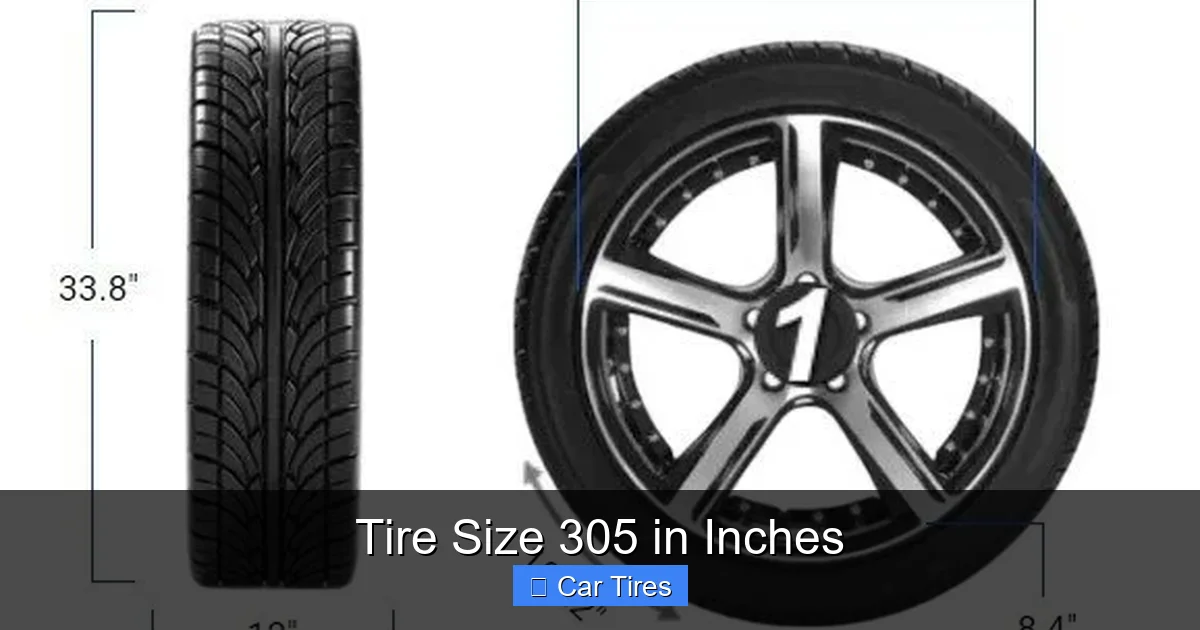
Let’s dive deeper into what makes a 305 tire tick. As mentioned, the 305 refers to the tread width—305 millimeters, or about 12 inches. That’s a substantial width, especially when compared to standard passenger car tires, which often range from 185 to 245 mm. This extra width gives the tire a larger contact patch with the road, which translates to better grip, improved cornering, and enhanced stability—especially at higher speeds or under heavy loads.
But width alone doesn’t define performance. The aspect ratio plays a huge role. For example, a 305/60R18 tire has a sidewall height that’s 60% of 305 mm, which equals 183 mm (or about 7.2 inches). Add that to the rim diameter (18 inches), and you get an overall tire diameter of roughly 32.4 inches. That’s a tall tire—great for off-roading, where ground clearance and shock absorption matter, but it might affect speedometer accuracy if you’re not careful.
Then there’s the rim diameter. A 305/60R18 tire is designed for an 18-inch wheel. If you try to mount it on a 17-inch or 19-inch rim, it simply won’t fit. Always match the last number in the tire size to your wheel size. Mismatched rims can lead to unsafe driving conditions, poor handling, and even tire failure.
Why Width Matters: The 12-Inch Advantage
So why go with a 12-inch-wide tire? The answer lies in physics. A wider tire spreads the vehicle’s weight over a larger area, reducing pressure per square inch. This improves traction, especially on loose surfaces like dirt, sand, or snow. It also helps with braking performance—more rubber on the road means shorter stopping distances.
For truck and SUV owners, this is a big deal. Whether you’re towing a trailer, hauling gear, or driving through muddy trails, a 305-width tire gives you confidence. It’s not just about looking tough (though let’s be honest—it does look awesome). It’s about function. The extra width helps distribute load more evenly, reducing the risk of tire blowouts under stress.
But there’s a trade-off. Wider tires create more rolling resistance, which can slightly reduce fuel economy. They may also produce more road noise and feel stiffer on smooth pavement. Still, for many drivers, the benefits outweigh the drawbacks—especially if you prioritize performance over a few extra miles per gallon.
Calculating Overall Diameter: A Real-World Example
Let’s say you’re considering a 305/65R17 tire. Here’s how to calculate its overall diameter:
– Width: 305 mm
– Aspect ratio: 65% → sidewall height = 305 × 0.65 = 198.25 mm
– Convert to inches: 198.25 mm ÷ 25.4 ≈ 7.8 inches
– Rim diameter: 17 inches
– Total diameter = (7.8 × 2) + 17 = 32.6 inches
That’s a tall tire—over 2.7 feet in diameter. Compare that to a typical passenger car tire at around 26–28 inches, and you see why 305 tires are favored for lifted trucks and off-road builds. The extra height gives you more ground clearance, which is crucial when navigating rocks, ruts, or deep potholes.
But remember: changing tire diameter affects your speedometer. If your vehicle was calibrated for a 30-inch tire and you switch to a 32.6-inch one, your speedometer will read slower than your actual speed. At 60 mph, you might actually be going closer to 65 mph. This can lead to speeding tickets or unsafe driving. Always recalibrate your speedometer after a significant tire size change.
Vehicles That Use 305 Tires: Trucks, SUVs, and More
Visual guide about Tire Size 305 in Inches
Image source: stocktonwheel.com
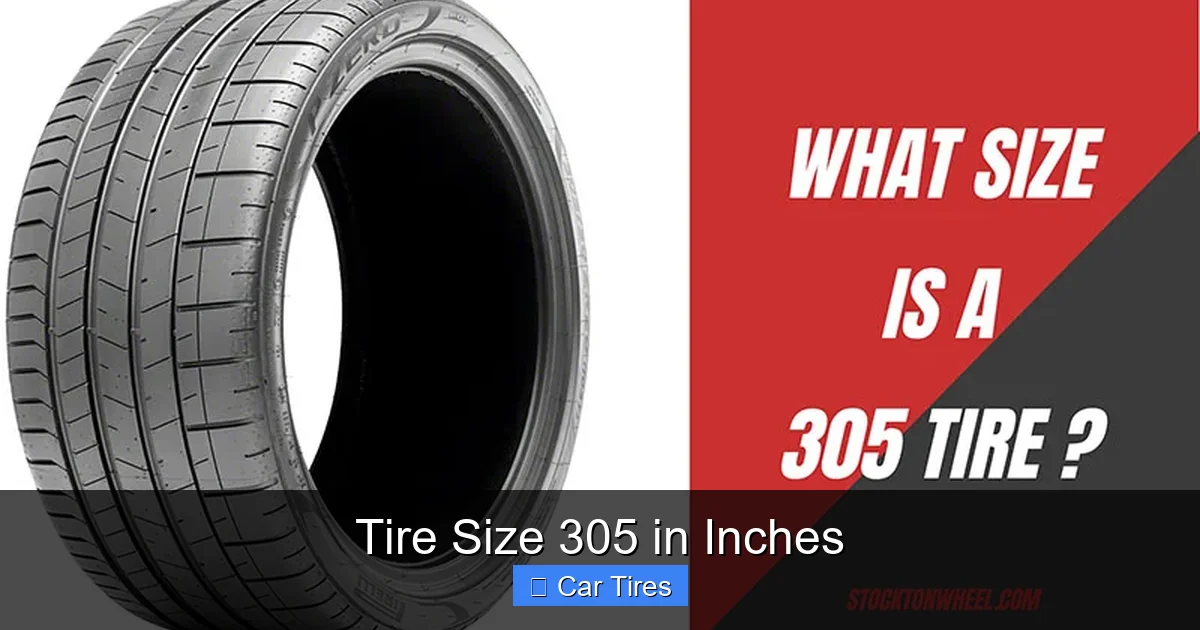
You’ll commonly find 305-width tires on full-size trucks, heavy-duty SUVs, and performance-oriented vehicles. These aren’t your average commuter cars—they’re built for power, payload, and adventure. Let’s look at some real-world examples.
The Ford F-150, one of America’s best-selling trucks, often comes with 305/65R18 or 305/55R20 tires in its higher trims or off-road packages like the FX4. These tires give the F-150 a commanding presence and improved off-road capability. Similarly, the Chevrolet Silverado 1500 and GMC Sierra offer 305-width options, especially in the AT4 and ZR2 trims designed for rugged terrain.
Jeep enthusiasts love 305 tires for the Wrangler and Gladiator. A 305/70R17 tire, for instance, is a popular upgrade for rock crawling and trail riding. It provides excellent sidewall flex and grip, essential for navigating uneven terrain. Even luxury SUVs like the Cadillac Escalade and Lincoln Navigator sometimes roll on 305-width tires, blending comfort with capability.
Performance Cars and 305 Tires: A Surprising Match
While 305 tires are most associated with trucks, they’re also used on high-performance cars. Take the Dodge Challenger SRT Hellcat or the Ford Mustang Shelby GT500. These muscle cars often come with 305/35R20 rear tires to handle their massive horsepower. The wide rear tires help put all that power to the ground without spinning out.
In racing and track driving, tire width is critical. More rubber means better grip during hard acceleration, sharp turns, and emergency braking. That’s why you’ll see 305-width tires on dragsters, drift cars, and even some supercars. It’s not just about looks—it’s about maximizing performance.
But remember: performance tires wear faster and may not be ideal for daily driving in harsh weather. If you’re using 305 tires on a sports car, consider seasonal changes or dedicated track tires for optimal results.
Off-Road and Overlanding: Why 305 Tires Shine
For overlanders and off-road adventurers, 305 tires are a game-changer. The extra width and taller sidewalls provide better flotation over sand, mud, and snow. They also absorb impacts better, protecting your rims from rocks and debris.
Many overland builds start with a 305/70R17 or 305/60R18 tire paired with a lift kit. This combo gives you the clearance and traction needed for remote trails. Plus, the larger contact patch improves braking on loose surfaces—something that can literally save your life in the backcountry.
Just be sure to adjust your tire pressure when off-roading. Lowering PSI (to around 15–20 psi) increases the tire’s footprint and improves grip. But don’t go too low, or you risk bead separation. Always reinflate to recommended levels before hitting the highway.
Pros and Cons of 305 Tires: What You Need to Know
Visual guide about Tire Size 305 in Inches
Image source: tireblogger.com
Like any tire size, 305-width tires come with advantages and trade-offs. Let’s break them down so you can decide if they’re right for your vehicle and driving style.
Advantages of 305 Tires
Enhanced Traction and Stability: The wider footprint gives you better grip on dry, wet, and loose surfaces. This is especially helpful when towing, hauling, or driving in adverse weather.
Improved Off-Road Performance: Taller sidewalls and wider treads make 305 tires ideal for rock crawling, mud bogging, and sand driving. They flex more and absorb shocks better than narrower tires.
Better Load Capacity: Trucks and SUVs often carry heavy loads. 305 tires are built to handle higher weight ratings, reducing the risk of blowouts.
Aggressive Look: Let’s face it—305 tires make your vehicle look tough. They fill out the wheel wells and give a bold, commanding stance.
Smoother Ride (in some cases): Depending on the aspect ratio, taller sidewalls can absorb road imperfections better, leading to a more comfortable ride—especially on rough terrain.
Disadvantages of 305 Tires
Reduced Fuel Economy: Wider tires create more drag and rolling resistance. Expect a drop of 1–3 MPG, especially in city driving or at highway speeds.
Increased Road Noise: The larger contact patch can generate more noise, particularly on coarse pavement. Some drivers notice a louder hum or rumble.
Higher Cost: 305 tires are larger and use more materials, so they’re generally more expensive than standard sizes. Expect to pay $200–$400 per tire, depending on brand and type.
Speedometer Inaccuracy: As mentioned earlier, changing tire diameter affects your speedometer. Always recalibrate after installation.
Potential Fitment Issues: Not all vehicles can accommodate 305 tires without modifications. You may need a lift kit, fender trimming, or suspension upgrades to avoid rubbing.
Tips for Maximizing 305 Tire Performance
To get the most out of your 305 tires, follow these practical tips:
– Check tire pressure weekly: Proper inflation ensures even wear, better fuel economy, and safer handling. Use a quality gauge and follow the manufacturer’s PSI recommendation (usually found on the driver’s door jamb).
– Rotate tires every 5,000–7,000 miles: This promotes even tread wear and extends tire life.
– Align your wheels: Misaligned wheels cause uneven wear and poor handling. Get an alignment after installing new tires.
– Balance your tires: Unbalanced tires lead to vibrations and premature wear. Have them balanced when mounted.
– Inspect for damage regularly: Look for cuts, bulges, or embedded objects, especially after off-road trips.
– Use the right tire type: Choose all-terrain, mud-terrain, or highway tires based on your driving needs. Don’t use mud tires for daily commuting—they wear fast and are noisy.
How to Convert 305 Tire Size to Inches: A Simple Guide
Converting tire size 305 to inches isn’t just about width. To get the full picture, you need to calculate the overall diameter, sidewall height, and circumference. Here’s how to do it step by step.
Step 1: Convert Width to Inches
Start with the width: 305 millimeters. To convert to inches, divide by 25.4 (since 1 inch = 25.4 mm).
305 ÷ 25.4 = 12.01 inches
So, the tire is about 12 inches wide.
Step 2: Calculate Sidewall Height
Next, use the aspect ratio. For a 305/60R18 tire, the aspect ratio is 60%. Multiply the width by this percentage:
305 mm × 0.60 = 183 mm
Convert to inches: 183 ÷ 25.4 ≈ 7.2 inches
This is the height of one sidewall.
Step 3: Find Overall Diameter
Add the sidewall height (top and bottom) to the rim diameter:
(7.2 × 2) + 18 = 32.4 inches
So, the total diameter is about 32.4 inches.
Step 4: Calculate Circumference (Optional)
Circumference helps estimate speed and distance. Use the formula: C = π × diameter
C = 3.1416 × 32.4 ≈ 101.8 inches
This means the tire travels about 101.8 inches per revolution.
Why This Matters
Knowing these measurements helps you compare tire sizes, understand speedometer changes, and ensure compatibility with your vehicle. For example, if your stock tires are 30 inches in diameter and you switch to 32.4-inch 305 tires, your speedometer will read about 8% slow. At 60 mph, you’re actually going closer to 65 mph.
Always consult your vehicle’s owner manual or a tire professional before making significant size changes. Some vehicles have strict limits on tire diameter to avoid interference with fenders, suspension, or ABS sensors.
Choosing the Right 305 Tire: Brand, Type, and Driving Needs
Not all 305 tires are created equal. The right choice depends on your vehicle, driving habits, and environment. Here’s how to pick the best one for you.
All-Terrain vs. Mud-Terrain vs. Highway Tires
– All-Terrain (A/T): Best for mixed driving—highway, gravel, light trails. Examples: BFGoodrich All-Terrain T/A KO2, Goodyear Wrangler DuraTrac. Great balance of comfort, durability, and off-road ability.
– Mud-Terrain (M/T): Designed for extreme off-roading. Aggressive tread, deep lugs. Examples: Nitto Trail Grappler, Mickey Thompson Baja Boss. Noisy on pavement but unbeatable in mud and rocks.
– Highway (H/T): Optimized for smooth, quiet rides on paved roads. Examples: Michelin Defender LTX, Bridgestone Dueler H/L. Lower rolling resistance, better fuel economy, but limited off-road capability.
Top Brands for 305 Tires
– BFGoodrich: Known for rugged durability and off-road performance. The KO2 is a favorite among truck owners.
– Goodyear: Offers reliable all-terrain and highway tires with good tread life.
– Nitto: Popular in the off-road and performance communities. Great for aggressive tread designs.
– Cooper: Affordable without sacrificing quality. The Discoverer series is a solid choice.
– Michelin: Premium tires with excellent longevity and comfort, ideal for highway driving.
Matching Tires to Your Driving Style
– Daily Commuter: Choose all-terrain or highway tires. Prioritize comfort, noise, and fuel efficiency.
– Weekend Warrior: Go for all-terrain tires. They handle both pavement and trails well.
– Off-Road Enthusiast: Mud-terrain tires are your best bet. Be ready for more noise and faster wear.
– Towing and Hauling: Look for tires with a high load index (120+) and reinforced sidewalls.
Seasonal Considerations
If you live in a snowy or icy region, consider winter-rated 305 tires or dedicated snow tires. All-terrain tires with the Three-Peak Mountain Snowflake (3PMSF) symbol offer improved winter performance. Avoid using summer performance tires in cold weather—they harden and lose grip.
Installation, Maintenance, and Safety Tips
Installing 305 tires isn’t just about mounting them on rims. Proper installation and maintenance are key to safety and performance.
Professional Installation Is a Must
Always have your tires installed by a certified technician. They’ll ensure proper mounting, balancing, and torque specs. Incorrect installation can lead to vibrations, uneven wear, or even tire separation at high speeds.
Check for Clearance Issues
Before installing, make sure the tires don’t rub against fenders, suspension, or brake lines. Turn the steering wheel lock-to-lock and check for interference. If needed, install a lift kit or trim fenders.
Monitor Tire Pressure
Use a digital tire pressure gauge and check pressure when tires are cold (before driving). Underinflated tires wear faster and overheat; overinflated tires reduce traction and wear unevenly.
Inspect Tread Depth
Use a tread depth gauge or the penny test (insert a penny into the tread with Lincoln’s head upside down—if you see the top of his head, it’s time to replace). Most 305 tires start with 12/32” to 15/32” of tread.
Watch for Uneven Wear
Cupping, feathering, or shoulder wear can indicate alignment, balance, or suspension issues. Address them early to avoid costly repairs.
Conclusion: Is Tire Size 305 Right for You?
Tire size 305 in inches—about 12 inches wide—offers a compelling mix of performance, capability, and style. Whether you drive a truck, SUV, or high-performance car, these tires can enhance traction, stability, and off-road prowess. But they’re not without trade-offs: higher cost, reduced fuel economy, and potential fitment challenges.
The key is matching the tire to your needs. If you tow, haul, or explore off-road, 305 tires are a smart investment. If you’re a city commuter focused on fuel efficiency, a narrower tire might serve you better.
Always consult your vehicle’s specifications, consider professional advice, and prioritize safety. With the right 305 tires, you’ll enjoy a smoother, more confident ride—whether you’re cruising the highway or conquering the trail.
Frequently Asked Questions
What does 305 mean on a tire?
The number 305 refers to the tire’s width in millimeters, which is approximately 12 inches. It’s part of a larger size code like 305/60R18, which includes aspect ratio and rim diameter.
Can I put 305 tires on my truck without a lift?
It depends on your truck model and suspension. Some trucks can fit 305 tires with minor modifications, but others may require a lift kit or fender trimming to avoid rubbing.
Do 305 tires reduce fuel economy?
Yes, due to increased rolling resistance, 305 tires can reduce fuel efficiency by 1–3 MPG compared to narrower tires, especially in city driving.
Are 305 tires good for off-roading?
Absolutely. Their wide footprint and tall sidewalls provide excellent traction, flotation, and shock absorption on dirt, mud, sand, and rocks.
How often should I rotate 305 tires?
Rotate them every 5,000 to 7,000 miles to promote even tread wear and extend tire life. Follow your vehicle manufacturer’s recommendations.
What’s the difference between 305/60R18 and 305/65R17?
The first has a shorter sidewall (60% of 305 mm) and fits an 18-inch rim, while the second has a taller sidewall (65%) and fits a 17-inch rim. The 305/65R17 is about 0.8 inches taller overall.
