
How Tall Is a 265/60r20 Tire

Understanding tire size is essential for performance, safety, and compatibility. A 265/60R20 tire stands approximately 32.5 inches tall and is a popular choice for trucks and SUVs. This guide breaks down the math, real-world fitment, and why it matters.
Key Takeaways
- Exact Height: A 265/60R20 tire has an overall diameter of about 32.5 inches (825 mm), making it ideal for large vehicles needing ground clearance.
- Width Matters: The “265” refers to the tire’s width—265 millimeters—which affects grip, stability, and fuel efficiency.
- Sidewall Ratio: The “60” is the aspect ratio—60% of the width—meaning a sidewall height of roughly 159 mm or 6.26 inches.
- Rim Compatibility: Designed for 20-inch rims, this size fits many full-size trucks, SUVs, and lifted vehicles without modifications.
- Speedometer Accuracy: Installing larger or smaller tires than stock can throw off your speedometer; recalibration may be needed.
- Load & Speed Ratings: Always check load index and speed rating (e.g., 112H) to ensure safe performance under real-world conditions.
- Seasonal Considerations: While size is fixed, tread pattern and compound determine whether it’s all-season, winter, or off-road ready.
📑 Table of Contents
- How Tall Is a 265/60R20 Tire? A Complete Breakdown
- Decoding the Tire Code: What Does 265/60R20 Mean?
- Why Tire Height Matters for Your Vehicle
- Real-World Fitment: Which Vehicles Use 265/60R20 Tires?
- Comparing 265/60R20 to Other Common Tire Sizes
- Installation Tips and Common Mistakes to Avoid
- Conclusion: Is the 265/60R20 Right for You?
How Tall Is a 265/60R20 Tire? A Complete Breakdown
If you’ve ever shopped for tires—especially for a truck, SUV, or lifted vehicle—you’ve probably stared at those cryptic numbers like “265/60R20” and wondered what they actually mean. More importantly, you might be asking: *How tall is a 265/60R20 tire?* The short answer? About 32.5 inches from tread to tread when mounted on a 20-inch rim. But the real story goes much deeper than that.
Tire sizing isn’t just random digits—it’s a precise engineering code that tells you everything from how much rubber meets the road to how your vehicle handles bumps, corners, and highway speeds. Whether you’re upgrading for off-road capability, improving ride comfort, or simply replacing worn-out rubber, knowing your tire’s true dimensions helps you avoid costly mistakes. A mismatched tire can affect braking distance, fuel economy, speedometer accuracy, and even your suspension system.
In this guide, we’ll walk you through exactly how to calculate the height of a 265/60R20 tire, explain what each number in the code means, compare it to other common sizes, and show you why this particular size has become a favorite among Ford F-150 owners, Chevy Silverado drivers, and Jeep enthusiasts alike. By the end, you’ll not only know the answer to “how tall is a 265/60R20 tire,” but also whether it’s the right fit for your ride.
Decoding the Tire Code: What Does 265/60R20 Mean?
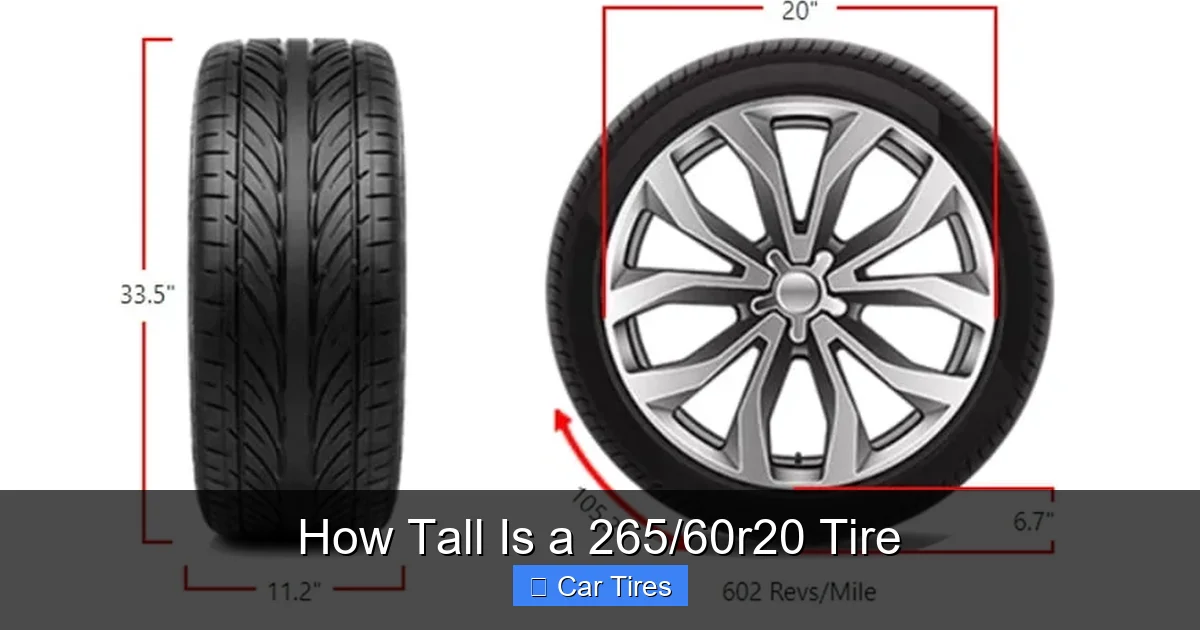
Visual guide about How Tall Is a 265/60r20 Tire
Image source: tiresalley.com
Let’s start by cracking the code. The alphanumeric string “265/60R20” follows the standard P-Metric system used globally (except in some European markets). Each part tells you something specific:
– **265**: This is the tire’s section width in millimeters—the distance from one sidewall to the other when mounted and inflated. So, a 265 mm wide tire is about 10.4 inches across.
– **60**: This is the aspect ratio—the height of the sidewall expressed as a percentage of the width. In this case, 60% of 265 mm = ~159 mm (or ~6.26 inches).
– **R**: Stands for radial construction, which means the tire’s internal plies run radially across the tire (the standard for modern vehicles).
– **20**: The diameter of the wheel (rim) in inches that the tire is designed to fit.
Now, to find the overall height—or diameter—of the tire, you need to do a little math. Here’s the formula:
> **Tire Diameter = (Sidewall Height × 2) + Rim Diameter**
First, convert the sidewall height to inches:
159 mm ÷ 25.4 = ~6.26 inches
Then double it (because there’s a sidewall on top and bottom):
6.26 × 2 = 12.52 inches
Add the rim diameter:
12.52 + 20 = **32.52 inches**
So, a 265/60R20 tire is approximately **32.5 inches tall**. That’s roughly the height of a standard office chair or a medium-sized dog standing on its hind legs!
This measurement is crucial because it affects your vehicle’s gearing, ground clearance, and even how your odometer reads miles driven. If you swap from a stock 31-inch tire to a 32.5-inch one without adjusting your speedometer, you could be driving faster than you think—and unknowingly racking up extra miles on your odometer.
Why Tire Height Matters for Your Vehicle
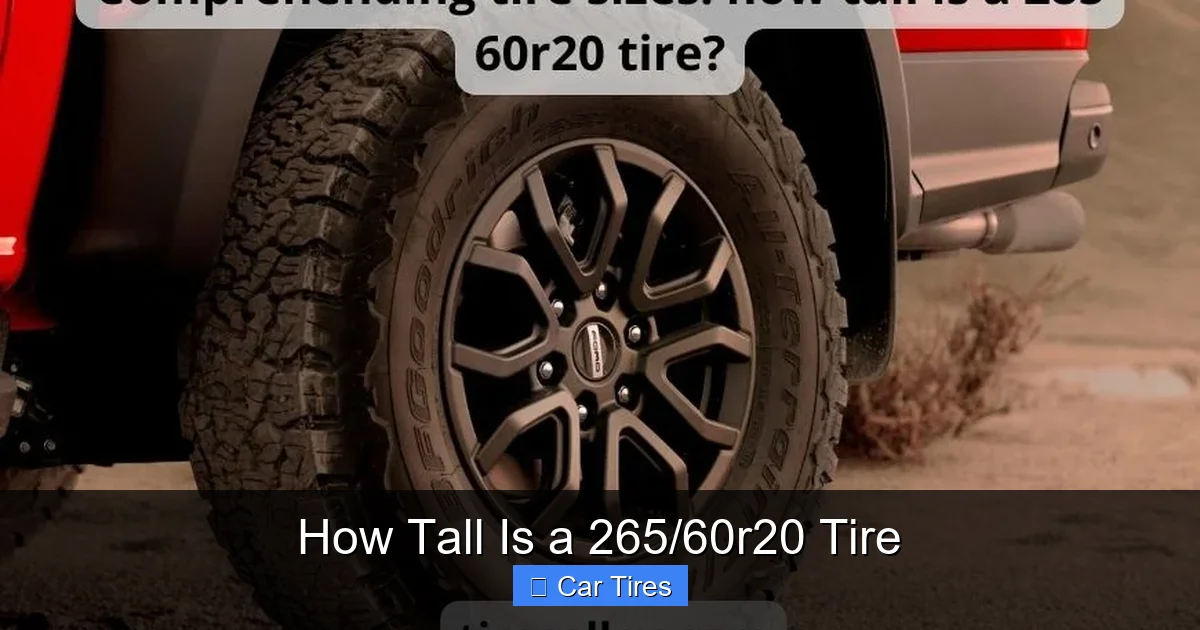
Visual guide about How Tall Is a 265/60r20 Tire
Image source: tiresalley.com
You might think tire height is just a number—but it’s actually a key factor in how your vehicle performs, feels, and functions. Let’s explore why that 32.5-inch measurement isn’t just trivia.
Ground Clearance and Off-Road Capability
For truck and SUV owners, especially those who venture off the pavement, ground clearance is everything. A taller tire like the 265/60R20 gives you nearly an extra inch of clearance compared to a typical 31-inch tire. That might not sound like much, but over rocks, ruts, or deep snow, it can mean the difference between getting stuck and driving through.
Many lifted trucks come factory-equipped with 265/60R20 tires precisely for this reason. They offer a balanced increase in height without requiring major suspension modifications or fender trimming.
Speedometer and Odometer Accuracy
Your vehicle’s speedometer and odometer rely on the number of tire rotations per mile. A taller tire covers more ground per rotation, so if you install a 32.5-inch tire where a 31-inch was expected, your speedometer will read slower than your actual speed.
For example, at a displayed 60 mph, you might actually be traveling closer to 63 mph. Over time, this discrepancy can lead to speeding tickets or inaccurate maintenance tracking (since oil changes and inspections are often scheduled by mileage).
Modern vehicles with electronic speed sensors can usually be recalibrated using a tuner or at a dealership. But if you skip this step, you’re flying blind.
Ride Comfort and Handling
Taller sidewalls (like the 6.26-inch ones on a 265/60R20) generally provide a smoother ride because there’s more rubber to absorb bumps and potholes. This is why many luxury SUVs and comfort-oriented trucks use higher-aspect-ratio tires.
However, there’s a trade-off: taller sidewalls flex more during hard cornering, which can reduce steering precision and responsiveness. If you prioritize sporty handling over comfort, you might prefer a lower-profile tire—but for most daily drivers and weekend adventurers, the 265/60R20 strikes a great balance.
Fuel Economy and Rolling Resistance
Wider tires (like the 265 mm width here) create more rolling resistance, which can slightly reduce fuel economy. But the difference is often marginal—especially if you maintain proper inflation and choose a low-rolling-resistance tread compound.
In real-world testing, switching from a 275/65R18 to a 265/60R20 might change fuel economy by less than 0.5 mpg. For most drivers, that’s negligible compared to the benefits of better traction and durability.
Real-World Fitment: Which Vehicles Use 265/60R20 Tires?
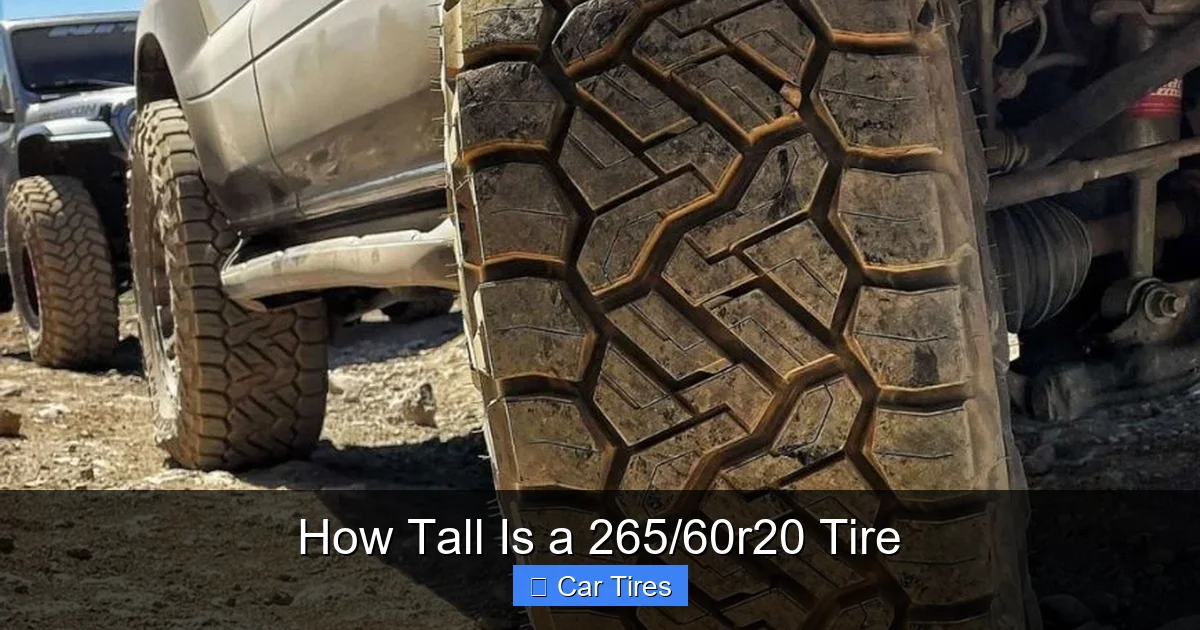
Visual guide about How Tall Is a 265/60r20 Tire
Image source: tiresalley.com
The 265/60R20 isn’t just a random size—it’s a factory and aftermarket favorite for a reason. Let’s look at where you’ll commonly find it.
Factory Applications
Many full-size trucks and SUVs come equipped with 265/60R20 tires straight from the dealer:
– **Ford F-150** (especially Platinum, Limited, and Raptor trims)
– **Chevrolet Silverado 1500** (High Country and LTZ packages)
– **GMC Sierra 1500** (Denali models)
– **Ram 1500** (Laramie and Limited trims)
– **Toyota Tundra** (Limited and TRD Pro versions)
– **Nissan Titan XD**
These vehicles often feature 20-inch wheels as part of premium or off-road packages, and the 265/60R20 provides the ideal blend of style, performance, and practicality.
Aftermarket and Lift Kit Compatibility
If you’ve added a 2- to 4-inch lift kit to your truck, the 265/60R20 is a natural upgrade. It fills the wheel well nicely without rubbing against suspension components or requiring fender modifications.
For example, a stock Ford F-150 might come with 275/65R18 tires (about 32.1 inches tall). Swapping to 265/60R20 gives you a slightly taller, wider tire that looks more aggressive and improves off-road capability—all while staying within safe operating parameters.
Many aftermarket wheel manufacturers design 20-inch rims specifically to pair with 265/60R20 tires, offering everything from sleek chrome finishes to rugged beadlock-style designs for serious off-roading.
Winter and All-Terrain Options
Because of its popularity, the 265/60R20 size is available in nearly every tread type:
– **All-season**: Great for daily driving in mild climates (e.g., Michelin Defender LTX)
– **All-terrain**: Balanced on- and off-road performance (e.g., BFGoodrich All-Terrain T/A KO2)
– **Mud-terrain**: Aggressive tread for serious off-roading (e.g., Nitto Trail Grappler)
– **Winter/studdable**: For snow and ice (e.g., Bridgestone Blizzak DM-V2)
This versatility makes it easy to match your tire choice to your driving needs—whether you’re commuting in the city or tackling mountain trails.
Comparing 265/60R20 to Other Common Tire Sizes
To truly understand the 265/60R20, it helps to see how it stacks up against similar sizes. Let’s compare it to three popular alternatives:
275/65R18
– Width: 275 mm (~10.8 in)
– Aspect ratio: 65%
– Rim: 18 in
– Calculated diameter: ~32.1 in
This is a common stock size on many trucks. It’s slightly narrower but has a taller sidewall, resulting in a marginally smaller overall diameter. The 275/65R18 offers a softer ride but less aggressive stance. Switching to 265/60R20 gives you a wider, more modern look with similar height.
285/70R17
– Width: 285 mm (~11.2 in)
– Aspect ratio: 70%
– Rim: 17 in
– Calculated diameter: ~32.7 in
This is a favorite among off-roaders. It’s wider and taller than the 265/60R20, offering maximum traction and clearance. However, it requires a lift kit on most trucks and can reduce fuel economy. The 265/60R20 is a more balanced choice for drivers who want capability without going full off-road beast.
255/55R20
– Width: 255 mm (~10.0 in)
– Aspect ratio: 55%
– Rim: 20 in
– Calculated diameter: ~31.0 in
This is a lower-profile, sportier option often found on crossovers and performance SUVs. It’s shorter and narrower, giving sharper handling but less cushion over bumps. If you prioritize comfort and off-road readiness, the 265/60R20 is a clear upgrade.
Practical Example: Upgrading from Stock
Imagine you own a 2020 Chevy Silverado that came with 275/65R18 tires. You love the truck but want a more aggressive look and better off-road performance. You consider two options:
1. **Stay with 18-inch wheels**: Upgrade to 285/70R17—but you’d need new wheels and possibly a lift.
2. **Go to 20-inch wheels**: Install 265/60R20 tires—no lift needed, same approximate height, wider footprint, and modern styling.
Most owners choose option 2 because it’s simpler, cheaper, and still delivers real benefits. Plus, you keep your factory warranty intact (as long as you stay within recommended specs).
Installation Tips and Common Mistakes to Avoid
Switching to 265/60R20 tires isn’t just about buying and bolting on. Here’s how to do it right.
Check Clearance Before Buying
Even though 265/60R20 is a common size, always measure your wheel well clearance—especially if your truck has aftermarket suspension or leveling kits. Use a tape measure to check:
– Distance from tire to fender (front and rear)
– Distance from tire to control arms or brake lines
– Turning radius (turn wheels lock-to-lock and watch for rubbing)
If you’re unsure, consult a tire professional or use online fitment guides from retailers like Tire Rack or Discount Tire.
Maintain Proper Inflation
Taller tires are more sensitive to underinflation. Check pressure monthly (including the spare) and adjust for load and temperature changes. Most 265/60R20 tires require 35–40 psi when cold, but always follow the vehicle manufacturer’s recommendation (found on the driver’s door jamb).
Recalibrate Your Speedometer
As mentioned earlier, a 32.5-inch tire rotates fewer times per mile than a 31-inch one. Use a GPS-based app or visit a shop with a recalibration tool to ensure your speedometer is accurate. Some trucks allow DIY recalibration via the infotainment system.
Rotate Regularly
To maximize tread life, rotate your tires every 5,000–7,500 miles. Front and rear tires wear differently—especially on rear-wheel-drive trucks—so rotation helps even out wear and extends tire life by thousands of miles.
Avoid Mixing Tire Types
Never mix radial and bias-ply tires, or different tread patterns, on the same axle. It can cause handling issues, uneven wear, and even loss of control. If you’re replacing one tire, try to match the others exactly—or replace all four.
Conclusion: Is the 265/60R20 Right for You?
So, how tall is a 265/60R20 tire? About 32.5 inches—a versatile, capable size that bridges the gap between everyday comfort and weekend adventure. It’s wide enough for stability, tall enough for clearance, and compatible with a huge range of trucks and SUVs.
Whether you’re upgrading for looks, performance, or practicality, this tire size delivers. Just remember: tire choice isn’t just about height—it’s about matching your rubber to your driving style, climate, and vehicle needs.
Take the time to understand your options, measure your clearance, and consult experts if needed. With the right 265/60R20 tires, you’ll enjoy better grip, a smoother ride, and the confidence that comes from knowing your vehicle is ready for whatever the road—or trail—throws your way.
Frequently Asked Questions
How tall is a 265/60R20 tire in inches?
A 265/60R20 tire has an overall diameter of approximately 32.5 inches (825 mm). This includes the 20-inch rim plus two sidewalls, each about 6.26 inches tall.
Will 265/60R20 tires fit my truck without a lift?
Yes, in most cases. Many full-size trucks like the Ford F-150, Chevy Silverado, and Ram 1500 come factory-equipped with this size or can accommodate it with minor modifications. Always check wheel well clearance before installing.
Can I use 265/60R20 tires in winter conditions?
Absolutely. Many winter and all-weather tires are available in this size, such as the Bridgestone Blizzak DM-V2 or Michelin X-Ice Snow. Just ensure the tread pattern and compound are rated for snow and ice.
Do I need to recalibrate my speedometer after switching to 265/60R20?
If your previous tires were significantly smaller (e.g., 31 inches), yes. A 32.5-inch tire rotates fewer times per mile, causing your speedometer to read low. Use a tuner or visit a shop to recalibrate for accuracy.
Are 265/60R20 tires good for towing?
Yes, especially if they have a high load index (like 112 or 115). These tires are commonly used on heavy-duty trims and provide excellent stability and traction when hauling trailers or payloads.
What’s the difference between 265/60R20 and 275/60R20?
The 275/60R20 is 10 mm wider (about 0.4 inches) but has the same aspect ratio and rim size. Its overall diameter is nearly identical (~32.6 inches), so it offers a slightly wider footprint for improved grip—but may require checking for clearance.
