
205/75r14 Tire Size

The 205/75r14 tire size is a popular choice for trailers, campers, and light-duty vehicles, offering a balance of load capacity, stability, and ride comfort. This comprehensive guide breaks down its dimensions, applications, performance traits, and how to choose the right one for your needs.
If you’ve ever towed a trailer, hitched up a camper, or loaded up a small utility hauler, chances are you’ve come across the 205/75r14 tire size. It’s one of those workhorse dimensions that quietly powers thousands of weekend adventures, farm chores, and cross-country road trips each year. But what exactly does “205/75r14” mean? And why is it such a trusted choice for so many vehicle types?
In this guide, we’ll dive deep into the world of the 205/75r14 tire—breaking down its specs, exploring where it shines (and where it doesn’t), and giving you practical advice on selecting, maintaining, and replacing these tires. Whether you’re a seasoned RVer, a weekend warrior with a boat trailer, or just curious about tire terminology, this article will give you the confidence to make smart decisions about your ride.
Key Takeaways
- 205/75r14 Explained: This size means a 205 mm tread width, 75% aspect ratio, radial construction, and fits a 14-inch wheel.
- Common Uses: Ideal for utility trailers, boat trailers, pop-up campers, and small RVs due to its durability and load rating.
- Load and Speed Ratings: Typically rated for up to 1,820 lbs per tire (Load Range C) and speeds up to 65 mph (M speed rating).
- Radial vs. Bias-Ply: Radial tires (like most 205/75r14s) offer better heat dissipation, longer tread life, and smoother rides than bias-ply.
- Proper Inflation Matters: Always inflate to the PSI listed on the tire sidewall—underinflation causes overheating and blowouts.
- Seasonal Considerations: Choose all-season or highway-focused tread patterns for consistent performance in varied conditions.
- Replacement Tips: Replace tires every 5–6 years regardless of tread depth due to rubber degradation over time.
📑 Table of Contents
- Understanding the 205/75r14 Tire Size
- Common Applications and Vehicle Compatibility
- Load Capacity, Speed Rating, and Safety Considerations
- Radial vs. Bias-Ply: Which Is Better for 205/75r14?
- Choosing the Right 205/75r14 Tire: What to Look For
- Maintenance, Storage, and Replacement Guidelines
- Top 205/75r14 Tire Recommendations
- Conclusion
Understanding the 205/75r14 Tire Size
Let’s start with the basics: decoding the numbers. Tire sizes may look like cryptic codes, but once you understand the pattern, they become incredibly useful tools for matching the right tire to your vehicle.
The code “205/75r14” follows the standard European metric format used globally. Here’s what each part means:
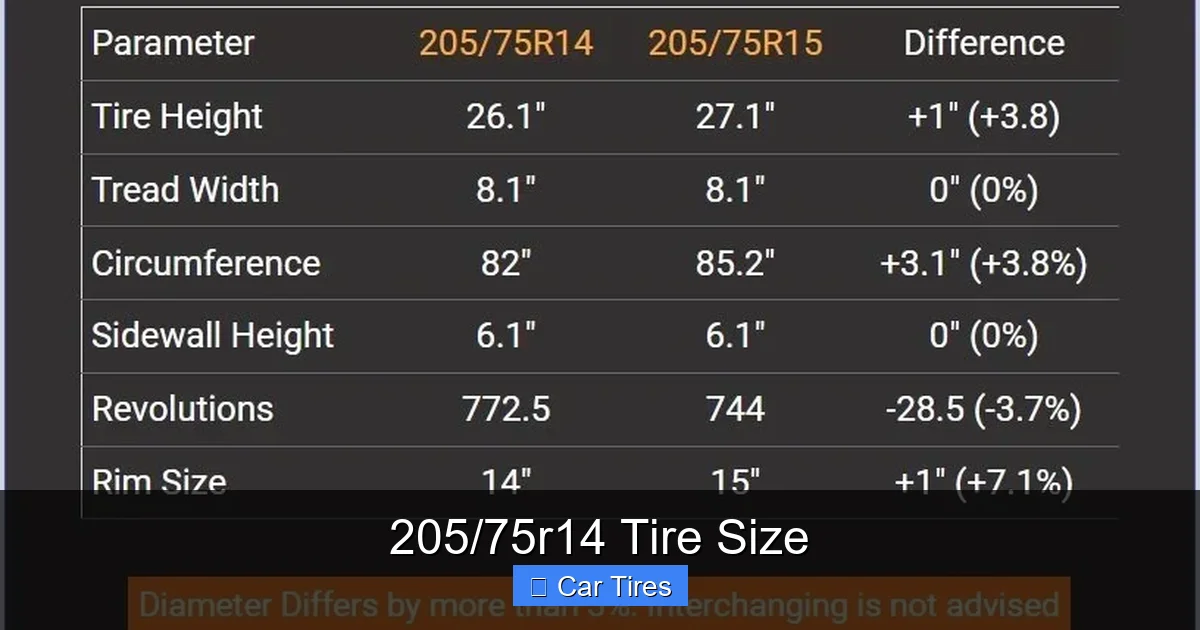
– **205**: This is the tire’s section width in millimeters—the distance from one sidewall to the other when mounted and inflated. A 205 mm width offers a solid footprint without being overly wide, which helps with stability and fuel efficiency.
– **75**: This is the aspect ratio—the height of the tire’s sidewall expressed as a percentage of the section width. So, 75% of 205 mm equals about 154 mm (or roughly 6 inches) of sidewall height. A higher aspect ratio generally means a softer, more comfortable ride, while lower ratios favor handling and responsiveness.
– **R**: Stands for “Radial,” indicating the internal construction of the tire. Radial tires have layers (plies) that run radially across the tire from bead to bead, with belts wrapped around the tread area. This design improves heat dissipation, tread life, and ride quality compared to older bias-ply designs.
– **14**: This is the wheel diameter in inches—the size of the rim the tire is designed to fit. In this case, it’s a 14-inch wheel, which is common on smaller trailers and light-duty vehicles.
So, putting it all together: a 205/75r14 tire is a radial tire with a 205 mm wide tread, a sidewall that’s 75% as tall as it is wide, and it fits a 14-inch wheel. Simple, right?
Why This Size Is So Popular
The 205/75r14 strikes a sweet spot between size, strength, and versatility. It’s not too big to be unwieldy, nor too small to lack load capacity. That’s why it’s widely used on:
– Utility trailers (for hauling gear, landscaping materials, or motorcycles)
– Boat trailers (especially for mid-sized fishing boats or pontoon boats)
– Pop-up campers and small travel trailers
– Light-duty cargo vans or older SUVs (in some cases)
Its popularity also comes from standardization. Because so many manufacturers use this size, replacement tires are easy to find, often at competitive prices. Plus, the radial construction ensures modern performance benefits—better fuel economy, longer wear, and improved safety—even on budget-friendly models.
Common Applications and Vehicle Compatibility
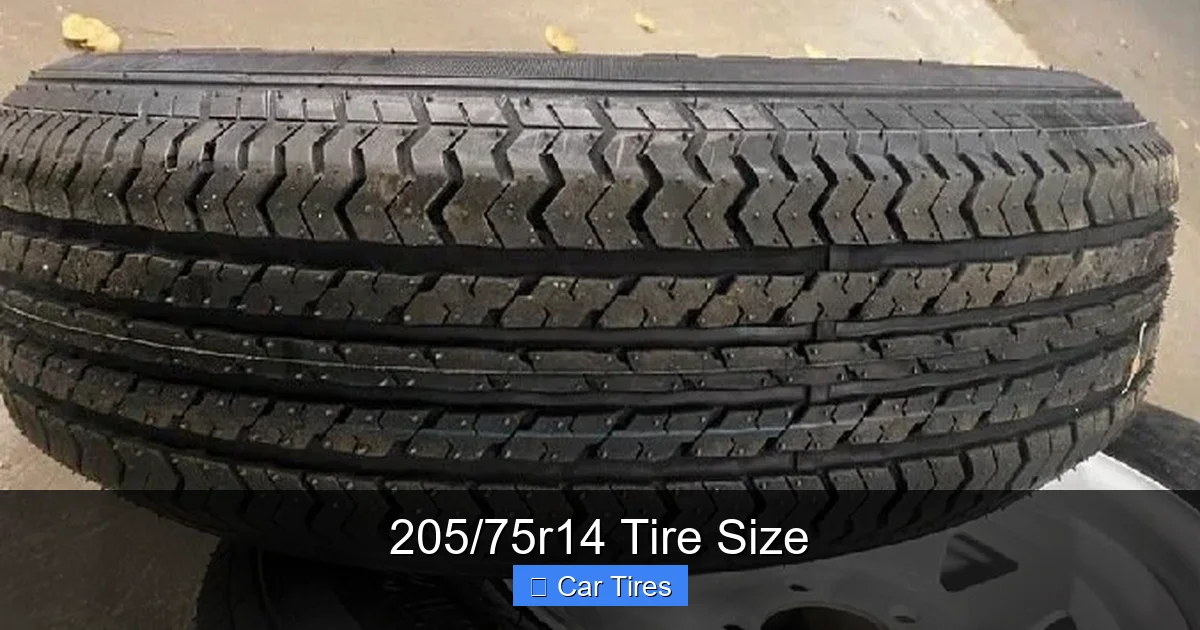
Visual guide about 205/75r14 Tire Size
Image source: tireblogger.com
Now that we know what the numbers mean, let’s talk about where you’ll actually see 205/75r14 tires in action.
Trailers: The Primary Use Case
By far, the most common application for 205/75r14 tires is on trailers. Whether you’re pulling a small utility trailer behind your pickup truck or towing a 5th-wheel camper, this tire size offers reliable performance under load.
Utility trailers often carry heavy loads—think bags of mulch, ATVs, or construction debris. The 205/75r14’s load range (usually C or D) supports weights up to 1,820 lbs per tire when properly inflated. That means a dual-axle trailer equipped with four of these tires can safely handle over 7,000 lbs—more than enough for most recreational and light commercial needs.
Boat trailers are another big user. Saltwater exposure, frequent submersion, and heavy loads make tire reliability critical. Many boaters choose 205/75r14 tires specifically for their corrosion-resistant sidewalls and robust construction. Some even opt for specialized “trailer-rated” tires with reinforced sidewalls to prevent sway and overheating during long hauls.
Recreational Vehicles (RVs) and Campers
Smaller RVs—especially pop-up campers, teardrop trailers, and lightweight travel trailers—often roll on 205/75r14 tires. These vehicles prioritize fuel efficiency and ease of towing, and this tire size delivers both. The slightly taller sidewall (thanks to the 75 aspect ratio) absorbs road imperfections better than low-profile tires, giving campers a smoother ride on bumpy campground roads.
It’s worth noting that larger RVs and motorhomes typically use bigger tires (like 225/75r15 or LT sizes), but if you’re towing something under 3,500 lbs, the 205/75r14 is likely a perfect match.
Light Trucks and Older Vehicles
While less common today, some older SUVs, minivans, and light trucks—especially those from the 1990s and early 2000s—were originally equipped with 205/75r14 tires. Examples include certain models of the Ford Ranger, Chevrolet S-10, and even some early Toyota Tacomas. If you’re restoring or maintaining one of these classics, sticking with the original size ensures proper speedometer accuracy, suspension geometry, and braking performance.
Always check your owner’s manual or the tire placard (usually on the driver’s door jamb) to confirm compatibility before swapping sizes.
Load Capacity, Speed Rating, and Safety Considerations
Visual guide about 205/75r14 Tire Size
Image source: tireblogger.com
Tires aren’t just about fit—they’re about function. And when it comes to safety, understanding load and speed ratings is non-negotiable.
Load Range and Ply Rating
Most 205/75r14 tires come in Load Range C or D. Here’s what that means:
– **Load Range C**: 6-ply rated, maximum load of ~1,765–1,820 lbs at 50 psi
– **Load Range D**: 8-ply rated, maximum load of ~2,205–2,270 lbs at 65 psi
The higher the load range, the stronger the tire—and the more air pressure it can safely hold. Always match your tire’s load rating to your trailer’s Gross Vehicle Weight Rating (GVWR). Overloading is a leading cause of tire failure.
For example, if your trailer has a GVWR of 3,500 lbs and you’re using a single axle, you’ll need tires rated for at least 1,750 lbs each. A Load Range C 205/75r14 fits perfectly. But if you’ve upgraded to a dual-axle setup carrying 5,000 lbs, consider Load Range D for extra safety margin.
Speed Rating: Don’t Ignore It
The speed rating tells you the maximum speed the tire can sustain under load. Most 205/75r14 tires have an “M” speed rating, which means they’re certified for speeds up to 81 mph (130 km/h). However, many trailer manufacturers recommend never exceeding 65 mph—even if the tire can handle more.
Why? Trailers lack the suspension and braking systems of passenger vehicles. High-speed towing increases sway risk, heat buildup, and stopping distance. Stick to posted speed limits and err on the side of caution, especially when hauling heavy loads or driving in windy conditions.
Inflation: The #1 Maintenance Tip
Underinflated tires are dangerous—especially on trailers. When a tire runs low on air, the sidewalls flex excessively, generating heat that can lead to blowouts. Overinflation isn’t great either; it reduces the contact patch, leading to uneven wear and a harsher ride.
Always inflate your 205/75r14 tires to the PSI listed on the sidewall—not the “max pressure” stamped there, but the recommended pressure for your load. Use a quality tire gauge and check pressure when tires are cold (before driving). Many RVers and trailer owners carry portable air compressors for on-the-go adjustments.
Pro tip: Invest in a tire pressure monitoring system (TPMS) for your trailer. These wireless sensors alert you to pressure drops or overheating in real time—peace of mind during long trips.
Radial vs. Bias-Ply: Which Is Better for 205/75r14?
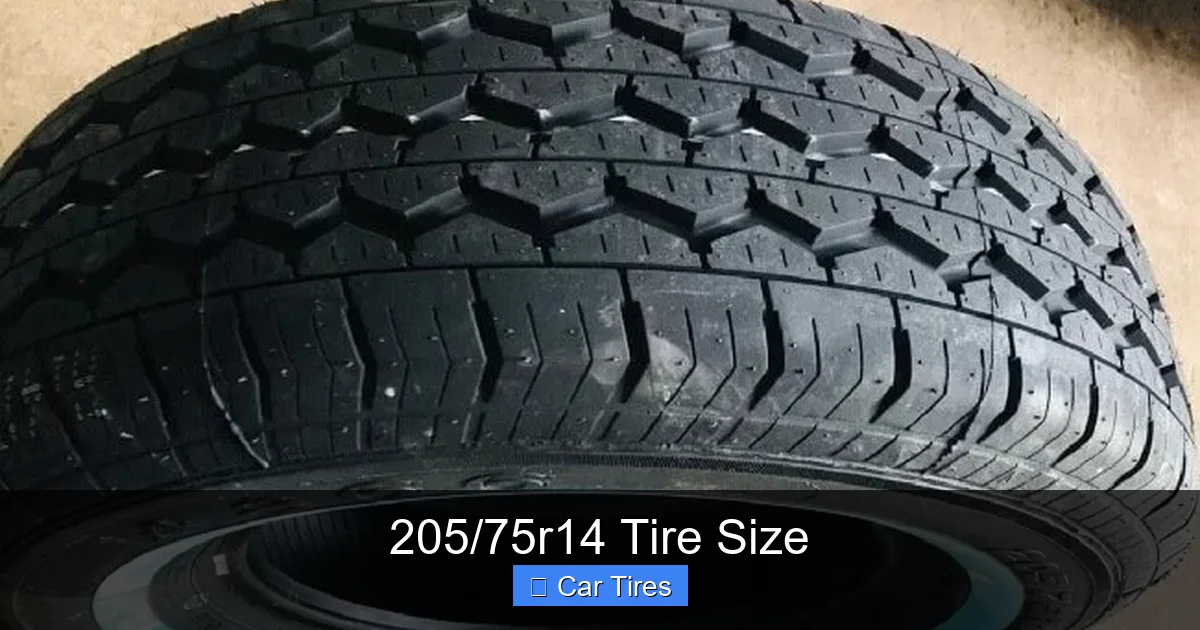
Visual guide about 205/75r14 Tire Size
Image source: tireblogger.com
You might encounter both radial and bias-ply versions of the 205/75r14 tire. So which should you choose?
The Case for Radial Tires
Radial construction is the modern standard—and for good reason. Radial tires run cooler, last longer, and provide a smoother ride because their sidewalls and treads move independently. This reduces rolling resistance, which can improve fuel economy when towing.
For the 205/75r14 size, radial tires are overwhelmingly the best choice for highway driving, long-distance towing, and everyday use. They’re more forgiving on rough roads and less prone to tread separation.
When Bias-Ply Might Make Sense
Bias-ply tires have crisscrossed plies that make the entire tire stiffer. This can be beneficial in very specific scenarios—like off-road trailers or applications where extreme sidewall strength is needed (e.g., backing into tight spaces without curbside protection). However, bias-ply tires run hotter, wear faster, and offer a rougher ride.
Unless you have a unique need, go radial. The performance and longevity benefits far outweigh any niche advantages of bias-ply.
Choosing the Right 205/75r14 Tire: What to Look For
Not all 205/75r14 tires are created equal. Here’s how to pick the best one for your needs.
Tread Pattern and Compound
Look for tires labeled “all-season” or “highway” tread. These feature circumferential grooves for water evacuation and siping for light snow traction—perfect for most trailer and RV uses. Avoid aggressive off-road treads; they’re noisy and wear quickly on pavement.
The rubber compound should be designed for low rolling resistance and UV resistance (important for trailers parked outdoors). Many top brands—like Carlisle, Maxxis, and Goodyear—offer trailer-specific compounds that resist ozone cracking and sun damage.
Brand Reputation and Warranty
Stick with reputable manufacturers. While budget tires may seem tempting, they often use inferior materials that degrade faster. Brands like Cooper, Michelin, and Bridgestone offer reliable 205/75r14 options with solid warranties (typically 40,000–60,000 miles).
Check the warranty details: some cover tread wear, while others include road hazard protection. For trailers, a good warranty can save you hundreds in replacement costs.
Staggered vs. Matching Sets
Always replace tires in complete sets—all four at once if possible. Mixing old and new tires (or different brands/models) can cause handling issues, uneven wear, and increased sway. If you must replace just one or two, ensure they’re identical to the existing ones in brand, model, and production date (check the DOT code on the sidewall).
Maintenance, Storage, and Replacement Guidelines
Even the best tires won’t last forever—especially when exposed to the elements 24/7.
Routine Inspection Tips
Every time you hitch up, do a quick visual check:
– Look for cracks, bulges, or cuts in the sidewall
– Check tread depth (use a penny—Lincoln’s head should be covered)
– Ensure valve stems aren’t cracked or leaking
– Remove debris stuck in tread grooves
Also, rotate your trailer tires if it has multiple axles. While not as critical as on cars, rotation helps even out wear patterns caused by braking or turning habits.
Proper Storage Extends Life
If you store your trailer or RV for months at a time, take steps to protect the tires:
– Park on wood blocks or tire cradles to prevent flat spots
– Cover tires with UV-resistant covers (sunlight accelerates rubber aging)
– Inflate to recommended pressure—even if unused
– Avoid parking on concrete or asphalt for long periods; these surfaces draw moisture and heat
When to Replace Your 205/75r14 Tires
Tread depth is only part of the story. Rubber deteriorates over time, regardless of use. Most experts recommend replacing trailer tires every 5–6 years—even if they look fine.
Check the DOT date code on the sidewall (the last four digits of the DOT number). For example, “2322” means the tire was made in the 23rd week of 2022. If it’s older than six years, it’s time for new ones.
Ignoring age-related wear can lead to sudden failures—something you definitely don’t want on a remote highway or mountain pass.
Top 205/75r14 Tire Recommendations
While we won’t name specific models (as availability changes), here are traits of top-performing 205/75r14 tires:
– **Carlisle Radial Trail HD**: Excellent all-around performer with strong sidewalls and great heat resistance.
– **Maxxis M8008**: Known for durability and smooth ride; popular among full-time RVers.
– **Goodyear Endurance**: Designed specifically for trailers, with reinforced sidewalls and a 80,000-mile warranty.
– **Cooper Discoverer STT Pro** (if used on light trucks): Offers off-road capability without sacrificing highway manners.
Always read recent customer reviews and consult your dealer for current stock and pricing.
Conclusion
The 205/75r14 tire size may seem like just a string of numbers, but it represents a vital link in the chain of safe, reliable towing. From weekend camping trips to cross-country hauls, this tire size delivers the right blend of strength, comfort, and affordability for countless drivers.
By understanding its specifications, respecting its limits, and maintaining it properly, you’ll get the most out of every mile. Remember: tires are the only thing connecting your vehicle to the road. Treat them with care, and they’ll carry you—and your adventures—where you need to go.
Whether you’re shopping for your first trailer or replacing worn-out rubber on a trusty old camper, the 205/75r14 is a proven choice. Now that you know what to look for, you’re ready to roll with confidence.
Frequently Asked Questions
What vehicles use 205/75r14 tires?
The 205/75r14 tire is most commonly used on utility trailers, boat trailers, pop-up campers, and small travel trailers. It’s also found on some older light trucks and SUVs, such as early Ford Rangers or Chevrolet S-10s.
Can I use 205/75r14 tires on my car?
Generally, no. This size is designed for trailers and light-duty applications, not passenger cars. Using it on a car could affect handling, braking, and speedometer accuracy. Always follow your vehicle manufacturer’s recommended tire size.
How much weight can a 205/75r14 tire hold?
A Load Range C 205/75r14 tire can support up to 1,820 lbs at 50 psi, while a Load Range D version handles up to 2,270 lbs at 65 psi. Always match the tire’s load rating to your trailer’s GVWR.
Do I need to balance 205/75r14 trailer tires?
While not always required, balancing improves ride quality and reduces vibration—especially at highway speeds. Many trailer owners opt for professional balancing when installing new tires.
Can I drive in snow with 205/75r14 tires?
Yes, if they have an all-season tread pattern with siping. However, trailer tires aren’t designed for aggressive winter driving. Use caution in icy or deep snow conditions and consider carrying tire chains if needed.
How often should I replace my 205/75r14 tires?
Replace them every 5–6 years, even if tread looks good. Rubber degrades over time due to UV exposure, ozone, and temperature changes. Check the DOT date code on the sidewall to determine age.