
How Much Does a Typical Car Battery Weigh

A typical car battery weighs between 30 and 50 pounds (13.6 to 22.7 kg), depending on size, type, and technology. This weight comes from lead plates, acid electrolyte, and durable casing. Knowing your battery’s weight helps with installation, handling, and choosing the right replacement.
Key Takeaways
- Typical weight range: Most standard car batteries weigh between 30 and 50 pounds (13.6–22.7 kg), with larger or high-performance models tipping the scale higher.
- Battery type matters: Lead-acid batteries are heavier than lithium-ion alternatives, which are lighter but more expensive and less common in traditional vehicles.
- Size and group number affect weight: Batteries with higher group numbers (like Group 24 or 35) are physically larger and heavier due to more internal components.
- CCA and Ah ratings influence mass: Batteries with higher cold cranking amps (CCA) or amp-hour (Ah) ratings often have thicker plates and more electrolyte, increasing weight.
- Handling tips: Always lift with your legs, not your back, and use proper tools when replacing a battery to avoid injury.
- Environmental impact: Heavier batteries contain more lead and acid, requiring responsible recycling to prevent pollution.
- Check your owner’s manual: Always refer to your vehicle’s specifications to find the correct battery size and weight for safe, optimal performance.
📑 Table of Contents
- How Much Does a Typical Car Battery Weigh?
- What Determines the Weight of a Car Battery?
- Types of Car Batteries and Their Weight Differences
- How Battery Size and Group Number Affect Weight
- Performance Ratings and Their Impact on Weight
- Practical Tips for Handling and Replacing Car Batteries
- Environmental and Safety Considerations
- Conclusion: Why Battery Weight Matters
How Much Does a Typical Car Battery Weigh?
If you’ve ever tried to lift a car battery—or watched someone wrestle one out of an engine bay—you know they’re not light. But exactly how much does a typical car battery weigh? The answer isn’t one-size-fits-all. Most standard automotive batteries fall between 30 and 50 pounds (13.6 to 22.7 kilograms), but that number can vary depending on several factors like battery type, size, and intended use.
Why does weight matter? For starters, it affects how easy (or difficult) it is to install or replace a battery. A heavier battery requires more care when lifting and positioning, especially in tight engine compartments. Weight also gives clues about the battery’s internal construction—more lead plates and electrolyte usually mean more power and longer life, but also more mass. Whether you’re a DIY mechanic, a new car owner, or just curious, understanding battery weight helps you make smarter decisions about maintenance, upgrades, and safety.
In this guide, we’ll break down everything you need to know about car battery weight—from what determines it, how different types compare, and practical tips for handling these essential but hefty components. We’ll also explore how weight relates to performance, longevity, and environmental responsibility. By the end, you’ll know not just how much your battery weighs, but why that number matters.
What Determines the Weight of a Car Battery?

Visual guide about How Much Does a Typical Car Battery Weigh
Image source: rerev.com
Car batteries aren’t just heavy by accident—their weight comes from a combination of materials and design choices made to deliver reliable power. The main contributors to a battery’s weight are the internal components: lead plates, sulfuric acid electrolyte, separators, and the plastic casing. Each plays a role in both function and mass.
Lead Plates: The Heavy Hitters
The bulk of a battery’s weight comes from its lead plates. These plates are arranged in alternating positive and negative grids, submerged in electrolyte. The more plates—and the thicker they are—the greater the battery’s capacity to store and deliver energy. High-performance batteries designed for cold climates or heavy electrical loads often have more or denser plates, which increases weight. For example, a battery with a high cold cranking amp (CCA) rating might weigh 45 pounds or more because it needs extra lead to generate that burst of power in freezing temperatures.
Electrolyte: The Liquid Core
The electrolyte in a traditional lead-acid battery is a mixture of sulfuric acid and water. This solution fills the space between the plates and enables the chemical reactions that produce electricity. While the liquid itself isn’t extremely dense, it adds noticeable weight—especially in larger batteries. A typical flooded lead-acid battery might contain several liters of electrolyte, contributing 10 to 15 pounds to the total weight.
Plastic Casing and Internal Structure
The outer case of a car battery is usually made of polypropylene, a durable plastic that protects the internal components. While the casing itself isn’t the heaviest part, it’s built to withstand vibration, heat, and chemical exposure. Thicker casings and internal support structures add a few pounds but are essential for safety and longevity. Some batteries also include internal baffles or reinforced partitions to prevent acid leakage during movement or tipping.
Terminal Design and Connectors
Battery terminals—usually made of lead or lead alloy—are another source of weight. They’re designed to conduct electricity efficiently and resist corrosion, but their size and material add a small but measurable amount to the total mass. Top-post and side-post terminals vary slightly in design, but the difference in weight is minimal.
Sealed vs. Flooded Designs
Flooded (or wet-cell) batteries, the most common type, have removable caps and require periodic maintenance. They tend to be heavier because they hold more free-flowing electrolyte. In contrast, sealed batteries like AGM (Absorbent Glass Mat) or gel batteries use absorbed or immobilized electrolyte, which can slightly reduce weight—but not by much. AGM batteries, for instance, are often only 5 to 10% lighter than comparable flooded batteries, despite their advanced design.
Types of Car Batteries and Their Weight Differences

Visual guide about How Much Does a Typical Car Battery Weigh
Image source: thepowerall.com
Not all car batteries are created equal—and that includes their weight. The type of battery you have (or are considering) plays a major role in how heavy it is. Let’s look at the most common types and how their construction affects mass.
Flooded Lead-Acid Batteries
These are the standard batteries found in most gasoline-powered cars. They’re affordable, reliable, and widely available. A typical flooded lead-acid battery weighs between 35 and 50 pounds (15.9 to 22.7 kg), depending on size and capacity. For example, a Group 24 battery (common in trucks and SUVs) might weigh around 48 pounds, while a smaller Group 35 battery (used in compact cars) could be closer to 38 pounds.
AGM (Absorbent Glass Mat) Batteries
AGM batteries are a step up in performance and durability. They’re sealed, maintenance-free, and better at handling deep discharges and high electrical demands—like those from start-stop systems or aftermarket electronics. Because they use fiberglass mats to hold the electrolyte, they can be slightly lighter than flooded batteries. However, the difference is often small. A typical AGM battery weighs 30 to 45 pounds (13.6 to 20.4 kg), with high-performance models still pushing 50 pounds.
Gel Batteries
Gel batteries use a silica-based gel to immobilize the electrolyte. They’re less common in standard passenger vehicles but are used in some motorcycles, marine applications, and RVs. Gel batteries are generally lighter than flooded types—often 25 to 40 pounds (11.3 to 18.1 kg)—but they’re also more sensitive to overcharging and have lower cranking power. This makes them less ideal for cold-weather starting.
Lithium-Ion Batteries
Lithium-ion batteries are the lightest option, often weighing just 15 to 25 pounds (6.8 to 11.3 kg) for a comparable capacity. They’re becoming more common in hybrid and electric vehicles, and some performance enthusiasts are retrofitting them into classic cars. However, they’re expensive, require special charging systems, and aren’t yet widely supported by standard automotive electrical systems. For most everyday drivers, lead-acid or AGM remains the practical choice.
Enhanced Flooded Batteries (EFB)
EFB batteries are a middle ground between standard flooded and AGM types. They’re designed for vehicles with start-stop technology but don’t require the full cost of AGM. EFBs are slightly heavier than standard flooded batteries due to reinforced plates and better cycling ability. Expect weights in the 40 to 50-pound range (18.1 to 22.7 kg).
How Battery Size and Group Number Affect Weight
Visual guide about How Much Does a Typical Car Battery Weigh
Image source: m.media-amazon.com
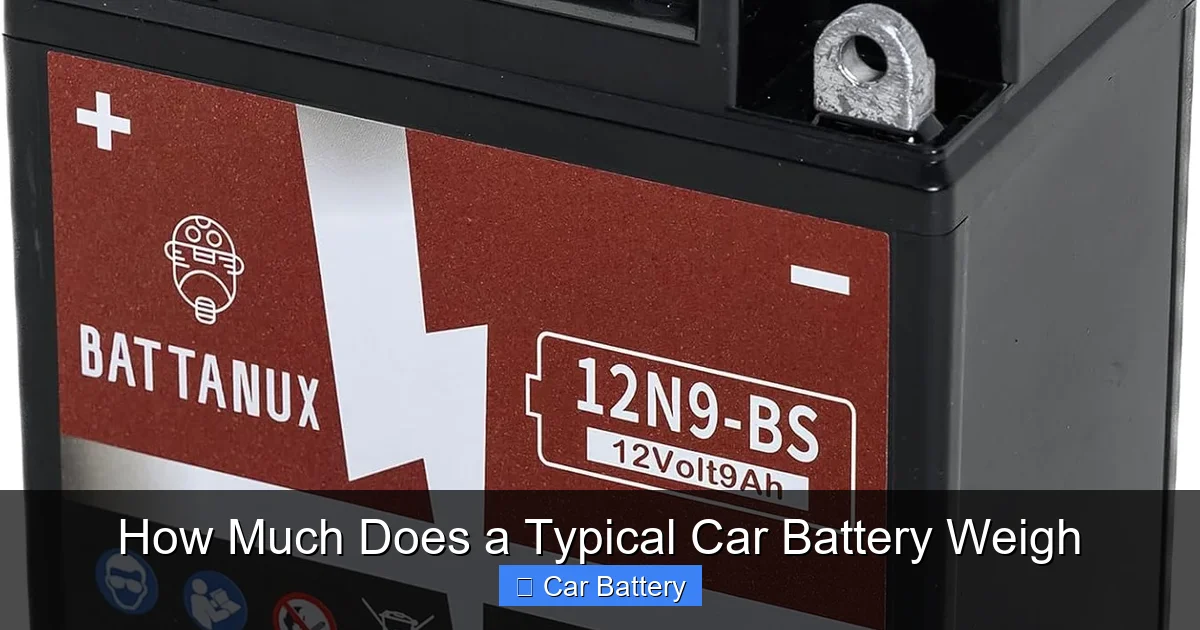
When shopping for a car battery, you’ll often see a “group number” like Group 24, Group 35, or Group 48. This number, defined by the Battery Council International (BCI), refers to the battery’s physical dimensions and terminal placement. And yes—larger group numbers usually mean heavier batteries.
Understanding Battery Group Sizes
Group size determines how a battery fits in your vehicle’s battery tray. For example, a Group 24 battery is typically about 10.25 x 6.8 x 8.9 inches (L x W x H), while a Group 35 is smaller at 9.0 x 6.9 x 8.9 inches. The larger the group, the more internal space there is for lead plates and electrolyte—and the heavier the battery.
Here’s a quick comparison of common group sizes and their average weights:
– Group 24: 45–50 lbs (20.4–22.7 kg) – common in trucks, SUVs, and older vehicles
– Group 27: 50–55 lbs (22.7–24.9 kg) – used in larger trucks and marine applications
– Group 34/35: 35–42 lbs (15.9–19.1 kg) – popular in compact and mid-size cars
– Group 48 (H6): 40–48 lbs (18.1–21.8 kg) – used in many modern European and Asian vehicles
– Group 65: 50–55 lbs (22.7–24.9 kg) – found in full-size trucks and performance vehicles
Why Size Matters for Weight
A larger battery can hold more active material—meaning more lead plates and electrolyte. This increases both capacity (measured in amp-hours) and cranking power (CCA). But it also means more weight. If your vehicle’s battery tray is designed for a Group 35, swapping in a Group 24 might not fit—and even if it does, the added weight could stress mounting hardware or make handling difficult.
Matching Battery Size to Your Vehicle
Always check your owner’s manual or the label on your current battery to find the correct group size. Installing the wrong size can lead to poor fit, electrical issues, or even safety hazards. Some vehicles even have specific battery requirements based on engine size, climate, and electrical accessories. For example, a car with heated seats, a premium sound system, and start-stop technology may need a heavier, higher-capacity battery to meet demand.
Performance Ratings and Their Impact on Weight
Battery weight isn’t just about size—it’s also tied to performance. Two batteries of the same group size can weigh differently if one has higher cold cranking amps (CCA) or amp-hour (Ah) ratings. These ratings reflect how much power the battery can deliver, and achieving higher performance often requires more internal material.
Cold Cranking Amps (CCA)
CCA measures how many amps a battery can deliver at 0°F (-18°C) for 30 seconds while maintaining voltage above 7.2V. This is crucial for starting engines in cold weather. Batteries with high CCA ratings—like 700 or 800 CCA—typically have thicker lead plates and more electrolyte to sustain that burst of power. As a result, they’re heavier. A 600 CCA battery might weigh 40 pounds, while an 800 CCA version of the same size could weigh 48 pounds or more.
Amp-Hour (Ah) Rating
Ah measures how long a battery can deliver a steady current. For example, a 50Ah battery can supply 5 amps for 10 hours. Higher Ah ratings mean more stored energy, which usually requires more plates and electrolyte—adding weight. Deep-cycle batteries, used in RVs or boats, often have high Ah ratings and can weigh 50 to 60 pounds or more.
Reserve Capacity (RC)
RC indicates how long a battery can power essential systems if the alternator fails. A higher RC means the battery can sustain a 25-amp load for more minutes. Like Ah, this often correlates with increased weight due to larger internal capacity.
Balancing Weight and Performance
While heavier batteries often offer better performance, that’s not always the goal. For city driving in mild climates, a lighter battery with moderate CCA may be sufficient. But if you live in a cold region or drive a vehicle with high electrical demands, the extra weight of a high-performance battery is a worthwhile trade-off for reliability.
Practical Tips for Handling and Replacing Car Batteries
Lifting a 40- to 50-pound battery isn’t something to take lightly—literally. Improper handling can lead to back injuries, acid spills, or damage to your vehicle. Here’s how to do it safely and efficiently.
Use Proper Lifting Technique
Always bend your knees and keep your back straight when lifting a battery. Use both hands—one on the handle (if present) and one supporting the bottom. Avoid twisting your body while carrying it. If the battery is too heavy, ask for help or use a battery carrier strap.
Wear Protective Gear
Battery acid is corrosive. Wear gloves and safety glasses when handling a battery. If you’re working under the hood, protect your clothes from spills. Keep a box of baking soda nearby to neutralize any acid leaks.
Disconnect in the Right Order
When replacing a battery, always disconnect the negative terminal first, then the positive. This reduces the risk of short circuits. When installing the new battery, connect the positive terminal first, then the negative.
Secure the Battery Properly
A loose battery can vibrate, leak, or even short against metal parts. Make sure the new battery is securely fastened in the tray with the hold-down clamp. Don’t overtighten, but ensure it won’t move.
Dispose of Old Batteries Responsibly
Car batteries contain lead and acid—hazardous materials that must be recycled. Most auto parts stores and service centers accept old batteries for recycling. Never throw them in the trash.
Consider a Battery Lift Tool
For frequent DIYers or mechanics, a battery lift tool or suction cup handle can make removal and installation much easier. These tools reduce strain and improve grip, especially in tight engine bays.
Environmental and Safety Considerations
The weight of a car battery isn’t just a physical concern—it’s also tied to environmental impact and safety. Heavier batteries contain more lead, a toxic metal that requires careful handling and recycling.
Lead Content and Recycling
Lead is the primary material in most car batteries, and it’s highly recyclable—over 99% of lead-acid batteries in the U.S. are recycled. This makes them one of the most recycled consumer products. However, improper disposal can lead to soil and water contamination. Always return old batteries to a certified recycler.
Acid Spills and Neutralization
Sulfuric acid in batteries can cause burns and damage surfaces. If a battery tips or cracks, neutralize spills with baking soda and water, then clean thoroughly. Store batteries upright and avoid dropping them.
Weight and Vehicle Efficiency
While a heavier battery won’t drastically affect fuel economy, every extra pound adds up. Some performance and electric vehicle owners opt for lighter lithium-ion batteries to reduce overall vehicle weight and improve efficiency. However, this comes at a higher cost and complexity.
Child and Pet Safety
Batteries should never be left where children or pets can access them. They’re heavy, contain toxic materials, and pose a choking or poisoning risk if mishandled.
Conclusion: Why Battery Weight Matters
So, how much does a typical car battery weigh? The short answer: between 30 and 50 pounds, with variations based on type, size, and performance needs. But weight is more than just a number—it’s a reflection of the battery’s design, power capacity, and environmental footprint.
Understanding battery weight helps you choose the right replacement, handle it safely, and appreciate the engineering behind this essential component. Whether you’re replacing a dead battery in your daily driver or upgrading for better performance, knowing what to expect in terms of weight makes the process smoother and safer.
Remember to check your vehicle’s specifications, use proper lifting techniques, and recycle old batteries responsibly. With the right knowledge, you can keep your car running smoothly—without straining your back or the planet.
Frequently Asked Questions
How much does a typical car battery weigh?
A typical car battery weighs between 30 and 50 pounds (13.6 to 22.7 kg), depending on its type, size, and performance ratings. Most standard lead-acid batteries fall within this range.
Why are car batteries so heavy?
Car batteries are heavy because they contain lead plates, sulfuric acid electrolyte, and a durable plastic casing. These materials are necessary to store and deliver electrical energy safely and reliably.
Are lithium-ion car batteries lighter?
Yes, lithium-ion batteries are significantly lighter—often 15 to 25 pounds (6.8 to 11.3 kg)—but they’re more expensive and not yet standard in most gasoline-powered vehicles.
Does a bigger battery always weigh more?
Generally, yes. Larger group sizes (like Group 27 vs. Group 35) have more internal components and thus weigh more. However, advanced designs like AGM can reduce weight slightly compared to flooded batteries of the same size.
Can I install a heavier battery in my car?
You can, as long as it fits in the battery tray and matches your vehicle’s electrical requirements. However, always check the manufacturer’s specifications to avoid compatibility issues.
How do I safely lift a car battery?
Lift with your legs, not your back, and use both hands—one on the handle and one supporting the bottom. Wear gloves and safety glasses, and consider using a battery lift tool for heavy models.