
Is Car Battery Ac or Dc

Car batteries are 12-volt DC (direct current) power sources, not AC. They provide steady, unidirectional electrical flow to start your engine and run onboard systems. While your car uses DC, alternators convert mechanical energy into AC before transforming it back to DC for battery charging.
Key Takeaways
- Car batteries supply DC power: All automotive batteries deliver direct current (DC), which flows in one direction, making it ideal for vehicle electronics.
- Standard voltage is 12 volts: Most cars use a 12-volt DC system, though some older models used 6 volts and heavy-duty vehicles may use 24 volts.
- Alternators generate AC, then convert to DC: The alternator produces alternating current (AC), but a rectifier converts it to DC to charge the battery and power systems.
- DC powers everything in your car: From ignition and fuel injection to lights, radio, and infotainment, all rely on DC from the battery or alternator.
- AC is not used directly in vehicles: Unlike homes, cars don’t use AC for powering components—everything runs on DC for safety and efficiency.
- Battery type doesn’t change current type: Whether lead-acid, AGM, or lithium-ion, all car batteries store and deliver DC power.
- Understanding DC helps with troubleshooting: Knowing how DC works helps diagnose electrical issues like weak starts, dim lights, or charging problems.
📑 Table of Contents
- Is Car Battery AC or DC? The Simple Answer
- Understanding AC vs. DC: What’s the Difference?
- How Your Car Battery Delivers DC Power
- The Role of the Alternator: AC to DC Conversion
- Types of Car Batteries and Their DC Output
- Common Misconceptions About Car Batteries and Current
- Practical Tips: Working with DC in Your Car
- Conclusion: DC Powers Your Drive
Is Car Battery AC or DC? The Simple Answer
If you’ve ever popped the hood of your car and stared at that rectangular box with two terminals, you might have wondered: *What kind of electricity does this thing actually produce?* Is it AC or DC? The short answer is: **your car battery is DC—direct current**. It doesn’t produce alternating current (AC), the kind that powers your home outlets. Instead, it delivers a steady, one-way flow of electrons that keeps your vehicle running.
But why does this matter? Because understanding whether your car uses AC or DC helps you make sense of how everything from your headlights to your GPS system actually works. It also helps when diagnosing electrical problems, choosing the right accessories, or even installing a solar charger or inverter. So let’s dive deeper into why DC is the heart of your car’s electrical system—and why AC plays a supporting role behind the scenes.
Most people associate electricity with the wall sockets in their homes, which deliver AC power. But vehicles operate entirely differently. From the moment you turn the key (or press the start button), your car relies on a 12-volt DC system. This low-voltage, high-reliability setup is perfect for the compact, mobile environment of a car. It’s safe, efficient, and compatible with the sensitive electronics that modern vehicles depend on.
Understanding AC vs. DC: What’s the Difference?
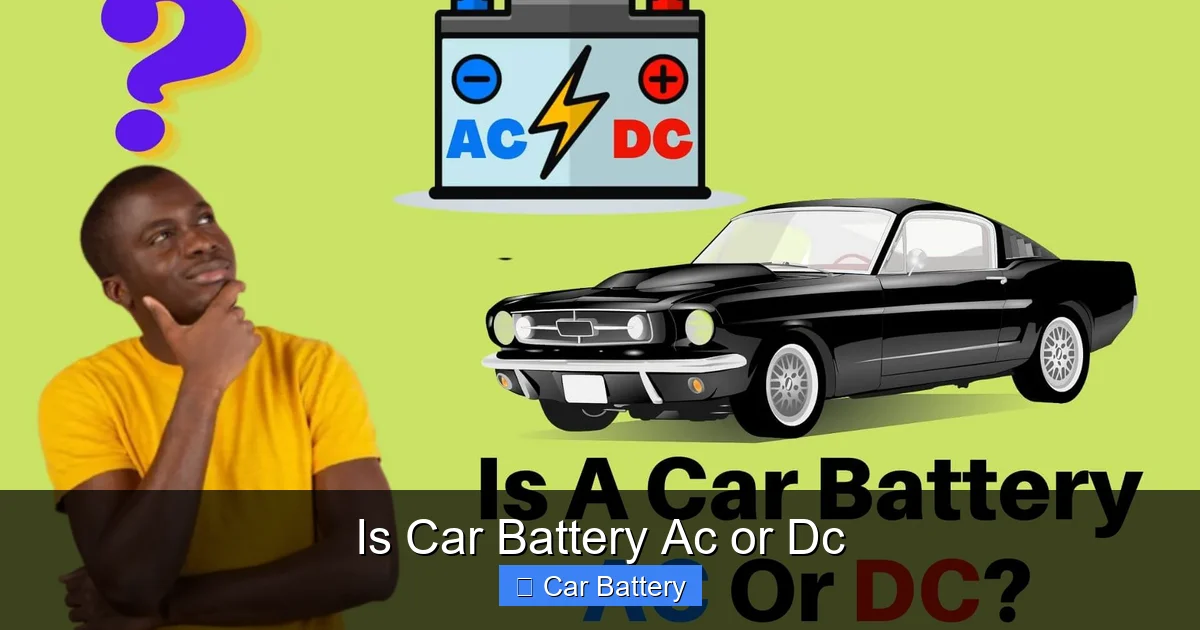
Visual guide about Is Car Battery Ac or Dc
Image source: batteryhacker.com
Before we go further, let’s clarify what AC and DC actually mean—because the difference is fundamental to how your car works.
Direct Current (DC) flows in one direction, like water moving through a hose from a pump. It’s steady, predictable, and ideal for powering small electronics. Batteries—whether in your phone, flashlight, or car—store and deliver DC power. The voltage remains constant (or nearly so), and the current doesn’t reverse direction.
Alternating Current (AC), on the other hand, periodically reverses direction. In the U.S., AC cycles 60 times per second (60 Hz), meaning the current flips back and forth rapidly. This makes AC great for transmitting power over long distances—like from a power plant to your home—because it can be easily stepped up or down in voltage using transformers.
So why doesn’t your car use AC? Simple: **batteries can’t store AC**. They only work with DC. And since your car needs a portable, self-contained power source (the battery), DC is the only practical option. Even when the engine is off, the battery must power lights, alarms, and onboard computers—all of which require stable DC voltage.
Why DC Wins in Automotive Applications
DC is the natural choice for vehicles for several reasons:
– **Battery compatibility:** Batteries store chemical energy and release it as DC. There’s no way to store AC in a battery.
– **Low voltage safety:** 12 volts is safe to handle and reduces the risk of electric shock or fire.
– **Efficiency in small systems:** DC doesn’t suffer from the same transmission losses as AC over short distances, making it ideal for the compact wiring in a car.
– **Electronic compatibility:** Modern cars are packed with microprocessors, sensors, and digital displays—all of which run on DC.
Imagine trying to power your car’s ECU (engine control unit) with AC. It would require constant conversion to DC, adding complexity, cost, and failure points. By using DC from the start, automakers simplify design and improve reliability.
How Your Car Battery Delivers DC Power
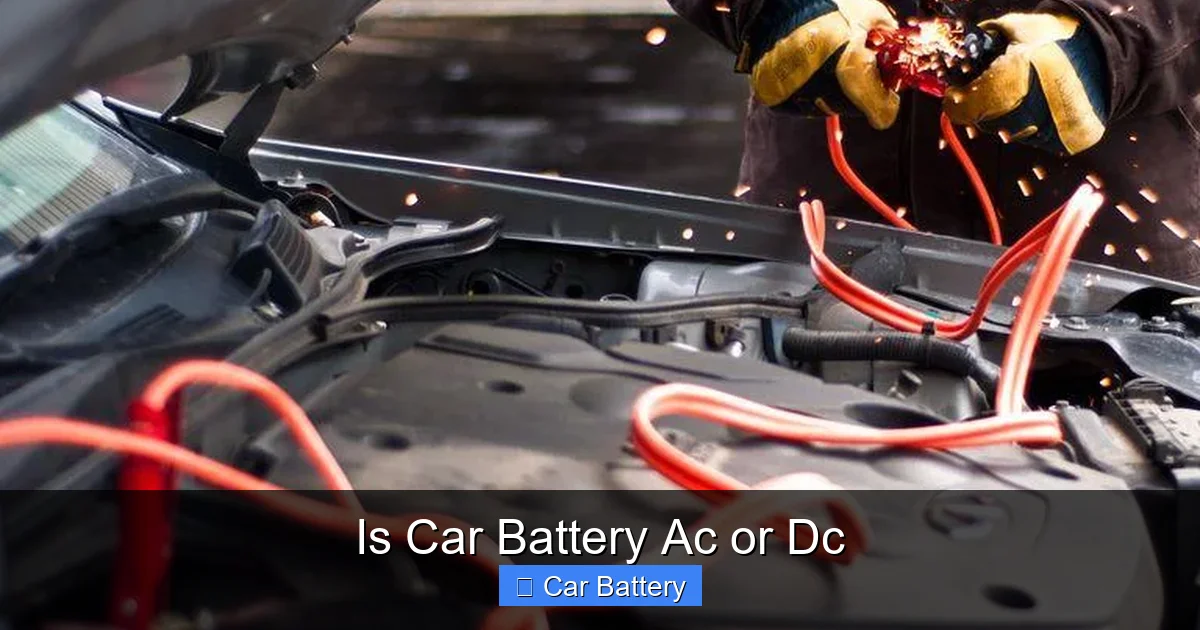
Visual guide about Is Car Battery Ac or Dc
Image source: carfromjapan.com
Your car battery is essentially a chemical power plant on wheels. It stores energy in the form of chemical potential and converts it into electrical energy when needed. But how exactly does it deliver that steady DC current?
Most car batteries are lead-acid batteries, consisting of six cells connected in series. Each cell produces about 2 volts, so six cells give you the standard 12-volt output. Inside each cell, lead plates are submerged in a sulfuric acid electrolyte. When you draw power (like when starting the engine), a chemical reaction occurs: lead dioxide (positive plate) and sponge lead (negative plate) react with the acid to produce lead sulfate, water, and electrons.
These electrons flow from the negative terminal, through the car’s wiring, and back to the positive terminal—creating a complete circuit. This one-way flow is DC. The battery maintains this flow as long as the chemical reaction continues, until the plates are mostly converted to lead sulfate and the voltage drops.
Important note: A fully charged 12-volt car battery actually measures around 12.6 volts when resting. When the engine is off, you might see 12.4–12.6 volts. Once the engine starts, the alternator takes over, and voltage rises to 13.7–14.7 volts to recharge the battery.
What Happens When You Start Your Car?
Let’s walk through what happens when you turn the key:
1. The ignition switch sends a small DC signal to the starter solenoid.
2. The solenoid engages, connecting the battery directly to the starter motor.
3. The starter motor draws a huge surge of DC current (often 100–300 amps) to crank the engine.
4. Once the engine starts, the alternator begins generating power.
5. The alternator produces AC, which is immediately converted to DC by a rectifier.
6. This DC power recharges the battery and runs all electrical systems.
At no point does the battery produce AC. It’s all DC—from the initial spark to the final mile.
The Role of the Alternator: AC to DC Conversion
Visual guide about Is Car Battery Ac or Dc
Image source: extronbattery.in
Here’s where things get interesting: while your battery is purely DC, your car’s alternator actually generates AC—before converting it back to DC. This might seem confusing, but it’s a clever engineering solution.
The alternator is a type of generator that uses electromagnetic induction to produce electricity. As the engine spins the alternator’s rotor (via a belt), it creates a rotating magnetic field inside stationary wire coils (the stator). This motion induces an alternating current in the coils—hence, AC.
But remember: your car runs on DC. So how does AC become usable? That’s where the diode rectifier comes in.
How the Rectifier Converts AC to DC
The rectifier is a set of diodes—semiconductor devices that allow current to flow in only one direction. When AC from the alternator passes through the diodes, the negative half of the wave is blocked, and the positive half is smoothed out. The result is pulsating DC, which is then filtered by capacitors to produce a steady 12-volt DC output.
This converted DC does two things:
– Powers all the car’s electrical systems (lights, radio, sensors, etc.)
– Recharges the battery
So while the alternator *generates* AC, the system as a whole delivers DC—just like the battery. This hybrid approach combines the efficiency of AC generation with the practicality of DC usage.
Why Not Generate DC Directly?
You might wonder: if the car uses DC, why not build a DC generator instead of an AC alternator? Great question!
Early cars did use DC generators, but they had major drawbacks:
– They required brushes and commutators, which wore out quickly and needed frequent maintenance.
– They were less efficient at high speeds.
– They couldn’t produce enough power for modern electrical loads.
Alternators, by contrast, are brushless (in most designs), more reliable, and generate higher output at lower RPMs. Plus, converting AC to DC is simple and efficient with modern electronics. So even though it adds a step, the overall system is more durable and powerful.
Types of Car Batteries and Their DC Output
Not all car batteries are the same—but they all deliver DC power. The type of battery affects performance, lifespan, and suitability for different vehicles, but the fundamental output remains direct current.
Lead-Acid Batteries (Flooded)
The most common type, found in most gasoline-powered cars. They’re affordable, reliable, and recyclable. These batteries use liquid electrolyte and require occasional maintenance (like checking water levels). They deliver a steady 12 volts DC and are perfect for standard driving needs.
Absorbent Glass Mat (AGM) Batteries
AGM batteries are sealed and use a fiberglass mat to absorb the electrolyte. They’re more resistant to vibration, charge faster, and handle deep discharges better than flooded batteries. Common in modern cars with start-stop technology, they still output 12 volts DC—just with improved performance.
Lithium-Ion Batteries
Used in electric and hybrid vehicles, lithium-ion batteries are lighter, more energy-dense, and longer-lasting. While they operate at higher voltages (often 200–400 volts in EVs), the principle is the same: they store and deliver DC power. In 12-volt auxiliary systems (like in hybrids), they still provide standard DC output.
Enhanced Flooded Batteries (EFB)
A step up from standard lead-acid, EFBs are designed for vehicles with mild hybrid systems or frequent start-stop cycles. They offer better charge acceptance and durability—still delivering 12 volts DC.
No matter the type, the battery’s job is the same: supply clean, stable DC power when the engine is off or under heavy load.
Common Misconceptions About Car Batteries and Current
Despite the clear science, many myths persist about car batteries and electricity. Let’s clear up a few:
Myth 1: “Car batteries produce AC because the alternator does.”
False. The alternator generates AC, but it’s converted to DC before use. The battery itself only stores and delivers DC. They work together, but the battery is purely DC.
Myth 2: “You can plug AC devices directly into your car.”
Not without an inverter. Your car’s 12-volt DC system can’t power standard AC appliances (like laptops or microwaves) directly. You need a power inverter to convert DC to AC. These devices plug into the cigarette lighter or battery terminals and simulate household outlets—but they’re not 100% efficient and can drain your battery quickly.
Myth 3: “All car electrical systems run on 12 volts.”
Most do, but not all. Heavy-duty trucks and military vehicles often use 24-volt systems for higher power demands. Electric vehicles use high-voltage DC systems (200–800 volts) for the motor, but still have a 12-volt DC battery for accessories.
Myth 4: “DC is dangerous in cars.”
Actually, 12-volt DC is very safe. It’s unlikely to cause electric shock or start a fire under normal conditions. That’s why it’s used in everything from toys to cars. High-voltage systems (like in EVs) require special handling, but your standard car battery is low-risk.
Practical Tips: Working with DC in Your Car
Now that you know your car runs on DC, here are some practical tips to keep things running smoothly:
Check Battery Voltage Regularly
Use a multimeter to measure your battery’s voltage:
– 12.6V or higher: Fully charged
– 12.4V: About 75% charged
– 12.2V: 50% charged
– Below 12.0V: Needs charging
A healthy battery should read at least 12.4V when the car is off.
Avoid Deep Discharges
Lead-acid batteries don’t like being fully drained. Leaving lights on or using accessories with the engine off can damage the battery over time. If you need extra power, consider a portable jump starter or battery maintainer.
Use the Right Charger
Not all chargers are created equal. Use a smart charger that automatically adjusts voltage and current. Avoid cheap trickle chargers that can overcharge and damage the battery.
Be Careful with Inverters
If you use a power inverter to run AC devices, don’t exceed the rated wattage. A typical 12V socket handles 100–150 watts. Running a coffee maker or power tool can blow fuses or drain the battery fast.
Understand Polarity
DC has a positive (+) and negative (−) terminal. Always connect red to positive, black to negative. Reversing polarity can damage electronics or cause sparks.
Conclusion: DC Powers Your Drive
So, is a car battery AC or DC? The answer is clear: **DC—direct current**. From the moment you start your engine to the last mile of your trip, your car relies on the steady, reliable flow of DC power. The battery stores it, the alternator replenishes it, and every system—from headlights to touchscreens—depends on it.
While AC plays a role in generation (via the alternator), it’s quickly converted to DC for practical use. This system is efficient, safe, and perfectly suited to the demands of modern vehicles. Whether you’re driving a compact sedan or a heavy-duty truck, the electrical heartbeat of your car is 12 volts of clean, direct current.
Understanding this helps you maintain your vehicle, troubleshoot issues, and make smarter choices about accessories and upgrades. So next time you pop the hood, you’ll know exactly what’s powering your ride—and why DC is the unsung hero under the hood.
Frequently Asked Questions
Is a car battery AC or DC?
A car battery is DC (direct current). It stores and delivers a steady, one-way flow of electricity at 12 volts, which powers all vehicle systems.
Does the alternator produce AC or DC?
The alternator generates AC (alternating current), but a rectifier inside converts it to DC before it charges the battery or powers electronics.
Can I run AC appliances in my car?
Only with a power inverter. The car’s 12-volt DC system can’t power standard AC devices directly. An inverter converts DC to AC, but it drains the battery quickly.
Why don’t cars use AC like homes?
Batteries can’t store AC, and most car electronics require stable DC power. DC is safer, more efficient, and better suited for mobile, low-voltage systems.
Do electric cars use DC?
Yes, electric cars use high-voltage DC for the motor and a 12-volt DC battery for accessories. All stored energy in batteries is DC.
What happens if I reverse battery polarity?
Reversing positive and negative terminals can damage electronics, blow fuses, or cause sparks. Always connect red to positive and black to negative.
