
Is Red Positive or Negative on a Car Battery

Red is almost always the positive terminal on a car battery, while black indicates the negative. Understanding this simple color code is essential for safe battery handling, jump-starting, and maintenance.
Key Takeaways
- Red means positive: On nearly all car batteries, the red terminal or cable indicates the positive (+) side.
- Black means negative: The black terminal or cable is the negative (−) side, completing the circuit.
- Safety first: Connecting cables in reverse can damage electronics, cause sparks, or even explode the battery.
- Look for markings: Most batteries have “+” and “−” symbols clearly labeled near the terminals.
- Cable size matters: Positive cables are often thicker because they carry more current from the battery to the starter.
- Hybrid and EVs may vary: Some electric vehicles use different color schemes—always check the manual.
- When in doubt, consult the manual: If colors are faded or unclear, refer to your vehicle’s owner’s guide for confirmation.
📑 Table of Contents
Understanding Car Battery Basics
Car batteries are the unsung heroes of your vehicle. They quietly power everything from your engine’s ignition to your headlights, radio, and dashboard lights. Without a properly functioning battery, your car simply won’t start. But beyond just knowing when it’s time for a replacement, understanding how your battery works—and especially how to identify its terminals—is crucial for safety and performance.
At the heart of every car battery are two terminals: one positive and one negative. These terminals allow electrical current to flow through your vehicle’s system, powering essential components. The color coding of these terminals—typically red for positive and black for negative—is a universal standard designed to prevent confusion and accidents. However, many drivers still get confused, especially during emergency situations like jump-starting a dead battery. That’s why knowing “is red positive or negative on a car battery” isn’t just trivia—it’s a vital piece of automotive knowledge.
How Car Batteries Work
A car battery stores chemical energy and converts it into electrical energy when needed. It consists of six cells, each producing about 2.1 volts, adding up to the standard 12-volt system in most vehicles. Inside each cell, lead plates are submerged in an electrolyte solution (usually sulfuric acid and water). When you turn the key, a chemical reaction occurs, releasing electrons that flow from the negative terminal through the car’s electrical system and back to the positive terminal—completing the circuit.
This flow of electrons is what powers your starter motor, lights, and other electronics. The positive terminal is where current returns to the battery after doing its work, while the negative terminal is the source of the outgoing current. Think of it like water flowing through a pipe: the negative side pushes the current out, and the positive side pulls it back in.
Why Terminal Identification Matters
Misidentifying the terminals can lead to serious consequences. Connecting jumper cables incorrectly—say, attaching red to negative and black to positive—can cause sparks, damage your car’s electrical system, or even result in a battery explosion. Modern vehicles are packed with sensitive electronics, and a reverse polarity event can fry control modules, fuses, and sensors costing hundreds or thousands of dollars to repair.
Even simple maintenance tasks like cleaning corrosion or replacing a battery require correct terminal identification. For example, you should always disconnect the negative terminal first when removing a battery to reduce the risk of short circuits. Reconnecting them in the wrong order can also cause problems. So, while it might seem like a small detail, knowing which color corresponds to which terminal is a foundational skill for any car owner.
The Color Code: Red Means Positive
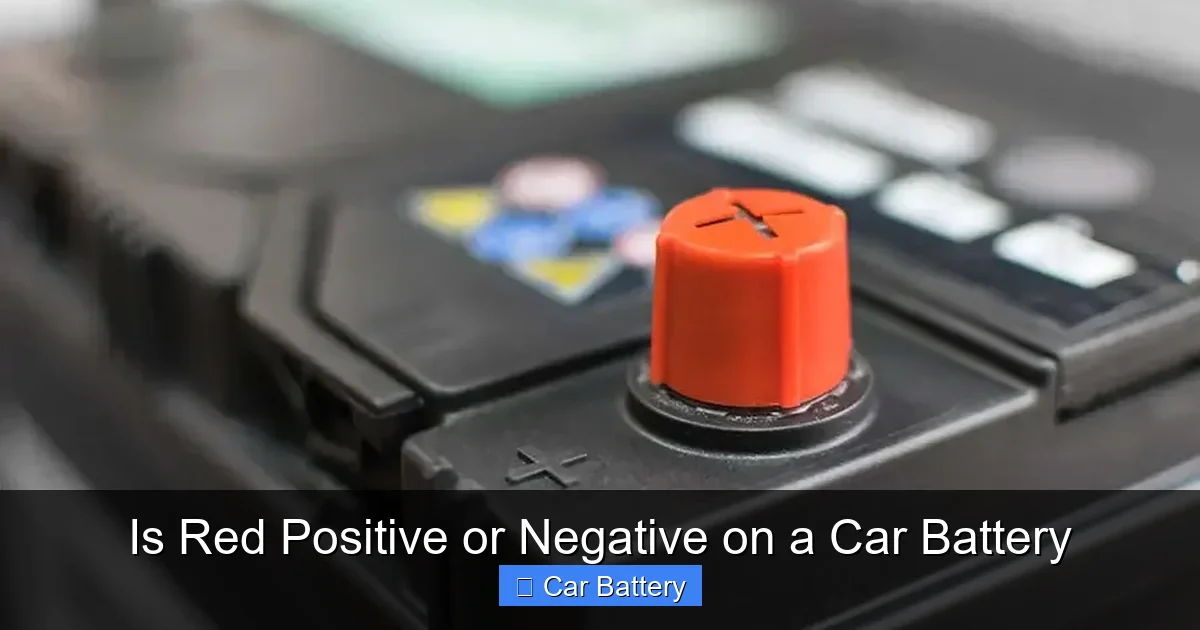
The short answer to “is red positive or negative on a car battery?” is clear: red is almost always positive. This color-coding standard has been adopted globally by automakers and battery manufacturers to ensure consistency and safety. The red terminal or cable connects to the positive (+) side of the battery, while the black one connects to the negative (−) side.
Visual guide about Is Red Positive or Negative on a Car Battery
Image source: thepowerall.com
This convention isn’t arbitrary. Red is universally associated with danger, alerts, and “go” in many contexts—so it makes sense that it would represent the terminal carrying the returning current, which is critical for system operation. Black, on the other hand, often symbolizes grounding or return paths in electrical systems, aligning perfectly with the negative terminal’s role.
Visual Clues Beyond Color
While color is the most obvious indicator, it’s not the only one. Most car batteries have clear “+” and “−” symbols stamped or printed near the terminals. These markings are usually molded into the plastic casing or labeled with durable stickers. Even if the red cover has faded or been painted over, these symbols provide a reliable backup.
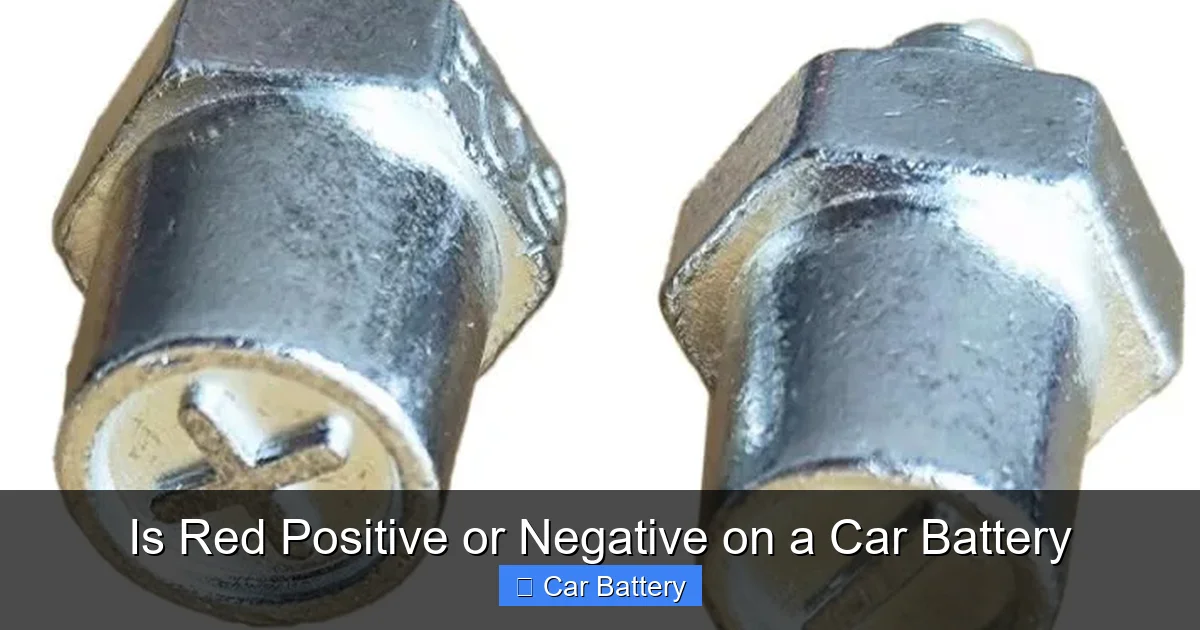
Additionally, the positive terminal is often slightly larger in diameter than the negative one. This subtle design difference helps prevent accidental reverse connections. Some batteries also feature raised ridges or unique shapes around the positive post to make tactile identification easier—especially useful in low-light conditions or for visually impaired individuals.
Exceptions to the Rule
While rare, there are exceptions. Some older European vehicles, particularly from the 1960s and 1970s, used reversed polarity systems where the positive terminal was grounded. However, these are largely obsolete, and modern vehicles follow the standard red-positive convention.
More commonly, hybrid and electric vehicles (EVs) may use different color schemes for high-voltage systems. For example, orange cables often indicate high-voltage circuits in EVs like Teslas or Nissan Leafs. But for the standard 12-volt auxiliary battery found in most hybrids and EVs, the red-positive rule still applies. Always consult your owner’s manual if you’re unsure—especially when working with high-voltage components.
Safety First: Risks of Getting It Wrong
Connecting battery cables incorrectly is one of the most common—and dangerous—mistakes drivers make. The consequences can range from minor inconveniences to catastrophic failures.
Visual guide about Is Red Positive or Negative on a Car Battery
Image source: ozo-electric.com
Electrical Damage
Modern cars rely heavily on electronic control units (ECUs), sensors, and infotainment systems. Reversing the battery polarity can send current flowing in the wrong direction, overwhelming delicate circuits. This can blow fuses, damage the alternator, or destroy the ECU—the brain of your vehicle. Repair costs can easily exceed $1,000, and in some cases, the damage may not be immediately apparent, leading to intermittent issues down the road.
Battery Explosion Risk
Car batteries contain sulfuric acid and produce hydrogen gas during charging. If jumper cables are connected backward, a spark can ignite this gas, causing the battery to explode. Shrapnel from the casing can cause serious injury, and the acidic electrolyte can burn skin and eyes. This risk is especially high in poorly ventilated areas like garages.
Alternator Damage
The alternator is designed to charge the battery with the correct polarity. Reverse connection can cause diodes in the alternator to fail, leading to a no-charge condition. You might notice dim lights, a dead battery, or a warning light on your dashboard. Replacing an alternator is expensive and often requires professional installation.
Practical Example: Jump-Starting Safely
Imagine you’re stranded in a parking lot with a dead battery. A kind stranger offers to help jump-start your car. Here’s how to do it safely:
- Turn off both vehicles and engage the parking brakes.
- Identify the positive (red) and negative (black) terminals on both batteries.
- Connect the red jumper cable to the positive terminal of the dead battery.
- Attach the other red clamp to the positive terminal of the good battery.
- Connect the black clamp to the negative terminal of the good battery.
- Attach the final black clamp to an unpainted metal surface on the dead car (like a bracket or engine block)—not the negative terminal. This reduces sparking near the battery.
- Start the working car and let it run for a few minutes.
- Try starting the dead car. If it starts, leave it running and disconnect the cables in reverse order.
Following this sequence minimizes risk and ensures you’re connecting red to positive and black to negative—or to a ground—every time.
Maintenance Tips for Battery Longevity
Knowing the terminal colors is just the beginning. Proper maintenance can extend your battery’s life and prevent unexpected failures.
Regular Inspection
Check your battery every few months, especially before extreme weather seasons. Look for signs of corrosion—a white, green, or blue powdery substance around the terminals. This buildup can impede electrical flow and cause starting problems. Clean it gently with a mixture of baking soda and water, using an old toothbrush. Rinse with clean water and dry thoroughly.
Tight Connections
Loose terminals can cause intermittent power loss or prevent the car from starting. Use a wrench to ensure both terminals are snug, but don’t overtighten—this can strip the threads or crack the casing. A properly secured connection ensures maximum current flow and reduces resistance.
Keep It Charged
Batteries lose charge over time, especially in cold weather. If you don’t drive often, consider using a battery maintainer or trickle charger. These devices keep the battery at full charge without overcharging, which can damage the plates. A fully charged battery is less likely to freeze in winter and more reliable in summer.
Watch for Warning Signs
Slow engine cranking, dim headlights, or a check engine light can indicate a weak battery. Most batteries last 3–5 years, so if yours is older, consider testing it at an auto parts store. Many offer free battery and charging system checks.
Replacement Best Practices
When replacing a battery, always disconnect the negative terminal first and reconnect it last. This reduces the risk of short circuits. Dispose of old batteries responsibly—most auto shops recycle them for free. New batteries often come with a warranty, so keep your receipt and register the product if required.
Special Cases: Hybrids, EVs, and Older Vehicles
While the red-positive rule holds true for most vehicles, there are some exceptions worth noting.
Hybrid and Electric Vehicles
Hybrids and EVs have two battery systems: a high-voltage traction battery (for propulsion) and a standard 12-volt auxiliary battery (for lights, radio, etc.). The 12-volt battery still follows the red-positive convention. However, the high-voltage system uses orange cables and requires specialized training to service. Never attempt to work on high-voltage components unless you’re certified.
For example, in a Toyota Prius, the 12-volt battery is usually located in the trunk or under the hood and has red and black terminals. But the main hybrid battery pack is clearly marked with orange insulation and warning labels. Always refer to the service manual before performing any work.
Classic and Vintage Cars
Some older vehicles, particularly British models from the 1960s, used positive-ground systems. In these cars, the positive terminal was connected to the chassis, and the negative was the “hot” side. However, most have been converted to negative-ground systems for compatibility with modern parts. If you own a classic car, check the wiring diagram or consult a specialist before making any connections.
Aftermarket Modifications
If you’ve installed a custom audio system, winch, or auxiliary lights, the wiring might not follow standard color codes. Always label your wires during installation and keep a diagram. Using a multimeter can help verify polarity if colors are unclear.
Tools and Accessories to Help
Having the right tools makes battery work safer and easier.
Multimeter
A multimeter is a handheld device that measures voltage, current, and resistance. Use it to confirm terminal polarity if colors are faded or missing. Set it to DC voltage, touch the red probe to one terminal and the black probe to the other. A positive reading means the red probe is on the positive terminal.
Battery Terminal Cleaner
These sprays or brushes make it easy to remove corrosion without mixing homemade solutions. They’re affordable and available at most auto parts stores.
Terminal Protectors
After cleaning, apply a thin layer of dielectric grease or terminal protector spray. This prevents future corrosion and ensures a solid connection.
Insulated Wrenches
Use wrenches with insulated handles to reduce the risk of short circuits. Avoid using metal tools that could bridge the terminals accidentally.
Conclusion
So, is red positive or negative on a car battery? The answer is clear: red is positive. This simple color code is a universal standard designed to keep you safe and your car running smoothly. Whether you’re jump-starting a dead battery, performing routine maintenance, or replacing an old unit, knowing which terminal is which is essential.
While most vehicles follow this rule, always double-check with markings, symbols, or your owner’s manual—especially with hybrids, EVs, or older models. And remember, safety comes first: incorrect connections can lead to electrical damage, fires, or even explosions. With the right knowledge and tools, you can handle your car’s battery with confidence and keep your vehicle in top condition for years to come.
Frequently Asked Questions
Is red always positive on a car battery?
In nearly all modern vehicles, yes—red indicates the positive terminal. However, always check for “+” and “−” markings or consult your owner’s manual to be certain, especially with older or specialized vehicles.
What happens if I connect the cables backward?
Reversing the cables can cause sparks, damage your car’s electronics, blow fuses, or even explode the battery. It’s a serious safety risk and can lead to expensive repairs.
Can I use any red and black cables for jump-starting?
Use only high-quality jumper cables rated for your vehicle’s battery size. Cheap or damaged cables may not carry enough current or could overheat, creating a fire hazard.
Why is the positive terminal sometimes bigger?
The positive terminal is often slightly larger in diameter to prevent accidental reverse connections. This design helps ensure correct polarity during installation or jump-starting.
Do electric cars follow the same color code?
For the 12-volt auxiliary battery, yes—red is positive. However, high-voltage systems in EVs use orange cables and require professional handling. Never work on high-voltage components without proper training.
How can I tell if my battery terminals are corroded?
Look for a white, green, or blue powdery substance around the terminals. This is corrosion caused by acid leakage and can be cleaned with baking soda and water. Regular cleaning helps maintain good electrical contact.
