
How to Store a Car Cover Properly: Step-by-Step Guide

Quick Answer
To store a car cover, remove loose debris, make sure the cover is fully dry, fold or roll it without dragging the paint-side surface on the ground, place it in a clean storage bag, and keep it in a cool, dry location. If the cover touched dirt or road grit, clean it first so that contamination does not reach your paint the next time you use it; Car and Driver’s car-cleaning resources are a useful reference for broader paint-care habits.
Fast storage steps
- Shake it out: Remove leaves, dust, sand, and loose debris before folding.
- Dry it fully: Check seams, hems, straps, and thicker sections for hidden dampness.
- Fold cleanly: Keep the inner paint-contact surface away from the floor or driveway.
- Bag it: Use the cover’s storage bag or another clean, breathable container.
- Store it cool: Choose a dry shelf or closet away from direct sunlight, standing water, and high heat.
One rule matters most
- Never seal a damp car cover in a bag just because the outside feels dry.
Storing a car cover looks simple, but a bad fold can trap moisture, dirt, and grit exactly where you do not want them. I use the same basic routine whether the cover protects a daily driver, a weekend car, or a vehicle parked for a season.
This 2026 guide explains how to store a car cover without contaminating its inner surface, creating hard creases, or packing away hidden moisture. It also covers wet covers, storage bags, trunks, garages, and long-term storage.
In This Guide
Why Does Proper Car Cover Storage Matter?
Proper storage keeps the cover’s paint-contact side clean, dry, and ready to use. It also reduces unnecessary stress on seams, coatings, elastic hems, and straps.
A stored car cover is a folded or rolled vehicle cover kept off the vehicle between uses. The goal is to protect the cover from moisture, contamination, heat, sunlight, and rough handling.
- Dirt control: Dust or grit packed into the cover can transfer back onto the vehicle.
- Moisture control: Damp fabric stored without airflow can develop musty odors or mildew.
- Material protection: Sharp repeated creases and heavy objects can stress fabric and coatings.
- Paint protection: A clean inner surface is less likely to carry abrasive particles against the clear coat.
- Faster reuse: A neatly stored cover is easier to identify, unfold, and install without dragging.
I think of the inner lining like a large detailing towel. Once that surface picks up sand, garage dust, or dirty floor debris, I no longer want it sliding over clear coat.
General vehicle-care guidance from Consumer Reports’ maintenance and repair resources also reinforces the bigger point: keeping a vehicle clean and maintained helps protect the finish over time.
Section Takeaway: Good car cover storage is contamination control. Keep the paint-contact side clean, keep the whole cover dry, and avoid crushing it into a dirty corner.
How Do You Store a Car Cover Step by Step?
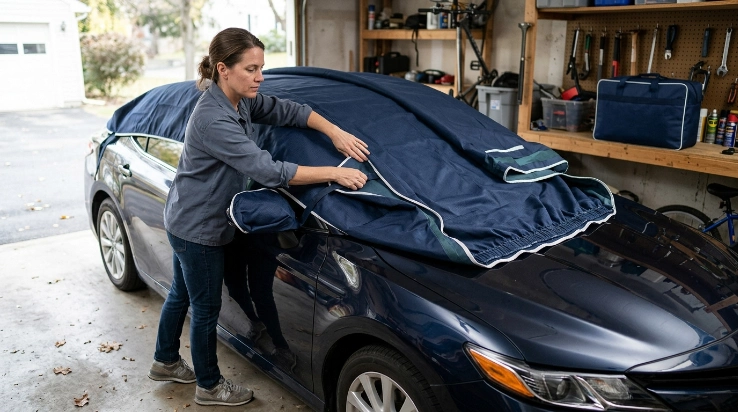
The safest routine is simple: clean, dry, fold or roll, bag, then store. The order matters because folding a dirty or damp cover only locks the problem inside.
1. Remove loose debris before taking the cover off
Brush or shake off leaves, twigs, pollen clumps, and loose dirt before you start folding. This keeps debris from getting trapped between layers.
If the outer surface is heavily soiled, clean it according to the cover manufacturer’s instructions before long-term storage. Washing rules vary by fabric, so do not assume every cover can go in a household washer or dryer.
2. Make sure the cover is completely dry
Do not judge dryness only by the large center panels. Seams, elastic hems, mirror pockets, straps, and reinforced areas can hold moisture longer.
- Feel the seams: Run your fingers along thicker stitched areas.
- Check the underside: Condensation may remain even when the top feels dry.
- Open folded sections: Dampness can hide where fabric was bunched during removal.
- Air-dry first: If anything feels cool or damp, leave the cover open in a ventilated area.
3. Keep the inner surface off the ground
A clean driveway can still hold sand, grit, oil residue, and metal particles. I avoid laying the paint-side surface directly on concrete whenever possible.
For frequent use, I prefer folding the cover while it is still resting loosely on the vehicle. That keeps the inner side enclosed and reduces dragging.
4. Fold the sides toward the center
Bring both side panels inward toward the roof centerline until the cover forms a long, narrow strip. Tuck mirror pockets and straps inside so they do not snag.
Keep the folds broad rather than sharply creased. You want a manageable bundle, not a tightly compressed brick.
5. Roll or fold from one end
Start at the front or rear and work toward the opposite end. A loose roll is convenient because it opens in the reverse order during the next installation.
6. Put the cover in a clean bag
Use the supplied storage bag if it is clean and dry. A breathable fabric bag or clean storage tote can also work when it fits the cover without heavy compression.
- Do not stuff it: Random compression can create hard folds and tangles.
- Do not mix hardware: Keep sharp locks, cables, or loose metal parts away from the fabric.
- Label multiple covers: Mark the vehicle or cover type on the bag, not on the cover’s paint-contact surface.
Section Takeaway: The best storage method protects the inner surface from dirt and gives hidden moisture a chance to escape before the cover is bagged.
Should You Fold or Roll a Car Cover?
Both methods can work, but rolling is often easier for repeat use and reduces the number of fixed crease lines. Folding can save space when the cover needs to fit a compact storage bag.
The better choice depends on the cover’s thickness, coating, lining, and manufacturer instructions. Do not force a bulky multilayer cover into a tiny bag just to make it look neat.
When rolling makes sense
- Frequent use: A rolled cover can be faster to unroll across the roof.
- Thick fabric: Rolling avoids stacking many bulky folded layers.
- Longer storage: A loose roll can reduce hard crease points when space allows.
When folding makes sense
- Small storage bag: Broad folds create a compact rectangular bundle.
- Trunk storage: A flat folded cover can fit better beside emergency gear.
- Light indoor cover: Thin fabric usually folds easily without heavy compression.
My practical rule is to choose the method that lets the fabric sit relaxed. If you have to kneel on the bag to close it, the bundle is too tight.
Whichever method you use, keep the same clean side protected inside the bundle. That habit matters more than whether the final shape is round or rectangular.
Where Is the Best Place to Store a Car Cover?
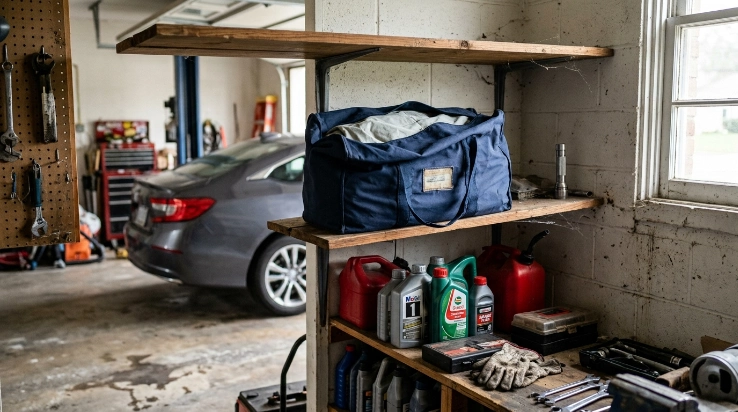
A cool, dry, clean indoor shelf is usually the best location. Avoid standing water, direct sunlight, high heat, sharp tools, chemicals, and areas where rodents can reach the fabric.
| Storage location | Best use | Main concern | Recommended setup |
|---|---|---|---|
| Garage shelf | Daily or seasonal use | Dust and humidity | Bagged, raised off the floor |
| Indoor closet | Long-term clean storage | Limited space | Loose fold or roll in a clean bag |
| Vehicle trunk | Portable short-term storage | Heat and contamination | Sealed from dirty cargo, not left damp |
| Basement or shed | Only if conditions are controlled | Humidity, pests, temperature swings | Raised clean container in a dry area |
A garage floor is convenient, but it is one of my last choices. It exposes the bag to water, dust, spilled chemicals, insects, and whatever gets carried in on tires.
If you store the cover near car-care supplies, keep solvents, fuel, oils, and sharp tools separate. Kelley Blue Book maintains a broad car maintenance resource center for owners managing the wider upkeep around stored vehicles.
Section Takeaway: Store the bag above floor level in a stable, dry environment. Convenience is useful, but cleanliness and moisture control come first.
What Should You Do With a Wet or Dirty Car Cover?
Do not fold and seal a wet cover. Open it up, remove standing water, and air-dry it until the fabric, seams, elastic, and straps are dry.
If you cannot dry it immediately, keep it loosely opened in a ventilated place. A temporary loose drape is safer than trapping moisture inside a closed bag.
If the cover is wet from rain or dew
- Shake off excess water. Remove as much surface water as you can without scraping the fabric.
- Open the cover fully. Do not leave wet layers pressed together.
- Let air reach both sides. Flip or reposition it during drying when needed.
- Check thick areas. Seams and hems often dry later than center panels.
- Bag it only when dry. Do one final touch check before storage.
If the cover is dirty
First remove loose debris, then follow the manufacturer’s cleaning instructions. Material-specific care matters because some coatings and linings react poorly to harsh detergent, bleach, high heat, or aggressive machine cycles.
- Light dust: Shake or gently brush it away.
- Mud or road film: Clean before long-term storage.
- Bird droppings or sap: Treat promptly rather than folding contamination into the material.
- Grit on the inner surface: Clean it before the cover touches paint again.
Never assume the outside is the only dirty side. Wind, handling, and a dirty storage surface can contaminate the inner face too.
How Should You Store a Car Cover for Several Months?
For seasonal or multi-month storage, clean and dry the cover more carefully, inspect it for damage, fold or roll it loosely, then place it in a clean bag on an indoor shelf. Do not place heavy objects on top of it.
Long-term storage is also a good time to check elastic hems, straps, grommets, seams, mirror pockets, and any soft inner lining. Small damage is easier to address before the next season starts.
Long-term car cover checklist
- Clean first: Remove contamination that could harden or stain while stored.
- Dry both sides: Pay special attention to seams and reinforced areas.
- Inspect hardware: Separate locks or metal cables from the folded fabric.
- Use broad folds: Avoid extreme compression and sharp repeated creases.
- Protect from pests: Choose a raised, clean location with limited rodent access.
- Check before reuse: Open the bag and inspect the inner surface before covering the car.
If the vehicle itself is being stored for months, the cover is only one part of the job. Edmunds’ long-term vehicle storage guide covers broader preparation such as cleaning the car, battery care, tire pressure, and keeping the vehicle protected from weather.
I also avoid treating a storage bag as permanent protection. Before the next use, I open the cover in good light, check for damp odor or grit, and make sure no insect or rodent damage appeared while it sat.
Section Takeaway: Seasonal storage needs one extra step: inspect before and after storage. A clean bag cannot protect a cover that went in damp, dirty, or already damaged.
Frequently Asked Questions
Can I store a car cover in the trunk?
Yes, a trunk can work for short-term portable storage if the cover is clean and dry. Keep it bagged and separated from dirty tools, leaking fluids, sharp cargo, and wet equipment.
Can I fold a car cover when it is slightly damp?
It is better to let it dry first. Even small damp areas around seams, hems, or straps can stay trapped when the cover is folded and placed in a bag.
Should the car cover storage bag be airtight?
An airtight bag is not necessary for normal storage, and it can be a problem if moisture gets sealed inside. A clean storage bag that protects against dust while holding a fully dry cover is the safer general approach.
How do I keep the inside of a car cover clean?
Avoid putting the inner surface on pavement, garage floors, grass, or dirty cargo. Fold the sides inward while the cover is still on the car when practical, and inspect the inner face before each installation.
Is rolling a car cover better than folding it?
Rolling can reduce hard crease lines and makes repeated installation easy, but folding is fine when done loosely. Follow the manufacturer’s instructions and avoid forcing either method into an undersized bag.
Do I need to wash a car cover before storing it?
Not after every use. Wash or clean it when it is visibly dirty, contaminated, or gritty, and always follow the specific care instructions for that cover’s material and coating.
What is the biggest mistake when storing a car cover?
The biggest mistake is packing it away while damp or contaminated. Moisture can create odor or mildew, while dirt on the inner surface can be transferred back to the vehicle’s paint.
The simple takeaway: Store your car cover clean, fully dry, loosely folded or rolled, and protected inside a clean bag in a cool, dry place.
Before every reuse, take a few seconds to inspect the inner surface. That small habit can protect both the cover and the paint underneath it.