
Classic Car Cover Problems: Causes, Damage, and How to Prevent Them

Quick Answer
Classic car cover problems usually come from trapped moisture, dust and grit, poor fit, wind movement, rough fabric, or covering a vehicle before it is completely dry. These issues matter more on older vehicles because fragile paint, chrome, rubber seals, and previously repaired bodywork may need gentler treatment. For broader guidance on preserving older vehicles, Hagerty’s classic car maintenance resources are also worth reviewing.
Problems to check first
- Trapped moisture: Condensation or a damp cover can keep metal, trim, and paint wet longer than expected.
- Paint rubbing: Dust beneath a moving cover can create fine scratches or dull delicate finishes.
- Loose fit: Excess fabric can flap across fenders, mirrors, roof edges, and other contact points.
- Dirty lining: Grit transferred from the floor or storage area can end up directly against the paint.
- Wrong material: A cover designed for indoor dust protection may not handle outdoor moisture and wind well.
- Covering too soon: Putting a cover over a wet or recently driven vehicle can trap heat and moisture.
Best first step
- Remove the cover, inspect the car and fabric in good light, and let both surfaces dry completely before deciding whether the cover is safe to reuse.
Classic cars can be surprisingly sensitive to the wrong cover. I’ve seen owners protect a vehicle from dust only to discover moisture, fine rubbing marks, or mildew underneath later.
A good cover can still be useful. The key is matching the material, fit, storage environment, and installation routine to an older vehicle’s condition.
In This Guide
- What Problems Can a Classic Car Cover Cause?
- Can a Car Cover Damage Classic Car Paint?
- Can a Car Cover Trap Moisture and Cause Rust?
- Which Car Cover Is Better for a Classic Car?
- How Do You Cover a Classic Car Without Damaging It?
- When Should You Replace a Classic Car Cover?
- Frequently Asked Questions
What Problems Can a Classic Car Cover Cause?
Classic car cover problems usually involve moisture, dirt, movement, fit, or unsuitable materials. The cover becomes risky when it holds contaminants against vulnerable surfaces instead of keeping them away.
A car cover is a removable protective fabric shell placed over a parked vehicle. Its job is to reduce exposure to dust, debris, sunlight, moisture, and other environmental contaminants.
The most common problems
- Condensation underneath: Moist air can become water droplets when temperatures change.
- Fine paint scratches: Dust or grit can rub against paint when the fabric moves.
- Mildew or musty odors: A wet vehicle or damp cover may remain moist for extended periods.
- Wind flapping: Loose fabric can repeatedly strike the same body panels.
- Trim pressure: Tight areas can pull against mirrors, hood ornaments, antennas, or fragile trim.
- Water penetration: Worn seams or unsuitable fabrics may allow rain to reach the vehicle.
- Dirty-cover transfer: A cover placed on the ground can pick up grit before touching paint again.
Older vehicles deserve extra attention because finishes vary widely. One car may have modern two-stage paint, while another carries older lacquer, enamel, or decades-old repaint work.
I therefore inspect the vehicle rather than assuming every classic can tolerate the same covering routine. A cover that works perfectly on one car may be a poor choice for another.
Indoor and outdoor problems are different
Indoor storage mainly creates concerns about dust, condensation, pests, and contamination. Wind and direct rain usually become less important.
Outdoor storage adds ultraviolet exposure, rain, debris, stronger temperature swings, and wind movement. That makes cover fit and weather suitability more important.
| Problem | Likely Cause | First Thing to Check |
|---|---|---|
| Fine scratches | Grit plus fabric movement | Inside of cover and paint cleanliness |
| Water droplets | Condensation or trapped moisture | Vehicle, floor, ventilation, and cover dryness |
| Fabric flapping | Poor fit or weak fastening | Elastic hems, straps, and overall size |
| Musty odor | Cover stored or installed damp | Lining and storage environment |
| Torn mirror area | Tight fit or repeated stretching | Mirror pockets and surrounding seams |
Section Takeaway: Most classic car cover problems are not caused by covering the car itself. They develop when moisture, contamination, movement, or poor fit gets involved.
Can a Car Cover Damage Classic Car Paint?
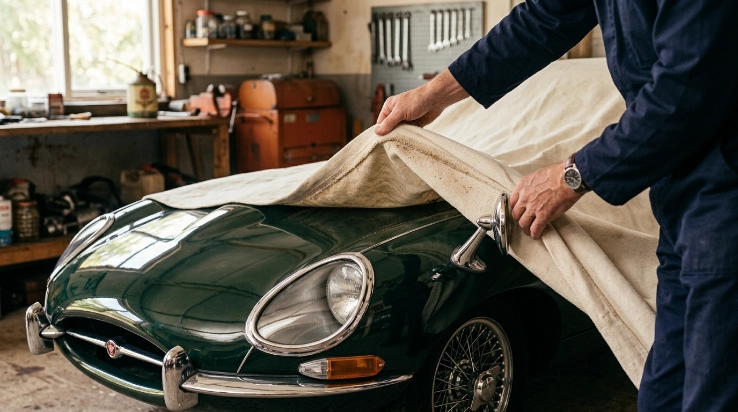
Yes. A car cover can contribute to paint damage when abrasive contamination gets trapped beneath it or the material repeatedly moves across the finish.
The risk becomes more important on a classic with delicate, oxidized, recently restored, or already damaged paint.
Dirt is often the hidden culprit
A clean, soft cover touching clean paint normally behaves differently from a dusty cover sliding over a dirty hood. That distinction matters.
Think about fine road dust as microscopic abrasive material. Repeated fabric movement can drag that contamination across the surface.
- Wash or safely dust the car before extended covering.
- Keep the cover’s inner surface clean.
- Never drag the cover across a dirty garage floor.
- Avoid pulling fabric sideways across the hood or roof.
- Check high-contact areas after the first few uses.
Inspect fragile finishes before covering them
Paint condition matters as much as cover quality. Peeling clear coat, lifting paint, bubbling repairs, or loose decals need special care.
If the finish already feels unstable, avoid repeatedly pulling fabric across it. Consider professional advice before long-term covered storage.
Mechanic Alert: If you find bubbling paint, exposed metal, significant corrosion, or loose body trim, have a qualified restoration or body professional inspect the area before continued storage.
Watch the pressure points
I check mirrors, fender peaks, hood ornaments, roof edges, spoilers, antenna areas, and sharp bumper corners first. These spots often carry more fabric tension.
- Too loose: The material can flap and slide.
- Too tight: The material can strain trim and seams.
- Correct fit: The cover follows the vehicle without large loose panels or excessive tension.
General vehicle-care guidance from Kelley Blue Book can also help when evaluating paint and exterior maintenance concerns.
Section Takeaway: Cleanliness and controlled movement matter more than softness alone. Even a soft cover can cause trouble when dirt becomes trapped underneath.
Can a Car Cover Trap Moisture and Cause Rust?
A car cover can trap or slow the escape of moisture under the wrong conditions. Persistent dampness can contribute to corrosion problems, especially around exposed or poorly protected metal.
The cover may not be the original source. Humid air, a damp floor, rain, washing, or putting the car away wet can all introduce moisture.
Where does moisture underneath a cover come from?
- A wet car: Water remains around trim, seams, wheel openings, and weatherstripping.
- A damp cover: Moist fabric transfers water back toward the vehicle.
- Condensation: Temperature changes can turn humid air into droplets.
- Damp ground: Moisture around the storage area can raise local humidity.
- Water intrusion: Rain may enter through worn material, damaged seams, or openings.
- Poor airflow: Moisture may escape more slowly from a closed or humid storage area.
Vehicle-storage guidance published through NHTSA’s technical-document system has also emphasized reducing exposure to ground moisture when storing vehicles. That principle makes sense for classics as well.
Breathable does not mean moisture-proof
A breathable cover is designed to allow water vapor to escape more readily. It cannot prevent every condensation event.
Likewise, a water-resistant cover does not mean the area beneath it will remain dry regardless of humidity or storage conditions.
What should you do when the car is wet underneath?
- Remove the cover carefully.
- Move the vehicle to a dry, ventilated location when possible.
- Let the vehicle dry completely.
- Dry the cover separately.
- Inspect seams, lining, windows, trim, and lower body areas.
- Check the garage or parking surface for moisture sources.
- Do not reinstall the cover until both surfaces are dry.
For general automotive safety and vehicle information, the National Highway Traffic Safety Administration remains a useful federal resource.
Section Takeaway: A cover should never become a damp cocoon around the car. If you repeatedly find moisture underneath, identify the source instead of simply covering the vehicle again.
Which Car Cover Is Better for a Classic Car?
The best cover depends on where the classic is stored. An indoor garage car and an outdoor driveway car face different conditions.
Material softness matters, but so do fit, breathability, fastening, cleanliness, and weather exposure.
Indoor vs outdoor classic car covers
| Feature | Indoor Cover | Outdoor Cover |
|---|---|---|
| Main purpose | Dust and light contact protection | Weather, debris, sun, and contamination protection |
| Typical feel | Often softer and lighter | Usually more weather-focused |
| Wind security | Usually less important indoors | Critical in exposed locations |
| Moisture management | Important in humid garages | Important after rain and temperature changes |
| Fit priority | High | Very high because wind increases movement |
Custom fit vs universal fit
A custom-fit cover follows a particular body shape more closely. That can reduce excess fabric around mirrors, bumpers, and roof sections.
A universal cover can still work when sizing is appropriate. I become cautious when large sections hang loose or the material must stretch tightly over protruding parts.
Soft lining is not the only consideration
A plush lining sounds ideal for classic paint, but a dirty soft surface can still hold grit. Maintenance remains essential.
- Check the manufacturer’s intended environment.
- Choose the correct vehicle dimensions.
- Inspect the interior fabric before every long storage period.
- Confirm straps cannot strike painted panels.
- Make sure mirror pockets align without excessive pulling.
As of 2026, I would choose a clean, properly fitted, environment-appropriate cover over a flashy cover with vague protection claims every time.
How Do You Cover a Classic Car Without Damaging It?
Start with a clean, dry vehicle and a clean, dry cover. Then install the fabric without dragging it across the body or ground.
This routine takes longer than throwing a cover over the roof. It also eliminates several common causes of damage.
A safer covering routine
- Clean the vehicle: Remove dust, grit, bird droppings, and other contamination.
- Dry it fully: Check mirrors, trim seams, door gaps, wheels, and weatherstripping.
- Inspect the cover: Look for dirt, dampness, rough areas, tears, or damaged seams.
- Position it carefully: Identify the front and rear before spreading it out.
- Roll rather than drag: Work the cover over the roof and panels with controlled movement.
- Fit mirrors gently: Never force pockets over mirrors or accessories.
- Secure the cover: Use the manufacturer’s fastening system correctly.
- Inspect afterward: Make sure straps, buckles, or loose fabric cannot strike paint.
Check the car during long-term storage
I don’t like covering a classic for several months without looking underneath. Small problems are easier to solve early.
Periodic inspections can reveal condensation, pest activity, dust intrusion, leaking fluids, tire changes, or a cover that has shifted.
- Check for dampness.
- Look for new rub marks.
- Inspect chrome and exposed metal.
- Check the garage floor for water.
- Confirm the cover remains clean and secure.
You can also review broader maintenance guidance from Consumer Reports when planning routine vehicle-care work.
Section Takeaway: Proper preparation is part of using a cover. A clean cover placed over a dirty or damp classic can still create problems.
When Should You Replace a Classic Car Cover?
Replace the cover when it can no longer stay clean, secure, intact, and appropriate for the storage environment. Age alone does not determine whether it has failed.
I pay more attention to physical condition than the purchase date.
Warning signs that a cover is worn out
- Brittle fabric: Material cracks, flakes, or tears under light handling.
- Repeated holes: New tears continue appearing after previous repairs.
- Failed seams: Stitching separates around mirrors, hems, or stressed sections.
- Weak elastic: Front or rear edges no longer grip securely.
- Broken fastening: Straps or attachment points cannot hold the cover properly.
- Rough lining: The inner surface has hardened, degraded, or become difficult to clean.
- Persistent dampness: The cover remains wet or develops recurring mildew problems.
- Poor fit: Stretching, shrinkage, or damaged elastic allows excessive movement.
Can you repair it instead?
A small isolated tear may be repairable when the surrounding material remains strong. A loose seam may also be worth fixing before it spreads.
Widespread deterioration is different. Patching one area will not restore weak fabric across the entire cover.
| Condition | Likely Best Choice |
|---|---|
| Dirty but structurally sound | Clean according to manufacturer directions |
| Small isolated tear | Consider a proper repair |
| Single damaged seam | Repair before it spreads |
| Weak fabric in several areas | Replace |
| Cannot remain secure | Replace or change fit |
| Recurring mildew or contamination | Clean thoroughly or replace if unresolved |
Section Takeaway: Don’t keep a failing cover simply because it once worked well. The cover should protect the classic without introducing new moisture, contamination, or movement problems.
Frequently Asked Questions
Should you put a car cover on a classic car?
Yes, a suitable car cover can help protect a classic from dust, debris, sunlight, and other contamination. Use a clean, properly fitted cover on a clean, dry vehicle, and match the cover to indoor or outdoor storage conditions.
Can a car cover scratch old paint?
It can. Scratching is more likely when grit becomes trapped between the cover and paint or loose fabric moves repeatedly across the body. Older, oxidized, damaged, or delicate finishes deserve extra care.
Should a classic car be covered inside a garage?
A cover can be useful in a garage when dust, accidental contact, or storage contamination is a concern. Choose a breathable indoor-appropriate cover and make sure the vehicle and fabric are completely dry before installation.
Can a car cover cause rust?
A cover does not automatically cause rust, but persistent trapped moisture can create conditions that encourage corrosion. Check for condensation, damp floors, leaks, poor airflow, and wet cover material whenever the vehicle stays damp underneath.
Should you cover a classic car immediately after driving?
It is better to let the vehicle cool and ensure its exterior is dry before long-term covering. Heat, moisture, road contamination, and water trapped around trim should be dealt with before the cover goes on.
Is a waterproof cover best for a classic car?
Not automatically. Weather protection, breathability, fit, softness, and the storage environment all matter. A highly water-resistant outdoor cover may be useful outside, while a softer breathable cover may suit a dry garage better.
How often should you check a covered classic car?
There is no single interval that fits every storage situation. Check often enough to catch condensation, shifting fabric, pests, leaks, or contamination before they become larger problems, especially during humid or changing weather.
The main rule is simple: the car and the cover should both be clean, dry, and compatible with the storage environment.
Inspect your classic before covering it again. If the current cover stays damp, moves excessively, feels rough, or no longer fits correctly, fixing the storage setup may protect the car better than simply leaving the cover in place.
