
Waterproof Car Cover Condensation: Why It Happens and How to Stop It

Quick Answer
Condensation under a waterproof car cover usually happens because humid air becomes trapped between the cover and the vehicle. As temperatures change, that moisture can turn into droplets on the paint, glass, and metal surfaces. A breathable car cover, a dry vehicle, and better airflow are the main ways to reduce it.
Most common causes
- Trapped humidity: Moist air underneath the cover has nowhere to escape.
- Wet vehicle: Covering the car before it dries traps water underneath.
- Poor breathability: Some waterproof fabrics block water in both directions.
- Temperature swings: Warm humid air can condense when the vehicle surface becomes cooler.
- Poor airflow: Tight covers without vents can hold damp air against the vehicle.
What to do first
- Remove the cover, dry both the vehicle and cover, then reinstall it only when both are fully dry.
The first time I found waterproof car cover condensation on one of my vehicles, I thought the cover had leaked. The outside was dry underneath, yet small water droplets covered the roof and windows.
The problem wasn’t rain coming through the fabric. Moisture was being trapped underneath it.
This guide explains why that happens, whether it can hurt your car, and how I deal with it without giving up outdoor protection.
In This Guide
- Why Does Condensation Form Under a Waterproof Car Cover?
- Is Condensation Under a Car Cover Bad for Your Car?
- How Do You Stop Condensation Under a Waterproof Car Cover?
- Waterproof vs Breathable Car Covers: Which Works Better?
- What Should You Do If Your Car Is Already Wet Under the Cover?
- FAQ: Waterproof Car Cover Condensation
Why Does Condensation Form Under a Waterproof Car Cover?
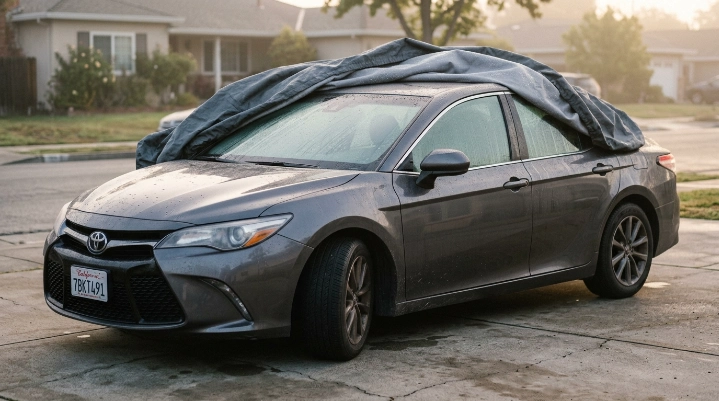
Condensation forms when moist air meets a surface cool enough for some of that moisture to become liquid water. A waterproof cover can make this more noticeable because trapped humid air may have limited ways to escape.
This is why water underneath a cover doesn’t automatically mean the cover is leaking.
Definition: Car cover condensation is moisture that changes from water vapor into liquid droplets underneath or on the inside surface of a vehicle cover.
Temperature changes are often the trigger
I notice the problem most after a warm, humid day followed by a cooler night. The vehicle body cools, while damp air remains trapped under the fabric.
That temperature difference can leave droplets across the roof, hood, windows, and sometimes the underside of the cover.
Waterproof doesn’t always mean breathable
A waterproof layer is designed to stop rain from reaching the vehicle. Breathability describes how easily water vapor can escape through or around the material.
Those are different jobs.
- Waterproofing helps stop liquid rain.
- Breathability helps moisture vapor escape.
- Ventilation lets humid air move out from underneath the cover.
- Fit affects how much natural airflow reaches the vehicle.
A cover can perform well in heavy rain yet still create condensation problems if it traps too much humid air underneath.
Covering a damp car makes things worse
This was one of my early mistakes. I washed a car late in the afternoon, gave it a quick wipe, and installed the cover before water had drained from every seam.
The next morning, the vehicle looked wetter than when I covered it.
Water often remains around mirrors, door handles, window seals, emblems, trunk gaps, and body seams. A cover can trap that moisture for hours.
Is Condensation Under a Car Cover Bad for Your Car?
A few droplets after one cool night usually aren’t an emergency. Repeated or long-lasting dampness is the bigger concern.
The goal is to prevent moisture from sitting against the vehicle for extended periods.
Paint and clear coat
Modern automotive paint is designed to handle ordinary rain and washing. That doesn’t mean I like leaving a dirty vehicle wet under fabric for days.
Dirt trapped between a damp cover and paint can also become abrasive when the cover moves.
A loose cover makes this worse. Wind can move the material across dusty paint and create fine marks over time.
Metal parts and corrosion
Long-term moisture deserves more attention around exposed metal, existing paint chips, fasteners, brake components, and damaged bodywork. Kelley Blue Book also notes that prolonged moisture exposure can contribute to rust during vehicle storage.
You can review its long-term car storage guidance when preparing a vehicle that will sit for weeks or months.
- Inspect paint chips: Bare metal deserves attention before long-term storage.
- Check wheel areas: Don’t intentionally trap a freshly washed, dripping vehicle beneath a cover.
- Watch existing rust: Persistent dampness won’t help an already corroding area.
- Check after storms: Remove the cover periodically and inspect the vehicle.
Mold and musty odors
Moisture problems can also affect the cover itself. A cover repeatedly folded or stored while wet may develop odors or mildew depending on its material.
I always let mine dry before folding it. That simple habit prevents many storage problems.
Section Takeaway: Occasional condensation is usually manageable. Repeated trapped moisture is the condition you want to correct.
How Do You Stop Condensation Under a Waterproof Car Cover?
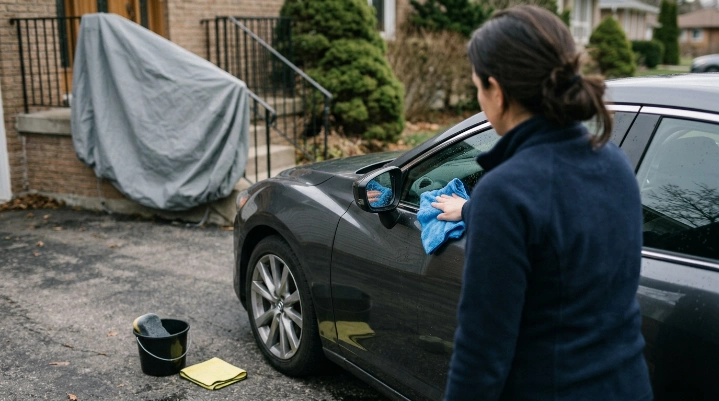
The best fix is to reduce the amount of moisture trapped underneath while giving humid air a practical escape route. I use the same routine each time I cover a car outdoors.
1. Start with a dry vehicle
Don’t cover the car immediately after rain or washing. Let water drain from seams, mirrors, weatherstripping, wheel arches, and panel gaps.
If I’m in a hurry, I use clean microfiber towels around those areas and give the car extra drying time.
2. Dry the cover too
A damp cover can put moisture right back against the vehicle. Check both its outer surface and inner lining.
After rain, I remove mine when practical and allow it to air-dry before long storage.
3. Choose breathable construction
Look beyond the word “waterproof” on the packaging. Check whether the manufacturer also describes vapor movement, breathable layers, or ventilation features.
Consumer Reports has specifically recommended breathable car covers where preventing moisture buildup matters.
4. Look for ventilation
Some outdoor covers use vents near the upper sides of the vehicle. These can help air move while the cover remains secured.
The design still needs to keep wind from turning the cover into a sail.
5. Use the correct fit
A cover shouldn’t flap wildly, but I also avoid forcing an undersized cover tightly across the car. Use the manufacturer’s sizing chart and secure the intended straps or attachment points.
Car and Driver’s 2026 car cover testing also highlights differences in fit, construction, waterproofing, and moisture protection between products.
6. Let the car breathe periodically
For a vehicle sitting outside for long periods, I don’t install the cover and forget about it for months. I uncover the car periodically when conditions are dry.
That gives me a chance to check for condensation, dirt, insects, wind damage, or cover movement.
- Choose a dry period.
- Remove the cover completely.
- Inspect the roof, hood, glass, trunk, and lower panels.
- Let trapped moisture evaporate.
- Dry the cover if necessary.
- Reinstall it only when both surfaces are dry.
Section Takeaway: Dry surfaces, breathable material, good fit, and periodic ventilation solve most recurring car-cover condensation problems.
Waterproof vs Breathable Car Covers: Which Works Better?
For outdoor parking, I don’t see waterproof and breathable as competing features. The ideal cover needs enough weather protection for your climate while still managing trapped moisture.
A plastic tarp may block rain well, yet it can be a poor long-term vehicle cover.
| Cover type | Rain protection | Moisture escape | Best use |
|---|---|---|---|
| Non-breathable waterproof sheet | High | Low | Short temporary protection |
| Breathable outdoor cover | Varies by design | Better | Routine outdoor parking |
| Soft indoor cover | Usually limited | Often good | Garage dust protection |
| Ventilated weatherproof cover | High when properly designed | Good | Longer outdoor storage |
As of 2026, product labels still vary from one manufacturer to another. I check the material description, intended storage location, ventilation, fit, and care instructions instead of trusting one marketing word.
Edmunds also recommends a weatherproof cover when a vehicle must be stored outdoors. Its long-term vehicle storage guide is useful if the car will remain parked for an extended period.
What Should You Do If Your Car Is Already Wet Under the Cover?
If you lift the cover and find droplets underneath, don’t panic. Remove the source of trapped moisture before covering the vehicle again.
I use this process rather than simply wiping the roof and putting the wet cover straight back on.
- Remove the cover: Take it completely off instead of rolling it onto another part of the car.
- Inspect the moisture: Check whether you’re seeing light condensation, obvious rain leakage, or standing water.
- Dry the vehicle: Let airflow do most of the work, then use clean microfiber towels where needed.
- Dry the cover: Hang or spread it according to its care instructions.
- Check the inner surface: Look for dirt, mildew, damaged seams, or saturated material.
- Wait before reinstalling: Both the car and cover should be dry.
How can you tell condensation from a leaking cover?
Condensation often appears as fine droplets spread over several surfaces. A leak is more likely to create localized wet areas beneath seams, damaged sections, or places where water pools on top.
Timing also helps.
- Dry night with heavy humidity: Condensation becomes more likely.
- Wet spot below a damaged seam: Leakage becomes more likely.
- Vehicle covered while wet: Trapped existing water may be the cause.
- Repeated moisture after every rain: Inspect the cover’s weather resistance.
If the cover’s coating is peeling, seams are separating, or water passes directly through the fabric, drying the vehicle won’t solve the underlying problem.
At that point, replacement may make more sense than repeatedly fighting trapped water.
FAQ: Waterproof Car Cover Condensation
Why is my car wet under a waterproof cover?
Your car may be wet because humid air became trapped underneath and condensed as temperatures changed. The vehicle might also have been damp before covering. Check for evenly distributed droplets, then inspect seams and fabric for signs of an actual leak.
Can a waterproof car cover cause condensation?
Yes. A cover can contribute to condensation if its material limits vapor escape or airflow. Waterproofing stops liquid water, while breathability helps trapped water vapor leave the covered space.
Should a car be completely dry before putting a cover on?
Yes, whenever possible. I wait until the paint, glass, mirrors, panel gaps, weatherstripping, and cover itself are dry. Covering a recently washed or rain-soaked vehicle can trap a surprising amount of moisture.
Will condensation damage car paint?
Brief condensation usually isn’t the same as immediate paint damage. Repeated dampness becomes more concerning when dirt, existing paint damage, exposed metal, or cover movement are involved. Keep the vehicle clean and avoid leaving it continuously wet under a cover.
Are breathable car covers waterproof?
Some outdoor covers combine strong water resistance with breathable multilayer construction, but specifications vary. Read the manufacturer’s description instead of assuming every waterproof cover is breathable or every breathable cover can handle prolonged heavy rain.
Should I leave a gap under my car cover for ventilation?
Use the cover as its manufacturer designed it. I don’t intentionally create large gaps that can catch wind or expose the vehicle. A correctly sized cover with built-in ventilation is a safer approach than improvising openings.
How often should I remove a car cover during long-term storage?
There isn’t one interval that suits every climate. I inspect an outdoor-covered vehicle periodically and after severe wet weather. Humid locations need closer attention because conditions under the cover can change even when the car isn’t being driven.
Bottom line: Waterproof car cover condensation doesn’t always mean your cover has failed. Most cases come down to trapped humidity, a damp vehicle, temperature changes, or limited airflow.
Start by drying both surfaces and checking the cover’s breathability and fit. If moisture keeps returning, inspect the material and ventilation instead of letting the vehicle remain damp underneath.
“`