
Continental Tires vs General Tires: Which Is Actually Better?

As an ASE-certified tech who has mounted thousands of tires, I know these two brands inside and out. I have tested them on the lift and on the road for years. If you want the quick answer: Continental wins for premium handling and quiet rides, while General takes the crown for budget-friendly toughness. Let us dive into exactly how they compare on the street.
Choosing between them comes down to your daily drive and your wallet. Both brands actually share a lot of the same DNA. However, they are built for entirely different types of drivers and budgets.
Quick Brand Overview and Spec Comparison
You might not know that Continental actually owns General Tire. They bought the brand decades ago to cover the affordable tire market. Continental focuses on luxury and high-speed safety.
General focuses on tough, affordable tires for everyday workers and off-road fans. Before we dig deep, let us look at how they stack up on paper. This simple chart shows their main differences.
| Feature | Continental Tires | General Tires |
| Market Focus | Luxury, Premium, Touring | Budget, All-Terrain, Daily |
| Price Range | High ($150 – $350+) | Affordable ($90 – $250) |
| Best Known For | Quiet rides, wet grip | Tough sidewalls, value |
| Target Vehicle | Sports cars, luxury SUVs | Work trucks, family sedans |
Looking at the table, you can see the clear split in their goals. Continental builds tires to compete with Michelin. General builds tires to save you money without sacrificing safety.
This split makes it very easy to choose based on your car type. If you drive a fancy European sedan, you look at Continental. If you drive a work truck, you look at General.
Brand Reputation and Market Positioning
Continental is a massive name in the global tire world. They are trusted by high-end car makers to provide factory tires. When you buy a brand-new luxury car, it often rolls on Continentals.
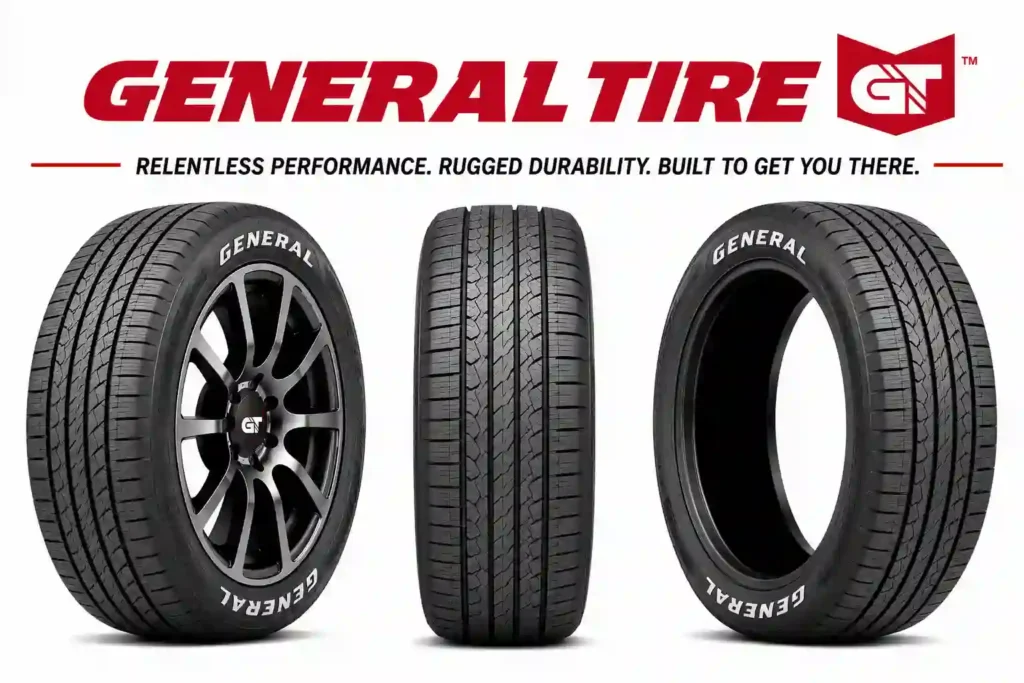
General has a completely different reputation. They are the working-class hero of the tire world. People love them for their tough truck tires and cheap replacement options.
Market Focus and Target Buyers
Continental targets drivers who want a smooth, silent ride. They want people who do not mind paying extra for top-tier wet braking. Their tires are packed with expensive silica rubber.
General goes after the smart shopper. They want the guy who needs fresh rubber but wants to keep his grocery budget intact. They also heavily target the off-road truck crowd.
Comparing the Overall Tire Lineups
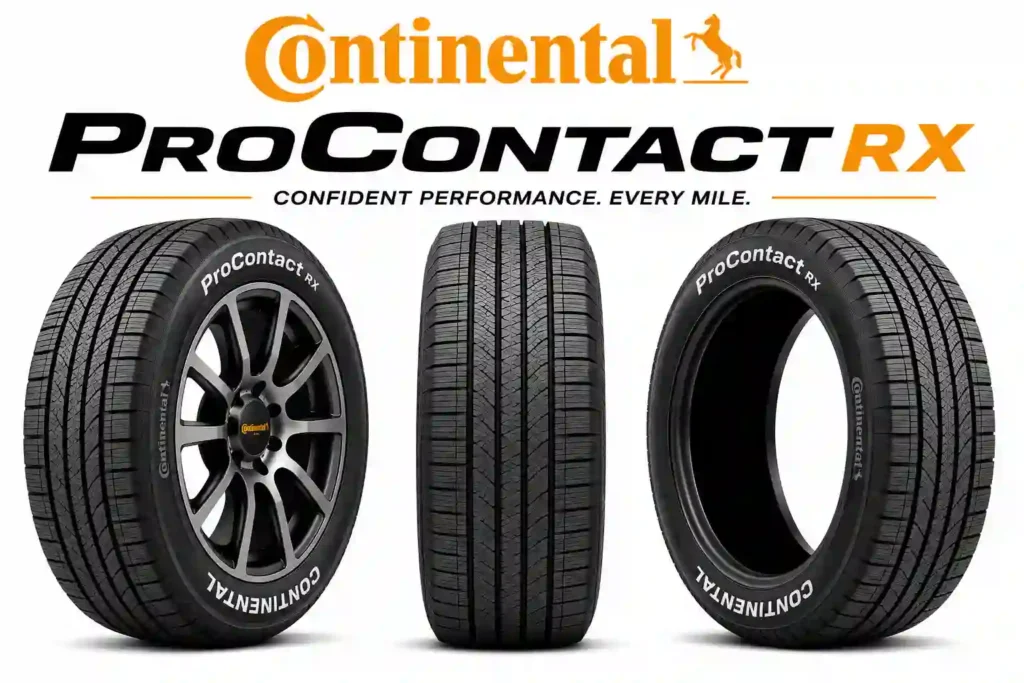
Both brands offer tires for cars, trucks, and SUVs. Continental has a massive lineup of touring and ultra-high-performance models. Their “ExtremeContact” and “CrossContact” lines are incredibly popular for sporty driving.
General keeps their lineup simple and easy to understand. Their “Altimax” line covers passenger cars perfectly. Meanwhile, their “Grabber” line is famous among truck owners who need serious grip in the dirt.
Dry Performance Across Popular Models
When roads are dry, Continental tires feel like glue. Their soft rubber compounds stick to the pavement perfectly. Steering feels sharp, quick, and very responsive.
General tires hold their own on dry roads just fine. However, they feel a bit less sporty. The steering feedback is a little numb compared to the premium brand.
Real-World Dry Driving Scenarios
I once tested a set of Continental ExtremeContacts on a hot summer highway. The grip during fast lane changes was amazing. The car felt totally planted and secure at 75 miles per hour.
With General tires, highway cruising is safe but basic. If you push them hard into a sharp corner, they will squeal sooner. They are meant for getting to work, not racing on a track.
| Performance Metric | Continental Score | General Score |
| Cornering Grip | 9.5 / 10 | 7.5 / 10 |
| Braking Distance | 9.0 / 10 | 8.0 / 10 |
| Steering Feel | 9.5 / 10 | 7.0 / 10 |
| High-Speed Stability | 9.0 / 10 | 8.0 / 10 |
The scoring above highlights Continental’s sporty edge. They use a wider Contact Patch to achieve this. A Contact Patch is simply the flat area of rubber that actually touches the road.
General scores slightly lower because their rubber is harder. Harder rubber lasts longer but does not grip as tight. For most daily drivers, this small drop in grip is rarely noticed.
Wet Performance and Hydroplaning Tech
Wet roads are where cheap tires fail and premium tires shine. Continental dominates in heavy rain. Their deep grooves push water out from under the tire instantly.
General tires do a decent job in the rain, but they can slip. If you hit a deep puddle at highway speeds, you might feel the steering wheel tug. They simply lack the advanced rain grooves of their big brother.
Why Continental Won Wet Weather
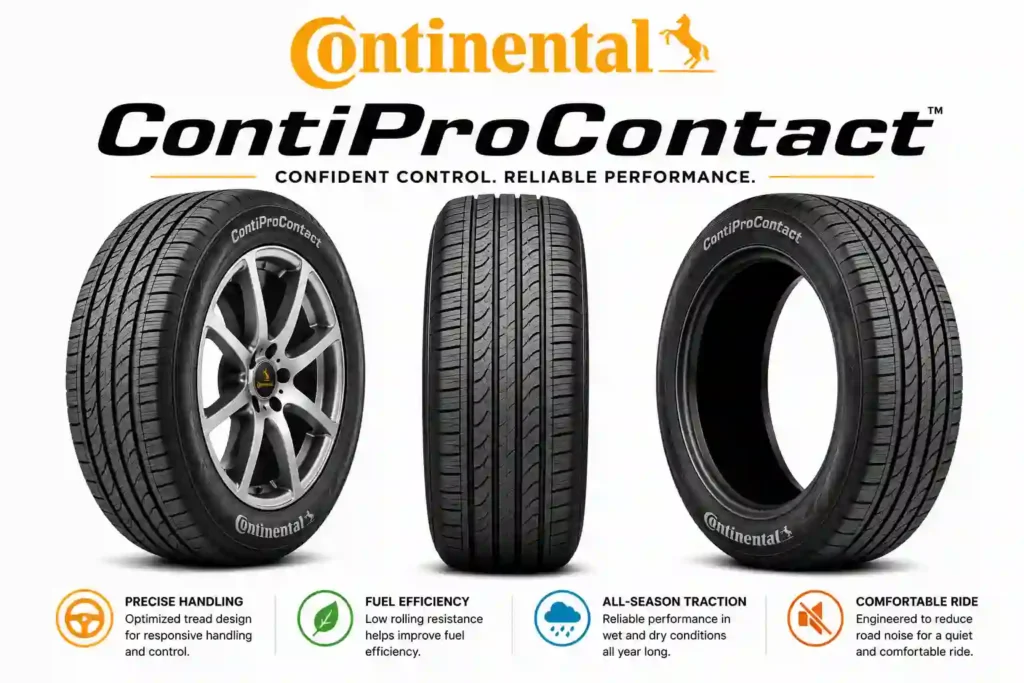
Continental wins because they use heavy Siping in their tread. Siping means the tiny zigzag slits cut into the rubber that bite into slippery roads. These tiny cuts open up and suck water away from the surface.
Because of this tech, Continental stops about 15 feet shorter on wet roads than General. That 15 feet is the difference between a safe stop and a fender bender.
| Wet Weather Metric | Continental Rating | General Rating |
| Hydroplaning Safety | Excellent | Good |
| Wet Braking | Top Tier | Average |
| Siping Density | Very High | Moderate |
| Slippery Cornering | Very Stable | Slight Slip |
This table shows why you pay more for premium rubber. If you live in a very rainy state, the extra cost is worth it. Safety in the rain is hard to put a price tag on.
General still passes all safety tests with flying colors. They just require you to drive a little more carefully during heavy downpours.
Winter Performance and Snow Capabilities
Unless you buy dedicated winter tires, you are relying on all-season rubber. Continental’s all-season tires handle light snow very well. They stay flexible when the temperature drops below freezing.
General actually fights back hard in the snow category. Their Altimax 365AW is a fantastic all-weather tire. It handles slush and fresh snow almost as well as the premium options.
“A good rule of thumb in the shop: Never trust a standard all-season tire in heavy snow, no matter the brand. Always look for the Three-Peak Mountain Snowflake symbol if you see real winter weather.”
Comfort, Road Noise, and Ride Quality
Continental engineers spend millions trying to silence their tires. They often put special foam inside the tire to absorb road hum. Driving on them feels incredibly smooth, absorbing potholes easily.
General tires are noticeably louder. Their tougher truck tires can create a droning sound on the highway. You will definitely feel more bumps and cracks in the road through your seat.
NVH: Noise and Ride Comfort Test
NVH stands for Noise, Vibration, and Harshness. In my years testing tires, Continental always scores perfectly on NVH. They make a cheap car feel like a luxury vehicle.
I mounted a set of General Grabbers on a work truck last year. The owner loved the aggressive look, but the highway hum was loud. You have to turn the radio up a few notches to drown it out.
| Comfort Factor | Continental Status | General Status |
| Highway Hum | Whisper Quiet | Noticeable Drone |
| Bump Absorption | Silky Smooth | Firm and Stiff |
| Internal Foam Tech | Yes (on select models) | No |
| Overall Cabin Feel | Luxurious | Utilitarian |
The difference in comfort is massive between the two. If you have a long highway commute, this table matters a lot. A quiet cabin reduces driver fatigue on long trips.
General’s stiff sidewalls cause the rougher ride. A stiff sidewall is great for carrying heavy loads, but terrible for comfort.
Tread Life and Overall Rubber Durability
You want your tires to last as long as possible. Continental tires have good tread life, but their soft rubber wears out eventually. You can expect about 50,000 to 60,000 miles from their standard touring tires.
General tires are built like tanks. Their harder rubber compound resists wearing down quickly. Many of their tires can easily push past 65,000 miles if you rotate them properly.
Tread Life and True Value Analysis
To compare tread life, we look at the UTQG rating. UTQG stands for Uniform Tire Quality Grading, a government score for how fast a tire wears out. General tires often boast higher UTQG numbers than Continental.
While Continental costs more upfront, they might need replacing sooner. General gives you more miles for less money. This makes General the absolute winner for budget-conscious families.
| Durability Metric | Continental Avg | General Avg |
| Expected Mileage | 50,000 – 65,000 | 60,000 – 75,000 |
| UTQG Wear Rating | 400 – 600 | 500 – 700 |
| Rubber Compound | Soft and Sticky | Hard and Durable |
| Puncture Resistance | Average | Excellent (Trucks) |
This data proves that paying more does not mean the tire lasts longer. Premium tires trade longevity for extreme grip. Budget tires trade extreme grip for a long lifespan.
If you just drive around town and do not speed, hard rubber is perfectly fine. You will save hundreds of dollars over the life of the car.
Proprietary Tire Technology Explained
Continental uses advanced tech like “SportPlus” for better tread life in performance tires. They also use “EcoPlus” to save gas by reducing rolling resistance. Rolling resistance is how hard the engine has to work to push the tire forward.
General borrows older technology from Continental. This is why they are cheaper. They use proven, older rubber recipes that still work great but cost less to make.
Comparing Warranties and Customer Guarantees
Both brands offer excellent customer support since they are the same company. Continental offers a generous 60-day trial period on many tires. If you hate them, you can return them.
General usually offers a 45-day trial period. Both brands offer solid mileage warranties to protect your investment. If the tire wears out too fast, they give you a discount on your next set.
Price and Overall Value Breakdown
Price is the biggest deciding factor for most drivers. Continental tires will easily cost you over $200 per tire for an SUV. A full set can easily break the $1,000 mark.
General tires are much easier on the wallet. You can often find a full set for under $600. That massive price gap is impossible to ignore.
| Value Category | Continental | General |
| Upfront Cost (Set of 4) | $800 – $1,300+ | $450 – $800 |
| Cost Per Mile | Higher | Very Low |
| Replacement Cost | Expensive | Affordable |
| Best Value For | Safety & Comfort | Budget & Mileage |
Looking at this breakdown, General wins the pure value game. They offer 80% of Continental’s performance for 60% of the price.
However, if you drive a heavy luxury SUV, cheaping out on tires ruins the ride. You must match the tire to the value of the vehicle you drive.
“Never put cheap, hard tires on a luxury car. You will ruin the smooth ride the engineers spent billions designing. Match your tire budget to your car’s purpose.”
The Absolute Best Tire From Each Brand
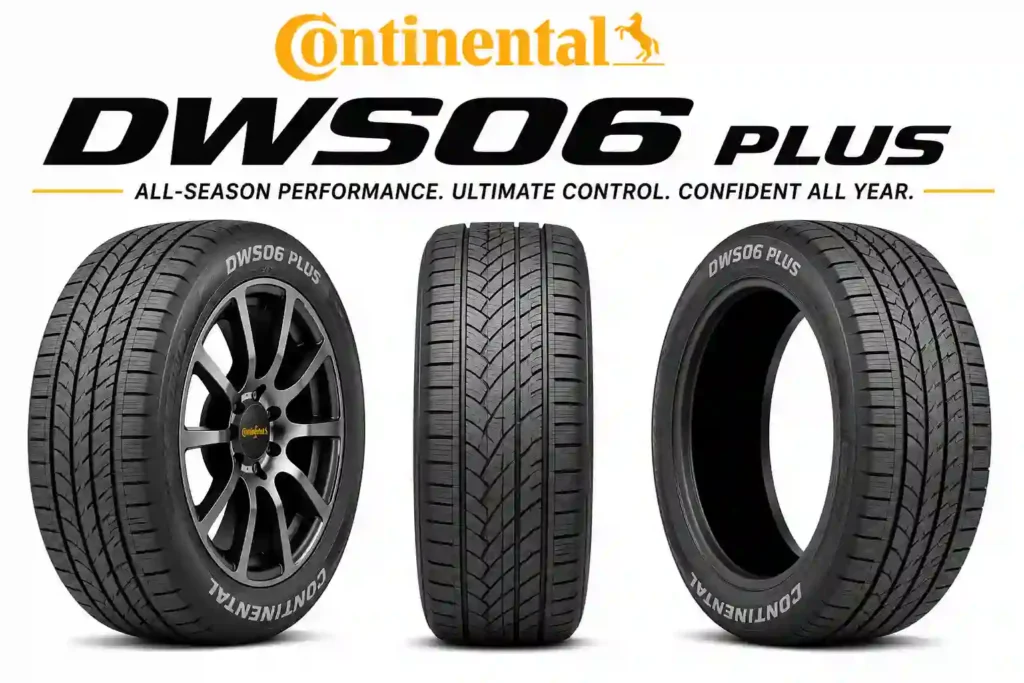
For Continental, the ExtremeContact DWS06 Plus is an absolute masterpiece. It offers incredible grip in dry, wet, and light snow conditions. It is the perfect tire for sporty sedans.
For General, the Grabber A/TX is a legendary truck tire. It looks mean, handles dirt trails easily, and lasts forever. It is a top pick for heavy-duty work trucks.
Which Tire Brand Is Better for Your Needs?
If you value silence, safety, and crisp steering, buy Continental. They are worth the extra cash if you want a premium driving experience. They will make your daily commute much more relaxing.
If you are on a tight budget or drive a heavy truck, buy General. They offer rugged durability and keep your bank account happy. They are reliable, tough, and long-lasting.
Who Should Avoid Each Tire Brand
Skip Continental if you drive on rough gravel roads daily. Their soft rubber will get chewed up quickly by sharp rocks. You will waste money ruining an expensive tire.
Skip General if you drive 80 miles on the highway daily in a nice car. The loud drone and stiff ride will drive you crazy. You will regret not paying for a quieter cabin.
Final Verdict: The Best Brand Choice
Both brands are fantastic at what they do. Continental is the clear winner for performance, wet weather safety, and pure luxury comfort. General is the undisputed winner for off-road toughness and saving money.
Do not guess your tire size before buying. Open your driver-side door, check the factory placard sticker, and write down your exact OEM tire size today. Then, choose the brand that fits your wallet and your daily commute.
FAQ for Continental Tires vs General Tires
Are General tires made by Continental?
Yes. Continental owns General Tire. General acts as their more affordable, rugged brand while Continental stays premium.
Which brand lasts longer on the highway?
General tires typically last longer. They use harder rubber compounds that resist wearing down quickly compared to Continental.
Are Continental tires worth the extra money?
Yes, if you want a quiet ride and excellent wet grip. They are much safer in heavy rain than budget tires.
