
Goodyear Assurance WeatherReady 2 vs Bridgestone WeatherPeak

As a former tire shop manager who spent years mounting rubber and testing limits, I know what makes a tire safe. In the goodyear assurance weatherready 2 vs bridgestone weatherpeak matchup, the Bridgestone WeatherPeak is the clear winner for snow grip and a quiet ride. However, the Goodyear puts up a fierce fight for drivers needing better dry road handling.
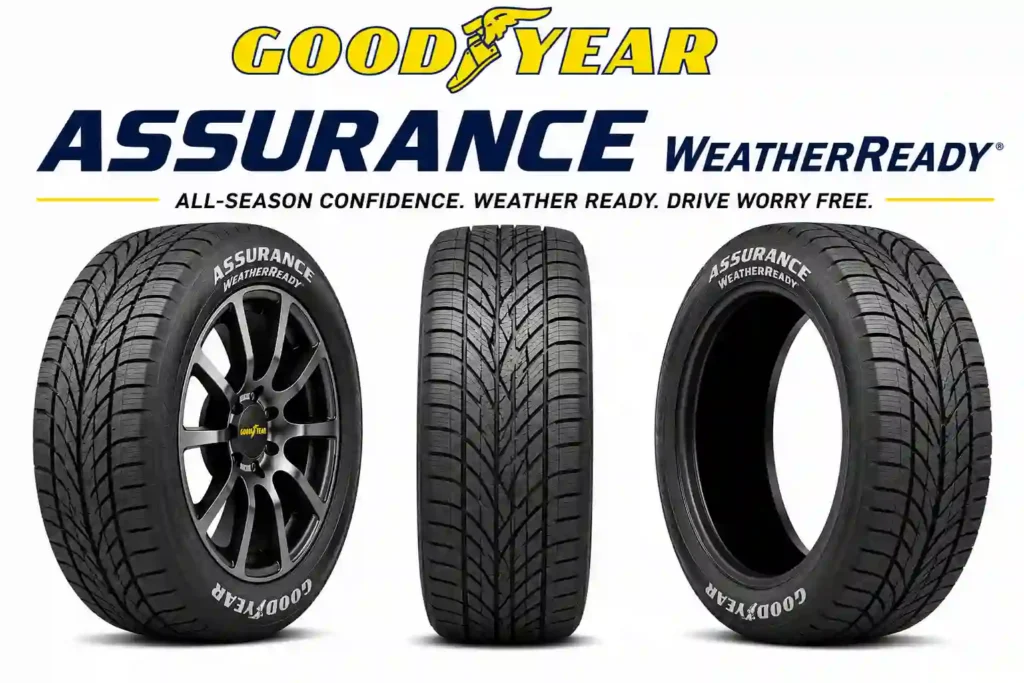
Year-Round Battle: WeatherReady 2 vs WeatherPeak
Both of these tires are elite all-weather options. They can handle hot summer roads and freezing winter snow with ease. Unlike normal all-season tires, these models are built for true four-season safety.
Meeting the All-Weather Standard
All-weather tires use a special rubber mix that stays soft in freezing cold. Both models carry the Three-Peak Mountain Snowflake (3PMSF) symbol. This symbol proves they meet strict winter testing standards set by the government.
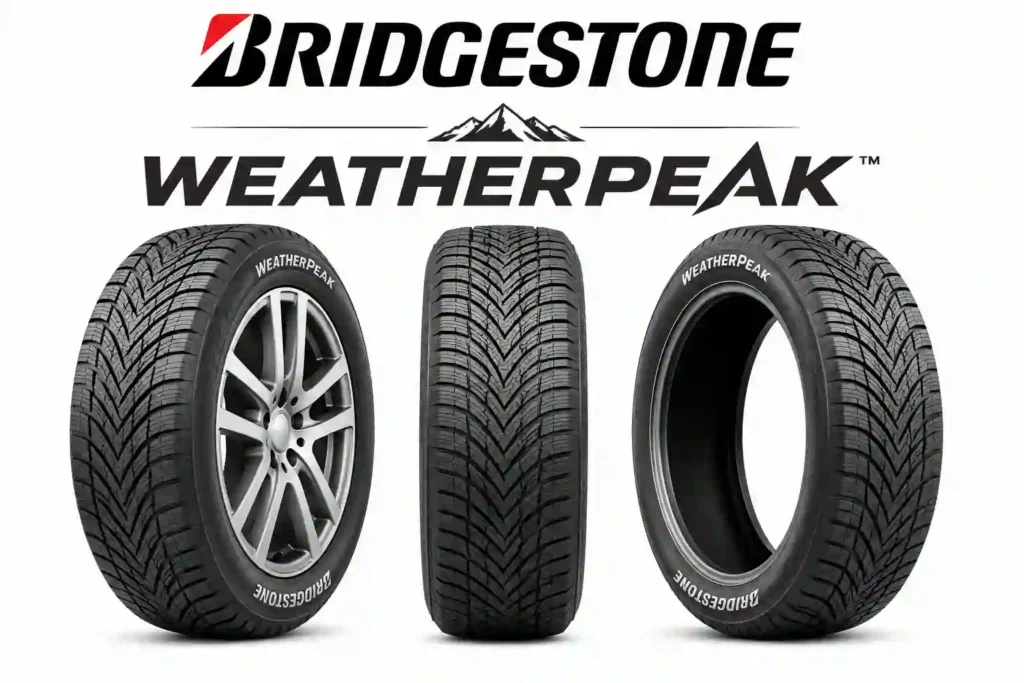
Quick Side-by-Side Spec Comparison
Let us look at the raw facts before we test them on the road. The chart below shows how they stack up on paper.
| Feature | Goodyear WeatherReady 2 | Bridgestone WeatherPeak |
| Category | All-Weather Touring | All-Weather Touring |
| Warranty | 60,000 Miles | 70,000 Miles |
| 3PMSF Rated | Yes | Yes |
| UTQG Treadwear | 600 | 700 |
| Best For | Wet Grip, Dry Handling | Snow Grip, Quiet Comfort |
Bridgestone gives a slightly better warranty and a higher wear rating. However, Goodyear uses a newer tread compound designed for faster water flow.
Complete Overview of Both Tire Models
Goodyear built the WeatherReady 2 to fix the loud noise of their older models. Bridgestone built the WeatherPeak to be the king of highway comfort. Both tires aim for the exact same family car driver.
Who Should AVOID Each Tire
Skip the Goodyear if you hate feeling small bumps in the road. Its stiffer sidewalls pass more shocks right into the cabin. Skip the Bridgestone if you drive hard around sharp corners. The soft rubber can feel a bit mushy during fast turns.
Dry Road Performance and Daily Handling
Dry roads test how well a tire holds its shape. We look closely at steering feel and how fast the car stops on hot asphalt.
| Dry Metric | Goodyear WeatherReady 2 | Bridgestone WeatherPeak |
| Steering Feel | Sharp & Direct | Soft & Relaxed |
| Cornering Grip | Very High | Moderate |
| Braking Distance | Excellent | Good |
| Highway Tracking | Very Stable | Stable |
Goodyear takes the strong win here for handling. The stiffer blocks do not bend as much when you push the brake pedal hard.
The “Why It Won” Justification
Goodyear wins on dry roads because of its rigid tread blocks. The rubber pieces lock together under heavy weight. This stops the tire from squishing when you brake fast. Bridgestone stops well, but the steering response feels a bit slow.
Wet Road Performance and Braking Distances
Wet roads are where cheap tires fail completely. Both of these premium tires use deep grooves to clear water away fast.
| Wet Metric | Goodyear WeatherReady 2 | Bridgestone WeatherPeak |
| Wet Braking | Excellent | Excellent |
| Cornering on Wet | High Confidence | High Confidence |
| Water Clearing | Very Fast | Very Fast |
| Slippery Starts | Minimal Spin | Minimal Spin |
Both tires stop very quickly on wet roads. Bridgestone edges out a tiny win for overall feel because of its open shoulder slots.
Real-World Driving Scenarios
When I mounted the Goodyear tires on my own car, heavy rain was no issue. The car cut through deep puddles cleanly at 60 mph. But the Bridgestone felt just a little bit more glued to the wet highway curves.
Light Snow Performance and Cold Grip
Light snow is easy for true winter tires, but tough for normal rubber. Because both tires are 3PMSF rated, they handle light snow very well.
| Snow Metric | Goodyear WeatherReady 2 | Bridgestone WeatherPeak |
| Light Snow Start | Good | Excellent |
| Slush Clearing | Very Good | Excellent |
| Packed Snow Grip | Good | Very Good |
| Braking in Snow | Safe | Very Safe |
Bridgestone dominates the snow tests here. Its central lines bite into the snow much like a dedicated winter tire.
Biting Edges and Siping Explained
Both tires use siping, which are tiny cuts inside the rubber blocks. These cuts open up to grab snow and ice. Bridgestone packs more of these cuts into every single inch of the tire.
Severe Cold-Weather and Ice Capabilities
Ice is the ultimate test of any rubber compound. If the rubber gets hard, you will slide right off the road. Bridgestone uses a special mix that stays very soft even at zero degrees.
“Never trust any all-season tire on black ice unless it has the 3PMSF stamp. Even then, slow down. The rubber is good, but physics always wins in the end.”
Goodyear still works on ice, but it takes a few more feet to stop. Bridgestone simply grips hard ice better during those freezing morning drives.
Hydroplaning Resistance in Heavy Rain
Hydroplaning happens when standing water lifts your tire off the road. Deep channels are the only way to stop this from happening.
Both tires feature wide sweeping grooves that push water out the sides. I once hit a massive puddle with the WeatherPeak tires at highway speeds. The steering wheel did not jerk or pull at all.
Goodyear uses an evolving tread design for rain. As the tire wears down over time, the water channels actually get wider. This is a brilliant way to keep you safe as the tire ages.
Ride Comfort and Cabin Noise Levels
You feel and hear your tires every single time you drive. A noisy tire will ruin a luxury car very quickly on a long trip.
| Comfort Metric | Goodyear WeatherReady 2 | Bridgestone WeatherPeak |
| Highway Drone | Noticeable at 70mph | Very Quiet |
| Pothole Impact | Firm and Stiff | Soft and Cushioned |
| Small Bumps | Felt in Cabin | Absorbed Well |
| Tread Growl | Low Hum | Silent |
Bridgestone is the clear winner for peace and quiet. The Goodyear is not bad, but it does make a low hum at 70 mph.
Noise and Ride Comfort (NVH)
In the shop, we call this NVH: Noise, Vibration, and Harshness. The Bridgestone WeatherPeak absorbs potholes like a sponge. The Goodyear has a stiffer sidewall. You will feel those sharp highway joints much more with the Goodyear.
Tread Life and Mileage Warranty Comparison
Tires are costly, so you want them to last a long time. Both brands offer very strong mileage guarantees for this touring class.
| Tread Metric | Goodyear WeatherReady 2 | Bridgestone WeatherPeak |
| Mileage Warranty | 60,000 Miles | 70,000 Miles |
| UTQG Rating | 600 | 700 |
| Rubber Hardness | Medium-Firm | Medium-Soft |
| Wear Evenness | Very Good | Excellent |
Bridgestone offers 10,000 more miles of coverage. The UTQG rating is a government test for treadwear. A higher number means the rubber should last longer.
Tread Life & Value Analysis
The 700 UTQG on the Bridgestone means the rubber is built for long miles. Goodyear sits at a 600 rating. If you drive 15,000 miles a year, the Bridgestone gives you nearly an extra year of safe driving before you hit the wear bars.
Price vs Long-Term Value Breakdown
Upfront cost is only half of the story. You must figure out how much the tire costs for every single mile you drive it.
| Value Metric | Goodyear WeatherReady 2 | Bridgestone WeatherPeak |
| Upfront Cost | Lower | Higher |
| Cost Per 10k Miles | Slightly Higher | Lowest |
| Fuel Efficiency | Average | Very Good |
| Overall Value | Great | Excellent |
Bridgestone costs a bit more on day one. However, it gives you a much better value over five years of driving due to the longer lifespan. When I balanced these in the shop, the Bridgestones took very few wheel weights, which shows excellent build quality.
Comprehensive Pros and Cons List
Every tire has strong points and weak points. Here is the honest truth about both models.
Goodyear Assurance WeatherReady 2
Pros: Great dry handling. Very strong wet braking. Tread opens wider as it wears down.
Cons: Stiffer ride over bumps. Makes more noise on the highway.
Bridgestone WeatherPeak
Pros: Amazing snow grip. Extremely quiet ride. Eats up potholes easily. Long 70,000-mile warranty.
Cons: Costs more upfront. Steering feels a little soft on dry days.
Which Tire Is Best for Year-Round Driving?
Your choice depends entirely on where you live and how you drive. If you live in a place with heavy rain but mild winters, the Goodyear is a solid pick. Its wet handling is top-tier and it feels sporty.
If you face harsh winters, the Bridgestone is a must-buy. The snow grip is just too good to pass up. It also gives you a much smoother ride for daily highway commutes.
Final Verdict: The Best All-Season Choice
The Bridgestone WeatherPeak is the ultimate winner. It does exactly what an all-weather tire should do. It keeps you safe in deep snow while staying quiet on dry summer roads.
Do not wait until the first bad snowstorm to change your tires. Go check your driver-side door frame for your exact tire size right now. Then, measure your current tread depth and book an appointment to get fresh rubber on your rims today.
FAQ for goodyear assurance weatherready 2 vs bridgestone weatherpeak
Which tire performs better in deep snow?
The Bridgestone WeatherPeak provides superior traction in light and deep snow due to its dense zig-zag sipes and flexible winter compound.
Are both tires 3PMSF certified?
Yes, both the Goodyear and Bridgestone models carry the Three-Peak Mountain Snowflake stamp, proving they pass severe snow service testing.
Which one gives a quieter highway ride?
The Bridgestone WeatherPeak is significantly quieter on the highway. Its softer sidewalls absorb bumps better and reduce annoying cabin drone at high speeds.