
Bridgestone Potenza vs Continental SportContact 5

As an ASE-certified tire tech, I have mounted both of these tires hundreds of times. If you just want the fast answer, the Continental SportContact 5 wins for daily street driving. It gives much better wet grip and a softer ride than the Potenza. The Bridgestone Potenza only wins if you drive purely on dry tracks.
To make the right choice, you must look at how you drive. Both tires are built for fast cars. However, they act very differently on the street. Let us break down exactly why one beats the other.
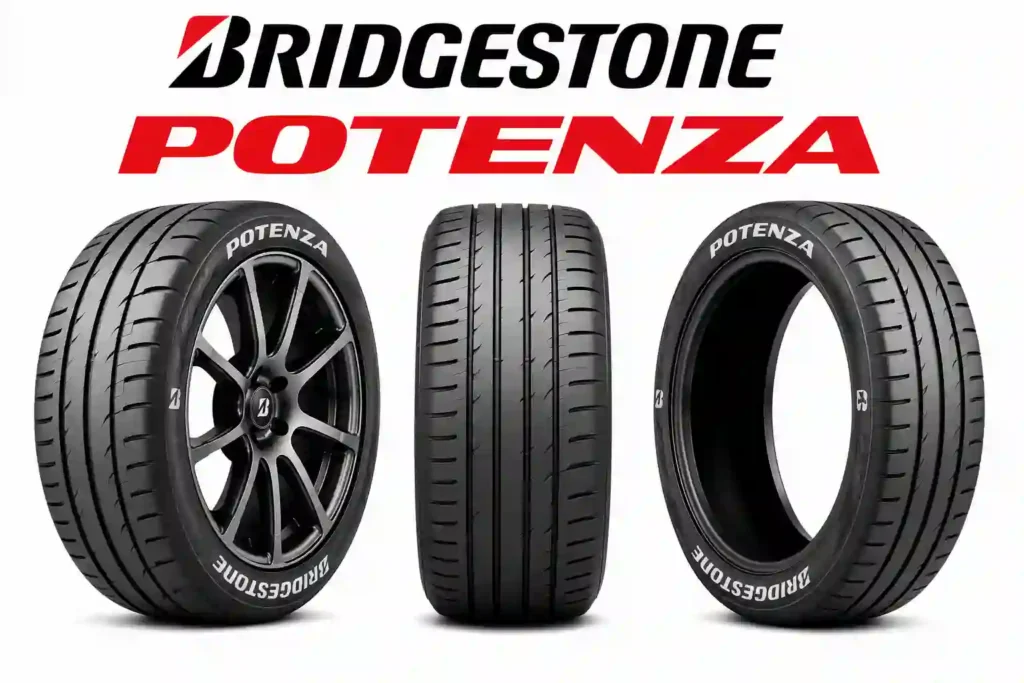
Quick Side-by-Side Spec Comparison
Before we dig deep, you need to see the raw stats. Both of these are top-tier summer performance tires. They are built for warm weather only.
| Feature | Bridgestone Potenza | Continental SportContact 5 |
| Best Used For | Dry track and canyon runs | Fast daily street driving |
| Ride Quality | Very stiff and firm | Smooth and quiet |
| Wet Road Grip | Average | Excellent |
| Tread Life Expectancy | Roughly 20,000 miles | Roughly 25,000 miles |
| Rubber Type | Harder summer mix | Soft silica blend |
This chart shows how different their goals are. Continental aims for a mix of comfort and speed. Bridgestone just wants pure dry grip. Let us look at how they are made.
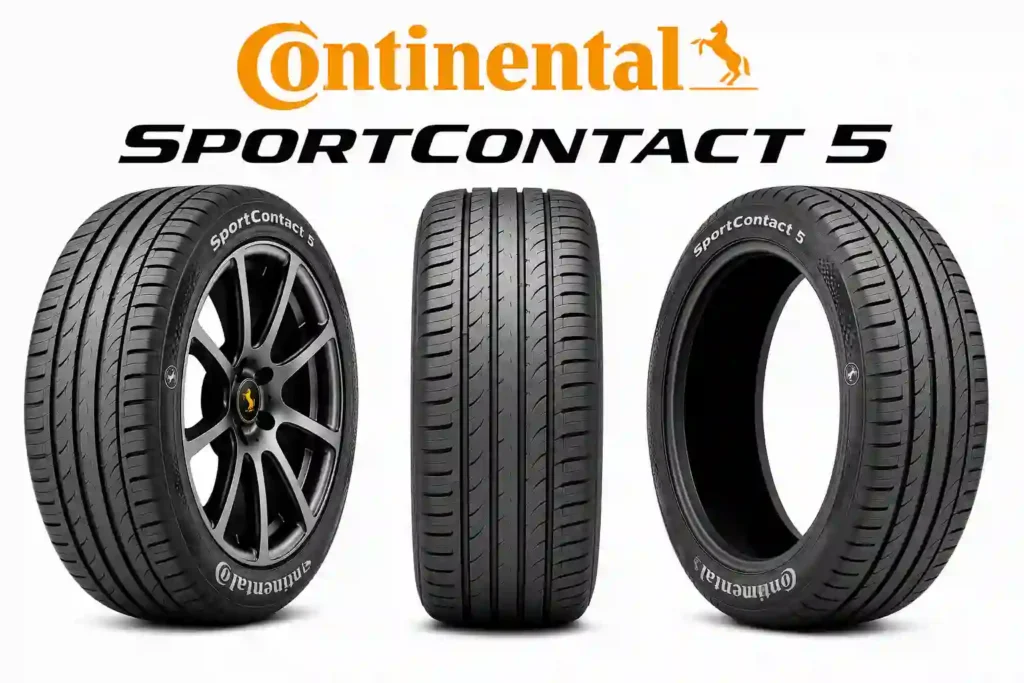
Performance Overview and Rubber Compounds
Tires are just baked chemicals and rubber. The mix of these materials changes how the tire grabs the road. Both brands use secret blends for speed.
Potenza Tread Tech Explained
The Potenza uses massive blocks of rubber on the outside edge. This helps the tire stay flat during hard turns. It uses a very stiff inner wall to keep the tire from bending.
This stiff build gives you great feedback through the steering wheel. You feel every crack in the road. For race car drivers, this is exactly what they want.
Continental Silica Blend
Continental takes a different path. They mix more silica into their rubber. Silica is a material that stays soft even when it gets slightly cool or wet.
This means the SportContact 5 molds over the road surface better. It hugs the small bumps instead of bouncing off them. This makes the tire feel much safer on daily trips.
Dry Grip and Off-the-Line Acceleration
When the sun is out, both tires wake up. Summer tires are built to stick to hot blacktop. However, one tire launches much harder than the other.
| Dry Test | Bridgestone Potenza | Continental SportContact 5 |
| Dead Stop Launch | Excellent grip | Good grip |
| Tire Spin Prevention | Great | Average |
| Heat Tolerance | Handles high heat well | Gets greasy when very hot |
The Potenza takes the crown here. If you drop the gas pedal, the Bridgestone digs into the street. The Continental might chirp the tires a bit more.
Launching from a Dead Stop
I once took a customer’s sports car for a test drive after mounting new Potenzas. When I hit the gas at a green light, the car just moved. There was zero wheel spin.
The Bridgestone puts more flat rubber on the ground. Mechanics call this the contact patch. A bigger contact patch means faster straight-line speed.
Who Should AVOID Potenza Here
Skip the Potenza if you only drive in stop-and-go traffic. You will never use its extreme grip. The stiff rubber also takes time to warm up.
If your commute is just five miles to the office, the tires stay cold. Cold Potenzas can feel slick. The Continental warms up much faster for short trips.
Cornering, Steering Response, and Apex Grip
Taking a sharp turn fast tests the sidewall. The sidewall is the side of the tire with the letters on it. A stiff sidewall stops the car from leaning.
Real-World Canyon Carving
The Potenza shines on twisty back roads. You turn the wheel, and the car darts instantly. There is no delay or squishy feeling.
The Continental is still very fast, but it feels slightly softer. You might feel the tire lean just a tiny bit on a hard curve. Most drivers will not notice this unless they are on a race track.
Braking Distance on Dry and Wet Pavement
Going fast is fun, but stopping saves your life. Both tires have massive stopping power in dry heat. In the rain, the story completely flips.
Emergency Stopping Power
On dry roads, the Potenza stops a few feet shorter. The stiff blocks do not fold under heavy braking. But on wet roads, the Continental is the clear king.
“Never buy a track tire for a daily commute. You will hate the stiff ride, and the rain will scare you to death.” – Old Shop Rule of Thumb
Wet Performance and Hydroplaning Resistance
Summer tires are notorious for being bad in the rain. However, top-tier brands engineer water channels to fix this. Let us see how they handle deep puddles.
| Wet Weather Test | Bridgestone Potenza | Continental SportContact 5 |
| Deep Water Safety | Poor | Excellent |
| Wet Braking | Long stops | Very short stops |
| Cornering in Rain | Slippery | Planted and safe |
The Continental dominates this test. It slices through standing water easily. The Bridgestone struggles to push water out of the way.
Why Continental Wins the Rain
The Continental SportContact 5 wins wet tests because of deep siping. Siping means tiny slits cut into the rubber. These slits squeeze water out like a sponge.
I once drove the SportContact 5 through a massive flash flood. The car never drifted or felt light. The Potenza would have hydroplaned in those exact same puddles.
High-Speed Stability and Track Capabilities
When driving fast on an open highway, you want a tire that tracks straight. You do not want a car that wanders left and right.
Highway Pulls and Confidence
Both tires lock dead center on the highway. At high speeds, the Potenza feels like it is on rails. It does not twitch in the wind.
The Continental is also rock solid. However, because it is softer, crosswinds can make it wiggle slightly more than the Bridgestone. Both are still incredibly safe at speed limit paces.
Ride Comfort on Rough City Streets
Performance tires usually ride like wooden wagon wheels. Because they need stiff sides for turns, they cannot absorb bumps well.
| Comfort Test | Bridgestone Potenza | Continental SportContact 5 |
| Pothole Impacts | Harsh and loud | Softer and muted |
| Highway Humming | Very loud | Quiet |
| Steering Wheel Shake | Noticeable on bad roads | Very smooth |
If you hate feeling every rock on the road, read this section closely. Ride comfort is the biggest difference between these two famous tires.
Stiff Sidewalls vs Daily Driving
The Bridgestone will rattle your teeth on a bad city street. It hits potholes hard. The road noise also drones loudly inside the cabin at 70 mph.
The Continental is a luxury performance tire. It absorbs the sharp impacts. You can talk to your passengers without yelling over tire hum.
Tread Life for High-Performance Rubber
Fast tires die young. The sticky rubber that gives you grip also melts away quickly. Do not expect truck tire mileage from these.
UTQG Ratings Explained
The government uses a rating called UTQG to measure tread life. A higher number means it lasts longer.
The Continental usually outlasts the Potenza by about 5,000 miles. Neither tire will last past 30,000 miles if you drive them hard. You trade long life for extreme safety and speed.
Price vs Performance Value Breakdown
Tires are expensive, and these are premium brands. You are paying for top-tier German and Japanese engineering. Let us look at the real costs.
| Value Test | Bridgestone Potenza | Continental SportContact 5 |
| Upfront Cost | Very high | Slightly lower |
| Cost Per Mile | Expensive | Moderate |
| Replacement Rate | Frequent | Less frequent |
The Continental is usually a bit cheaper to buy. Because it lasts a few thousand miles longer, it is the better financial choice.
Upfront Cost vs Long-Term Gain
If you buy the Potenza, you pay for track-day magic. If you never take your car to a track, you are wasting your money.
The Continental gives you 90% of the dry grip for less cash. Plus, you will not have to replace them as quickly. That makes it the clear winner for value.
Comprehensive Pros and Cons List
Every tire has a flaw. You have to pick which flaw you can live with. Here is the final breakdown of both models.
| Tire Model | The Best Traits (Pros) | The Worst Traits (Cons) |
| Bridgestone Potenza | Incredible dry grip, instant steering | Loud on highways, bad in rain |
| Continental SportContact 5 | Great in the rain, quiet ride, lasts longer | Less sharp on twisty roads |
This list shows the divide perfectly. One is a race tire for the street. The other is a street tire that can race.
Which Performance Tire Is Actually Better?
Better depends on your commute. If you live in a dry, hot place with smooth roads, the Potenza is magic. It makes your car feel like a go-kart.
But for the real world, the Continental takes the prize. Most of us deal with rain, bad traffic, and broken roads.
The “Why It Won” Breakdown
The Continental SportContact 5 wins because it stops 15 feet shorter on wet roads. Its soft silica rubber saves you from fender benders in the rain.
It also keeps your cabin quiet on long trips. You get sports car handling without the headache of a jarring ride. It is simply the smarter daily choice.
Final Verdict: The Best Choice for Enthusiasts
The Continental SportContact 5 is the overall winner. It balances daily comfort with thrilling weekend speed. It handles rain safely and lasts longer than its rival.
Before you buy, go look at your current tires. Take a penny and stick it upside down in the tread. If you can see Lincoln’s whole head, it is time to upgrade. Order the Continentals in your factory size today and enjoy a safer, smoother ride.
FAQ for Bridgestone Potenza vs Continental SportContact 5
Are these tires safe to drive in the snow?
No. Both are summer tires. Their rubber turns to hard plastic in freezing weather, making them very dangerous on snow or ice.
How long will the Continental SportContact 5 last?
Most drivers get around 20,000 to 25,000 miles out of them. It depends heavily on how hard you press the gas pedal.
Why is the Bridgestone Potenza so loud on the highway?
It has a very stiff sidewall and large tread blocks. This design creates sound waves that travel straight up into your car cabin.
