
Bridgestone AT41 vs Michelin Anakee Adventure: Which Is Better?

I have spent years mounting tires and pushing tread limits in the shop. I know how hard it is to pick the right dual-sport rubber for your bike. Choosing between the Bridgestone AT41 and Michelin Anakee Adventure is a big deal for adventure riders.
To give you a fast answer, the Michelin Anakee Adventure wins for most riders. It offers much better tire life and a smoother dual-compound wear pattern. The Bridgestone is amazing in the rain, but the front tire wears out too quickly for long trips.
Quick Side-by-Side Spec Comparison
Before we dive deep, let us look at the raw numbers. This helps to see what each tire is built to do on the road.
| Feature | Bridgestone AT41 | Michelin Anakee Adventure |
| Intended Use | 80% Road / 20% Dirt | 80% Road / 20% Dirt |
| Rubber Compound | Single Compound | Dual-Compound (2CT/2CT+) |
| Best Feature | Extreme Wet Grip | Long Tread Life |
| Biggest Flaw | Front Tire Wear | Highway Drone Noise |
Both tires aim for that 80/20 sweet spot for big adventure bikes. This means they are made to spend eighty percent of their time on pavement. They can handle dirt paths, but they are not made for deep mud.
Tire A Overview: Strengths and Ideal Drivers
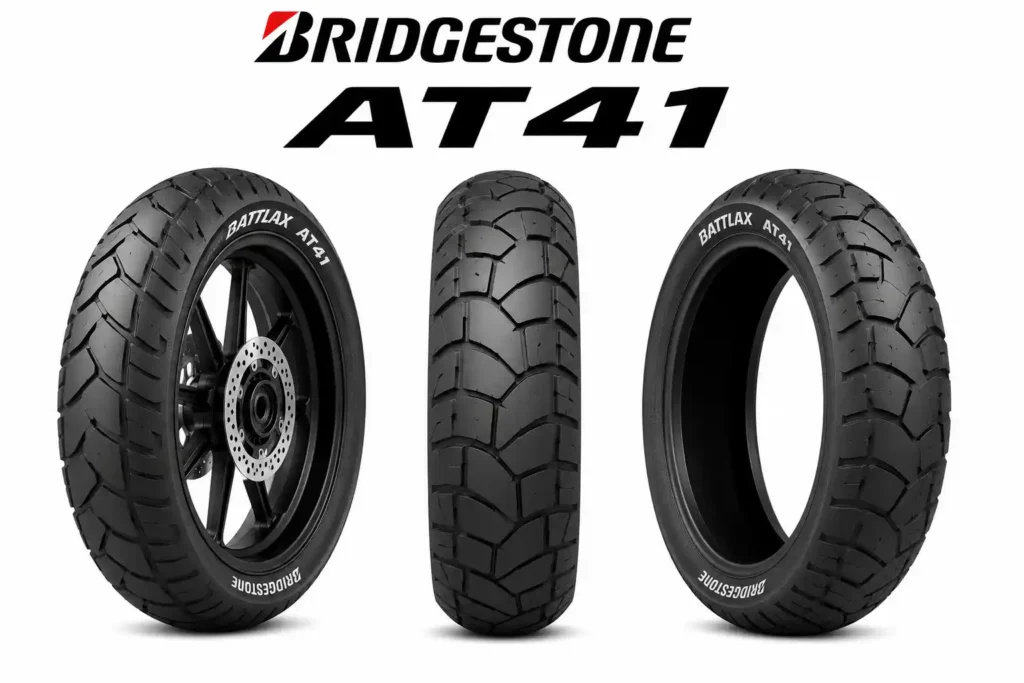
The Bridgestone AT41 looks mean with its blocky tread pattern. It is built for riders who want the tough off-road look without giving up street safety.
This tire is a massive step up for rain riding. It channels water away fast. I tell my customers to buy this if they ride in wet climates often.
You should avoid this tire if you ride cross-country. The front tire wears out very fast under heavy loads. It is better for weekend rides than huge tours.
The Aggressive Street Setup
Bridgestone used a smart design trick here. The tread blocks look like they belong on a dirt bike. However, the rubber itself acts like a sport touring tire.
This gives you a lot of grip on twisted roads. It grips hard when you lean into a corner. You will feel very safe on paved mountain passes.
Tire B Overview: Strengths and Ideal Drivers
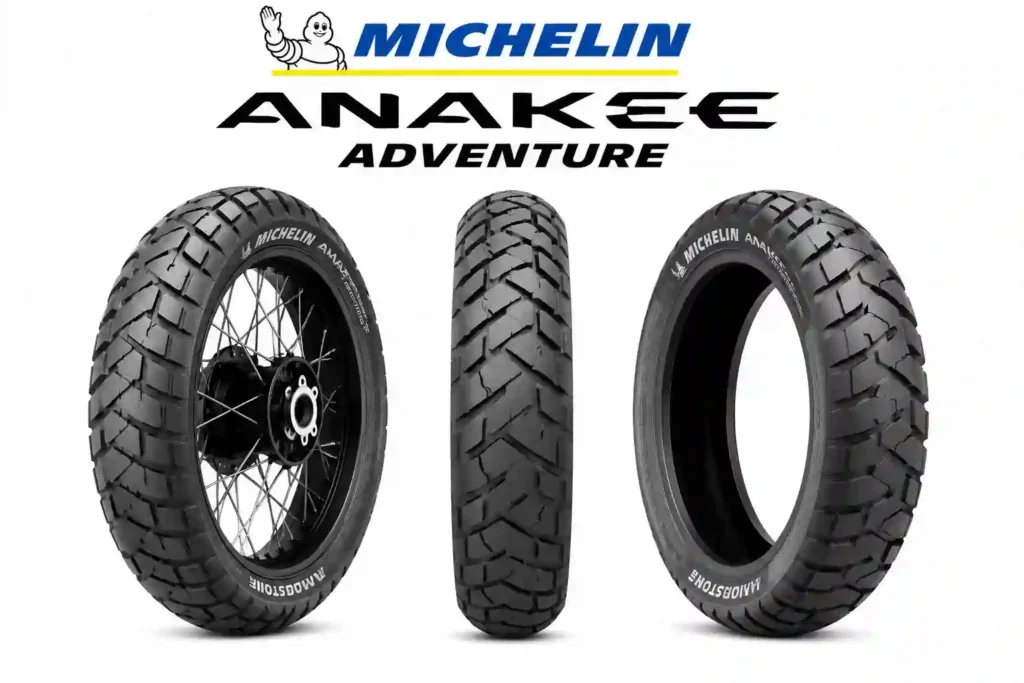
The Michelin Anakee Adventure is a total classic for big bikes. Many heavy adventure bikes come with these straight from the factory.
Michelin uses a dual-compound setup. This means the center rubber is hard for long wear on highways. The edges are soft for extra grip in curves.
Skip this tire if you hate road noise. It has a very loud hum on the highway. Some riders cannot stand the extra noise on long trips.
The Long Distance Champion
When a customer comes in planning a massive summer road trip, I point them here. These tires just keep going for thousands of miles.
The smart rubber mix stops the tire from squaring off too fast. Squaring off happens when the center wears flat before the edges. This ruins how the bike turns.
Dry Pavement and Highway Handling Showdown
Both of these tires are truly street tires hiding in dirt bike clothing. They both grip dry roads very well for daily riding.
The Michelin feels a bit more stable when you ride in a straight line. The hard center rubber keeps the bike tracking perfectly straight.
The Bridgestone feels a bit quicker when turning. It drops into corners fast. This makes heavy bikes feel a little lighter on their feet.
Testing on Winding Roads
“When I took the Anakee out on a dry summer twisty road, it felt glued to the ground. The soft edges grab the pavement just like a street-only sport tire.”
The Bridgestone matched that grip perfectly. Both tires give you the confidence to scrape your foot pegs. You will never feel them slip on hot, dry asphalt.
Wet Weather Grip and Hydroplaning Resistance
Rain riding is where you really see the difference in tire tech. Adventure riders need to trust their tires in surprise storms.
The Bridgestone AT41 completely dominates this category. It was built specifically to fight hydroplaning. Hydroplaning is when water builds up under the tire and lifts it off the road.
Here is how the wet weather data breaks down between the two.
| Wet Performance | Bridgestone AT41 | Michelin Anakee Adventure |
| Rain Grip | 9.5 / 10 | 8.5 / 10 |
| Water Clearing | Excellent | Very Good |
| Cold Wet Feel | Very Safe | Good |
| White Line Slip | Minimal | Moderate |
The deep, wide grooves on the AT41 push massive amounts of water away. The bike feels totally planted even in huge puddles.
The Michelin is still very safe in the rain. However, the Bridgestone just gives you that extra bit of trust. The front end never feels like it wants to wash out.
Ride Comfort and Sidewall Stiffness Compared
Comfort matters when you sit on a bike for ten hours. A stiff tire makes your back hurt on bumpy roads.
The Bridgestone has a slightly softer sidewall. The sidewall is the side of the tire that flexes. This flex absorbs small bumps and cracks in the road.
The Michelin is a bit stiffer overall. This makes the tire last longer, but it passes more bumps to your hands. You will feel potholes a bit more.
Off-Road Comfort
When I aired these down on a gravel road, the Bridgestone felt smoother. It soaked up the sharp rocks much better.
The Michelin felt a little rigid on the dirt. You really have to lower the tire pressure to soften the ride. Both are fine for hard-packed dirt paths.
Road Noise Levels at Highway Speeds
Noise, Vibration, and Harshness (NVH) is a huge deal for adventure riders. Loud tires can give you a headache on a long trip.
This is the biggest flaw of the Michelin Anakee Adventure. It makes a loud howling noise at highway speeds. It sounds like a large truck tire humming.
Let us compare the noise ratings for both options.
| Noise & Comfort | Bridgestone AT41 | Michelin Anakee Adventure |
| Low Speed Noise | Quiet | Noticeable Hum |
| Highway Howl | Mild | Very Loud |
| Vibration at 70mph | Low | Medium |
| Best For | Quiet Helmets | Earplug Users |
The Bridgestone AT41 is not perfectly silent, either. It has some noise due to the blocky tread. However, it is much quieter than the Michelin.
If you ride without earplugs, avoid the Michelin. The drone noise starts around sixty miles per hour. It stays loud until you slow down again.
Tread Life, UTQG Ratings, and Warranties
Motorcycle tires do not use UTQG ratings like car tires do. However, we can still look at real-world mileage and tread wear.
The Michelin is the absolute king of tread life. You can easily get ten thousand miles on a rear tire. The dual-compound rubber really does its job well.
The Bridgestone has a serious wear issue on the front tire. Many riders burn through a front tire in just four thousand miles.
Here is the average mileage you can expect from each tire.
| Wear Category | Bridgestone AT41 | Michelin Anakee Adventure |
| Front Tire Life | 4,000 – 5,000 miles | 10,000 – 12,000 miles |
| Rear Tire Life | 6,000 – 8,000 miles | 9,000 – 11,000 miles |
| Cupping Risk | High | Low |
| Squaring Risk | Medium | Low |
I have seen guys replace two Bridgestone front tires for every one rear tire. That gets very annoying on a long road trip.
The Michelin wears very evenly over time. The front and rear usually wear out around the same time. This saves you money on mounting fees.
Initial Cost vs Long-Term Value Analysis
Tires are expensive, and mounting fees add up quickly. You have to look past the sticker price to see the real value.
The Bridgestone AT41 is often a little bit cheaper to buy at first. A full set looks like a good deal on paper.
However, the Michelin Anakee Adventure wins the long-term value game. Because it lasts twice as long, you buy half as many tires.
Here is a breakdown of the overall value for your wallet.
| Value Metric | Bridgestone AT41 | Michelin Anakee Adventure |
| Upfront Price | Moderate | Premium |
| Replacement Rate | Frequent | Rare |
| Cost Per Mile | Higher | Lower |
| Overall Value | Fair | Excellent |
You will spend more time in the tire shop with the Bridgestone. The mounting labor costs make it a much pricier option over two years.
If you are on a tight budget today, the Bridgestone works. If you want to save money over the next year, buy the Michelin.
Comprehensive Pros and Cons Breakdown
It is time to look at the good and the bad for both tires. No tire is completely perfect for every single rider.
The Bridgestone AT41 gives you crazy rain grip and looks amazing. But you have to deal with fast wear and frequent tire changes.
The Michelin Anakee Adventure gives you incredible mileage and great dry grip. But you have to deal with a loud, howling noise on the highway.
The Good and The Bad
“Tire choice is always a compromise. You can have endless mileage or you can have sticky, soft grip. You rarely get both in the exact same tire.”
If you ride in Seattle rain, the Bridgestone is your best friend. If you ride across the hot Texas desert, the Michelin will survive the trip.
Exactly Which Tire Should You Choose?
Your choice depends on how and where you ride your motorcycle. You need to match the rubber to your daily habits.
Buy the Michelin Anakee Adventure if you commute every single day. Buy it if you are planning a massive cross-country tour. The long life is worth the road noise.
Buy the Bridgestone AT41 if you live in a very rainy state. It is perfect if you only take short weekend trips and want peak safety in wet weather.
A Quick Shop Rule
When a rider asks for my advice, I check their odometer first. If they put on huge miles every year, I always sell them the Michelin.
If their bike sits in the garage for weeks at a time, wear rate does not matter. The Bridgestone will keep them safer during a surprise storm.
Final Verdict: Bridgestone AT41 vs Michelin Anakee Adventure
This is a tough battle, but one tire clearly offers a better package. The Michelin Anakee Adventure is the winner of this matchup.
The Michelin won because the dual-compound rubber is simply superior for heavy bikes. Getting ten thousand miles out of a tire changes the game. It saves you money and time.
The Bridgestone AT41 is a great rain tire, but the front wear is unacceptable. Replacing a front tire at four thousand miles is just too soon for an adventure bike.
