
How to Fix and Prevent a Musty Car Cover Smell

Quick Answer
A musty car cover smell is caused by trapped moisture, mildew, and bacterial growth thriving in dark, confined conditions. To eliminate the odor, wash the cover thoroughly with mild detergent and white vinegar, then let it dry completely in direct sunlight before storing it again. You can consult resources like Consumer Reports for vehicle care guidelines.
Immediate Steps to Remove the Odor
- Shake it out: Remove loose debris and dried dirt from the exterior and interior sides.
- Wash carefully: Use a large-capacity commercial washer or hand-wash in a clean driveway using mild car cover soap.
- Neutralize mildew: Add white vinegar to the rinse cycle to kill lingering mold spores without ruining fabric fibers.
- Sun dry completely: Hang the cover outdoors in direct sunlight until both sides are 100 percent dry.
Prevention Best Practices
- Never put a damp cover back onto a wet vehicle.
Pulling your car cover off on a sunny weekend only to be hit by a wave of stale, damp odor is frustrating. That stubborn musty smell means mold and mildew have taken up residence inside your protective fabric. As a DIY enthusiast who has stored project cars and daily drivers alike, I know how fast moisture ruins a good cover.
This guide breaks down why that smell happens, how to clean your cover safely, and how to keep your vehicle fresh year-round.
In This Guide
Why Does Your Car Cover Smell Musty?
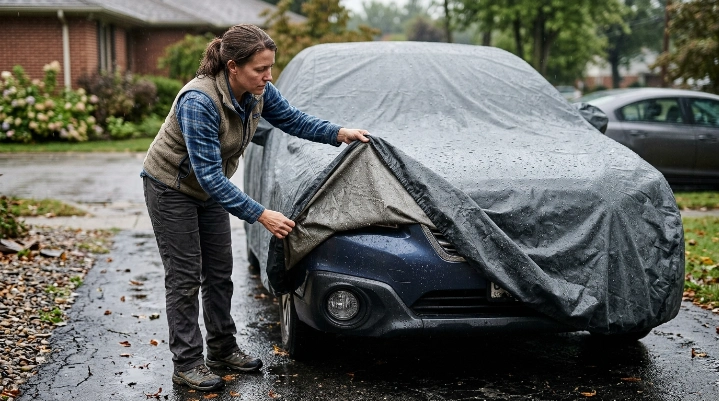
A musty car cover smell is the direct result of trapped moisture reacting with organic dust, pollen, and microscopic mold spores. When you wrap a vehicle tightly, any residual morning dew or rain has nowhere to go. This creates a miniature greenhouse effect underneath the fabric.
Mildew thrives in dark, humid environments where airflow is completely blocked. As these fungi break down trapped organic particles on the fabric surface, they release volatile organic compounds that create that distinct, earthy odor. Ignoring this smell can lead to mold transferring onto your vehicle’s paint or soft top.
Section Takeaway: Musty odors are caused by trapped moisture and mold growth in stagnant environments, which can damage both the fabric and your car’s finish if left unchecked.
Step-by-Step Cleaning Guide for Fabric Covers
Washing a car cover requires a gentle touch to preserve its protective coatings. Standard household laundry detergents often break down water-resistant treatments and leave residues that attract more dirt.
Follow these steps to safely wash and deodorize your cover at home:
- Shake and brush: Lay the cover flat on a clean driveway and brush off loose surface dirt.
- Select a safe washer: Use a large-capacity commercial front-load washing machine without a central agitator.
- Choose the right soap: Add a mild liquid detergent specifically formulated for technical fabrics or outdoor gear.
- Run a gentle cycle: Wash the cover on a delicate cycle using cold or lukewarm water only.
- Rinse thoroughly: Run an extra rinse cycle with one cup of white vinegar added to neutralize odors.
If your cover is too large for a washing machine, you can wash it directly while it is draped loosely over your vehicle or spread out on a clean patio. Hose it down, scrub gently with a soft-bristled brush, and rinse completely.
Section Takeaway: Always wash your car cover using mild detergent and a delicate cycle to eliminate mold spores without destroying its protective waterproofing layers.
How to Treat Persistent Mildew Stains
Sometimes a standard wash cycle isn’t enough to banish deep-set mildew spots. Black or green dots require targeted treatment before they permanently weaken the fabric threads.
Mix equal parts water and white vinegar in a spray bottle to tackle stubborn areas. Spray the affected spots generously and let the solution sit for ten to fifteen minutes to break down the mold structure.
Gently blot the area with a soft microfiber cloth instead of scrubbing aggressively. Aggressive scrubbing can fuzz the fabric and ruin multi-layer custom covers.
Never use harsh chlorine bleach on a car cover. Bleach breaks down stitching, degrades elastic hems, and destroys synthetic fibers rapidly.
Section Takeaway: Use a diluted white vinegar solution and gentle blotting to safely eliminate stubborn mildew stains without harming delicate synthetic fabric fibers.
Breathable vs. Waterproof Covers: Understanding the Risks
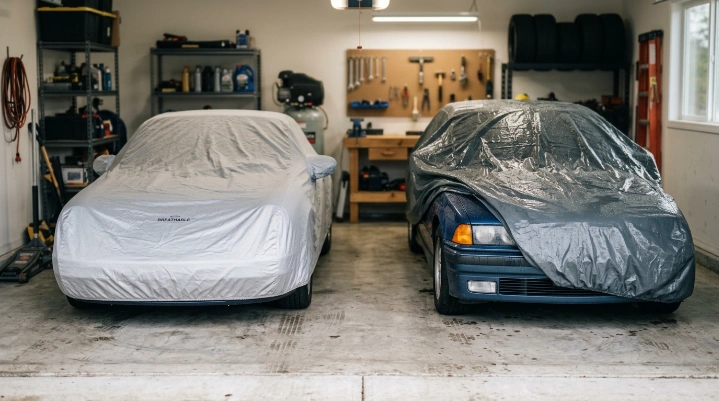
Choosing the wrong type of cover for your climate is the number one reason musty smells develop. Understanding material differences helps prevent future headaches.
| Cover Type | Best Environment | Moisture Risk |
|---|---|---|
| Multi-Layer Breathable | Outdoor, all-weather climates | Low (allows vapor escape) |
| Heavy Waterproof Vinyl | Heavy rain/snow regions | High (traps condensation) |
| Indoor Dust Cover | Garage or storage unit | Minimal (climate controlled) |
Fully waterproof vinyl covers lock out rain effectively, but they also lock in condensation when temperatures fluctuate. If you live in an area with high humidity, always opt for a breathable woven fabric like Evolution or Sunbrella.
Breathable fabrics allow trapped moisture vapor to escape into the air before mold can colonize the surface. This simple switch drastically cuts down on musty odors over time.
Section Takeaway: Selecting a breathable outdoor cover prevents condensation buildup and significantly reduces the likelihood of recurring musty mold smells.
How to Properly Dry and Store Your Car Cover
Putting a slightly damp car cover back into its storage bag guarantees a severe musty smell the next time you open it. Proper drying and packing techniques protect your investment.
Always hang your cover over a clean fence, a large drying rack, or your vehicle on a hot, sunny day. Ensure both the inner lining and outer shell are completely dry before taking it down.
Avoid tossing a rolled cover directly onto a dirty garage floor where it can pick up fresh dust and moisture. Store the clean, dry cover inside a breathable canvas storage bag rather than a sealed plastic bin.
If you must store your car in an underground or high-humidity garage, consider placing a moisture-absorbing desiccant bucket nearby. Keeping the surrounding air dry stops mildew from forming in the first place.
Section Takeaway: Completely air-dry your cover in the sun and store it in a breathable bag to prevent trapped residual moisture from reviving mold growth.
Frequently Asked Questions
Can I put my car cover in a household clothes dryer?
Most standard home dryers generate too much heat for synthetic car cover materials. High heat melts waterproof membranes, shrinks elastic hems, and damages fabric coatings. Always air dry your cover outdoors.
Will baking soda remove musty smells from a car cover?
Baking soda works well for dry fabric deodorizing, but it is difficult to rinse out of large car covers completely. Washing the cover with white vinegar is far more effective at killing mold spores at the root.
How often should I wash my car cover?
You should wash your car cover every three to six months depending on how often it is used outdoors. Regular cleaning removes abrasive dust, pollen, and organic debris that feed mold growth.
Is it safe to use Lysol or commercial disinfectants on a car cover?
Harsh chemical disinfectants can degrade protective UV coatings and weaken synthetic woven fibers. Stick to mild soaps, white vinegar, and specialized outdoor fabric cleaners for safe maintenance.
Why does my car smell musty even after washing the cover?
If the odor persists after washing the cover, trapped moisture may have reached your vehicle’s interior carpets or trunk. Inspect your cabin floorboards, cabin air filter, and weatherstripping for active leaks.
Can mold from a car cover damage my car’s paint?
Active mold colonies release acidic byproducts that can etch clear coat finishes over extended periods. Addressing a musty cover quickly prevents potential cosmetic damage to your vehicle’s exterior.
Dealing with a musty car cover takes a little patience, but a thorough wash and proper drying routine will have your garage smelling fresh again. Take time to check your cover’s breathability and storage habits to keep mildew away for good.