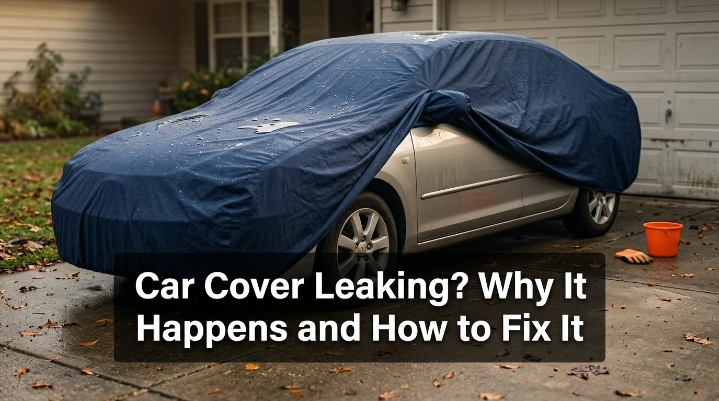
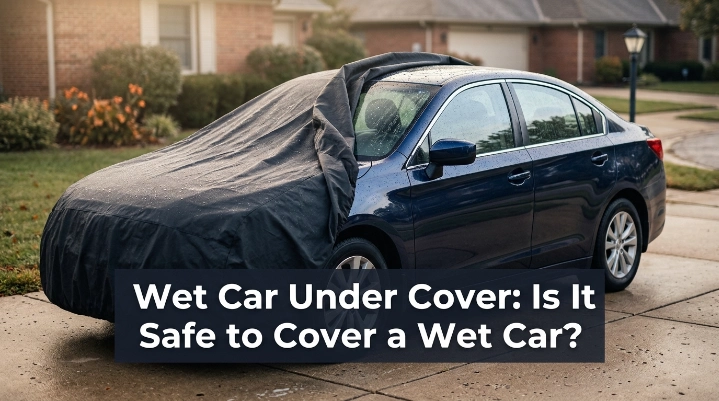
Water Pooling on Car Cover: Causes, Fixes, and Prevention

Quick Answer
Water pooling on a car cover usually happens because loose fabric creates a low spot over the roof, hood, or trunk. Tighten the cover, remove excess slack, and create a gentle slope so rain can run off. Proper sizing also matters, as shown in Car and Driver’s 2026 car-cover testing.
Most likely causes
- Loose fit: Extra fabric sinks between the vehicle’s high points.
- Loose straps: The cover shifts and develops deeper depressions during rain.
- Flat panels: Wide roofs and hoods give water an easy place to collect.
- Leaves and debris: Added weight can pull the fabric downward.
- Wrong cover type: An oversized universal cover may leave too much loose material.
What I would do first
- Empty the existing pool, reposition the cover, tighten every strap, and check whether rain now has a clear downhill path.
Water pooling on a car cover looks harmless at first. I don’t treat it that way because standing water adds weight, stretches fabric, and can keep the vehicle damp longer.
The good news is that this problem usually doesn’t require a complicated repair. Most cases come down to fit, tension, support, and water runoff.
In This Guide
Why Does Water Pool on a Car Cover?
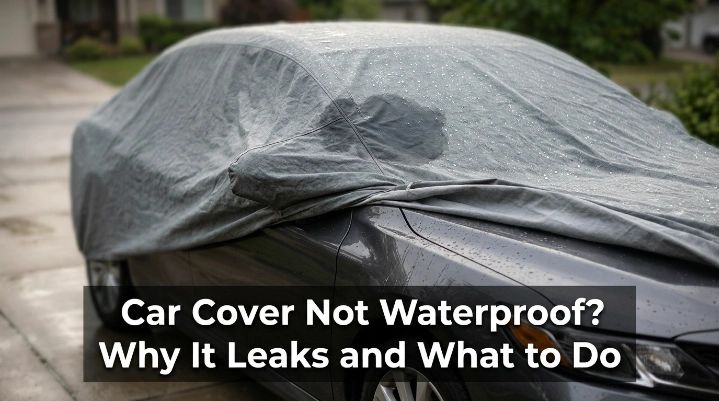
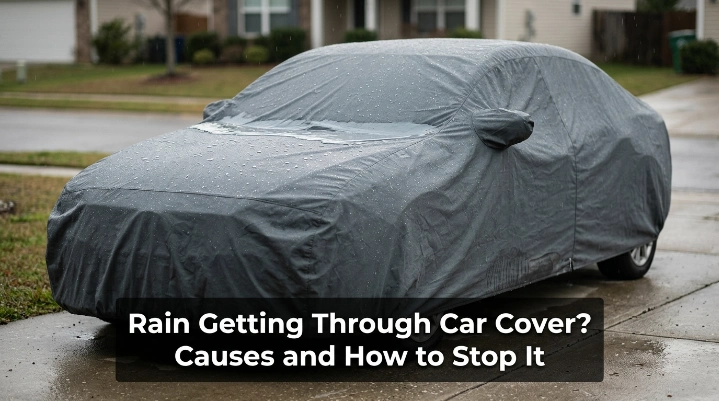
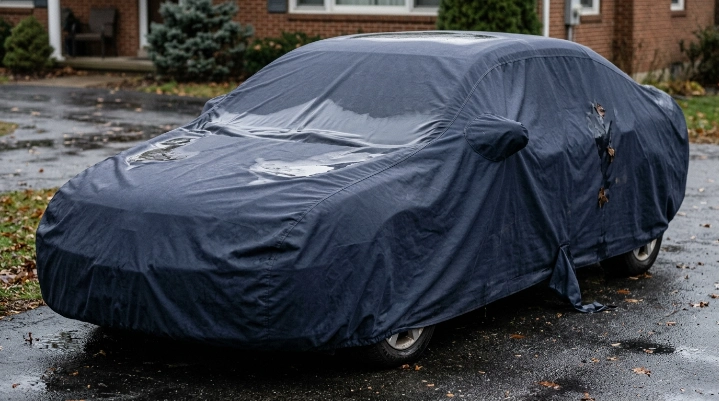
Water pools because the cover develops a depression with no downhill escape path. Rain fills that low point faster than it can roll off the sides.
Definition: Water pooling on a car cover means rainwater collects in a sagging section of fabric instead of draining naturally from the vehicle.
Loose fabric is the most common cause
A universal cover often has more material than a model-specific cover. That extra fabric can sag between the roof, windshield, hood, mirrors, and trunk.
Once a small puddle forms, its weight pulls the material lower. The deeper pocket then holds even more water.
- Roof center: Common on sedans with broad, fairly flat roofs.
- Hood area: Loose fabric can dip between the windshield and front edge.
- Trunk or hatch: Long unsupported sections may sag after heavy rain.
- Pickup bed area: A full vehicle cover can have a large unsupported span behind the cab.
Loose straps allow the shape to change
A cover may look fine when you install it. Wind and rainfall can move loose sections several inches and create a new depression.
I check every buckle instead of assuming the elastic hem will handle everything. A secure lower edge helps keep tension across the upper panels.
Leaves can create their own low spot
Wet leaves are heavier than dry ones. A pile can push an otherwise acceptable cover downward and start a puddle.
- Remove leaves before expected rain.
- Clear small branches and seed pods.
- Check valleys beside roof rails or spoilers.
- Inspect the cover after windy weather.
A clean cover also sheds water more consistently. Dirt trapped in the fabric can affect how some materials behave when wet.
How Do You Stop Water Pooling on a Car Cover?
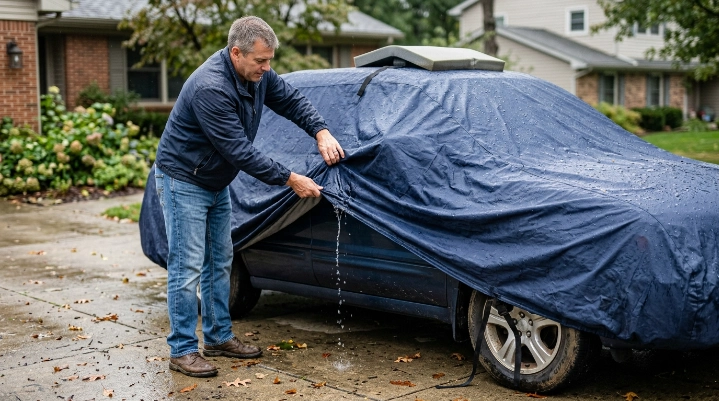
Start by removing the existing water without dragging the cover over the paint. Then eliminate the depression that allowed the pool to form.
1. Push the pooled water toward an edge
Lift the cover gently from underneath when possible. Guide the water toward the nearest side rather than pulling the wet cover across the car.
A soft, broad object can help from outside. Avoid sharp broom handles or anything that concentrates pressure on one paint panel.
2. Re-center the cover
Check whether the front and rear are positioned correctly. An off-center cover may leave excess material over one section.
- Find the cover’s front and rear markings.
- Center mirror pockets if the cover has them.
- Pull the fabric evenly down both sides.
- Seat the elastic hem around the lower body.
3. Tighten the straps
Secure every supplied strap and buckle. They should remove slack without forcing the cover tightly against sharp edges.
Don’t overtighten one strap while leaving another loose. Balanced tension works better.
4. Create a gentle peak over the problem area
If the same spot keeps collecting rain, the fabric may need support. The goal is a broad, gentle peak that gives water a downhill route.
- Use only a stable support designed for covers or similar soft applications.
- Use a wide, padded contact surface.
- Avoid hard or sharp objects against paint.
- Don’t place excessive point pressure on thin roof panels.
I prefer changing the cover’s shape rather than stretching it until it feels like a drum. A small slope is usually enough to improve runoff.
5. Remove debris and test the drainage
After adjusting the cover, pour a small amount of clean water onto the problem area. Watch where it travels.
If the water still runs into the same depression, the low spot remains. Reposition the support or remove more slack.
6. Recheck everything after the next rain
A cover can settle after becoming wet. Inspect it again after the next storm and make one final adjustment if needed.
This extra check matters with new universal covers. Their final position may change after the fabric has been exposed to wind and rain.
Section Takeaway: Emptying the puddle is only temporary. The lasting fix is to remove the low point that keeps collecting water.
What Is the Best Fix for Your Type of Pooling?
The best solution depends on where the water collects and why the cover sags. Use the visible symptom to narrow the cause before changing anything.
| What You See | Likely Cause | Best First Fix |
|---|---|---|
| One deep pool in roof center | Unsupported fabric span | Create a safe, padded central peak |
| Several shallow puddles | Cover is generally too loose | Re-center and tighten all straps |
| Pooling after windy rain | Cover moves during storms | Improve lower-edge security |
| Pool forms under leaves | Debris adds localized weight | Clean the cover before rainfall |
| Pooling returns after every adjustment | Poor cover sizing or shape | Move to a better-fitting cover |
Water gets heavy faster than many owners expect. One U.S. gallon weighs about 8.3 pounds, so a two-gallon pocket adds roughly 16.7 pounds.
That load sits on a small part of the fabric. It can deepen the depression and put extra stress on seams.
When tightening alone is enough
Straps can solve shallow pooling caused by mild slack. They work best when the cover already matches the vehicle reasonably well.
When you need to change the cover
Repeated deep pools across several panels point toward poor sizing. A cover with too much material will always be harder to keep shaped correctly.
- The cover hangs far below the rocker panels.
- Large folds remain after all straps are tight.
- Mirror areas never align correctly.
- The same large depressions return after every storm.
At that point, I would stop fighting the fabric. A better fit is the cleaner long-term fix.
Can Pooled Water Damage the Cover or Car Paint?
Yes, persistent pooling can shorten cover life and increase moisture-related problems. The main concerns are fabric stress, water intrusion, dirt movement, and moisture trapped near the finish.
Standing water stretches the cover
A puddle places continuous downward force on one area. Repeated wetting can make an existing depression more noticeable over time.
Seams and strap attachment points may also carry more load. Check them when chronic pooling has already occurred.
- Look for stretched fabric.
- Inspect seam stitching.
- Check strap anchors for tearing.
- Look for thin or worn areas.
Water resistance does not mean moisture can never appear underneath
A useful outdoor cover needs to deal with rain while still allowing trapped moisture to escape. Covercraft explains why it favors breathable, water-resistant cover materials instead of completely non-breathable waterproof construction.
Condensation can form even when rain never passes directly through the fabric. Covering a wet vehicle makes that problem worse.
Trapped moisture can affect clear coat
Long periods of moisture against paint are worth avoiding. Dr. Beasley’s documents clear-coat discoloration linked with moisture trapped beneath covers and plastic sheeting.
If I find the paint wet after removing a cover, I let the vehicle and cover dry fully. I don’t put the same damp cover straight back on.
Paint-care tip: Never slide a dirty, water-heavy cover across the vehicle. Grit between the cover and clear coat can turn that movement into abrasion.
Persistent cloudy marks, staining, or damaged clear coat deserve inspection by a professional detailer or body shop. Aggressive polishing can remove more clear coat than necessary.
What Type of Car Cover Prevents Water Pooling Best?
A properly sized outdoor cover with secure straps and water-shedding, breathable fabric gives you the best starting point. Fit matters because even excellent fabric can collect water when it hangs in a deep fold.
Custom-fit versus universal covers
Custom or vehicle-specific covers usually follow the body more closely. Universal covers trade precise fit for broader compatibility.
- Custom fit: Less spare fabric and fewer deep folds.
- Semi-custom: A practical middle ground when sizing is accurate.
- Universal: Often cheaper, but may require more tension adjustment.
- Indoor dust cover: Usually unsuitable for repeated outdoor rain exposure.
As of 2026, independent testing still shows how much sizing and securing methods affect real-world cover performance. A well-fitted outdoor cover is easier to keep stable during changing weather.
Breathability matters too
Don’t focus on the word “waterproof” alone. You also want moisture underneath the cover to have a way out.
A breathable outdoor material can shed rain while allowing humidity to escape. That balance matters for vehicles stored outdoors for days or weeks.
The inside surface should stay clean
Even a good cover can mark paint if grit becomes trapped underneath. Covercraft’s paint-care guidance also stresses clean surfaces and a snug fit.
- Wash heavy dirt from the car before covering it.
- Don’t drop the inside of the cover on dirty pavement.
- Dry the cover fully before storage.
- Inspect the lining for grit before reinstalling it.
I also avoid covering a freshly washed car while water remains around mirrors, trim, door handles, or panel gaps. Give those areas time to drain first.
Frequently Asked Questions
Why does my waterproof car cover still collect water?
Waterproofing describes how the material handles water penetration. It does not guarantee that rain will run off. If the fabric sags, even waterproof material can form a bowl-shaped depression that collects standing water.
How can I stop water pooling without buying another car cover?
Re-center the cover, remove leaves, tighten every supplied strap, and eliminate the low spot. If one unsupported area keeps sagging, a broad padded support can create enough slope for water to drain away.
Should I remove pooled water immediately?
Yes. Removing it reduces fabric load and lets you inspect why the pool formed. Guide the water toward an edge gently instead of dragging a heavy wet cover across painted panels.
Can I put a tarp over my car cover?
I generally avoid adding a loose plastic tarp as a permanent solution. It can create more folds, move in wind, and trap moisture. A properly fitted outdoor vehicle cover is usually a better approach for repeated weather exposure.
Will tightening the straps completely prevent pooling?
Not always. Tight straps can remove general slack, but they cannot support every wide horizontal span. If water always collects at one central point, the cover may need better support or a more suitable fit.
Is it normal for some water to remain on a car cover after rain?
Small beads on water-resistant fabric are normal. A deep standing puddle is different because it indicates a drainage problem. The surface should have enough slope for most rainwater to move toward the edges.
Final Takeaway: Fix the Low Spot, Not Just the Water
Water pooling on a car cover is usually a shape problem. Loose fabric, poor positioning, weak strap tension, debris, or an oversized cover creates a depression that catches rain.
Start with the simple fixes first. Empty the pool, center the cover, tighten the straps, remove debris, and test how water runs off.
- If one spot keeps pooling: Create a safe, gentle peak.
- If many areas pool: Recheck the cover’s size and fit.
- If moisture appears underneath: Dry the vehicle and cover fully.
- If paint looks cloudy or damaged: Get the finish inspected before polishing aggressively.
My final check is simple: I want rain to have an obvious downhill route everywhere on the cover. If I can see a bowl-shaped section before the storm starts, I fix it before the water gets the chance to fill it.