
Wet Car Under Cover: Is It Safe to Cover a Wet Car?

Quick Answer
It is best not to put a car cover over a wet car. The cover can slow evaporation and keep moisture against paint, trim, glass, and metal longer than necessary. Dry the vehicle first and use a breathable cover designed for your parking conditions. For broader owner-care guidance, see Kelley Blue Book.
What matters most
- Dry it first: Remove visible water before installing the cover.
- Check hidden areas: Water often remains around mirrors, trim, handles, and wipers.
- Choose breathability: A cover should let trapped water vapor escape.
- Avoid dirty paint: Moist dirt under a moving cover can increase scratch risk.
- Inspect often: Outdoor storage needs more checks during humid or rainy weather.
If the car is already covered wet
- Remove the cover when weather allows, dry both the vehicle and the cover, then reinstall it only when both feel dry.
I have made the mistake of covering a car too soon after washing it. The body looked dry, but water was still hiding around the mirrors and trim.
By the next check, the paint felt damp again under the cover. As of 2026, my rule is simple: a clean, dry car goes under the cover, while a wet one gets more drying time.
In This Guide
- What happens if you put a car cover on a wet car?
- Why is my car wet under the cover?
- How dry should a car be before you cover it?
- Is a breathable or waterproof car cover better?
- What should you do if you already covered a wet car?
- How do you stop moisture under a car cover?
- Frequently asked questions
What Happens If You Put a Car Cover on a Wet Car?
Covering a wet vehicle can trap water against the car and slow normal drying. The biggest concern is not a few drops of water, but moisture that stays trapped for long periods.
Definition: A wet car under cover means moisture is present between the vehicle and the cover instead of escaping freely into open air.
Can trapped water damage car paint?
Brief contact with clean water normally does not destroy automotive paint. Problems become more likely when water stays against dirty paint, minerals dry on the surface, or the cover rubs contaminants across the finish.
- Water spots: Minerals can remain after droplets evaporate.
- Surface staining: Dirty water may leave marks on neglected finishes.
- Scratches: Dust and grit can move against the paint when the cover shifts.
- Mildew: Damp fabric and organic dirt can develop musty growth during storage.
- Corrosion: Long-term moisture can encourage rust where bare or damaged metal is exposed.
I worry more about a wet, dirty car than a freshly washed one. Grit between the cover and clear coat can act like fine sandpaper when wind moves the fabric.
Does a wet cover create rust immediately?
No. Rust does not appear simply because your car was covered while damp for one short period.
The concern is repeated or prolonged moisture around exposed steel, chips, seams, fasteners, and other corrosion-prone areas. Older vehicles with existing paint damage deserve extra attention.
If I find a paint chip before storage, I do not rely on the cover to protect it. I address the damaged area and keep it as dry as practical.
Why Is My Car Wet Under the Cover?
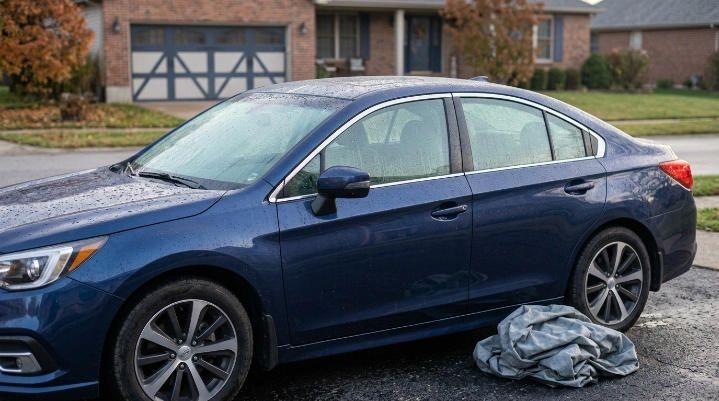
A car can become damp under a cover even when rain never passed through the fabric. Condensation, residual wash water, humidity, and a wet cover are common explanations.
Condensation under a car cover
Condensation forms when moist air cools enough for water vapor to turn into liquid on a cooler surface. Your car’s roof, glass, hood, and metal panels can all collect that moisture.
This explains why a vehicle may feel dry in the evening but damp the next morning. Outdoor temperature swings make the effect more noticeable.
- Warm humid air: Moisture remains in the air around the vehicle.
- Cool body panels: Metal and glass lose heat as temperatures fall.
- Limited airflow: Moisture may take longer to escape beneath a cover.
- Wet ground: Damp pavement or soil can add humidity around the parked vehicle.
Water can hide after washing
One lesson I learned from hand washing cars is that “dry” can be misleading. Water loves to hide in small gaps.
I check these five areas before putting a cover on:
- Side mirrors and mirror housings
- Door handles and weather seals
- Window and roof trim
- Fuel or charging door area
- Wiper cowl and trunk edges
A short drive can also blow trapped water out of seams. I still let the vehicle cool before covering it.
Section Takeaway: A wet car under a cover does not always mean the cover leaked. Condensation and hidden water are often the real sources.
How Dry Should a Car Be Before You Cover It?
The vehicle should be dry to the touch before you install the cover. I do not use a fixed waiting time because humidity, temperature, vehicle size, and weather change drying speed.
Use a simple five-point dryness check
Walk around the vehicle once before putting the cover on. Look closely instead of checking only the hood or roof.
- Paint: No beads or wet streaks should remain.
- Glass: Windows and mirrors should be dry.
- Trim: Press a clean microfiber towel around seams.
- Lower panels: Check rocker panels and wheel-arch edges.
- Cover itself: The inside surface should also be dry and clean.
If the towel comes away damp, I give the car more time. A few extra minutes of drying are easier than dealing with a musty cover later.
Should you cover the car right after driving?
I prefer to let a recently driven car cool before covering it. Heat around the engine bay, exhaust area, brakes, and tires can make trapped air warmer than the surrounding air.
Follow the cover manufacturer’s instructions if it specifies a cooling period. Material heat limits can differ between products.
Is a Breathable or Waterproof Car Cover Better?
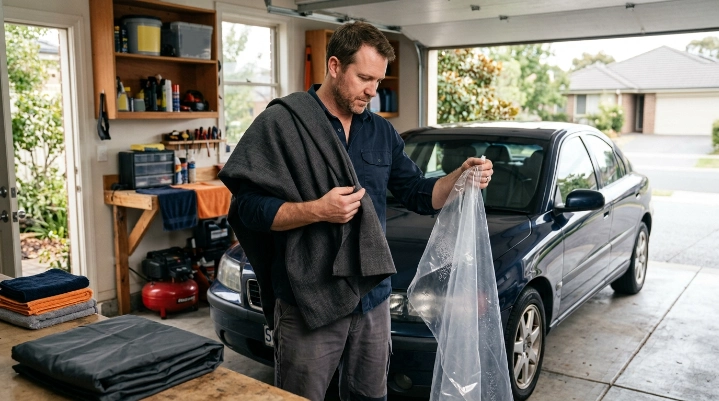
For routine storage, I prefer a cover that combines weather resistance with breathability. A material that blocks rain but also allows water vapor to escape is more useful than a simple plastic sheet.
Automotive accessory testing and product guidance from sources such as Car and Driver can help when comparing cover materials and other vehicle accessories.
| Cover Type | Moisture Behavior | Best Use | Main Concern |
|---|---|---|---|
| Breathable indoor cover | Allows water vapor to escape more easily | Garage and indoor dust protection | Limited heavy-weather protection |
| Breathable outdoor cover | Balances weather resistance and ventilation | Regular outdoor parking | Must fit securely in wind |
| Non-breathable plastic sheet | Can restrict evaporation | Short temporary protection only | Trapped moisture and abrasion |
Waterproof does not always mean moisture-free
A cover can stop outside rain while moisture still forms underneath. Water vapor already present around the car does not disappear just because rain cannot enter.
That is why I look for ventilation and a clean inner lining rather than focusing only on the word “waterproof.” Fit matters too.
Loose covers can create another problem
A loose cover can move across the paint in wind. If dust or grit is trapped underneath, that movement can mark the finish.
The cover should fit the vehicle without excessive flapping. Secure it only through the attachment points the manufacturer provides.
What Should You Do If You Already Covered a Wet Car?
Do not panic if you accidentally covered your car while wet. Remove the cover when conditions allow and let both surfaces dry.
- Remove the cover carefully. Avoid dragging dirty fabric across the paint.
- Inspect the car. Look for standing water, dirt, staining, or musty areas.
- Dry the body. Use clean microfiber towels or allow safe air drying.
- Dry the cover. Do not reinstall it while the inner surface remains damp.
- Check vulnerable areas. Look around chips, seams, trim, and exposed metal.
- Reinstall only when dry. Make sure both the vehicle and cover are ready.
If I only find a few clean droplets, I dry them and move on. I become more cautious when the car has stayed damp for days or smells musty.
What if you find mold or corrosion?
Small surface dirt can often be handled through normal cleaning. Extensive mold inside the cabin or corrosion around electrical parts deserves professional inspection.
Mechanic Alert: If moisture has reached wiring, control modules, lighting connectors, or other electrical components and the vehicle develops faults, have a qualified technician inspect it instead of opening electrical systems yourself.
For general safety information and vehicle-related guidance, you can also consult the National Highway Traffic Safety Administration.
How Do You Stop Moisture Under a Car Cover?
The best strategy is to control moisture before the cover goes on. Your parking surface, cover condition, weather, cleanliness, and storage routine all matter.
Use this routine before covering the car
- Wash when needed: Do not trap abrasive road dirt under the cover.
- Dry completely: Check seams, trim, mirrors, and lower panels.
- Cool the vehicle: Avoid covering it immediately after a drive.
- Inspect the cover: Make sure its inner surface is clean and dry.
- Fit it correctly: Reduce wind movement against the paint.
- Check storage conditions: Avoid standing water beneath the vehicle when possible.
Check long-term stored vehicles regularly
A cover should not make a stored vehicle disappear from your maintenance routine. I lift mine periodically to check moisture, pests, tire condition, paint, and the cover lining.
The right interval depends on storage conditions. Humid, coastal, rainy, or outdoor locations deserve more frequent checks than a clean, climate-controlled garage.
Keep the cover clean too
A dirty cover can transfer grime back onto clean paint. Follow its care label because washing and drying instructions vary by material.
I never fold a damp cover and throw it into the trunk. I let it dry first, then store it where dirt cannot contaminate the inner surface.
Frequently Asked Questions About a Wet Car Under Cover
Can I put a car cover on after washing my car?
Yes, but dry the car first. Check mirrors, trim, door handles, wiper areas, and panel gaps because those spots often hold water after the main body looks dry.
Will a breathable car cover dry a wet car?
A breathable cover may allow some moisture vapor to escape, but I would not use it as a drying method. Dry the car before covering it so the fabric does not have to manage unnecessary trapped water.
Why is my car wet under a waterproof cover?
Condensation may be forming beneath the cover. Humid air can cool against the vehicle and create droplets even when outside rain never passes through the material.
Can a car cover cause rust?
A cover does not automatically cause rust. Long-term trapped moisture can contribute to corrosion, especially where paint is chipped, metal is exposed, or water remains in seams.
Should I remove a wet car cover?
Yes, when weather conditions make removal practical. Dry the vehicle and the cover before reinstalling it, especially if the cover’s inner surface is soaked or dirty.
Is it better to leave a wet car uncovered?
If the choice is between normal air drying and trapping substantial water under a cover, I usually let the car dry first. Once the paint and cover are clean and dry, the cover can go back on.
Can I cover a car when rain is starting?
If the vehicle is already wet, adding a cover can trap that water. When possible, dry the car first and follow the cover manufacturer’s instructions for use in wet weather.
My final takeaway: A wet car under cover is usually preventable. Keep the vehicle clean, let it dry, choose a breathable cover, and inspect stored cars often.
Those few habits have saved me more trouble than any complicated storage trick. When in doubt, I would rather leave the cover off briefly than seal obvious moisture underneath it.