
How Long Can a Baby Sleep in a Car Seat? The Complete Safety Guide

Few things bring a parent as much relief as looking in the rearview mirror and seeing their baby peacefully asleep. The gentle hum of the engine and the vibration of the road often work like magic to soothe a fussy infant. However, while driving with a sleeping baby is a common experience, many parents are unaware of the strict safety guidelines surrounding it.
If you find yourself wondering how long can a baby sleep in a car seat, you are asking one of the most important safety questions for young passengers. Car seats are designed to protect your child during a crash, but they are not designed for safe, long-term sleep. Understanding the limits of car seat sleep, recognizing the risks, and knowing how to prepare your vehicle for safe travel will keep your most precious cargo secure on the road.
Quick Answer
Wondering exactly how long can a baby sleep in a car seat? Safety experts strictly recommend the “2-Hour Rule.” A baby should not spend more than two hours in a car seat within a 24-hour period. Prolonged sitting restricts their developing airway and puts unsafe strain on their fragile spine.
The 2-Hour Rule Explained
The 2-hour rule is the golden standard supported by pediatricians, child passenger safety technicians, and automotive safety experts. It states that an infant should not sit in a car seat—or any semi-reclined device—for more than two hours at a time.
For newborns and premature babies, this time limit is often even shorter. Many pediatricians recommend limiting car rides for very young infants to just 30 to 45 minutes whenever possible.
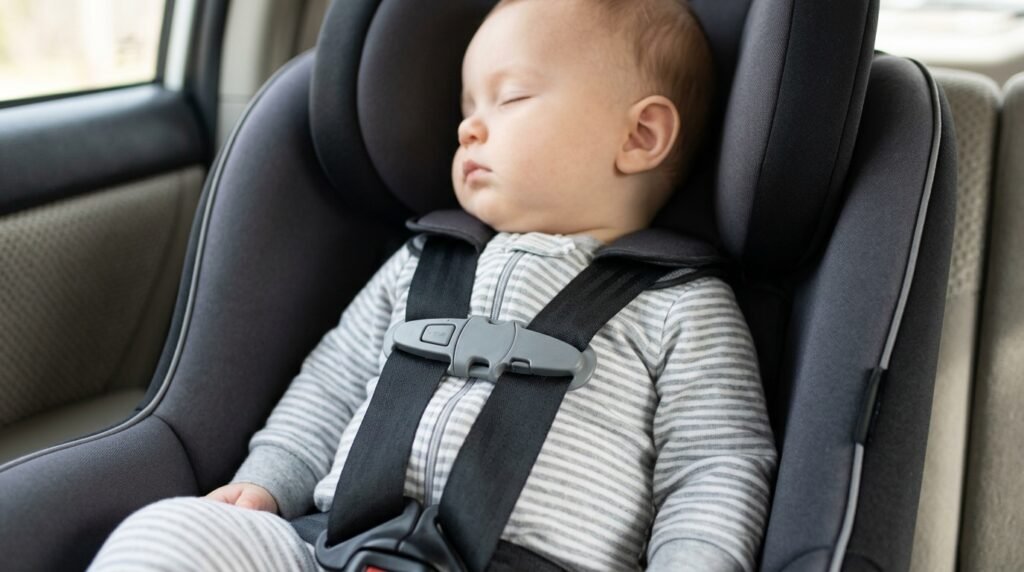
The primary reason for this rule is a condition known as positional asphyxiation. Babies do not have the neck strength to hold their heavy heads upright. When they sit in a semi-upright position for too long, their chin can fall forward onto their chest. This pinches their soft airway, quietly reducing their oxygen supply.
Additionally, car seats restrict movement. A baby’s developing spine needs time on a flat, firm surface to grow properly. Spending excessive time strapped into a curved position can put unnecessary strain on their back and restrict healthy physical development.
What to Do on Long Road Trips
If you are planning a family road trip, the 2-hour rule doesn’t mean you have to cancel your plans. It simply means you need to adjust your driving strategy to keep your baby safe.
Here are practical steps to manage long drives with an infant:
- Plan Frequent Stops: Map out rest stops, parks, or safe parking lots where you can pull over every two hours.
- Get the Baby Out of the Seat: During these breaks, completely unbuckle your baby and take them out of the vehicle. Let them stretch out on a flat surface, like a portable play mat or the flat trunk space of an SUV (while parked safely, of course).
- Have an Adult Sit in the Back: If possible, an adult should sit in the back seat next to the baby. This allows you to monitor their breathing, ensure their head hasn’t slumped forward, and keep them entertained.
- Combine Stops with Feedings: Time your two-hour breaks with diaper changes and feedings to maximize your time off the road.
According to the American Academy of Pediatrics guidelines, babies should always sleep on a firm, flat surface. This means that while car seats are essential for travel safety, they should never be treated as a substitute for a crib, even on the longest road trips.
Ensuring Your Vehicle is Safe for Car Seats

Your baby’s safety relies heavily on the condition of your vehicle’s safety hardware. A premium car seat cannot protect a child if the vehicle’s seatbelts or LATCH (Lower Anchors and Tethers for Children) system are compromised.
Check the LATCH Anchors
Modern vehicles are equipped with LATCH lower anchors hidden between the seat cushion and the backrest. Over time, heavy debris, spilled food, or previous incorrect installations can damage these metal bars. Inspect them with a flashlight to ensure they are clean, rust-free, and securely welded to the vehicle’s frame.
Test the Seatbelt Retractor
If you are installing the car seat using a vehicle seatbelt, the belt must lock securely. Pull the seatbelt all the way out until you hear a click, then let it feed back in. You should hear a ratcheting sound, and the belt should not pull back out. This is the Automatic Locking Retractor (ALR) engaging. If your seatbelt fails to lock, it is unsafe for car seat installation.
Maintain Proper Cabin Climate
Babies cannot regulate their body temperature as well as adults. Direct sunlight through a car window can cause a sleeping baby to overheat rapidly. Use simple, non-projectile window shades to block the sun, and ensure your vehicle’s air conditioning is reaching the back seat effectively.
When to Call a Professional Mechanic
Most car seat safety issues are resolved by adjusting the seat itself, but there are critical moments when your vehicle’s hardware is the problem. You should absolutely consult a professional auto repair shop or dealership if you notice any of the following:
- Frayed or Torn Seatbelts: A seatbelt with even minor fraying has lost its structural integrity and could snap during a collision. A mechanic must replace the entire seatbelt assembly.
- Broken Seatbelt Buckles: If the buckle requires excessive force to click, or if it pops out on its own, the internal locking mechanism is failing.
- Loose LATCH Anchors: LATCH bars are welded to the chassis. If they wiggle or feel loose, the vehicle’s frame may have hidden damage from a previous collision.
- Air Conditioning Failure: In the summer, a broken A/C compressor isn’t just uncomfortable; it is a severe health hazard for a baby trapped in a rear-facing seat.
Additionally, if you are struggling with the seat installation itself, you don’t need a mechanic; you need a Child Passenger Safety (CPS) technician. The National Highway Traffic Safety Administration (NHTSA) provides excellent resources to help parents find certified inspection stations to ensure their car seats are installed perfectly.
Expert Tip:
Always remove your baby’s puffy winter coat before buckling them into their car seat. Thick coats compress during a crash, leaving the harness dangerously loose. Instead, buckle the baby in securely in regular clothes, and lay a warm blanket over the straps.
Car Seat Sleep Safety Checklist
Use this simple table to quickly check if your current car seat habits are keeping your baby safe.
| Safety Factor | Safe Practice | Unsafe Practice |
| Duration of Sleep | Less than 2 hours in a 24-hour period. | Leaving the baby in the seat for 3+ hours. |
| Location | Only used while riding in a moving vehicle. | Used for naps at home, in restaurants, or stores. |
| Harness Fit | Snug. You cannot pinch any slack at the shoulders. | Loose straps that allow the baby to slouch. |
| Chest Clip | Positioned exactly at armpit level. | Down by the baby’s stomach or up by their neck. |
| Seat Angle | Reclined according to the manufacturer’s indicator. | Installed too upright, causing the head to fall forward. |
Common Mistakes Car Owners Should Avoid
Even the most careful parents can make accidental safety errors when dealing with a sleeping baby. Avoid these common automotive and child safety pitfalls:
- Letting them finish their nap inside: The most common mistake is unclicking the infant carrier, bringing it inside the house, and letting the baby continue sleeping on the floor. Without the specific angle of the car’s seat base, the carrier can sit too upright, causing positional asphyxiation.
- Using aftermarket head supports: Never buy attachable head-slump pillows, strap covers, or sleeping bags that did not come in the box with your car seat. These modify the way the seat performs in a crash and can push a baby’s head into an unsafe breathing position.
- Ignoring the recline indicator: Every rear-facing car seat has a bubble or line indicator on the side. If you park on a flat surface and the bubble isn’t in the safe zone, the seat is installed at the wrong angle, increasing the risk of airway restriction.
- Attaching toys to the handle: Heavy plastic toys clipped to the car seat handle become dangerous projectiles during hard braking or a collision. Keep the area around the sleeping baby clear.
FAQs
Does the 2-hour rule apply to newborns?
Yes, but many pediatricians advise being even more cautious with newborns. Because their neck muscles are practically nonexistent, it is highly recommended to limit car rides to 30 to 45 minutes for infants under one month old.
What should I do if my baby falls asleep on a short drive?
If you arrive home and your baby is still sleeping, you should gently unbuckle them, take them out of the car seat, and transfer them to a firm, flat crib or bassinet. Never leave them to finish their nap in the car seat inside the house.
Are travel system strollers safe for sleep?
Travel systems that allow you to click the infant car seat directly into the stroller frame are incredibly convenient. However, the 2-hour rule still applies. Time spent in the stroller clicked into the car seat counts toward their daily two-hour limit.
Do I need to wake my baby up during a road trip break?
Yes. It can be painful to wake a sleeping baby, but it is a vital safety measure. You must take them out of the seat every two hours so they can stretch their spine and breathe freely without chest compression.
How should the car seat be angled for a sleeping baby?
Rear-facing car seats must be installed at a specific recline angle, usually between 30 and 45 degrees, depending on the manufacturer’s instructions. Always check the built-in level indicator on the side of the seat base while parked on level ground.
What if my vehicle’s seat is too sloped for the car seat base?
If your vehicle’s rear seats have a steep slope (common in some sports cars and trucks), the car seat may sit too upright. Read your car seat manual; many allow you to place a tightly rolled towel or a pool noodle under the base to achieve the correct, safe recline angle.
Conclusion
Understanding exactly how long can a baby sleep in a car seat is crucial for mixing automotive travel with infant safety. While the gentle motion of your vehicle makes for a great sleep aid, the strict 2-hour rule exists to protect your baby’s fragile airway and developing spine.
Always remember to plan frequent stops on long road trips, ensure your vehicle’s seatbelts and LATCH systems are in perfect working order, and always transition your sleeping baby to a flat, safe crib once you reach your destination. By preparing your vehicle properly and respecting time limits, you can ensure that every drive you take with your little one is as safe as it is peaceful.
