
Diono Monterey 2XT Latch 2-in-1 Booster Car Seat: Full Guide

Quick Answer
The Diono Monterey 2XT Latch 2-in-1 Booster Car Seat is a high-back booster that converts to backless mode. It supports children from 40 to 120 pounds and 38 to 63 inches tall, according to the current U.S. manual. It stands out for adjustable width, 11 headrest positions, lower-anchor connectors, and a roomy design. Before moving any child into a booster, compare their readiness with NHTSA booster-seat guidance.
Best reasons to consider it
- Long fit range: The stated child limits cover 40–120 pounds and 38–63 inches.
- Two booster modes: You can start with the high back and later remove it for backless use.
- Adjustable fit: Eleven headrest positions and an adjustable-width back help accommodate growing children.
- Lower-anchor connection: LATCH connectors help keep the booster secured to compatible vehicle anchors.
- Roomy seating: The broad, expandable design can work well for bigger or broader-shouldered kids.
Main issue to check first
- Its generous width may be useful for one child but less convenient in tight three-across seating arrangements.
I like booster seats that solve the fit problem without making daily buckling complicated. The Diono Monterey 2XT takes that approach with adjustable height, adjustable width, two booster modes, and front-access lower-anchor straps.
The important question isn’t whether it has the longest feature list. It’s whether the seat fits your child, your vehicle, and your normal routine correctly.
In This Guide
- What is the Diono Monterey 2XT Latch 2-in-1 Booster Car Seat?
- Who is the Diono Monterey 2XT best for?
- How do its size, fit, and comfort features work?
- How do you install and use the Monterey 2XT correctly?
- How does the Monterey 2XT compare with other Diono boosters?
- Is the Diono Monterey 2XT worth it in 2026?
- Frequently Asked Questions
What is the Diono Monterey 2XT Latch 2-in-1 Booster Car Seat?
The Diono Monterey 2XT is a belt-positioning booster seat. It raises and positions an older child so the vehicle’s lap-and-shoulder belt can sit across stronger areas of the body.
It does not use a built-in five-point harness. The vehicle seat belt restrains the child.
Definition: A belt-positioning booster raises a child and guides the vehicle’s lap-and-shoulder belt into a safer position across the hips, shoulder, and chest.
The Monterey 2XT starts as a high-back booster. The backrest can later be removed so the seat functions as a backless booster.
Diono’s current U.S. Monterey 2XT instruction manual specifies a child weight range of 40–120 pounds and a height range of 38–63 inches.
Key specifications
| Specification | Monterey 2XT |
|---|---|
| Child weight range | 40–120 lb |
| Child height range | 38–63 in |
| Modes | High-back and backless booster |
| Head support positions | 11 |
| Published seat weight | 14.3 lb |
| Published overall width | 22 in |
| Recline settings | 2 |
| Cup holders | 2 retractable holders |
The published dimensions help explain the personality of this booster. This isn’t Diono’s narrow three-across model.
Instead, Monterey focuses on adjustable shoulder and torso space. That’s worth remembering before ordering one for a compact back seat.
Who is the Diono Monterey 2XT best for?
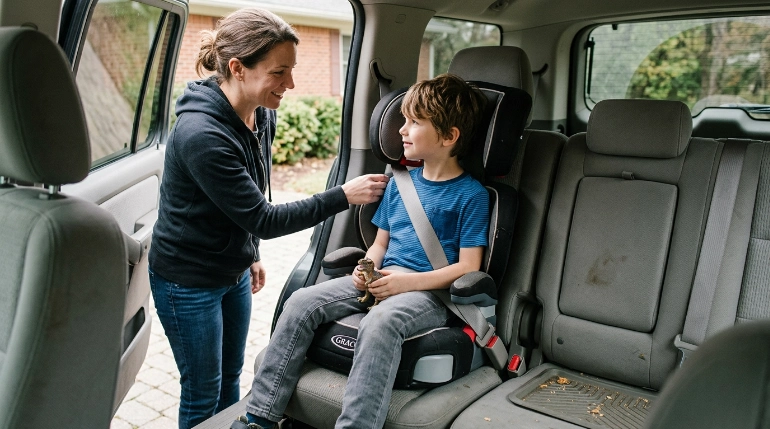
The Monterey 2XT makes the most sense for a booster-ready child who benefits from extra width or adjustability. Meeting the seat’s minimum weight and height numbers alone doesn’t automatically mean a child should leave a harnessed seat.
NHTSA recommends keeping children in a forward-facing seat with a harness until they outgrow the manufacturer’s height or weight limits. After that, a booster is the next stage for many children.
Look at readiness before the calendar
I wouldn’t choose a booster because a child reached one birthday. I would first check the limits on the existing harnessed seat and the child’s ability to sit correctly throughout a trip.
You can compare your child’s stage with NHTSA’s right-seat guidance before making the move.
A child using a belt-positioning booster needs to remain upright. Slouching, leaning far to the side, or placing the shoulder belt behind the back can defeat proper belt positioning.
The Monterey 2XT is especially appealing when:
- Your child needs more shoulder room: The adjustable backrest width is a defining Monterey feature.
- You want one booster with two modes: The back can be removed when backless use becomes appropriate.
- Your vehicle has lower anchors: The built-in connectors help secure the booster when compatible anchors are available.
- Your child is still growing quickly: Eleven headrest positions provide substantial adjustment.
- You frequently take longer drives: The broad seat, recline adjustment, and retractable cup holders are practical comfort features.
Who should consider something narrower?
Families trying to place three passengers or restraints across one row should measure carefully. Diono publishes a 22-inch overall width for the Monterey 2XT in its current product information.
A narrower booster may leave more room for adjacent passengers and easier buckle access. Vehicle-seat geometry still matters, so published width alone doesn’t guarantee a fit.
Section Takeaway: Choose the Monterey 2XT for its adjustable, roomy fit—not simply because your child has reached 40 pounds.
How do its size, fit, and comfort features work?
The Monterey 2XT’s biggest advantage is adjustability. Diono gives parents several ways to match the booster to a growing child and different vehicle seats.
Adjustable-width backrest
A dial on the rear of the high-back section changes the backrest width. This feature helps create more shoulder and torso room as the child grows.
Diono says the back can expand to provide substantially more occupant space. The practical benefit is simple: the seat doesn’t force a growing child’s shoulders into one fixed-width shell.
Eleven headrest positions
The headrest moves through 11 positions. In high-back mode, the manual says the shoulder-belt guide should sit slightly above the child’s shoulder.
The manual specifies at least about 1 cm above the shoulder. That positioning helps the belt travel naturally across the shoulder rather than the neck.
Two recline positions
The backrest has two recline positions that can help it follow the angle of the vehicle seat. This is not a sleep recline like an infant seat.
Its purpose is matching the booster to the vehicle seatback while maintaining proper support.
Side structure and padding
Diono describes the high-back model as using reinforced head support and energy-absorbing foam. Those components form part of the seat’s side structure around the head, shoulders, and torso.
I wouldn’t turn those marketing terms into an independent crash-test claim. The more useful buying question is whether the child’s head, shoulders, and belt remain correctly positioned in your vehicle.
Retractable cup holders
Two holders swivel out when needed and fold inward when they’re not. That small detail is useful when another passenger needs more hip room beside the booster.
The manual warns against using them for hot food or hot liquids.
Washable cover
Diono allows the fabric cover to be washed separately in cold water on a gentle cycle with mild detergent. The manual directs users to dry it flat and away from direct sunlight.
The plastic shell and components should be spot-cleaned. Harsh chemicals and lubricants are not recommended.
How do you install and use the Monterey 2XT correctly?
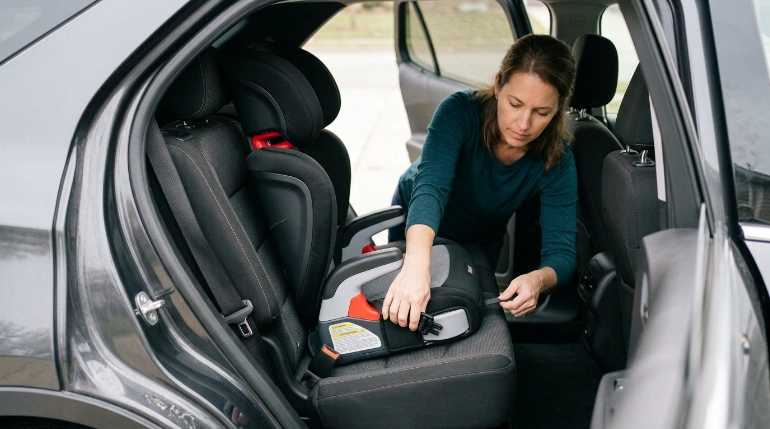
The key fact is easy to miss: LATCH does not replace the vehicle seat belt for the child. The child still needs the vehicle’s lap-and-shoulder belt every ride.
The lower-anchor connectors mainly secure and stabilize the booster itself.
High-back setup
- Choose a rear seating position with a lap-and-shoulder belt.
- Check your vehicle manual for approved lower-anchor locations.
- Attach the Monterey’s lower-anchor connectors when compatible.
- Push the booster against the vehicle seat and tighten both adjuster straps.
- Confirm the booster bottom rests flat on the vehicle seat.
- Make sure the high-back head support is supported by the vehicle seatback or head restraint.
- Seat the child upright and all the way back.
- Set the headrest so the shoulder-belt guide sits slightly above the shoulder.
- Route the shoulder belt through the upper guide.
- Route the lap belt through the lower belt guides and buckle it.
The lap portion should lie flat across the child’s hips rather than high over the stomach. The shoulder portion should cross the shoulder and chest without touching the neck.
The manual also says to check that the shoulder belt retracts freely. Belt geometry can differ enough between vehicles that one seating position may work better than another.
What if your vehicle doesn’t have usable lower anchors?
The Monterey can still function as a belt-positioning booster. Diono instructs users to secure an unoccupied booster with the vehicle seat belt when LATCH isn’t being used.
That step keeps an empty booster from becoming a loose object during sudden braking or a collision.
Using it in backless mode
Backless mode needs adequate vehicle head support. Diono says the child’s ears must remain below the top of the fully raised vehicle seatback or headrest.
The lap-and-shoulder belt must still fit properly.
If the shoulder belt doesn’t sit correctly, the Monterey includes a backless shoulder-belt guide strap. Its red guide should be positioned just above the child’s shoulder.
Check the buckle position
The buckle should line up correctly beside the booster. If the buckle gets pulled across a lower belt guide or into the booster, the manual tells you to choose another seating position.
This is one reason I prefer doing a real vehicle fit check before committing to any booster. Two cars with similar rear-seat width can have completely different buckle locations.
Safety Alert: If you’re unsure about belt routing, vehicle compatibility, or your child’s restraint stage, use the manufacturer instructions and consider help from a certified Child Passenger Safety Technician.
Section Takeaway: The Monterey’s LATCH connectors secure the booster, while the vehicle lap-and-shoulder belt restrains the child.
How does the Monterey 2XT compare with other Diono boosters?
The Monterey 2XT isn’t automatically the best Diono booster for every back seat. Its biggest strength—extra space—can also be its biggest compromise.
Here is how it compares with two other Diono 2-in-1 boosters using currently published manufacturer specifications.
| Feature | Monterey 2XT | Cambria 2XT | Connect3 RXT High-Back |
|---|---|---|---|
| Weight range | 40–120 lb | 40–120 lb | 40–120 lb |
| Maximum stated height | 63 in | 63 in | 63 in |
| Published overall width | 22 in | 20.1 in | 16.3 in |
| Published seat weight | 14.3 lb | 13.2 lb | 11.5 lb |
| Headrest positions | 11 | 7 | 11 |
| Main design advantage | Expandable, roomy fit | Simpler general-purpose design | Narrow three-across-focused design |
Choose Monterey 2XT for adjustable space
The Monterey is the one I’d shortlist first for a child who appreciates extra shoulder room. Its width-adjustment mechanism distinguishes it from simpler fixed-width boosters.
Choose Cambria 2XT for a more conventional footprint
Cambria 2XT is narrower and slightly lighter based on Diono’s published figures. It also uses seven headrest positions instead of Monterey’s 11.
That can make Cambria appealing when you want Diono’s two-mode concept without Monterey’s full expandable design.
Choose Connect3 RXT when width is the problem
Connect3 RXT is published at only 16.3 inches wide without its accessories extended. Diono specifically designs that line around fitting three across in many vehicle configurations.
If your back seat already feels crowded, that’s a major difference.
Before comparing ratings or prices, I would compare real fit. Independent resources such as Consumer Reports car-seat coverage can also help when you’re narrowing several models.
Section Takeaway: Monterey 2XT prioritizes adjustable occupant space; Connect3 prioritizes a narrow vehicle footprint.
Is the Diono Monterey 2XT worth it in 2026?
For the right family, yes. The Monterey 2XT makes a strong case when you need a roomy booster that can adjust through several stages of an older child’s growth.
I would be less enthusiastic if your main goal is fitting multiple restraints into a narrow second row.
What I like
- Useful growth range: The current manual lists 40–120 pounds and 38–63 inches.
- High-back to backless conversion: One seat covers two belt-positioning booster configurations.
- Expandable backrest: Width adjustment is useful for children who need more shoulder space.
- Eleven headrest positions: Fine adjustment makes it easier to keep the shoulder guide in the correct area.
- Lower-anchor connectors: These help keep the booster attached when compatible anchors are available.
- Two recline settings: The backrest can better match different vehicle seatback angles.
- Practical daily features: Retractable cup holders and a removable washable cover simplify routine use.
What I’d check before buying
- Back-seat width: A published overall width of 22 inches makes this a relatively broad booster.
- Buckle access: Wide boosters can make adjacent buckles harder for a child to reach.
- Vehicle headrest interaction: The booster back and head support must sit as directed in the manual.
- Lower-anchor location: Not every rear seating position provides compatible anchors.
- Actual belt fit: The shoulder and lap belt must lie correctly on your child in your vehicle.
The manual also gives the Monterey 2XT an eight-year expiration period from the date of purchase. Check the seat label, purchase information, and manual rather than estimating its usable life.
If you’re buying secondhand, I’d be cautious. You need reliable information about the seat’s age, condition, missing parts, and crash history.
My practical verdict
The strongest reason to buy the Monterey 2XT is not the LATCH name or the cup holders. It’s the combination of an adjustable-width high back, 11 headrest positions, and later backless use.
That makes it particularly attractive for growing children who feel squeezed in narrower boosters.
Its main tradeoff is equally clear. If every inch of rear-seat space matters, compare a narrower booster before making your final choice.
As of 2026, I would put child readiness, belt fit, vehicle compatibility, and easy everyday buckling ahead of price or appearance. Those factors determine whether a booster works well after the first week.
Frequently Asked Questions
What are the Diono Monterey 2XT weight and height limits?
The current U.S. Diono Monterey 2XT manual specifies use for children weighing 40–120 pounds and measuring 38–63 inches tall. A child should also be developmentally ready for a belt-positioning booster and should not move out of a harnessed seat too early.
Does the Diono Monterey 2XT use a five-point harness?
No. The Monterey 2XT is a belt-positioning booster. The vehicle’s lap-and-shoulder belt restrains the child, while the booster positions that belt across the child’s hips, shoulder, and chest.
What does LATCH do on the Monterey 2XT?
The lower-anchor connectors attach the booster to compatible vehicle anchors. They do not replace the lap-and-shoulder belt used to restrain the child. Diono recommends securing an unoccupied booster so it cannot become a loose object.
Can you use the Monterey 2XT without LATCH?
Yes, provided the booster and vehicle configuration follow the manual. If lower anchors aren’t being used, Diono directs users to secure the empty booster with the vehicle seat belt when it is unoccupied.
When can I remove the high back?
Use backless mode only when the child still receives proper vehicle head support and the lap-and-shoulder belt fits correctly. Diono specifies that the child’s ears must stay below the top of the fully raised vehicle seatback or headrest.
How long does a Diono Monterey 2XT last before expiration?
The current manual says not to use the restraint when it is more than eight years from the date of purchase. Check the product’s labels and documentation for the exact seat you own rather than relying only on a general online description.
How do I check the Monterey 2XT for recalls?
Registering the booster with Diono helps the manufacturer contact you about safety notices. You can also search child-restraint recalls through the official NHTSA recall lookup and keep your model and manufacturing information available.
Final Takeaway: The Diono Monterey 2XT Latch 2-in-1 Booster Car Seat is most compelling when your child needs room to grow and your vehicle has enough space for its broad footprint.
Before buying, measure your rear seat, locate the buckle and lower anchors, confirm your child’s booster readiness, and read the current manual. A five-minute fit check can tell you more than another hour of comparing feature lists.