
10 Best Car Seat for Flights: Top Picks and Buying Guide for Air Travel

Car seats for flights help families keep children safe and comfortable when flying. They range from full-size convertible seats to smaller, FAA-approved harnesses and lightweight seats designed for airplane seats. We explain how these car seats work on planes and why using one can make travel less stressful for both kids and adults.
When choosing a car seat for a flight, focus on FAA approval, size and fit on an airplane seat, weight, ease of installation, and how comfortable it is for your child. FAA approval and a secure, simple fit on narrow airplane seats are the most important factors when picking an airplane car seat. We tested and compared models to find ones that balance safety, portability, and ease of use so you can pick the best option for your next trip.
Best Car Seats for Flights
We picked car seats that make flying with kids safer and easier. Our list focuses on lightweight, FAA-approved models that fit airplane seats and offer clear installation.
J.L. Childress Gate Check Bag
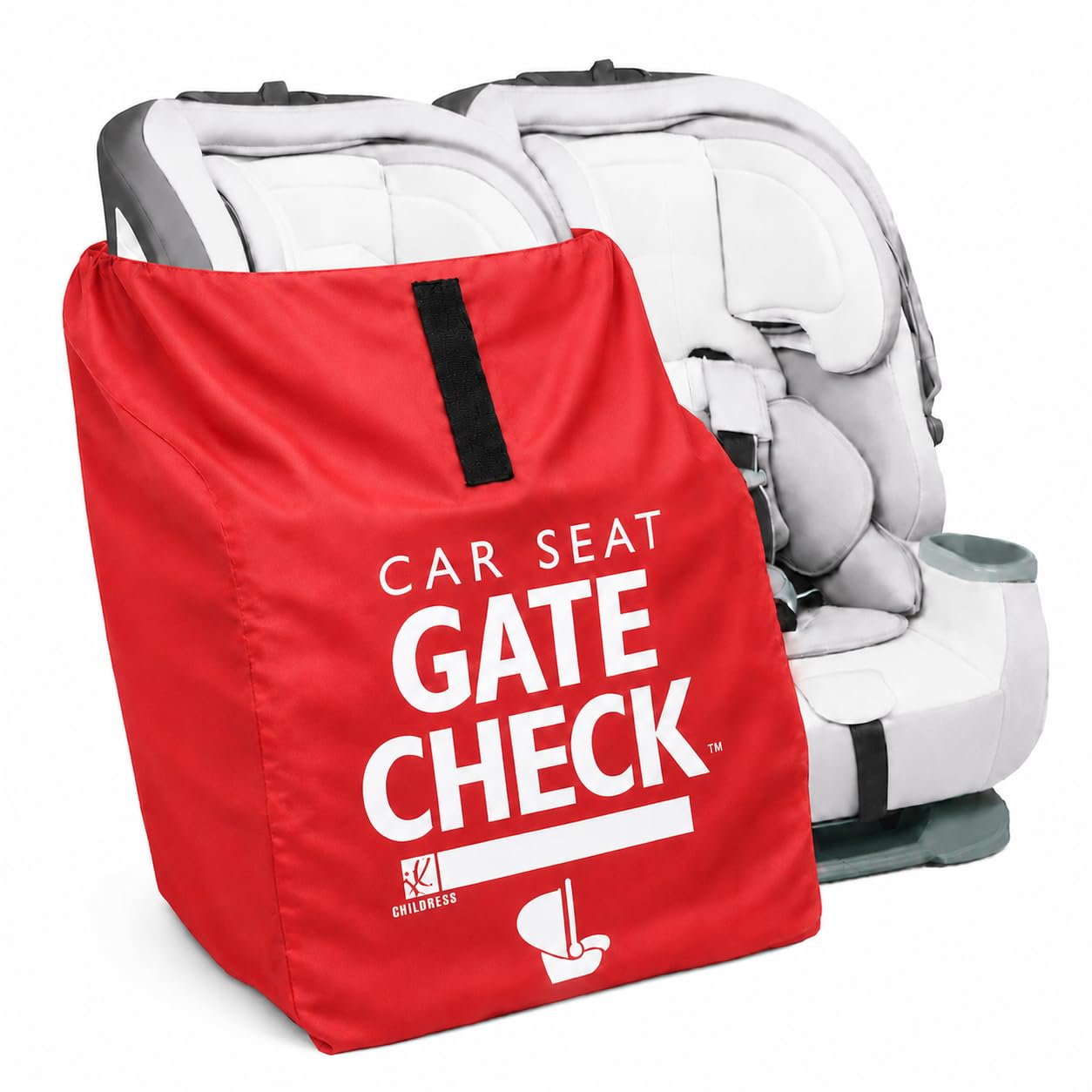
We recommend this if you want a simple, durable cover that keeps a car seat clean and easy to spot at the gate.
Pros
- Tough fabric and reinforced seams hold up to rough handling.
- Bright color and big ID box make the seat easy to find.
- Built-in pouch and handle make packing and carrying quick.
Cons
- Drawstring closure doesn’t fully protect against heavy rain or mud.
- No padding, so it won’t stop big bumps.
- Looks bulky when folded, even with the pouch.
We used this bag on three flights and found it very straightforward. It slid over our infant carrier fast, and the handle made it easy to lift the seat up to the gate. The bright red color drew attention from gate agents, so our seat returned quickly.
The material felt tough enough to resist dirt and light scuffs. We liked the AirTag pocket for peace of mind and the wipeable fabric cleaned up crumbs without fuss. Folding it back into the attached pouch saved time between flights.
One drawback: the drawstring closure keeps dust out but won’t keep heavy rain or mud off the seat. Also, the bag has no padding, so it won’t protect against hard impacts during checked handling. For gate check use, though, it does the main job well and stays reliable trip after trip.
WAYB Pico

We recommend the WAYB Pico if you need a truly portable, FAA-approved car seat that fits overhead bins and works well for short flights and rides.
Pros
- Extremely light and easy to carry
- Folds compact for overhead storage
- Meets FAA and U.S. safety standards
Cons
- Forward-facing only limits younger toddlers
- Not padded like full-size seats
- Returned/open-box seats must be destroyed per policy
We used the Pico on a recent trip and liked how little space it took in the overhead bin. Carrying it through the airport felt easy because it’s only about 8 pounds and the included bag protects it from scuffs.
Putting our child in the seat was quick. The harness and five points felt secure, though the seat’s thin profile gave less cushioning than a regular car seat. For a quick flight or rideshare, comfort was acceptable but not luxurious.
Installation in the plane and in cars took little time. The aluminum frame feels solid for its weight, and the mesh fabric kept our kid cool. Remember to check the manufacture date and weight/height limits on the label before you buy.
Ellaris 3‑in‑1 Slim Convertible (Safety 1st)

We recommend this seat if you want a travel‑friendly convertible that grows with your child and fits tight airplane and car spaces.
Pros
- Slim profile fits better in narrow airplane rows and crowded rear seats.
- Easy to install with hook‑style LATCH and clear adjustments for headrest and harness.
- Removable, machine‑washable pad and cup holders make life simpler on trips.
Cons
- At about 12 pounds, it’s lighter than full‑size seats but still bulky to carry through airports.
- Harness adjustments take extra steps compared with no‑rethread systems.
- Not the plushest padding for very long flights or naps.
We used this seat on a recent family trip and found the slim shell really helps when squeezing into an airplane row. It slides into tighter spaces so our toddler had more elbow room and the crew didn’t ask us to gate‑check it.
Installation felt straightforward. The hook‑style LATCH grabbed the anchor points quickly, and the five headrest positions made it easy to get a good fit as our child grew. We liked how the harness sits without too much fiddling once set.
On board the plane, the machine‑washable pad and removable cup holders saved time and mess. Carrying it through security and to the gate was manageable, though we preferred a lighter travel‑only seat for long walks. Overall, it handled everyday travel and car use reliably and felt built to last.
Ellaris 3‑in‑1 Slim Convertible (Safety 1st)
Diono Radian 3R

We recommend this seat if you want one FAA‑approved, slim-fit car seat that grows with your child and packs flat for travel.
Pros
- Very slim — fits three across in most cars without crowding.
- Long rear-facing limit — lets us keep little ones rear-facing longer.
- Folds and is FAA approved — easy to carry through airports and store.
Cons
- Heavy to lift — the steel frame adds real weight when we carry it.
- Bulky when attached to a stroller — not ideal for tight airport transfers.
- Covers need time to remove and wash — not instant cleanup on the go.
We used the Radian for a recent flight and on drives around town. Installing it with SuperLATCH felt secure and the seat sat tightly in the plane and in our car. The harness and high sides gave us confidence on longer rides.
The slim profile made a big difference on the airplane. It fit in the aisle seat without blocking the person next to us, and the fold helped getting it through security and into overhead bins. Expect to still manage the weight at the gate.
Daily use proved durable. The steel frame and firm shell felt solid when we buckled kids in and out. Padding is comfy, though removing the cover for a deep clean takes patience.
Guiseapue Car Seat Travel Bag
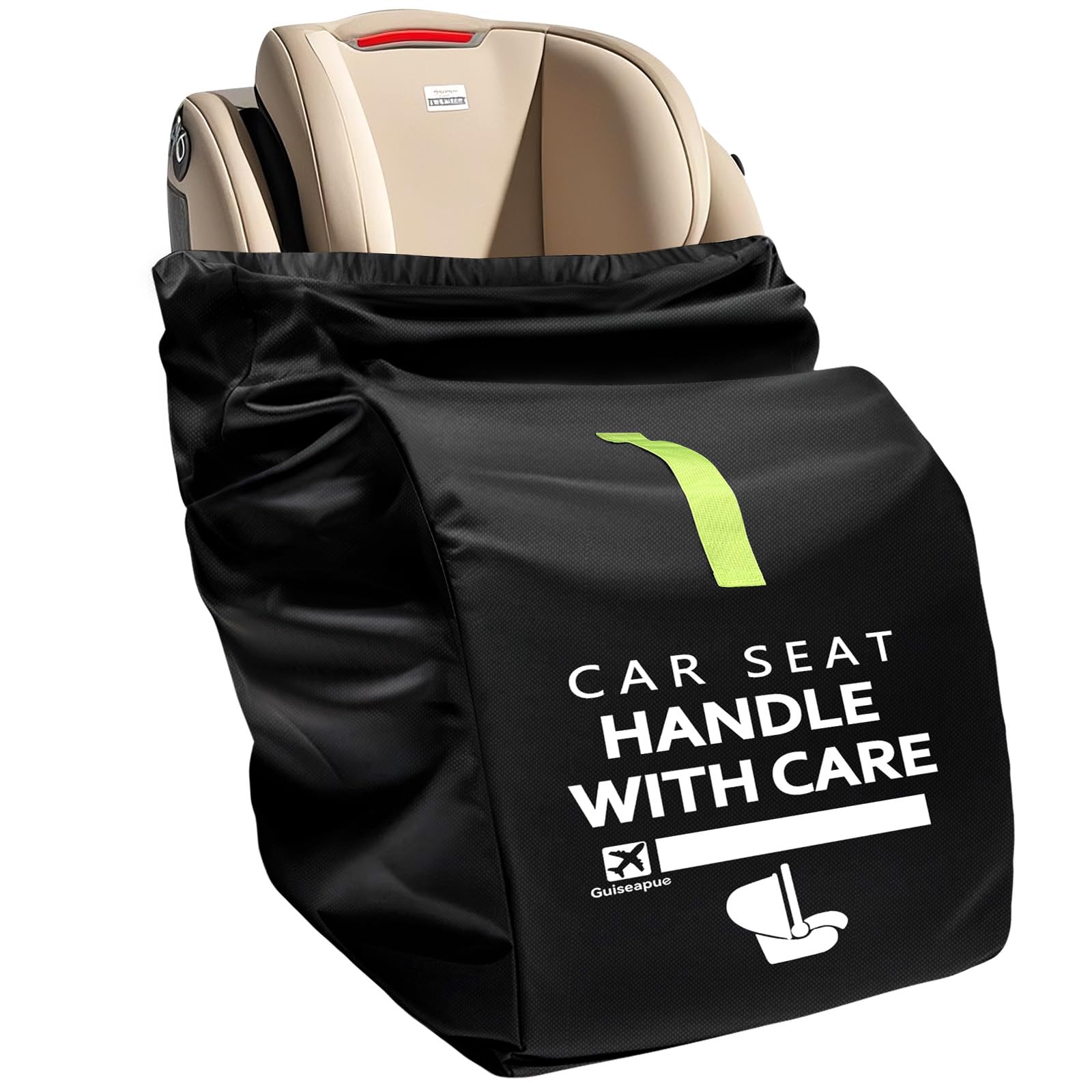
We recommend this bag if you want a light, protective cover that fits most car seats and tucks into a diaper bag for flights.
Pros
- Lightweight and packs small for easy stashing.
- Tough nylon shell kept our seat clean from dirt and grease.
- Built-in ID holder made it simple to spot our bag at busy gates.
Cons
- Drawstring closure felt less secure than a zipper for checked luggage.
- Thin shoulder straps can dig in when carrying heavier seats.
- Fits bulky seats snugly; requires some squishing to close.
We used this bag on a domestic flight and liked how little space it took in our carry stash. The nylon resisted scuffs during gate checks and avoided the usual dirt transfer to our stroller and car seat.
Carrying it felt easy for short walks through the airport. The shoulder straps worked fine for a quick lift, but they got uncomfortable when we walked longer distances with a heavier carrier.
When we stuffed a convertible seat inside, the fit was tight but doable. The drawstring closed tightly, yet we still worried about full checked handling; a zipper would give more confidence for rough baggage handling.
The ID pocket proved handy at the gate. Instead of guessing which black bag belonged to us, our tag was clear and protected from smudging.
Overall, this bag is a practical, low-weight option for parents who want protection and easy packing on flights, so long as you plan to carry the seat yourself rather than check it.
YOREPEK Travel Car Seat Backpack

We recommend this if you want an affordable, hands-free way to protect and carry a car seat through the airport.
Pros
- Easy to carry with padded backpack straps and waist belt.
- Water-resistant fabric protects from dirt and light rain.
- Folds flat for storage and has side pockets for small items.
Cons
- Not padded on the front, so it won’t absorb heavy impacts.
- Doesn’t fit some large models (check fit before travel).
- No wheels — long carries can tire you out.
We used this on a recent trip and liked how it freed our hands while we moved through crowded terminals. The backpack straps let us hoist the seat on our back and handle a toddler and luggage at the same time.
Putting the seat into the bag was quick. The internal strap held the base in place and the side mesh pockets kept a burp cloth and small toy handy.
The bag feels light and packs down flat into a stroller basket between flights. Expect protection from scratches and grime, but add extra padding if you want stronger impact protection.
Graco Tranzitions 3-in-1
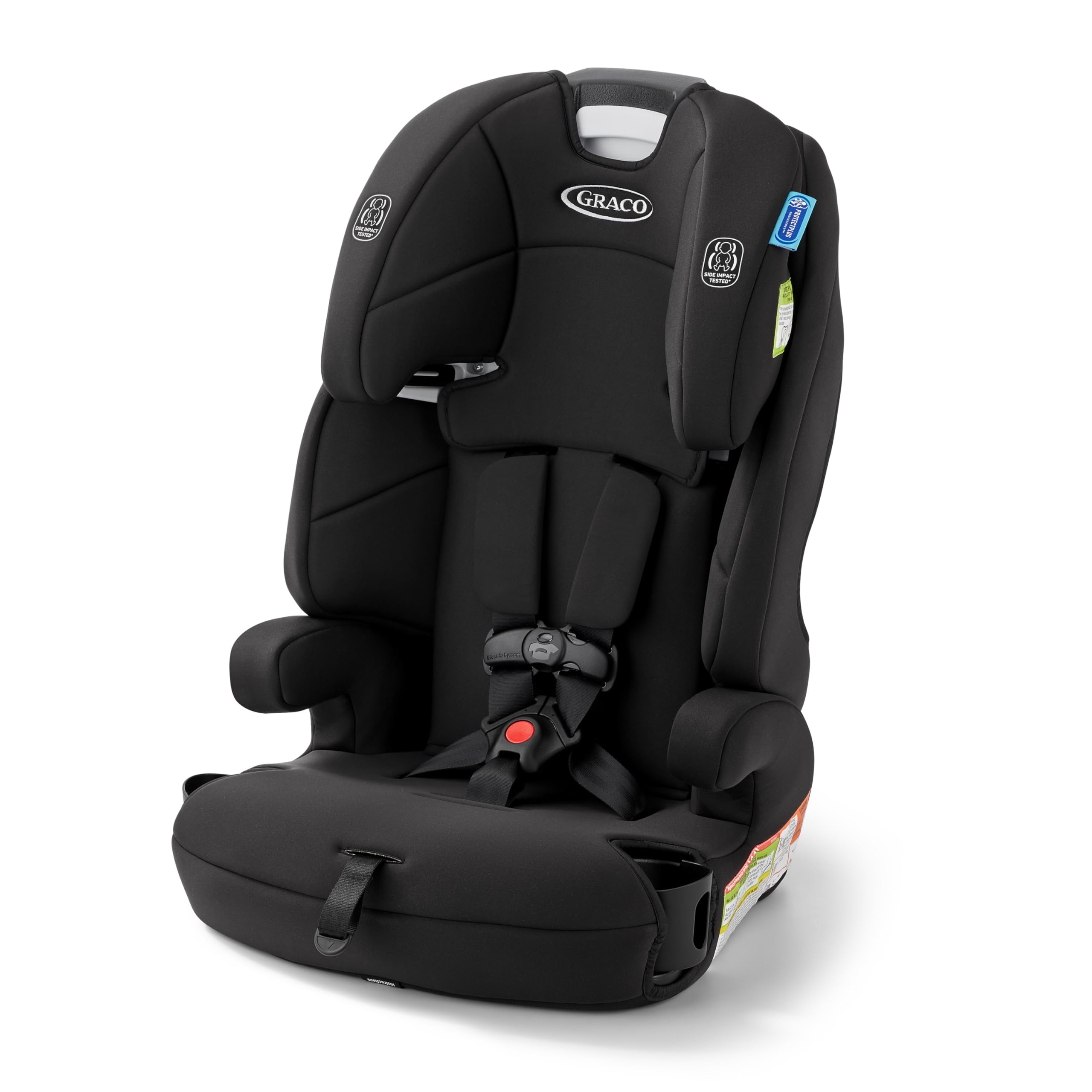
We recommend this seat if you want a light, easy-to-move car seat that grows with your child for years.
Pros
- Lightweight and easy to carry through airports and between cars
- Simple one-hand headrest and harness adjustment as we used it
- Machine-washable pads and two cup holders made travel less messy
Cons
- Bulkier than a dedicated travel-only seat when stowed on a plane
- Harness mode still takes space in a plane seat compared with a backless booster
- Some parents may prefer more padding on long flights
We used this seat on a short flight and around town. It felt light to lift and fit into the overhead compartment more easily than heavier models. The harness adjusted quickly when our child grew a bit during the trip.
Installing in a rental car at the airport was straightforward. The LATCH and open-loop belt guides helped us secure the seat without fuss. Cup holders kept snacks handy and saved us from chasing crumbs mid-flight.
On the plane, the seat worked best as a highback or backless booster; carrying it down the aisle was manageable but awkward if the flight was full. For regular flyers who need a harnessed seat, it performs well, but anyone wanting a ultra-compact travel seat might look elsewhere.
Overall, we found the Graco Tranzitions a solid, practical choice for families who value adjustability and easy cleaning during travel.
TushGuard Seat Cushion

We would buy this for flights when we want extra tailbone support and a thinner, easy-to-carry cushion.
Pros
- Feels supportive without being bulky
- Thin profile fits airplane and car seats easily
- Cover is removable and machine washable
Cons
- Not a full booster — doesn’t raise a child for seat belt fit
- Memory foam can feel warm on long flights
- Thin edge may compress for very heavy users
We took this on a recent trip and liked how it slid into our carry bag and still gave firm support during long airport waits. The U-shaped cutout eased pressure on our coccyx and stopped that sore spot we usually get after a few hours sitting.
Strapping it to a narrow airplane seat felt natural. The non-slip bottom kept it from moving when we shifted, and the built-in handle made it simple to pull out and carry through security.
We noticed the foam warms to body heat and molds quickly, which felt comfy but can be a bit warm on a hot cabin. For people needing a slight lift or pressure relief on flights, this worked well. For kids who need a proper booster to meet belt position rules, this is not the right choice.
Hiccapop UberBoost Inflatable Booster
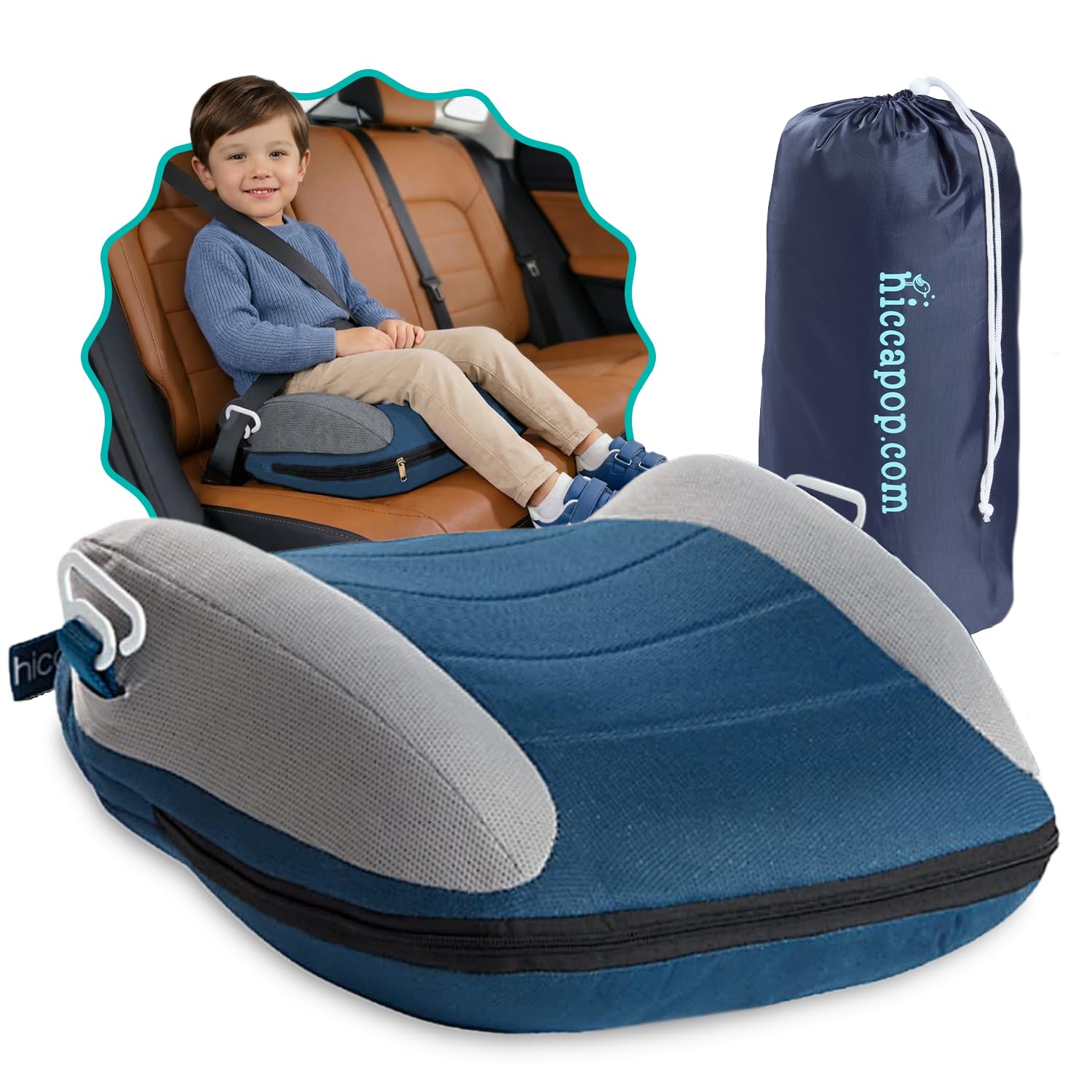
We recommend this if you need a light, packable booster for travel and short rides because it inflates fast and saves suitcase space.
Pros
- Ultralight and packs small for flights and carry-ons
- Inflates in seconds and feels comfy for short trips
- Narrow shape fits between or beside other seats
Cons
- Not a full harness seat — only a belt-positioning booster
- Air bladder can feel firm on long drives
- Takes care to position vehicle belt correctly every time
We used the UberBoost on a recent trip and liked how little room it took in our luggage. It blew up with a few breaths and fit easily into a tote when deflated.
Putting it on a rental car seat took under a minute. The non-skid base held steady on leather and the belt guides helped the lap belt sit low across the hips.
Kids liked the extra cushion but after about an hour the inflatable surface felt firm and needed a quick air top-up. For flights, though, the compact size and quick setup made it a practical choice.
Buy it from Amazon: Hiccapop UberBoost Inflatable Booster
BubbleBum Inflatable Booster
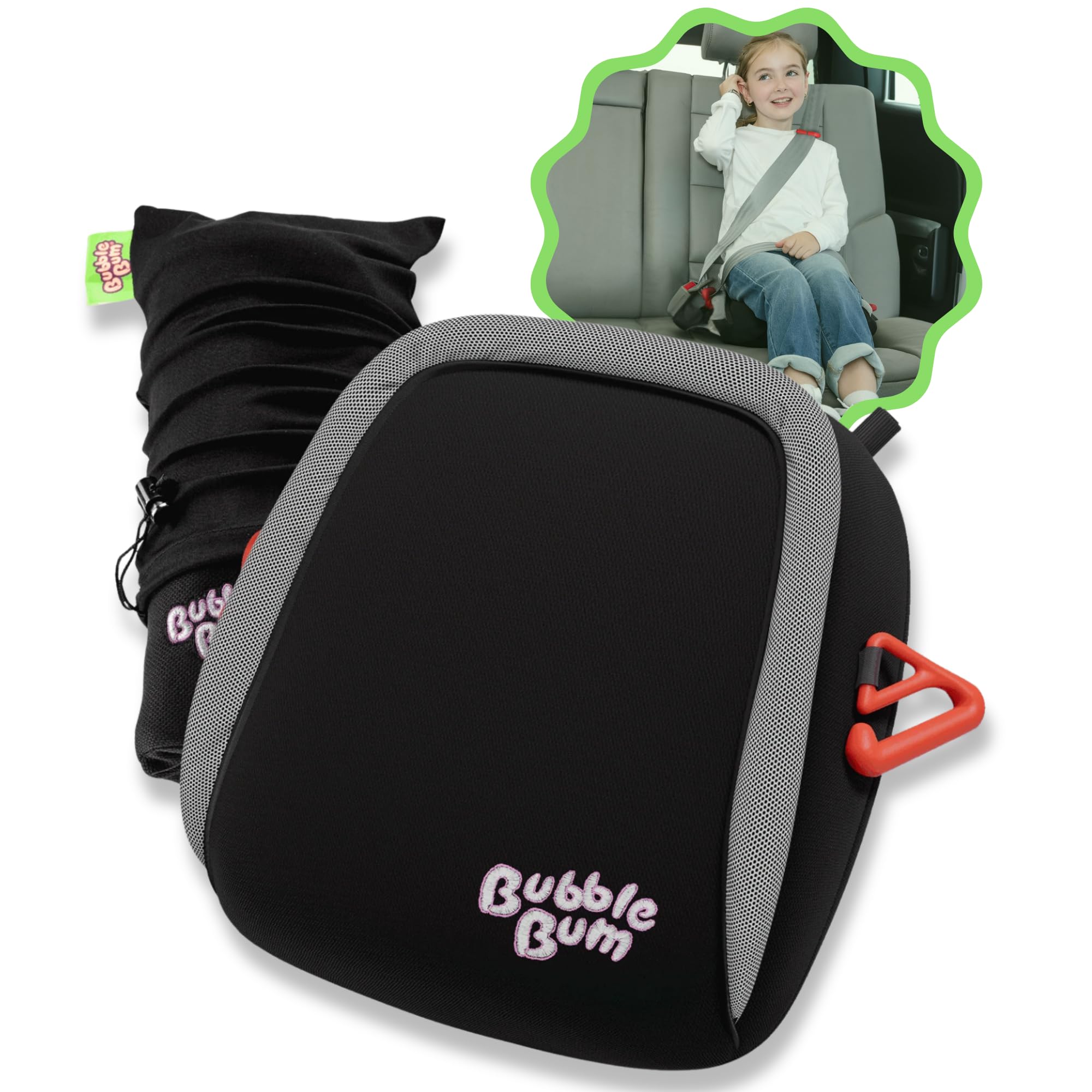
We recommend this if you want a very portable booster that still meets safety rules for kids 40–100 lbs.
Pros
- Packs down tiny and fits in luggage or a backpack.
- Feels softer and more comfortable than hard plastic boosters.
- Lets three kids sit across in small back seats.
Cons
- Needs inflation and occasional re-sealing after heavy use.
- Not as rigid as a full-size booster for long-term everyday use.
- Can shift if the vehicle seat belt isn’t snug or routed correctly.
We used this on a recent family trip and appreciated how little space it took in our suitcase. Pulling it out at the rental car felt fast — inflate, click the belt, and we were ready to go.
Our kid liked the cushioned seat more than the old hard booster. Long drives were quieter since there were fewer complaints about poking edges or hard plastic.
Installation was simple, but we double-checked the belt fit each time. If the seat belt isn’t positioned right, the booster can move, so patience during setup pays off.
For short trips, flights, or rideshares this saved us a lot of hassle. It’s not a replacement for a heavy-duty daily booster, but it makes travel and carpooling much easier.
Buying Guide
We focus on safety, fit, and ease of use when choosing a car seat for flights. Think about the child’s age, height, and weight first. These determine which seat types will fit and be allowed on the plane.
We look for FAA approval or the equivalent. That tells us the seat has passed crash-safety tests for aircraft use. Check labels or the manual for this information.
We weigh size and portability. A slimmer, lighter seat saves space and is easier to carry. But it must still offer good support and padding for comfort on long flights.
We value simple installation and clear instructions. Seats that use the plane seat belt or include a simple harness cut down on stress. Practice installing the seat at home before travel.
We compare materials and cleaning options. Removable, machine-washable covers make spills less stressful. Breathable fabrics help keep the child comfortable during long trips.
We note harness type and padding. Five-point harnesses give better restraint. Extra head and neck support helps infants and toddlers on turbulence or sleep.
We consider airline and seat compatibility. Check the airline’s rules and the seat map for width and recline. Measure your seat and the car seat dimensions to avoid surprises at the gate.
We set a budget range but avoid cheap models that skip key safety features. Prioritize safety, fit, and ease of use over price when choosing a seat for air travel.
| Feature to check | Why it matters |
|---|---|
| Certification/Approval | Ensures aircraft use testing |
| Size & weight | Affects carry and fit on plane |
| Installation method | Simplicity reduces mistakes |
| Harness & support | Safety and comfort during flight |
| Materials & cleaning | Hygiene and long trips |
| Airline compatibility | Prevents denied use at the gate |
Editor’s Choice
We pick the Clek Liing as our Editor’s Choice for most flights. It balances safety, comfort, and ease of use without adding heavy weight to your carry-ons.
We like its compact design. It installs firmly in airplane seats and fits most narrow economy spaces.
The headrest and side impact protection add real value on long trips. Padding is firm but comfortable, and the harness keeps the child secure.
Key quick facts:
- Age/weight: Rear-facing 5–40 lbs; forward-facing 22–65 lbs (model dependent)
- Weight: About 12–14 lbs — lighter than many convertible seats
- Airline approval: FAA-compliant when used with airplane belt
We tested ease of installation and found it straightforward. The rigid lower connectors and clear belt path help when cabin space is tight.
We also considered travel-friendly features. The slim shell and removable covers make cleaning and packing easier. The seat’s reputation for safety keeps our confidence high.
Conclusion
We prioritized safety, comfort, and ease of use when choosing car seats for flights. Each option meets common airline rules and gives reliable protection during takeoff, landing, and turbulence.
We recommend picking a seat that fits your child and your travel style. Measure cabin dimensions and check airline policies before you book.
We value simple setup and light weight, so we favor seats that install quickly and carry easily. A compact fold or travel bag can make moving through airports much smoother.
We also considered longevity and value. Some seats transition from infant to toddler use, which can save money and reduce gear you must pack.
Key points to remember:
- Safety first: Look for FAA approval or equivalent.
- Fit matters: Test seat in your car and, if possible, on a plane.
- Ease of travel: Choose lightweight and easy-to-carry models.
We aim to help you pick a seat that keeps your child safe and reduces travel stress. Use our picks as a starting point, then confirm fit and rules for your specific airline and aircraft.
FAQS
Can we bring a car seat on a plane?
Yes. We can bring FAA-approved car seats for children who need a separate seat. Check the airline’s rules before you travel.
How do we know a seat is FAA-approved?
Look for a label that says it is certified for aircraft use. The label is usually on the side or bottom of the car seat.
Do we need to buy a seat for the child?
We recommend buying a separate airplane seat for children under 2 for safety and comfort. Lap infants are allowed on some airlines, but that reduces protection.
How do we install the car seat on the plane?
Use the aircraft seat belt to secure the car seat facing forward unless the car seat maker says otherwise. We avoid using LATCH in airplanes; belt installation is standard.
Can we gate-check the car seat?
Yes, but gate-checking risks damage. We prefer to bring the seat on board if it fits and the airline permits it.
What if the plane is full?
If no extra seat is available, we follow airline guidance. Bring documentation and call ahead if possible.
Do booster seats work on planes?
Most boosters need the child’s feet to touch the floor and a lap-and-shoulder belt. We recommend harness seats for younger children and check airline belt types before travel.
How do we clean a car seat after travel?
Follow the manufacturer’s cleaning instructions. We spot-clean fabric and use approved cleaners to avoid damage.
